
Falls of Foyers
Falls of Foyers: The Smoking Falls of Loch Ness
When Robert Burns reached the Falls of Foyers in 1787 and looked down into the gorge, he saw what he described as "the horrid cauldron" — the deep, spray-filled amphitheatre at the base of the lower falls, where nearly a hundred feet of water crashes into the rock below. He wrote a poem on the spot, Lines on the Fall of Fyers, near Loch Ness, and the falls' reputation was set. The Scottish Gaelic name says the same thing rather more elegantly: Eas na Smùide — the smoking falls — for the mist that rises from the gorge like smoke and drifts out over the eastern shore of Loch Ness.
The Falls of Foyers are not the tallest in Scotland, but they are among the most dramatic: two distinct drops, the upper a series of cataracts falling 46 feet through a wooded ravine, the lower a single unbroken 98-foot plunge into the rock amphitheatre below, with a total descent of around 165 feet. The River Foyers then flows the short remaining distance into Loch Ness.
They have been drawing visitors since the 18th century, and that long history is literally written on the walls: excerpts from Burns' poem are inscribed on slate plaques along the path down to the viewpoints. Here is everything you need to plan a visit.
About the Falls of Foyers
The Falls of Foyers are two waterfalls on the River Foyers, which drains down through a steep gorge on the south-eastern shore of Loch Ness, about halfway along the loch's length, near the village of Foyers.
The upper falls (46 feet / 14 metres) comprise three cataracts — powerful steps of water — dropping through woodland into a narrowing ravine. The lower falls (98 feet / 30 metres) are the centrepiece: a single plunge into the dark rock amphitheatre that Burns described as the "horrid cauldron." The total descent is typically given as around 165 feet (50 metres).
One important piece of history changes the falls' character: in 1895, the British Aluminium Company constructed a hydro-electric plant to power a new aluminium smelter on the shore of Loch Ness — one of the first large-scale commercial hydro-electric schemes in Europe. Water was taken from the River Foyers just above the falls, significantly reducing their flow. The smelter closed in 1967, but a large pumped-storage scheme followed. The falls are still beautiful, especially after heavy rain, but visitors in dry weather may find them less dramatic than the Victorian engravings suggest.
Alongside Burns, other notable visitors included the Wordsworths, Robert Southey and Samuel Johnson and James Boswell (in 1773). Robert Addams, a scientist, visited in 1834 and was so struck by the effect of watching the water that he wrote a landmark paper on what is now called the "waterfall illusion" — the visual after-effect in which stationary rocks appear to move upwards after watching a cascade.
Getting there
By car, from Inverness take the B862 south along the eastern shore of Loch Ness — a quieter and more scenic route than the busy A82 on the western side. The village of Foyers is around 20 miles from Inverness; allow at least 30 minutes. The B862 narrows significantly in places and has passing places — drive carefully, especially on busier summer days. The car park is in Upper Foyers, beside the Waterfall Cafe and gift shop.
By public transport, the 302 bus from Inverness Bus Station serves Upper Foyers; check the current timetable at the Highland Council transport pages or Traveline Scotland before travelling, as services are infrequent. The journey takes around 45–50 minutes. From the bus stop beside the shop and café, the trailhead is directly across the road.
If you are arriving from elsewhere in the Highlands or prefer a guided experience, local tours from Inverness frequently include the Falls of Foyers as part of a Loch Ness circuit.
Compare Transfers & Local Transport in the Scottish Highlands →
Where does the name come from?
Foyers comes from the Scottish Gaelic Foithir, meaning "shelving slope" — a description of the hillside terrain above Loch Ness on which the village sits. The falls themselves carry the poetic Gaelic name Eas na Smùide ("the smoking falls"), referring to the mist that rises perpetually from the gorge below and drifts out across the lochside — the same image that gave Burns his "rising mists and ceaseless showers."
The walk and the trails
From the Upper Foyers car park, cross the B862 and pass through the left-hand gate to find the signed path down to the falls. The route descends steeply through woodland, with around 219 steps on the main approach. Burns' poem is inscribed on slate plaques along the way.
The path splits at a junction:
- Left leads to the upper viewpoint, where the cataracts of the upper falls are visible above. This section is shorter and a little less steep.
- Right and continuing down reaches the lower viewpoint — the best position, looking directly across at the 98-foot plunge and the spray-filled amphitheatre.
Allow 20–30 minutes for the short out-and-back to the viewpoints, more if you pause at each inscription or viewpoint. The return is steep — take it steadily on wet steps.
For a longer outing, a path continues below the lower viewpoint down to the shore of Loch Ness, following the burn through woodland to a pebbly beach with open loch views. From there, a minor road loops back up to the café — a circuit of around 2–3 miles taking 1–2 hours. Note that a footbridge on this lower route has occasionally been closed; check current conditions before descending.
Parking
The car park is at Upper Foyers (IV2 6XX), immediately beside the Waterfall Cafe and gift shop. It is free, with public toilets available nearby. It is not a large car park and fills quickly on fine summer days and weekends — arriving early in the morning gives the best chance of a space without waiting.
Facilities
The Waterfall Cafe & Foyers Gift Shop at the car park serves hot drinks, snacks and light meals, and is generally open during visitor season — check locally for current days and hours. Public toilets are available near the car park.
There are no facilities on the trail itself. The falls are in a steep gorge with no staffed presence; come self-sufficient for weather and the descent.
Things to know before you go
Best time to visit. After heavy and sustained rain for the most dramatic falls — the reduction in flow from the hydro scheme means Foyers in a dry spell can be underwhelming, and the lower falls in particular benefit enormously from recent rainfall. Autumn and winter typically give the most reliable flow. Spring and summer are pleasant for the woodland setting; the "smoking" effect is most pronounced in cool, wet weather.
The steps. Around 219 steps descend to the lower viewpoint. The path is steep and can be slippery after rain. Sturdy footwear with grip is essential. The path is not suitable for wheelchairs or pushchairs.
Dogs. Dogs are welcome but should be on leads throughout, particularly near the unfenced gorge edge and on the steep stepped path.
Accessibility. The viewpoints require descending steep, uneven steps. The upper viewpoint is slightly more accessible than the lower, but neither is suitable for wheelchairs or pushchairs.
Families and safety. Suitable for families with older children comfortable on steep paths. Keep children close near the gorge — there are unfenced drops at both viewpoints and the gorge is deep and narrow.
Swimming. Not recommended — strong currents and the rocky gorge below the falls make the water genuinely dangerous.
Where to stay
The closest base is Inverness, the Highland capital around 20 miles north on the B862, with the widest range of accommodation, good transport connections, and easy access to both Loch Ness sides.
Find Hotels & Stays in Inverness →
What to pack
The steep descent and the permanent wet conditions near the gorge make kit worth thinking about even on a short walk.
- A pair of waterproof walking boots with good grip and ankle support — the steps are steep and wet, and the rock near the viewpoints is permanently slippery.
- A waterproof jacket and warm layers; the B862 side of Loch Ness is exposed and wet weather arrives quickly.
- A pair of binoculars — the woodland around the gorge is good for woodland birds, and the view from the lower path to the lochside opens up wide Loch Ness views.
- A travel tripod for long-exposure shots in the shaded gorge — the mist and confined light reward a slow shutter speed.
Nearby attractions and making a day of it
Falls of Foyers is ideally placed as part of a Loch Ness circuit, combining the quiet eastern shore with the more visited western side.
| Attraction | Why Visit | Distance |
|---|---|---|
| Loch Ness (Foyers shore) | The loch itself — the path below the falls leads to a pebbly beach with open water views, free from the crowds of the western shore | ~0.5 miles on foot |
| Boleskine House | A restored 18th-century Georgian manor on the lochside with a long and colourful history, now open to visitors | ~1.3 miles |
| Invermoriston Falls & Telford Bridge | A pair of beautiful cascades in the village of Invermoriston, beside a historic packhorse bridge built by Thomas Telford | ~12 miles |
| Urquhart Castle | One of Scotland's most photographed castles — a dramatic ruin on a promontory above Loch Ness, with Nessie-sighting views | ~17 miles |
| Inverness | The Highland capital — the natural base for exploring Loch Ness, with shops, cafés, the Inverness Castle visitor centre, and good rail connections | ~20 miles |
For a classic Loch Ness day, drive the western A82 south from Inverness to Urquhart Castle, cross to Fort Augustus, and return along the B862 via the Falls of Foyers — a circuit of Loch Ness with three very different experiences.
Browse Loch Ness & Highland Tours →
Photography tips
The lower viewpoint is the essential shot — facing directly across the gorge at the full height of the lower falls, with the spray rising from the amphitheatre below. After rain, the mist fills the gorge and the air is damp with spray; a waterproof camera cover or a lens cloth is useful here.
Burns' slate plaques on the way down make excellent foreground interest — the poem and the falls together in one frame. Early morning in autumn, with mist over Loch Ness visible through the trees on the lower path, can be extraordinary.
A tripod and a long exposure are the standard approach for the gorge: the water turns to silk, the rock texture comes forward, and the whole scene takes on the dark, romantic quality that brought Burns and the Wordsworths here in the first place.
Conclusion
The Falls of Foyers are quieter and less visited than many Loch Ness attractions, reached via a narrow road on the eastern shore that most visitors bypass. That is almost entirely their advantage. The gorge, the slate plaques, the view of the lower falls and the rising mist — these have been drawing poets and travellers for 250 years. On a wet autumn day, after two days of Highland rain, the "smoking falls" and the "horrid cauldron" are exactly as Burns found them.
FAQs
How tall are the Falls of Foyers?
The upper falls drop around 46 feet (14 metres) in three cataracts; the lower falls drop 98 feet (30 metres) in a single plunge into the rock amphitheatre below. The total descent is around 165 feet (50 metres).
Why are the falls sometimes not very impressive?
A hydro-electric scheme, begun by the British Aluminium Company in 1895, diverts a large volume of water from the River Foyers above the falls. In dry spells the flow can be greatly reduced. For the most powerful display, visit after heavy rain.
Is there a fee to visit the Falls of Foyers?
No — the falls and the trail are free to visit. The car park at Upper Foyers is also free. Check for any on-site notices.
What is the best time to visit the Falls of Foyers?
After heavy and sustained rain for the best flow. Autumn and winter usually give the most dramatic falls. Spring and summer are pleasant for the woodland setting.
Are dogs allowed at the Falls of Foyers?
Yes, but on leads throughout — the gorge has unfenced drops and the steps are steep and slippery.
Is the trail accessible for wheelchairs?
No. The path descends steep, uneven steps and is not suitable for wheelchairs or pushchairs. The upper viewpoint is slightly less steep but still requires careful footing.
What are the parking options at the Falls of Foyers?
A free car park at Upper Foyers (IV2 6XX), beside the Waterfall Cafe. It is not large and fills quickly on sunny summer days — arrive early.
Who was Robert Burns' poem about the falls?
Burns visited in 1787 and wrote Lines on the Fall of Fyers, near Loch Ness, describing the gorge as a "dim-seen" vision through "rising mists" and the pool below as "the horrid cauldron." Excerpts from the poem are inscribed on slate plaques along the path to the falls.
Can I swim at the Falls of Foyers?
No — the gorge is dangerous, with strong currents and rocky walls. Swimming is not recommended.
What's nearby?
Loch Ness shore (a short walk below the falls), Boleskine House (~1.3 miles), Invermoriston Falls (~12 miles), Urquhart Castle (~17 miles), and Inverness (~20 miles).
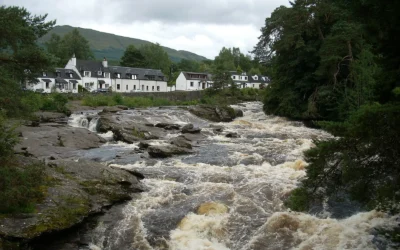
Falls of Dochart
Falls of Dochart: The Waterfall at the Heart of a Village Most waterfalls require a walk to find. The Falls of Dochart require no such effort at all — they run directly through the centre of Killin, beneath the old stone Bridge of Dochart, in full view of the...
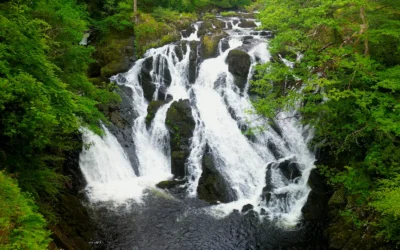
Swallow Falls
Swallow Falls: Wales' Highest Continuous Waterfall The River Llugwy has been performing for visitors at Swallow Falls for well over a century, and it still knows exactly what it is doing. The water tumbles 42 metres through a narrow, tree-lined gorge in a sequence of...
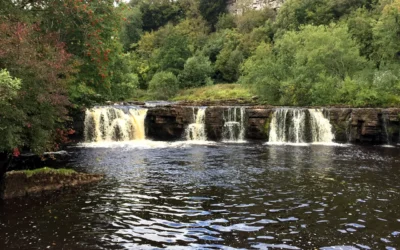
Wain Wath Force
Wain Wath Force: The Broadest Waterfall in Upper Swaledale Wain Wath Force will never win a prize for height. The River Swale drops only around a metre and a half here, sliding gently over a wide limestone ledge beneath the pale cliffs of Cotterby Scar. But what it...
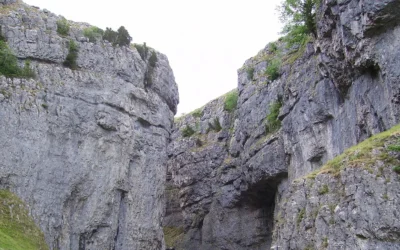
Gordale Scar
Gordale Scar: The Gorge That Stopped Wordsworth in His Tracks There is a moment as you walk the flat, pleasant path from Malham when the gorge closes around you without warning. The sky narrows to a strip above. The walls rear up on either side — overhanging...
Low Force
Low Force: Teesdale's Most Peaceful Waterfall High Force gets the crowds. Low Force gets the quiet. Just a mile and a half downstream from its more famous neighbour, where the River Tees spreads wide across a series of 18-foot cascades over the Whin Sill...