
Warwick Castle
Warwick Castle: Eleven Centuries of Kings, Sieges and a Kingmaker on the River Avon
Stand on the riverbank below Warwick Castle at the right moment — early on a still morning, the mist lifting off the Avon — and the two great towers rise above the sandstone bluff exactly as they were built to: to be seen, and to be feared. Caesar’s Tower climbs nearly 45 metres; Guy’s Tower, twelve-sided, stands beside it; and the curtain wall runs between them along the bluff where a fortress has guarded the crossing of the River Avon for over a thousand years.
The story of Warwick does not begin with William the Conqueror in 1068. It begins in 914 AD, with Æthelflæd — daughter of Alfred the Great and the formidable Lady of the Mercians — who raised a fortified burh on this ground to defend Mercia against the Danes, more than a century and a half before the Normans arrived.
Today Warwick Castle is one of the most complete and most visited medieval castles in Britain — a place where the full sweep of English history stands intact in a single building, combined with jousting shows, falconry displays, a great trebuchet and the chance to stay the night in the castle grounds. It sits in the heart of the historic county town of Warwick, in Warwickshire, with Kenilworth, Leamington Spa and Stratford-upon-Avon all close by. This guide covers everything you need to plan your visit.
Where Is Warwick Castle?
Warwick Castle stands on a sandstone bluff above the River Avon in the centre of Warwick, the county town of Warwickshire, in the English Midlands. It is roughly 40 minutes south of Birmingham and around an hour and 40 minutes from London, less than 2 miles from Junction 15 of the M40.
The castle is within easy walking distance of Warwick town centre and its railway station, and there are two main car parks — The Stables and Stratford Road — with Blue Badge parking and a drop-off point on Stratford Road. Clear brown tourist signs guide drivers in from the motorway.
A Brief History of Warwick Castle
Æthelflæd’s Saxon burh of 914 was the beginning, but it was William the Conqueror who raised the first true castle here in 1068, two years after the Battle of Hastings. That first structure was timber; it was rebuilt in stone in the 12th century under Henry II.
The castle reached its military peak in the 14th century during the Hundred Years War, when the Beauchamp earls raised the towers that still dominate the skyline — Caesar’s Tower at nearly 45 metres, with its distinctive double parapet and dungeon below, and the twelve-sided Guy’s Tower at just under 40 metres. The gatehouse, with its murder holes, drawbridges and portcullises, made Warwick one of the most sophisticated pieces of military architecture in medieval England.
The castle’s most famous resident arrived in the 15th century. Richard Neville, 16th Earl of Warwick, became so powerful during the Wars of the Roses that history remembers him as the Kingmaker — the nobleman who could make and unmake monarchs. In 1469 he went so far as to imprison the reigning king, Edward IV, within Warwick’s own walls.
The castle saw further conflict in the English Civil War, held as a Parliamentarian stronghold and surviving a Royalist siege in 1642. Then, in 1604, its character changed entirely: Sir Fulke Greville was granted the castle by James I and began turning the fortress into a luxurious country house, filling it with art and transforming its interiors over generations. The Greville family held Warwick for 374 years until 1978.
The remarkable thing about Warwick is how completely it tells the whole story of the English castle in a single building. The Conqueror’s motte, the Hundred Years War towers, the Kingmaker’s stronghold, the Civil War fortress and the stately home are all here — layered one on top of another on the same bluff above the Avon, and standing almost completely intact.
Architecture & Design
Warwick’s architecture is a study in how a castle evolved from a machine of war into a residence of power and beauty. The original 1068 motte gave way to a 12th-century stone shell keep and curtain walls; the 14th-century additions are the masterpieces. Caesar’s Tower, rising from the rock at the south-eastern corner with its unusual double parapet, and the twelve-sided Guy’s Tower beside it — each side giving defenders clear sightlines — formed the most modern military fortification of their day.
The gatehouse and barbican between them created a layered killing ground, defended by twin drawbridges, portcullises and the murder holes through which defenders could assail anyone trapped beneath. Together they make Warwick one of the finest surviving examples of 14th-century defensive design in Britain.
Within the walls, the residential castle tells the second half of the story. Sir Fulke Greville’s 17th-century transformation introduced the Great Hall and state rooms; the Grevilles added Gothic elements in the 18th century; and Lancelot “Capability” Brown landscaped the 64-acre grounds, framing the towers in sweeping lawns along the riverbank.
A fire in 1871 damaged part of the castle, but a careful restoration by the architect Anthony Salvin preserved its grandeur. The result is a Grade I listed building and scheduled monument — one of the most complete medieval castles in Britain.
Legends & Lore
The documented history of Warwick is, in places, as dark as any legend. In 1628, Sir Fulke Greville — the man who had transformed the castle into a country house — was murdered by his manservant, Ralph Haywood, in what is now called the Ghost Tower. That much is fact. According to local legend, Greville’s spirit has never left the tower, and visitors over the centuries have reported unexplained footsteps, moans and an unsettled feeling in its chambers.
Another tale, pure folklore, tells of Moll Bloxham, said to have been punished for theft at the castle; legend holds that after her disappearance a spectral black dog with red eyes haunted the grounds. These stories are told as atmosphere and legend rather than fact — but they are a genuine part of Warwick’s long character, and the castle embraces them with its popular seasonal Halloween programme.
For those more interested in spectacle than spectres, Warwick offers another extraordinary sight: Britain’s largest working trebuchet — a colossal medieval siege machine, recreated using period engineering — that has become one of the castle’s most remarkable exhibits. Few castles in the world can match the combination of Warwick’s genuine thousand-year history and the sheer drama of its shows and living-history programme.
Visiting the Castle
A full day at Warwick is barely enough. The castle stages a programme of live experiences alongside its historic interiors, and the two together make it one of the most rewarding days out in England. The Falconer’s Quest is the UK’s largest birds-of-prey display, with over 60 birds flying above the castle grounds — falcons, eagles and owls in close-up flight.
The Wars of the Roses LIVE! jousting show fills the grounds with armoured knights, thundering horses and stunts, while the Horrible Histories Maze and the Zog Playland and Live Show keep younger visitors thoroughly entertained. Inside, the Great Hall with its extraordinary arms and armour collection and the state rooms are explored through guided tours by expert historians, and the towers and ramparts can be climbed for sweeping views over the Avon valley.
The castle runs regular seasonal events including the hugely popular “Haunted Castle” Halloween season and a Christmas programme, and the trebuchet demonstrations are a must-see for anyone interested in medieval siege warfare. Multimedia guides and the official app help plan the day around the show timetable, and booking tickets online in advance is strongly recommended — not only for the saving, but to ensure you can fit the live shows around your visit. Most visitors find they need a full day; half a day is not enough.
On-site, the castle has cafés and dining options, and visitors may bring their own food to enjoy in the grounds — check the current food policy on the official website for any updates. There is a gift shop. Photography is generally permitted in the castle grounds, but check with staff on the day for any restrictions in specific indoor areas.
Check Tickets & Show Times for Warwick Castle →
Check the official Warwick Castle website for current opening times, show schedules and prices.
Where to Stay at Warwick Castle
Warwick is one of the few castles in Britain where staying the night on the estate turns a day visit into something altogether different. The accommodation sits within or beside the castle grounds, so you wake up at the foot of the towers themselves.
| Stay | Style | Features |
|---|---|---|
| Woodland Lodges | Self-catering lodges | Set in the castle grounds; cosy and private, ideal for families |
| Medieval Glamping | Themed glamping | Tented accommodation in a medieval-themed village; family-friendly and full of atmosphere |
| Warwick Castle Hotel | Hotel rooms | Comfortable hotel accommodation close to the castle entrance |
Staying on the estate typically includes castle entry with favourable access arrangements — check details at the time of booking. For a wider choice of hotels and guesthouses in and around the town, Warwick itself is a delightful base with a rich medieval character.
Find Hotels & Stays in Warwick →
The Best Time to Visit
Spring (April to June) is one of the loveliest times at Warwick — Capability Brown’s grounds are in leaf, the weather is improving and the full show programme is running without the peak-summer crowds. Summer (July and August) is the busiest and most lively period, with the daily jousting, falconry and the complete activity calendar at full tilt; expect families, coach groups and queues, and book well ahead.
Autumn (September and October) brings golden light along the Avon and the build-up to the hugely popular Halloween “Haunted Castle” season — one of the best Halloween events at any castle in England, running for several weeks. Winter is atmospheric and far less crowded, and the Christmas programme transforms the castle and grounds into something quite different, though some outdoor activities run on a reduced schedule.
For the best balance of full shows, reasonable weather and manageable crowds, aim for a weekday in late spring or early autumn and arrive early to reach the towers and ramparts before the coach parties arrive later in the morning.
How to Get There
By car. Warwick Castle is less than 2 miles from Junction 15 of the M40, with clear brown tourist signs guiding you in. It is around 40 minutes from Birmingham and about an hour and 40 minutes from London. The castle has two car parks — The Stables and Stratford Road — both with Blue Badge parking and a drop-off point on Stratford Road.
By train. Warwick railway station is roughly a mile from the castle — a short walk or taxi ride. Royal Leamington Spa station, about 2.5 miles away, offers step-free access and frequent services from Birmingham and London Marylebone.
By bus and on foot. Buses stop at Castle Hill, within 150 metres of the entrance, and the castle is a straightforward walk from Warwick town centre.
Compare Transfers & Local Transport in Warwick →
Nearby Attractions
Warwick and the surrounding county are rich in history, and several outstanding places are within easy reach.
| Attraction | Why Visit | Distance |
|---|---|---|
| Lord Leycester Hospital | A breathtaking 14th-century timber-framed complex — one of the finest medieval buildings in England | ~0.5 miles |
| Kenilworth Castle | A magnificent red sandstone ruin with Elizabethan gardens and powerful Robert Dudley connections | ~5 miles |
| Royal Leamington Spa | An elegant Regency spa town with grand architecture, parks and independent shops | ~3 miles |
| Stratford-upon-Avon | The birthplace of William Shakespeare — one of the most famous historic towns in the world | ~9 miles |
| Baddesley Clinton (National Trust) | A medieval moated manor house with a remarkable recusant history | ~8 miles |
A full Warwickshire itinerary pairs Warwick Castle with Lord Leycester Hospital and a stroll through the town on the same day, and adds Kenilworth Castle and Shakespeare’s Stratford over the following days — one of the finest history routes in the Midlands.
Browse Warwickshire Tours & Day Trips →
Family & Accessibility
Families. Warwick is one of the very best castles in Britain for a family day out. The jousting and falconry shows, the Zog playland and live show, the Horrible Histories Maze and the trebuchet are all designed with families in mind, while the towers, dungeon and ramparts capture older imaginations. Some shows carry age or height guidance, so plan the day around the show timetable and keep younger children’s stamina in mind.
Accessibility. The castle takes accessibility seriously, with free carer tickets available for visitors with disabilities on production of suitable documentation, and Blue Badge parking at both car parks. However, this is a genuine medieval castle: many of its most dramatic areas involve steps, spiral staircases and narrow passages, and the towers and ramparts are not accessible to wheelchair users.
The grounds and a number of ground-level areas are more accessible, and the main shows can be viewed from accessible positions. Dogs are welcome in the castle grounds but check the current policy for specific areas before bringing one. Check the official accessibility guide before you visit so you can plan the right route and make the most of your day.
Practical Tips
- Wear comfortable walking shoes — you will be on your feet all day across cobbles, grounds, towers and ramparts.
- Book tickets online in advance — almost always cheaper than buying on the day, and essential for busy dates.
- Plan around the show timetable. Jousting, falconry and the Zog show all run at set times; download the app or check the daily schedule when you arrive so you don’t miss them.
- Arrive early — the towers, ramparts and Great Hall are best explored before the mid-morning coach parties arrive.
- Photography is generally permitted in the grounds; check with staff for any restrictions in indoor areas.
- Bring a compact travel umbrella or light jacket — much of the Warwick experience is outdoors.
- Bring a portable power bank for a long day of photos, the castle app and mobile tickets.
- Overseas visitor? The UK uses Type G plugs, so pack a UK travel adapter.
Conclusion
Warwick Castle is the rare place where the entire sweep of English history stands intact in a single building — the Lady of the Mercians’ burh, the Conqueror’s motte, the Hundred Years War towers, the Kingmaker’s stronghold, the Civil War fortress and the Grevilles’ stately home, all on one sandstone bluff above the River Avon.
Add the jousting, the birds of prey, the great trebuchet and the chance to stay the night on the estate, and you have one of the most complete and rewarding days out in Britain. Few castles give you so much, and almost none give it to you so completely preserved.
Frequently Asked Questions
What are the opening hours of Warwick Castle?
Warwick Castle opens daily from 10am, with seasonal closing times. Shows run to a daily timetable, so check the official website for current hours and the day’s schedule before you travel.
How much does it cost to visit Warwick Castle?
Admission varies by date, age and whether you book online or on the day, with family and group rates available. Booking online in advance is usually cheaper — check the official website for current prices.
How long should I spend at Warwick Castle?
Allow a full day. Between the towers, ramparts, dungeon, state rooms and the timed live shows — jousting, falconry and more — most visitors find a half-day is not enough.
Can you stay overnight at Warwick Castle?
Yes. The estate offers Woodland Lodges, Medieval Glamping and the Warwick Castle Hotel, so you can stay within or beside the castle grounds and turn a day visit into a short break.
Is Warwick Castle suitable for children?
Very much so — it is one of the most family-friendly castles in Britain, with jousting, birds of prey, the Horrible Histories Maze, the Zog playland and live show, and towers and a dungeon to explore.
Is Warwick Castle wheelchair accessible?
The grounds and several areas are accessible, and free carer tickets and Blue Badge parking are available. However, the towers, ramparts and many historic areas involve steps and spiral staircases — check the official accessibility guide to plan your route.
Is there food at Warwick Castle?
Yes — the castle has on-site cafés and dining. Visitors may also bring their own food to enjoy in the grounds; check the current food policy on the official website.
Are dogs allowed at Warwick Castle?
Dogs are welcome in the castle grounds; check the current policy for specific areas before bringing one.
Can I take photos at Warwick Castle?
Photography is generally permitted in the castle grounds. Check with staff on the day for any restrictions in specific indoor areas.
What is the Kingmaker connection at Warwick Castle?
Richard Neville, 16th Earl of Warwick, was so powerful during the Wars of the Roses that he earned the nickname “the Kingmaker.” In 1469 he even imprisoned the reigning king, Edward IV, within Warwick Castle’s own walls — one of the most remarkable events in English medieval history.
Audley’s Castle
Audley's Castle: The Free Tower House Above Strangford Lough, Where Game of Thrones Arrived In the first season of Game of Thrones, the fields and approaches to Castle Ward became Winterfell — the ancestral seat of the Starks. The fields around Audley's...
Kilwaughter Castle
Kilwaughter Castle: John Nash's Antrim Ruin, Declared Enemy Property in the Second World War In 1803, John Nash — the architect who designed Regent Street, remodelled Buckingham Palace and built the Royal Pavilion at Brighton — came to County Antrim and...
Shane’s Castle
Shane's Castle: The O'Neill Estate on Lough Neagh, Touched by John Nash and Twice Burned In 1809, John Nash — the architect who designed Regent Street, Carlton House Terrace and remodelled Buckingham Palace for George IV — began redesigning a castle on the...
Belfast Castle
Belfast Castle: The Free Victorian Castle Above the City, with Nine Hidden Cats The legend says the castle will be safe — or its residents will have good fortune — as long as a white cat lives within its walls. The castle's response to this piece of local...
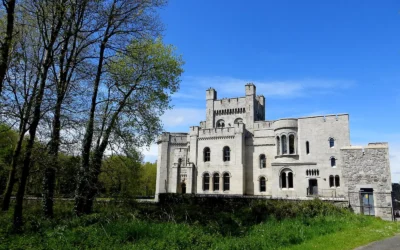
Gosford Castle
Gosford Castle: Ulster's Largest Listed Building — and Game of Thrones' Riverrun When Robin Fedden of the National Trust surveyed Gosford Castle in 1952, he described it as "one of the most original buildings of its time" and noted that it had...