
Hever Castle
Hever Castle: The Double-Moated Home of Anne Boleyn, in the Heart of Kent
Two of the most extraordinary objects at Hever Castle are the smallest: a pair of prayer books, small enough to hold in one hand, each inscribed with handwritten notes by Anne Boleyn herself. She grew up in this castle in the early 16th century; her father, Thomas Boleyn, had inherited it in 1505,
And it was from here that Anne left for the court of Henry VIII, the relationship that would make her Queen of England, cost her her head, and — through their daughter Elizabeth — change the course of English history. The prayer books are still here, in the castle where she wrote in them.
Hever Castle is a 14th-century double-moated fortress in the village of Hever in Kent, about 30 miles south-east of London. Around the medieval core, the American millionaire William Waldorf Astor added 125 acres of award-winning gardens, a man-made lake and one of the finest Italian gardens in England when he restored the castle in the early 20th century.
The result is a place that rewards a full day — the Tudor rooms and their extraordinary portrait collection, the Egyptian maze, the Rose Garden, the lake and the Italian statuary — and where overnight stays in the castle’s own wings make it possible to enjoy the grounds in the quiet of the evening and early morning. This guide covers everything you need to plan your visit.
Where Is Hever Castle?
Hever Castle is in the village of Hever, in the Weald of Kent, approximately 30 miles south-east of central London. The postcode for sat-nav is TN8 7NG. From the M25, exit at Junction 5 or 6 and follow the brown tourist signs.
The nearest railway station with regular services is Edenbridge Town, roughly 3 miles from the castle — a short taxi ride away. Hever Station is just a mile from the castle on foot, but it is an unmanned halt with no taxi services, so walkers should be prepared for the rural mile along quiet lanes. The journey from London Victoria or London Bridge to Edenbridge Town takes around 40 minutes.
A Brief History of Hever Castle
The castle’s origins lie in 1270, when a modest country house with a gatehouse and walled bailey was built on this site. In 1383 it was granted a licence to crenellate, transforming it into a properly fortified residence. The Boleyn family acquired Hever in 1462 and held it for the next 77 years, modernising the medieval structure into a comfortable Tudor manor.
Thomas Boleyn inherited in 1505, and it was in these rooms that his daughter Anne spent her childhood and early youth before leaving for the French court and, eventually, for Henry VIII’s.
Anne Boleyn’s relationship with Henry VIII reshaped England. Henry’s desire to annul his first marriage to pursue Anne — refused by the Pope — drove England’s break with Rome and the establishment of the Church of England. Anne became queen in 1533 and gave birth to the future Elizabeth I; three years later she was executed on charges of treason.
After her father Thomas Boleyn died in 1539, Hever passed to Henry, who gave it to his fourth wife Anne of Cleves as part of their annulment settlement in 1540. The castle passed through several families over the following centuries, falling into disrepair by the late Victorian era.
In 1903, the American press magnate William Waldorf Astor purchased Hever and undertook one of the most ambitious private restorations in British history. He built the “Tudor village” — now the Astor Wing — to house his staff and guests, excavated a 35-acre lake from farmland, laid out the Italian Garden with its collection of ancient Greek and Roman statuary and created the Rose Garden with over 4,000 roses. The castle has been owned by Broadland Properties since 1983 and operates as a major heritage attraction.
The remarkable thing about Hever is not just Anne Boleyn — though her presence runs through every room — but the fact that two of her personal prayer books are still here. She held them, wrote in them, and they have remained at the castle where she grew up. Few historic houses in England can offer so direct and physical a connection to one of its most famous inhabitants.
Architecture & Design
Hever Castle’s exterior is defined by its double moat — an unusual survival — and the robust gatehouse flanked by embattled towers that guards the only entrance. The gatehouse dates to 1270, and its working drawbridge and portcullis are among the oldest functioning examples in England. The inner bailey, surrounded by water on all sides, contains the castle proper: a compact medieval structure enlarged and refined by the Boleyns in the Tudor style, with timber-framed buildings within the walls.
Inside, the panelled rooms are rich with fine furniture, tapestries, tapestries and antiques, much of it assembled or restored by Astor with exceptional care. Hever holds one of the finest collections of Tudor portraits in existence — second only to the National Portrait Gallery — and the two prayer books inscribed by Anne Boleyn herself.
In the grounds, Astor’s Italian Garden stretches for some 110 metres along a classical loggia, lined with ancient Greek and Roman statuary and anchored by a Loggia fountain inspired by Rome. The Rose Garden, the Yew Maze, the Water Maze and the 35-acre lake complete a landscape that is as much a destination as the castle itself.
Legends & Lore
Hever has long been associated with the ghost of Anne Boleyn — hardly surprising given what she experienced and where she spent her formative years. According to local legend, her spirit is said to return to Hever each Christmas Eve, drifting across the bridge over the River Eden and sometimes pausing to drop a sprig of holly into the water below.
Tradition also speaks of a man in a bowler hat seen in the cellars, a Tudor gentleman in the Henry VIII bedroom, and a phantom horse said to gallop through the Long Gallery. These tales are woven into the castle’s character rather than presented as documented fact, and they sit naturally alongside a history that is already dramatic enough without embellishment.
The screen and cultural connection to Hever is equally strong: the castle has been used as a filming location for numerous television documentaries and dramas about the Tudor period, and it regularly hosts theatrical and outdoor events in the castle grounds. Few castles in Kent can match its combination of genuine Tudor history and continued cultural life.
Visiting the Castle
A visit to Hever rewards a full day. Inside the castle, the Tudor rooms are filled with Astor’s remarkable collection — fine furniture, tapestries, suits of armour and, at the heart of it, Anne Boleyn’s personal prayer books and the castle’s extraordinary Tudor portrait collection.
Audio guides are available in several languages (including English, French, German and a children’s version), and knowledgeable staff are on hand throughout the rooms. The castle’s interior is intimate and detailed in a way that larger houses are not — every room feels lived-in rather than displayed.
Outside, the 125-acre grounds are arguably the greater attraction. The Italian Garden, stretching along its classical loggia with ancient statuary and a fountain, is one of the finest of its kind in England. The Rose Garden holds over 4,000 roses and is at its peak in May and June.
The Yew Maze and Water Maze provide entertainment for all ages, and the 35-acre lake is open for boating. There is also an adventure playground and an archery range. The castle runs seasonal events including jousting tournaments, outdoor theatre and art weeks — check the official website for what is on during your visit.
Picnicking is actively encouraged, with benches throughout the grounds, and the on-site cafés serve local produce. There is a gift shop. Photography policies vary between areas — check with staff on arrival for current guidance on indoor photography. The castle is generally open daily from spring through autumn; check the official website for current opening times before you travel.
Check Tickets & Tour Times for Hever Castle →
Check the official Hever Castle website for current opening times and prices before your visit.
Where to Stay at Hever Castle
Hever Castle offers overnight accommodation in two historic wings, allowing guests to experience the castle in the quiet of the evening and the early morning — before the day visitors arrive — in a way that a day visit simply cannot replicate.
| Stay | Style | Features |
|---|---|---|
| Astor Wing | B&B rooms | Built by William Waldorf Astor in the early 20th century as a Tudor-style guest village; characterful rooms overlooking the castle grounds |
| Anne Boleyn Wing | B&B rooms | Located within the castle complex itself; named for Hever’s most famous resident; private access to the grounds |
Both wings operate as bed and breakfast accommodation, particularly during the off-season months; check the official website for availability and current arrangements. Staying at the castle includes access to the grounds outside normal visitor hours — one of the real privileges of an overnight stay.
For a wider choice of hotels, guesthouses and self-catering options in the surrounding Weald of Kent, the nearby towns of Edenbridge and Sevenoaks are well served.
Find Hotels & Stays Near Hever →
The Best Time to Visit
Spring (April to June) is outstanding at Hever — the gardens come into their full glory, the Rose Garden peaks in May and June with over 4,000 roses in bloom, and the Italian Garden is at its most photogenic. Summer (July and August) brings warm weather, the lake and the outdoor activities, and the castle’s seasonal events programme, but also the largest visitor numbers — arrive early and book ahead.
Autumn (September and October) offers golden light on the grounds and quieter weekdays, with the estate at its most atmospheric. Winter (November to March) sees reduced opening but a very different and often beautiful mood — the double moat reflecting the bare trees, the Tudor rooms lit and intimate. For the best combination of full gardens, all activities and manageable crowds, a weekday in late spring or early June is ideal.
How to Get There
By car. From the M25, exit at Junction 5 or 6 and follow the brown tourist signs to Hever Castle (postcode TN8 7NG). The drive from central London takes around one to one and a half hours. Free parking is available on site, with Blue Badge bays approximately 250 metres from the entrance; a golf buggy can assist less mobile visitors from the car park.
By train. From London Victoria or London Bridge, trains reach Edenbridge Town in around 40 minutes; from there a taxi takes about 10 minutes to the castle. Hever Station (a different station) is just a mile from the castle on foot, a scenic rural walk, but has no taxi services.
On foot. The 1-mile walk from Hever Station to the castle follows quiet country lanes through the Weald of Kent — pleasant in good weather, though not suitable in poor conditions with luggage.
Compare Transfers & Local Transport in Kent →
Nearby Attractions
The Weald of Kent around Hever is one of the richest areas in south-east England for historic houses and gardens.
| Attraction | Why Visit | Distance |
|---|---|---|
| Chartwell (National Trust) | The beloved family home of Winston Churchill, now a museum with personal collections and gardens | ~4 miles |
| Penshurst Place | A magnificent 14th-century manor house with one of England’s finest medieval great halls and walled gardens | ~3 miles |
| Chiddingstone Castle | A picturesque historic house with eclectic collections of Japanese art, Egyptian antiquities and Jacobite relics | ~2 miles |
| Emmetts Garden (National Trust) | A hillside garden with outstanding views across the Weald; magnificent in spring and autumn | ~4 miles |
| Knole (National Trust) | One of England’s largest houses, set in a deer park — a treasure-house of art and furniture spanning 600 years | ~8 miles |
A natural day out pairs Hever in the morning with Penshurst Place or Chartwell in the afternoon — together they make one of the finest Tudor and 20th-century history itineraries in Kent.
Browse Kent Tours & Day Trips →
Family & Accessibility
Families. Hever is an excellent family castle. The Yew Maze and Water Maze are perennial favourites for all ages, the lake boating and adventure playground keep younger children happily occupied, and archery and shield painting add interactive history. The Tudor rooms, with their suits of armour and Anne Boleyn’s prayer books, tend to capture older children’s imagination — particularly for those who have studied the Tudors at school.
Accessibility. The castle’s 125-acre grounds are largely accessible via hard-surfaced paths, and the gardens are manageable for most visitors. However, the castle interior is genuinely medieval — wheelchairs and mobility scooters are not permitted inside for preservation reasons, as the rooms involve steps including spiral staircases of 13 to 26 steps to upper floors.
Disabled visitors pay standard admission, with one carer admitted free. Assistive devices including audio guides, hearing loops, magnifying glasses and Braille guides are available. A golf buggy assists less mobile visitors from the car park. Dogs, other than assistance dogs, are not permitted inside the castle; check the current policy for the grounds before bringing a dog.
Practical Tips
- Book tickets online in advance — usually cheaper than on the day, and worth securing for popular spring and summer dates.
- Wear comfortable walking shoes — the 125 acres of grounds involve a lot of walking on paths that include grass and gravel.
- Bring a picnic — Hever actively encourages it, with benches throughout the grounds. The Rose Garden in June is a particularly fine picnic spot.
- Check photography guidance with staff on arrival — policies vary between the indoor rooms and the grounds.
- Pack a compact travel umbrella; the Kent Weald weather can change, and much of the best of Hever is outdoors.
- Bring a portable power bank for a long day of photos in the grounds and gardens.
- Check the events calendar — Hever hosts jousting tournaments, outdoor theatre and art weeks throughout the season, and timing your visit around an event adds considerably to the day.
- Overseas visitor? The UK uses Type G plugs, so pack a UK travel adapter.
Conclusion
Hever Castle is where the Tudor age comes closest. Anne Boleyn’s prayer books are still in the rooms where she grew up; the double moat and portcullis that her family knew still guard the gate; and the Italian Garden, the Rose Garden and the lake that William Waldorf Astor built around the medieval core make the grounds among the most beautiful of any castle in England.
Thirty miles from London, in the quiet of the Weald of Kent, it offers something that very few historic houses can: the chance to hold history in your hands.
Frequently Asked Questions
What are the opening hours of Hever Castle?
Hever Castle is generally open daily from spring through autumn, typically opening at 10:30am; check the official website for current seasonal hours and any winter opening arrangements before you travel.
How much does it cost to visit Hever Castle?
Admission varies by age and by whether you visit the castle and gardens together or the gardens only, with online booking offering a discount over the gate price. Check the official website for current prices.
How long should I spend at Hever Castle?
Allow a full day — the castle interior, the Italian Garden, the Rose Garden, the two mazes and the lake between them take several hours to explore properly, and rushing means missing the best of the grounds.
Can you stay overnight at Hever Castle?
Yes. The Astor Wing and the Anne Boleyn Wing offer bed and breakfast accommodation within the castle complex, allowing guests access to the grounds outside normal visitor hours. Check the official website for availability.
Is Hever Castle suitable for children?
Very much so. The Yew Maze and Water Maze, lake boating, archery, adventure playground and the castle’s Tudor artefacts make it one of the best family castles in Kent.
Is Hever Castle wheelchair accessible?
The grounds are largely accessible via hard-surfaced paths. However, wheelchairs and mobility scooters are not permitted inside the castle itself, which has spiral staircases. One carer is admitted free; assistive devices and a golf buggy from the car park are available. Check the official accessibility guide before visiting.
Is there food at Hever Castle?
Yes — on-site cafés serve local produce with indoor and outdoor seating. Picnicking is actively encouraged throughout the grounds, with benches provided.
Are dogs allowed at Hever Castle?
Assistance dogs are always welcome. Check the current policy for the grounds before bringing a dog.
Can I take photos at Hever Castle?
Photography is generally welcome in the grounds and gardens. Check with staff on arrival for current guidance on photography inside the castle rooms.
How do I get to Hever Castle?
By car from the M25 (Junctions 5 or 6), following brown tourist signs (postcode TN8 7NG), about one to one and a half hours from central London. By train to Edenbridge Town (about 40 minutes from London Victoria or London Bridge), then a short taxi ride.
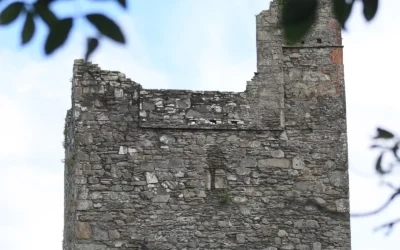
Audley’s Castle
Audley's Castle: The Free Tower House Above Strangford Lough, Where Game of Thrones Arrived In the first season of Game of Thrones, the fields and approaches to Castle Ward became Winterfell — the ancestral seat of the Starks. The fields around Audley's...
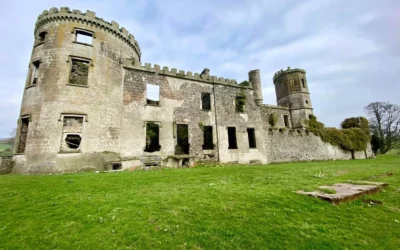
Kilwaughter Castle
Kilwaughter Castle: John Nash's Antrim Ruin, Declared Enemy Property in the Second World War In 1803, John Nash — the architect who designed Regent Street, remodelled Buckingham Palace and built the Royal Pavilion at Brighton — came to County Antrim and...
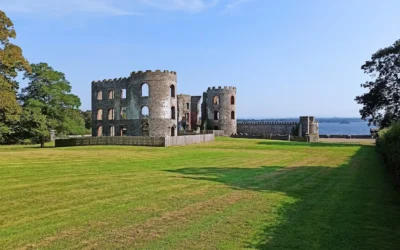
Shane’s Castle
Shane's Castle: The O'Neill Estate on Lough Neagh, Touched by John Nash and Twice Burned In 1809, John Nash — the architect who designed Regent Street, Carlton House Terrace and remodelled Buckingham Palace for George IV — began redesigning a castle on the...
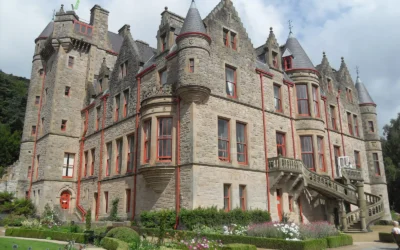
Belfast Castle
Belfast Castle: The Free Victorian Castle Above the City, with Nine Hidden Cats The legend says the castle will be safe — or its residents will have good fortune — as long as a white cat lives within its walls. The castle's response to this piece of local...
Gosford Castle
Gosford Castle: Ulster's Largest Listed Building — and Game of Thrones' Riverrun When Robin Fedden of the National Trust surveyed Gosford Castle in 1952, he described it as "one of the most original buildings of its time" and noted that it had...