
Highclere Castle
Highclere Castle: Where Downton Abbey Comes to Life and Tutankhamun’s Story Begins
Two things made Highclere Castle world-famous, and they could hardly be more different. The first is a television drama: Highclere is the house used as Downton Abbey in the beloved ITV series, and every room that visitors walk through — the saloon, the library, the dining room — is instantly recognisable from the screen.
The second is one of the greatest moments in the history of archaeology: in November 1922, the 5th Earl of Carnarvon, who lived at Highclere, stood in the Valley of the Kings in Egypt beside the archaeologist Howard Carter as Carter broke through a sealed doorway and held up a candle.
Through the flickering light, three thousand years of history became visible at once. Carter had found the tomb of Tutankhamun, intact and undisturbed. The 5th Earl had funded the entire dig. His Egyptian collection is now housed in Highclere’s own cellars.
That these two stories — an Edwardian country house drama and the greatest archaeological discovery of the 20th century — both lead back to the same building in the Hampshire hills is what makes Highclere extraordinary. The castle is a private family home, open to the public on a limited number of days each year, and its rarity only adds to its appeal.
This guide covers everything you need to plan a visit — what to see, when to go, how to get there and where to stay nearby.
Where Is Highclere Castle?
Highclere Castle is located near the village of Highclere in Hampshire, approximately 70 miles west of London and 5 miles south of Newbury. The address for planning purposes is Highclere, Newbury RG20 9RN, but visitors driving should follow the brown tourist signs from the A34 rather than relying solely on sat-nav, as some postcodes lead to the wrong gate.
From London, the castle is reached via the M4 and A34 — allow around one and a half to two hours depending on traffic. By train, services from London Paddington reach Newbury in around an hour; from there a taxi to the castle takes roughly 15 minutes. The North Wessex Downs surround the estate on all sides, making the approach through the Hampshire countryside one of the loveliest drives in the south of England.
A Brief History of Highclere Castle
The Highclere estate has a history reaching back to 749 AD, when it was granted to the Bishops of Winchester. In the late 14th century, Bishop William of Wykeham built a medieval palace and gardens here, and the estate passed through several hands before Sir Robert Sawyer, a prominent lawyer, purchased it in 1679 and rebuilt it as Highclere Place House.
The castle as visitors see it today was created between 1842 and 1849, when Sir Charles Barry — the architect simultaneously designing the Houses of Parliament in London — transformed the house into a grand Jacobethan masterpiece for the 3rd Earl of Carnarvon.
The 5th Earl of Carnarvon gave Highclere its most extraordinary chapter. A passionate Egyptologist, he funded Howard Carter’s systematic excavations in the Valley of the Kings for years, and in November 1922 that investment yielded the greatest archaeological discovery of modern times: the sealed, intact tomb of the boy pharaoh Tutankhamun, with all its treasures untouched for over three thousand years.
The 5th Earl did not live to see the tomb fully excavated; he died in Cairo in April 1923, just months after the discovery. During the First World War, Highclere served as a convalescent hospital for wounded soldiers. In the Second World War, it sheltered children evacuated from London. It has remained the home of the Carnarvon family ever since.
The remarkable thing about Highclere is how completely it has absorbed these two very different kinds of fame — the intimate, domestic world of Downton Abbey on one hand, and the vast, ancient mystery of Tutankhamun’s Egypt on the other — and made both part of a single building’s story.
Architecture & Design
Highclere Castle is Sir Charles Barry’s most accomplished country house — and given that he was simultaneously building the Houses of Parliament, that is saying a great deal. The style is Jacobethan, a Victorian interpretation of the English architecture of the late 16th and early 17th centuries, blending Tudor and Renaissance elements in a way that felt at once historical and romantic.
The exterior is clad in warm, golden Bath stone that glows in the Hampshire sun, and its silhouette — towers, pinnacles and elaborate stonework rising above the parkland — is one of the most photographed in England.
Inside, the castle has over 250 rooms. The grandest spaces open to visitors include the great saloon, with its soaring ceilings and Gothic detailing, the library, the dining room and several bedrooms, all furnished with the period furniture and fine artwork accumulated by the Carnarvon family over generations.
Below, in the cellars, the Egyptian Exhibition houses genuine antiquities collected by the 5th Earl — objects of real archaeological significance displayed in the same building from which their excavation was financed. The 5,000-acre parkland surrounding the castle was designed by Lancelot “Capability” Brown in 1771 and features six 18th-century follies, including Jackdaw’s Castle and the Temple of Diana, set among rare trees and open vistas that stretch to the horizon.
Legends & Lore
Highclere has its share of ghost stories, told as part of the castle’s long character rather than as verified fact. Staff members have reported hearing phantom footsteps echoing through the corridors during evening lock-ups, and tradition speaks of a mysterious lady in black seen near the Gothic staircase and an unexplained figure in the parkland.
As with many houses of this age, the stories have accumulated over centuries and are woven into the atmosphere of the place.
The screen connection, though, needs no embellishment — it is entirely real and entirely remarkable. Downton Abbey was filmed at Highclere between 2010 and 2015, and the house served as Downton itself: the saloon, the library, the dining room and several bedrooms are immediately recognisable to anyone who has watched the series.
Themed guided tours, including “Real Lives and Film Sets,” allow visitors to explore how the rooms appeared both as a Carnarvon family home and as the set of one of the most-watched television dramas in British history.
Visiting the Castle
Highclere is a private family home, and its opening calendar reflects that — it is open on selected dates only, typically including a period around Easter, the May Bank Holidays, and Sunday to Thursday from July to September, amounting to around 60 to 70 days in a year.
This limited availability makes advance booking not just recommended but essential; tickets sell out quickly, particularly for summer dates. Visitors should check the official Highclere Castle website for the current opening calendar well before planning travel.
A visit takes in the state rooms of the castle — the saloon, library, dining room and select bedrooms, all instantly recognisable to Downton Abbey viewers and all displaying the genuine Carnarvon family collection. Below stairs, the Egyptian Exhibition in the cellars is a highlight in its own right: genuine antiquities collected by the 5th Earl, displayed in the house from which the Tutankhamun excavation was funded, telling the story of one of the great archaeological adventures in history.
Outside, the gardens — including the Monk’s Garden, Secret Garden, White Border and Wild Flower Meadow — offer tranquil walks with views across the Capability Brown parkland, and the parkland itself rewards longer exploration for those with time.
Tea rooms and a café in the former stables serve tea, coffee, scones and sandwiches, and there is a gift shop near the castle entrance stocking books and Downton Abbey-themed souvenirs. Visitors may not bring picnics into the gardens. Photography is not permitted inside the castle, which remains a private family home — photography in the grounds and gardens is fine.
Check Tickets & Tour Times for Highclere Castle →
Check the official Highclere Castle website for the current opening calendar and to book tickets — advance booking is essential.
Where to Stay Near Highclere Castle
Highclere Castle is a private residence and does not offer accommodation. The nearest town, Newbury, is about 5 miles away and makes an excellent base, with a good range of hotels and guesthouses, strong transport connections to London and easy access to the North Wessex Downs countryside.
The wider area — the Hampshire and Berkshire border country, with its quiet villages, chalk downland and the Kennet valley — is one of the most peaceful parts of southern England, and staying in the area for a night or two allows time to explore it properly alongside the castle visit.
Find Hotels & Stays Near Newbury →
The Best Time to Visit
Highclere’s opening calendar is the first thing to check — the castle is not open year-round, and visits must be planned around its published dates. Within those dates, spring (the Easter and May openings) is outstanding: the gardens are in bloom, the parkland is at its freshest and the crowds are smaller than in summer.
Summer (July to early September) brings the longest run of open days and the best weather for the gardens and parkland, but also the largest visitor numbers — book as far ahead as possible.
For the most relaxed experience inside, weekday mornings are consistently less crowded than weekend afternoons. The Egyptian Exhibition in the cellars is worth allowing extra time for, so plan to arrive early and work your way down from the state rooms to the cellars without rushing.
How to Get There
By car. Follow the M4 west from London, then the A34 south; brown tourist signs direct you to the main castle entrance. Note that some sat-nav postcodes lead to a secondary gate — follow the brown signs once on the A34. Parking is on-site and typically included with admission.
By train. London Paddington to Newbury takes around an hour; Newbury to Highclere Castle is roughly 15 minutes by taxi. Services from London Waterloo to Andover also serve the area, with the castle around 20 minutes by taxi from Andover station.
On foot. Public footpaths cross the estate, but access may be restricted on public opening days — check before planning a walk-in approach.
Compare Transfers & Local Transport in Hampshire →
Nearby Attractions
Highclere sits in the North Wessex Downs Area of Outstanding Natural Beauty, surrounded by excellent Hampshire and Berkshire attractions.
| Attraction | Why Visit | Distance |
|---|---|---|
| Sandham Memorial Chapel (National Trust) | Stanley Spencer’s extraordinary WWI murals — one of the finest 20th-century artworks in England | ~4 miles |
| Beacon Hill Iron Age Hill Fort | A spectacular hilltop fort with panoramic views over the Downs — the 5th Earl is buried on its summit | ~3 miles |
| Whitchurch Silk Mill | Britain’s last remaining working silk mill on a river, producing fabric since the early 19th century | ~8 miles |
| Watership Down | The chalk hillside that inspired Richard Adams’s beloved novel — one of the most atmospheric walks in Hampshire | ~5 miles |
| Finkley Down Farm | A family farm park with animals and outdoor activities, ideal for younger children | ~6 miles |
A natural day out pairs the castle in the morning with a short walk on Beacon Hill in the afternoon — where the 5th Earl himself is buried, with views that take in the very parkland of Highclere below.
Browse Hampshire Tours & Day Trips →
Family & Accessibility
Families. Highclere is an excellent visit for older children and teenagers, particularly those who know Downton Abbey or have an interest in Egyptian history — the story of Tutankhamun’s tomb tends to captivate young imaginations. The gardens and parkland offer space for younger children to explore. Note that pushchairs must be left at the entrance hall during the castle tour itself, though they are welcome in the gardens.
Accessibility. The castle offers disabled access to most areas, including the Egyptian Exhibition, which is reached via the courtyard. Manual wheelchairs are available — check the official website for current arrangements. Dogs, with the exception of guide dogs, are not permitted in the gardens. The castle is a working private home with some areas on upper floors or with restricted access — consult the official accessibility information for full details before you visit.
Practical Tips
- Book tickets well in advance — Highclere opens on a limited number of days each year and tickets for summer dates sell out quickly. Check the official website as soon as your dates are confirmed.
- Photography is not permitted inside the castle but is welcome in the gardens and grounds.
- Allow time for the Egyptian Exhibition — it is in the cellars and is often rushed; the story of the 5th Earl and Tutankhamun rewards unhurried attention.
- Wear comfortable walking shoes — the parkland and gardens cover a lot of ground and the paths vary in surface.
- Bring a compact travel umbrella or light jacket; the Hampshire Downs weather can change on open days.
- No picnics in the gardens — plan to use the tea rooms in the former stables for refreshments.
- Overseas visitor? The UK uses Type G plugs, so pack a UK travel adapter.
Conclusion
Highclere Castle is two places at once: the most famous stately home on British television and the house from which one of archaeology’s greatest discoveries was funded. To walk through the state rooms that doubled as Downton Abbey and then descend to the Egyptian Exhibition in the cellars — where genuine antiquities from the Valley of the Kings sit in the home of the man who paid for their discovery — is to experience one building carrying two quite different kinds of history, each extraordinary on its own terms.
Highclere opens its gates on only a limited number of days each year, which makes every visit feel like something of a privilege.
Frequently Asked Questions
When is Highclere Castle open to visitors?
Highclere is open on selected dates only — typically around Easter, the May Bank Holidays, and Sunday to Thursday from July to September, totalling around 60 to 70 days a year. Check the official website for the current opening calendar as dates vary each year.
How do I book tickets for Highclere Castle?
Tickets must be booked in advance through the official Highclere Castle website — advance booking is essential, as popular dates sell out quickly. Walk-up entry is not always available.
How much does it cost to visit Highclere Castle?
Admission varies depending on which parts of the castle and grounds you are visiting, with discounted rates for seniors, students and disabled visitors. Check the official website for current prices.
What is the Downton Abbey connection?
Highclere Castle was used as the exterior and interior of Downton Abbey throughout the television series, and many of the state rooms are instantly recognisable from the show. Themed guided tours explore how the rooms appeared both as a family home and as a television set.
What is the Egyptian Exhibition at Highclere Castle?
The Egyptian Exhibition in the castle’s cellars displays genuine antiquities collected by the 5th Earl of Carnarvon, who co-funded Howard Carter’s excavation of Tutankhamun’s tomb in 1922 — one of the greatest archaeological discoveries of the 20th century.
Can I take photos inside Highclere Castle?
Photography is not permitted inside the castle, which remains a private family residence. Photography is welcome in the gardens and grounds.
Is there food at Highclere Castle?
Tea rooms and a café in the former stables serve tea, coffee, scones and sandwiches on open days. Picnics are not permitted in the gardens.
Are dogs allowed at Highclere Castle?
Dogs, with the exception of guide dogs, are not permitted in the gardens.
Is Highclere Castle wheelchair accessible?
The castle offers disabled access to most open areas, including the Egyptian Exhibition via the courtyard. Check the official website for current accessibility arrangements before visiting.
How do I get to Highclere Castle?
By car via the M4 and A34, following the brown tourist signs (sat-nav postcodes can lead to the wrong gate). By train, London Paddington to Newbury takes about an hour, then a 15-minute taxi to the castle.
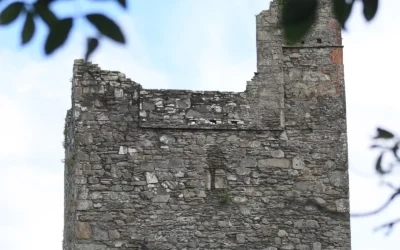
Audley’s Castle
Audley's Castle: The Free Tower House Above Strangford Lough, Where Game of Thrones Arrived In the first season of Game of Thrones, the fields and approaches to Castle Ward became Winterfell — the ancestral seat of the Starks. The fields around Audley's...
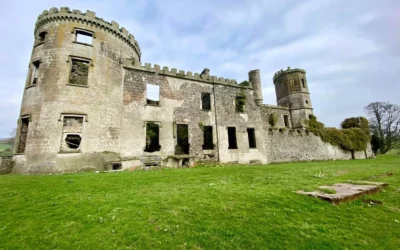
Kilwaughter Castle
Kilwaughter Castle: John Nash's Antrim Ruin, Declared Enemy Property in the Second World War In 1803, John Nash — the architect who designed Regent Street, remodelled Buckingham Palace and built the Royal Pavilion at Brighton — came to County Antrim and...
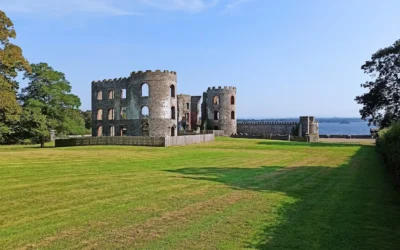
Shane’s Castle
Shane's Castle: The O'Neill Estate on Lough Neagh, Touched by John Nash and Twice Burned In 1809, John Nash — the architect who designed Regent Street, Carlton House Terrace and remodelled Buckingham Palace for George IV — began redesigning a castle on the...
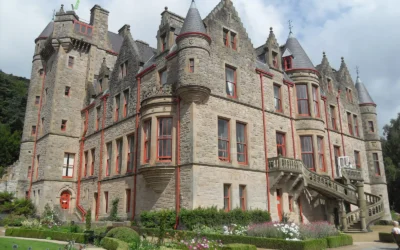
Belfast Castle
Belfast Castle: The Free Victorian Castle Above the City, with Nine Hidden Cats The legend says the castle will be safe — or its residents will have good fortune — as long as a white cat lives within its walls. The castle's response to this piece of local...
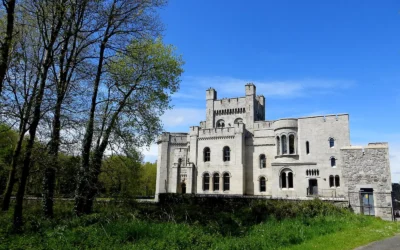
Gosford Castle
Gosford Castle: Ulster's Largest Listed Building — and Game of Thrones' Riverrun When Robin Fedden of the National Trust surveyed Gosford Castle in 1952, he described it as "one of the most original buildings of its time" and noted that it had...