
Windsor Castle
Windsor Castle: A Thousand Years of Kings and Queens Above the Thames
The Round Tower has stood on its great earthen mound above the River Thames for the best part of nine centuries, and from its foot the castle spreads along the ridge in a sweep of grey stone and battlements that has no equal anywhere in the world.
Windsor Castle is the oldest and largest occupied castle on earth — a working royal palace that has been home to the monarch, in an unbroken line, since William the Conqueror raised the first fortress here around 1070. Forty monarchs have lived within these walls. It is not a museum pretending to be a palace; it is a palace that happens, on most days, to open its gates to visitors.
Windsor sits in the Berkshire town of the same name, about 20 miles west of London and barely half an hour away by train, which makes it one of the easiest and most rewarding royal days out in the country. Behind its walls lie the lavish State Apartments and their Royal Collection treasures, St George’s Chapel with its centuries of royal tombs, and the daily theatre of the Changing of the Guard.
This guide covers everything you need to plan a visit.
Where Is Windsor Castle?
Windsor Castle stands on a chalk ridge above the River Thames in the town of Windsor, in Berkshire, in the south of England. It is roughly 20 miles west of central London and dominates the town beneath it, with the historic town of Eton just across the Thames and the vast Windsor Great Park stretching away to the south.
The castle is exceptionally easy to reach: direct trains run from London Paddington and London Waterloo in around 30 to 50 minutes, and the M4 brings drivers from the capital in about 45 minutes. There is no parking at the castle itself, so drivers use the public car parks in Windsor town, a short walk away.
A Brief History of Windsor Castle
Windsor began as a link in a chain of fortifications. Around 1070, William the Conqueror chose this chalk bluff above the Thames as one of a ring of castles guarding the approaches to London. The first castle was a timber motte-and-bailey, its great mound still forming the base of the Round Tower today; a century later Henry II rebuilt much of it in stone.
It was Edward III, born at Windsor in 1312, who gave the castle its lasting royal character — in 1348 he founded the Order of the Garter and made Windsor its spiritual home, a role St George’s Chapel still holds. The Georgian kings created the opulent State Apartments, and in the 19th century Queen Victoria made Windsor her principal residence, the beating heart of court life.
In 1992 a devastating fire gutted parts of the State Apartments; the five-year restoration that followed was a triumph of craftsmanship, and the rooms today look as magnificent as ever. Windsor remains a working royal residence, used for state banquets and ceremonies, and St George’s Chapel continues to host royal weddings, services and burials — it is the resting place of monarchs including Henry VIII, Charles I and Queen Elizabeth II.
The remarkable thing about Windsor is its sheer continuity: for close to a thousand years, through forty reigns, it has never stopped being the monarch’s home. No other castle on earth has been lived in for so long.
Architecture & Design
At the castle’s heart stands the Round Tower, raised on the Conqueror’s original motte and rebuilt in stone by Henry II — the Norman anchor around which everything is arranged. The castle runs along the ridge in two great courtyards, the Upper Ward and the Lower Ward, enclosed by the curtain walls and towers that still trace the medieval defences; the silhouette of battlements and Round Tower is among the most recognisable in Britain.
Within the walls, the residential castle showcases royal taste across the centuries. The State Apartments are hung with Royal Collection treasures, including paintings by Rembrandt and Van Dyck and superb Georgian furniture, and culminate in spaces such as St George’s Hall and the Grand Reception Room.
St George’s Chapel, begun in the 15th century, is one of the finest examples of Perpendicular Gothic in England, its fan-vaulted ceiling rising above the tombs of kings and queens and the stalls of the Order of the Garter — Norman, Gothic and Georgian work all standing side by side.
Legends & Lore
For a castle so steeped in royal history, it is no surprise that Windsor has gathered a rich crop of ghost stories. According to long-standing legend, the castle is said to be haunted by Henry VIII, whose heavy tread is reputedly heard in the cloisters, and by Anne Boleyn, said to appear in the Dean’s Cloister.
Tradition also tells of Herne the Hunter, a spectral huntsman said to roam Windsor Great Park near an ancient oak — a tale told for generations, though always as folklore rather than fact. None of these stories is presented as anything more than legend, but they are an enduring part of Windsor’s character.
The castle’s true fame, though, is not its ghosts but its place at the centre of real royal life. For a thousand years Windsor has been the backdrop to great occasions of state — ceremonies, royal weddings and funerals watched by millions around the world. Few buildings anywhere are so woven into the living story of a nation.
Visiting the Castle
A visit to Windsor is, above all, a chance to walk through the working rooms of a royal palace. The undoubted highlight is the State Apartments, a sequence of richly decorated rooms filled with Royal Collection masterpieces — Rembrandt and Van Dyck on the walls, gilded furniture, and great ceremonial spaces such as St George’s Hall, all restored to their full splendour after the 1992 fire.
Equally unmissable is St George’s Chapel, a Perpendicular Gothic masterpiece and the burial place of Henry VIII, Charles I and Queen Elizabeth II. Many visitors are also enchanted by Queen Mary’s Dolls’ House, an exquisitely detailed miniature mansion from the 1920s, and by the Changing of the Guard, a display of military pageantry held on selected days, usually late morning and weather permitting.
Multimedia guides (including a British Sign Language version) bring the rooms to life, and most people find a visit takes around two and a half to three hours. The castle has a café — the Undercroft Café, set in an atmospheric vaulted medieval cellar — though no food or drink may be brought into the main areas except bottled water, and there are gift shops selling Royal Collection souvenirs.
Photography is allowed in the grounds but not inside the State Apartments or St George’s Chapel, and the castle is closed on certain days each week and during major royal occasions, so check the calendar before you travel.
Check Tickets & Tour Times for Windsor Castle →
For current opening days, times and prices, check the official Royal Collection Trust website.
Where to Stay Near Windsor Castle
As a working royal residence, Windsor Castle does not offer accommodation — but the town of Windsor is a delightful place to stay, and well worth a night or two. Its riverside setting, cobbled lanes and views of the castle walls make it a lovely base, and staying over lets you enjoy the town in the quiet of the early morning and evening, once the day-trippers have gone.
Windsor has a wide range of hotels and guesthouses, from historic coaching inns to comfortable modern options, many within a short walk of the castle gates, and it makes an excellent base for Windsor Great Park, Eton and the Legoland resort.
Find Hotels & Stays in Windsor →
The Best Time to Visit
Spring (April to June) and early autumn (September and October) are the loveliest times to visit — the weather is generally kind, the Long Walk and Windsor Great Park are at their best, and the crowds are thinner than in high summer. Summer is the busiest period, with the longest opening hours and the most frequent Changing of the Guard, but expect queues and book ahead.
Winter is quiet and atmospheric, with the State Apartments often beautifully dressed for Christmas, though daylight is short. A weekday is always quieter, the Changing of the Guard does not take place every day, so check the schedule, and arriving early lets you enjoy the State Apartments before the largest groups.
How to Get There
By train. Direct trains run from London Waterloo to Windsor & Eton Riverside in around 50 minutes, while trains from London Paddington reach Windsor & Eton Central in about 30 minutes (usually changing at Slough). Both stations are a few minutes’ walk from the castle.
By car. Windsor is reached via the M4 (Junction 6) or the M3, around 45 minutes from central London. There is no parking at the castle — use the public car parks in Windsor town.
On foot. From either station it is a pleasant five-minute walk uphill to the castle gates.
Compare Transfers & Local Transport in Windsor →
Nearby Attractions
Windsor and its surroundings offer far more than the castle alone, making it easy to fill a day or a weekend.
| Attraction | Why Visit | Distance |
|---|---|---|
| Windsor Great Park | A vast royal parkland with the famous three-mile Long Walk | Adjacent |
| Eton College | One of the most famous historic schools in the world, just across the Thames | ~0.5 miles |
| The Savill Garden | A celebrated ornamental garden within Windsor Great Park | ~4 miles |
| Legoland Windsor | A hugely popular family theme park | ~3 miles |
| Runnymede | The riverside meadow where Magna Carta was sealed in 1215 | ~5 miles |
A natural day out pairs the castle in the morning with a stroll along the Long Walk; with longer to spare, families can add Legoland and history lovers can make the short trip to Runnymede.
Browse Windsor & Royal London Tours →
Family & Accessibility
Families. Windsor is a wonderful day out for children. The multimedia family trails and online games help younger visitors engage, the Changing of the Guard is pure spectacle, and Queen Mary’s Dolls’ House captivates almost everyone — with Windsor Great Park on the doorstep and Legoland close by, the castle sits at the centre of one of the best family destinations near London.
Accessibility. The castle offers wheelchair access to many areas, concessionary rates for disabled visitors and a free companion ticket. It stands on a steep hill with long routes on foot, so comfortable shoes are essential, and a photo journey guide is provided for areas that are harder to reach; as a historic building, some parts have steps. Only assistance dogs are permitted within the castle. Check the official accessibility information before you visit.
Practical Tips
- Wear comfortable walking shoes — the climb to the castle is steep and the routes involve a lot of walking and standing.
- Photography is not allowed inside the State Apartments or St George’s Chapel, though you are free to take photos in the grounds.
- Book tickets online in advance — it is usually cheaper and guarantees entry to one of Britain’s most popular attractions.
- Check the opening calendar and the Changing of the Guard schedule before you travel — Windsor is closed on certain days each week and during royal occasions, and the Guard does not change every day.
- Bring a portable power bank; a full day of outdoor photos and the multimedia guide will run a phone down quickly.
- Overseas visitor? The UK uses Type G plugs, so pack a UK travel adapter.
Conclusion
Windsor Castle is the rare place where a thousand years of history is not preserved behind glass but lived in, day after day, exactly as it always has been. To walk through the State Apartments, stand beneath the fan vaulting of St George’s Chapel and watch the Changing of the Guard is to step inside a working royal palace that has outlasted every other castle on earth — and with London barely half an hour away, it is one of the most complete and memorable royal days out in Britain.
Frequently Asked Questions
What are the opening hours of Windsor Castle?
Windsor is open on selected days, but is closed on certain days each week and during major royal events, with times that vary by season. Check the official Royal Collection Trust website for the current calendar.
How much does it cost to visit Windsor Castle?
Admission varies by age, with concessionary rates for disabled visitors and a free companion ticket, and online tickets are usually cheaper than buying on the day. Check the official website for current prices.
How long should I spend at Windsor Castle?
Around two and a half to three hours is enough to see the State Apartments, St George’s Chapel and the grounds, plus time for the Changing of the Guard.
Can you stay overnight at Windsor Castle?
No — Windsor is a working royal residence and does not offer accommodation, but the town of Windsor has plenty of hotels and guesthouses within a short walk.
Is Windsor Castle suitable for children?
Yes. Family trails, multimedia guides and the much-loved Queen Mary’s Dolls’ House keep younger visitors engaged, the Changing of the Guard is a highlight, and Windsor Great Park and Legoland are close by.
Is Windsor Castle wheelchair accessible?
The castle offers wheelchair access to many areas, concessionary tickets and a free companion ticket, though it stands on a steep hill with long routes. A photo journey guide is provided for harder-to-reach areas — check the official accessibility information.
How do I get to Windsor Castle?
By train, direct services run from London Waterloo (around 50 minutes) and London Paddington (around 30 minutes, usually changing at Slough). By car it is about 45 minutes from central London via the M4, with no castle parking — use the town car parks.
Is there food at Windsor Castle?
The castle has the Undercroft Café, set in a vaulted medieval cellar. No food or drink may be brought into the main areas except bottled water.
Are dogs allowed at Windsor Castle?
Only assistance dogs are permitted within the castle.
Can I take photos inside Windsor Castle?
Photography is allowed in the grounds, but not inside the State Apartments or St George’s Chapel.
Audley’s Castle
Audley's Castle: The Free Tower House Above Strangford Lough, Where Game of Thrones Arrived In the first season of Game of Thrones, the fields and approaches to Castle Ward became Winterfell — the ancestral seat of the Starks. The fields around Audley's...
Kilwaughter Castle
Kilwaughter Castle: John Nash's Antrim Ruin, Declared Enemy Property in the Second World War In 1803, John Nash — the architect who designed Regent Street, remodelled Buckingham Palace and built the Royal Pavilion at Brighton — came to County Antrim and...
Shane’s Castle
Shane's Castle: The O'Neill Estate on Lough Neagh, Touched by John Nash and Twice Burned In 1809, John Nash — the architect who designed Regent Street, Carlton House Terrace and remodelled Buckingham Palace for George IV — began redesigning a castle on the...
Belfast Castle
Belfast Castle: The Free Victorian Castle Above the City, with Nine Hidden Cats The legend says the castle will be safe — or its residents will have good fortune — as long as a white cat lives within its walls. The castle's response to this piece of local...
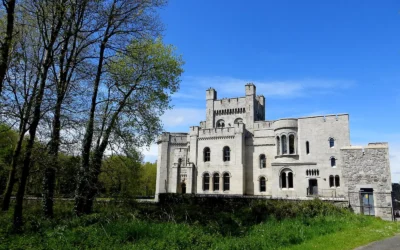
Gosford Castle
Gosford Castle: Ulster's Largest Listed Building — and Game of Thrones' Riverrun When Robin Fedden of the National Trust surveyed Gosford Castle in 1952, he described it as "one of the most original buildings of its time" and noted that it had...