
Noss Head Lighthouse
Noss Head Lighthouse: A North Coast 500 Gem With a World-First Lantern
On the Noss Head peninsula three miles north-east of Wick, a lighthouse stands above Sinclairs Bay that is less famous than it deserves to be. When Alan Stevenson designed the lantern room here in 1849, he introduced diagonal glass panes — a seemingly simple change that reduced the obstruction of the glazing bars on the emerging light and dramatically improved its effectiveness. Lighthouse builders across Britain and beyond adopted the innovation almost immediately. The diagonal pane became a standard feature of lighthouse construction worldwide, and it was first used at Noss Head on the Caithness coast.
The lighthouse is also on the North Coast 500 — Scotland’s celebrated 500-mile coastal road trip, one of the great drives of the world — and the ruined towers of Castle Sinclair Girnigoe, a dramatic clifftop stronghold of the Earls of Caithness, are visible from the lighthouse grounds a short walk away. The keeper’s cottage sleeps six, is thoughtfully designed for accessibility and families, and looks out over Sinclairs Bay and the North Sea towards Orkney. This guide covers everything you need to know about visiting and staying at Noss Head.
Where Is Noss Head Lighthouse?
Noss Head Lighthouse is situated on Noss Head, a peninsula approximately 3 miles (4.8 km) north-east of Wick in Caithness, Scotland. The postcode for sat-nav navigation is KW1 4QT. The lighthouse is reached from Wick via the A99 road, a drive of around ten minutes.
Wick itself is on Scotland’s far north-east coast, on the North Coast 500 route and connected to the south by the A9, Scotland’s main northern arterial road. The nearest major airport is Inverness, around two and a half hours south; Wick Airport also has connections to Edinburgh and Aberdeen.
A Brief History of Noss Head Lighthouse
Noss Head Lighthouse was constructed in 1849 by the builder Robert Arnot under the supervision of Alan Stevenson, Engineer to the Northern Lighthouse Board, and first lit on 18 June 1849. The lighthouse was built in response to the frequent and devastating shipwrecks along the Caithness coast — one of the most exposed and unforgiving stretches of the Scottish shore, where the North Sea meets the Pentland Firth and the weather can change from calm to dangerous within hours. Positioned midway between the lighthouses at Tarbat Ness and Pentland Skerries, Noss Head was designed to guide sailors safely into the sheltered anchorage of Sinclairs Bay during westerly winds.
Alan Stevenson — who also designed the Egyptian-style lighthouse at Ardnamurchan, the westernmost point of the British mainland — brought the same inventive intelligence to Noss Head. The cottages he built here are also in the Egyptian style, a design Stevenson used at several of his Scottish lighthouses, and the lantern room he designed for Noss Head introduced the diagonal glass pane that would go on to be adopted as a standard worldwide.
The lighthouse was automated in 1987 and remains an active navigational aid maintained by the Northern Lighthouse Board. The original lamp is preserved in the Wick Heritage Museum in the town.
The diagonal pane innovation is worth pausing on. In a traditional lighthouse lantern, the glazing bars that hold the glass panes run vertically and horizontally — and every time the rotating beam passes a bar, the light is briefly interrupted. Stevenson’s diagonal panes, set at an angle, meant that the bars cut across the beam at an angle rather than full-face, reducing the obstruction and producing a cleaner, more powerful light. It sounds like a small change. It was adopted by lighthouse builders across the world within a generation.
Architecture & The Light
Noss Head is an 18-metre (59-foot) cylindrical brick tower, painted white, with a single gallery and a lantern room topped with a black cupola. The tower’s 76 steps lead to the lantern room, where the famous diagonal glass panes are set at the angle that Stevenson first tested here. The original keeper’s cottages are built in the Egyptian style that Stevenson also used at Ardnamurchan, with attractive decorative details in the walled compound.
The light flashes white every 20 seconds, powered by a mercury vapour lamp rotated by clockwork machinery, with a range of 18 nautical miles across the North Sea. The lighthouse is fully automated and managed by the Northern Lighthouse Board.
Visiting the Lighthouse
The lighthouse tower is not open to the public. The grounds are freely accessible during daylight hours, with no admission fee, and the views of Sinclairs Bay, the Caithness coastline and — on a clear day — Orkney across the Pentland Firth are excellent from the headland.
The Wick Heritage Museum in the town preserves the original Noss Head lamp and offers a broader exploration of Caithness’s fishing and maritime heritage — a rewarding companion to a visit to the lighthouse itself.
A short walk from the grounds, the ruined towers of Castle Sinclair Girnigoe — a dramatic clifftop stronghold of the Sinclair family, Earls of Caithness — are visible and open to explore. The contrast of the Victorian lighthouse and the medieval castle on the same headland is one of the most distinctive views on the Caithness coast.
Staying at the Lighthouse
The former lighthouse keeper’s cottage at Noss Head has been sensitively converted into a self-catering holiday let, with particular care given to accessibility and family comfort. The cottage sleeps up to six guests across three bedrooms and is managed privately, offering a level of personal attention that a larger institutional holiday let cannot match.
|
Accommodation |
Sleeps |
Features |
|
Noss Head Keeper’s Cottage |
6 |
3 bedrooms, level access (1–2 steps), blackout blinds (2 bedrooms), Wi-Fi, Smart TV, board games, books, family activity packs, dog-friendly; EV charging by arrangement |
The cottage is designed with accessibility and neurodiversity in mind: level access is a priority, blackout blinds are provided in two bedrooms, and the space is thoughtfully equipped for guests with a range of needs. Dog owners will appreciate the dedicated dog amenities. Families with young children will find the high chair, child-friendly crockery and activity packs a genuine convenience.
As pricing varies by season and booking length, check the official booking website for current rates and availability.
Find Lighthouse & Coastal Stays Near Wick →
The Best Time to Visit
Summer (June to August) offers the longest days — on the Caithness coast in midsummer the light barely fades — the warmest weather, and the best conditions for the North Coast 500, wildlife-watching and exploring the coastal walks. The views of Orkney from the headland are clearest in summer. Spring (April to May) brings seabirds back to the coast and is a fine time for exploring the NC500 before the peak season.
Autumn (September to October) can be spectacular on the Caithness coast, with dramatic skies and quieter roads than the summer NC500 peak. Winter (November to March) is genuinely remote and elemental — but for those who are well prepared and seek real solitude, the Caithness coast in winter is unforgettable, and the cottage’s warm, well-equipped interior makes it an excellent retreat.
Caithness weather is notoriously changeable at any time of year. Always check the forecast, bring layers and waterproof gear, and build flexibility into any plans.
How to Get There
By car. From the south, drive the A9 to Wick, then the A99 north to the Noss Head road. The postcode KW1 4QT takes you to the lighthouse. From Inverness, allow around two and a half hours. This is the recommended approach, and for North Coast 500 travellers the lighthouse is a natural stopping point.
By public transport. Wick is served by train from Inverness (around three and a half hours). From Wick town, the lighthouse is 3 miles north-east — reachable by taxi, though public buses are limited to Staxigoe (2 miles away).
By air. Wick Airport has connections to Edinburgh and Aberdeen; Inverness Airport offers more frequent services. Car hire from either airport is recommended.
Compare Transfers & Local Transport in Caithness →
Wildlife & The Coast
The Caithness coast and the Pentland Firth waters around Noss Head are rich in wildlife. Grey seals are regularly hauled out on the rocks around the headland, and the North Sea and Pentland Firth are home to common and bottlenose dolphins and harbour porpoises throughout the year. Orcas (killer whales) — the same pods that visit Orkney — occasionally pass through Caithness waters, particularly in the second half of the year when grey seal pups are present on the beaches.
Seabirds wheel along the cliffs throughout the summer, and the broader Caithness coast supports one of the finest puffin populations in northern Scotland. Golden eagles and buzzards patrol the hinterland behind the lighthouse.
A pair of binoculars for wildlife watching is essential at Noss Head — from the headland, the Pentland Firth, Sinclairs Bay and the Caithness cliffs offer outstanding wildlife-watching throughout the year.
Nearby Attractions
Noss Head sits at the heart of one of the most historically and scenically rich corners of the Scottish Highlands.
|
Attraction |
Why Visit |
Distance |
|
Castle Sinclair Girnigoe |
Dramatic ruined clifftop castle of the Earls of Caithness — visible from the lighthouse |
Short walk |
|
Wick Heritage Museum |
Original Noss Head lamp + the story of Caithness’s great fishing industry |
~3 miles |
|
John o’Groats |
The famous land’s end of mainland Britain — ferry to Orkney |
~20 miles |
|
Duncansby Head |
Scotland’s true north-east tip — sea stacks and seabirds |
~22 miles |
|
Dunrobin Castle |
A magnificent Highland castle overlooking the Dornoch Firth |
~50 miles |
A natural day out: the lighthouse grounds and Castle Sinclair Girnigoe in the morning, Wick Heritage Museum and town in the afternoon, then north to John o’Groats and Duncansby Head.
Browse North Coast 500 & Caithness Tours →
Safety & Accessibility
Safety. The cliffs at Noss Head have no barriers in some areas — keep well back from the edges, keep pets on leads and supervise children carefully. Caithness coastal weather can change rapidly; check the forecast before any clifftop walking.
Accessibility. The cottage is designed with level access in mind (one or two steps at the entrance), making it more accessible than many lighthouse properties. Blackout blinds in two bedrooms and thoughtful neurodiversity-friendly design features throughout. EV charging can be arranged with the property. Visitors with specific accessibility needs should check with the host before booking.
Families. The cottage is well equipped for families, with activity packs, board games and child-friendly crockery provided. The grounds and the walk to Castle Sinclair Girnigoe are excellent for children, with the usual care needed near the cliff edges.
Practical Tips
- Noss Head is on the North Coast 500 — an excellent stop for NC500 travellers. Check the official NC500 website for suggested itineraries that include this area.
- Wear waterproof walking boots for the clifftop paths and the walk to Castle Sinclair Girnigoe.
- Pack a waterproof walking jacket; Caithness weather is notoriously changeable and this exposed headland takes the full force of North Sea weather.
- Bring binoculars for the orcas, dolphins, seals and seabirds — Caithness waters are outstanding.
- Overseas visitor? The UK uses Type G plugs, so a UK travel adapter is essential for charging your devices.
- If you have an EV, contact the host in advance to arrange charging — a genuinely useful feature on a remote Scottish headland.
- Visit the Wick Heritage Museum to see the original Noss Head lamp up close and understand the maritime history that the lighthouse was built to protect.
Conclusion
Noss Head Lighthouse is a place where a small piece of engineering history sits on a headland above one of the world’s great road trips. The diagonal glass panes that Alan Stevenson first used in this lantern room in 1849 went on to light coastlines around the world; the castle ruins on the cliff below pre-date the lighthouse by four centuries; and the North Sea stretching towards Orkney is the same water that the lighthouse was built to make safer. For NC500 travellers seeking a place to pause and stay in the flow of that extraordinary journey, Noss Head is one of the finest stopping points on the Caithness coast.
Frequently Asked Questions
What is the history of Noss Head Lighthouse?
Built in 1849 by Robert Arnot under the supervision of Alan Stevenson, Noss Head was first lit on 18 June 1849. It was designed to guide ships safely into Sinclairs Bay on the treacherous Caithness coast and introduced the diagonal glass pane in its lantern room — a world-first innovation that became a global standard.
Where is Noss Head Lighthouse located?
On Noss Head, 3 miles north-east of Wick in Caithness, Scotland. Postcode KW1 4QT.
Can I visit Noss Head Lighthouse?
The grounds are open during daylight hours, free of charge. The tower is not open to the public. Castle Sinclair Girnigoe is a short walk away.
Can I stay overnight at Noss Head Lighthouse?
Yes. The former keeper’s cottage sleeps up to 6 guests across 3 bedrooms. It is dog-friendly and designed with accessibility and neurodiversity in mind.
What was the world-first design at Noss Head?
Alan Stevenson introduced diagonal glass panes in the lantern room at Noss Head in 1849 — reducing light obstruction and improving beam effectiveness. The innovation was subsequently adopted by lighthouse designers worldwide.
Is Noss Head Lighthouse on the North Coast 500?
Yes — the lighthouse is on the route of the NC500, Scotland’s celebrated 500-mile coastal road trip. It is one of the most historically significant lighthouse stops on the route.
What wildlife can I see near Noss Head Lighthouse?
Grey seals on the rocks, dolphins and porpoises offshore, and orca sightings are reported in Caithness waters, particularly later in the year. Seabirds, puffins and eagles are all present along the coast.
What is Castle Sinclair Girnigoe?
A dramatic ruined clifftop castle, former stronghold of the Sinclair family, Earls of Caithness, a short walk from the lighthouse grounds — one of the most atmospheric ruins on the Caithness coast.
Is the cottage accessible?
Yes — the cottage is designed with level access (one or two steps), blackout blinds in two bedrooms and neurodiversity-friendly features. EV charging can be arranged. Check with the host for specific accessibility details before booking.
How do I book Noss Head Lighthouse cottage?
Through the official booking website; check current pricing and availability directly with the property.
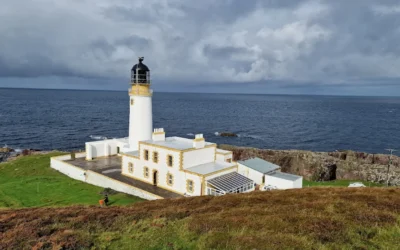
Rua Reidh Lighthouse
Rua Reidh Lighthouse: Wild Wester Ross Beacon Above Loch Ewe's WWII Convoys Three miles beyond the last village on a private track across the moorland of Wester Ross, where the headland of Rubha Rèidh — the Gaelic for flat headland — reaches out into the Minch, a...
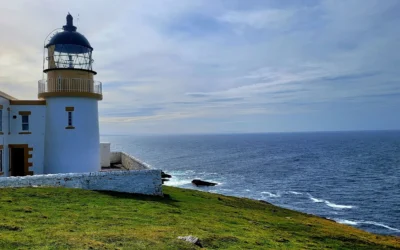
Stoer Lighthouse
Stoer Lighthouse: On Scotland's NC500, Two Miles From the Old Man of Stoer Two miles north of Stoer Lighthouse, the cliff edge drops away and the Old Man of Stoer rises from the sea — a 62-metre sandstone stack, sheer on all sides, standing apart from the headland as...
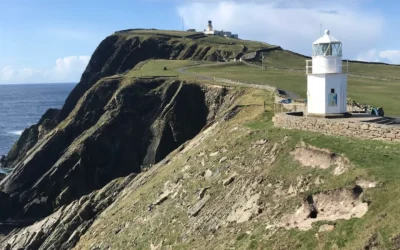
Sumburgh Head Lighthouse
Sumburgh Head Lighthouse: Robert Stevenson's 1821 Beacon on Shetland's Puffin Cliffs At the southernmost tip of Mainland Shetland, where the North Sea and the Atlantic meet in the turbulent tidal race known as the Sumburgh Roost, Robert Stevenson — the founder of the...
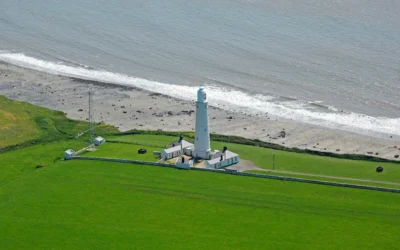
Nash Point Lighthouse
Nash Point Lighthouse: The Last Light in Wales to See Its Keeper Go In 1998, the keeper at Nash Point Lighthouse on the Glamorgan Heritage Coast turned off the oil lamps for the last time, handed the keys to Trinity House and walked away, making Nash Point the last...
Mull of Galloway Lighthouse
Mull of Galloway Lighthouse: Scotland's Southernmost Beacon, With Four Countries in View At the very tip of the Rhinns of Galloway — the long, narrow peninsula that stretches south from Stranraer like a finger pointing towards Ireland — Scotland ends at a set of sheer...