
North Foreland Lighthouse
North Foreland Lighthouse: The Kent Beacon That Has Shone Since 1499
The Goodwin Sands lie seven miles offshore from the chalk cliffs of North Foreland, and they have been doing what they do for centuries: appearing and disappearing with the tides, drawing ships onto them in poor visibility, and holding onto whatever they catch. Mariners call them the Ship Swallower.
The treacherous sandbank, extending for ten miles across the southern North Sea, has claimed hundreds of wrecked vessels over the centuries, and it was the need to warn ships away from it — and from the Margate Sands to the north — that put a fire on the chalk cliffs of the Isle of Thanet in 1499. That fire has been burning in one form or another ever since, making North Foreland the oldest continuously used lighthouse site in England.
The current tower, a sturdy octagonal structure of brick, stone and flint, dates from 1691 and has guided ships past the Goodwin Sands for over three centuries. It marks the junction of the Dover Strait and the Thames Estuary — one of the busiest shipping corridors in the world. It was the very last Trinity House lighthouse in England and Wales to be automated, a ceremony attended by HRH The Duke of Edinburgh in 1998.
Today it remains an active navigational aid, with two former keepers’ cottages in its grounds available as holiday accommodation, and the charming town of Broadstairs — where Charles Dickens wrote David Copperfield — a twenty-minute walk away. This guide covers everything you need to know about visiting and staying at North Foreland.
Where Is North Foreland Lighthouse?
North Foreland Lighthouse stands on the nearly vertical chalk cliffs of the Isle of Thanet, near the town of Broadstairs in Kent, approximately 80 miles south-east of London. It is reached by car via the A255 to Broadstairs, then via a narrow, winding country lane to the lighthouse — drive carefully on the approach road, which is single-track in places.
By train, Broadstairs station is on the mainline from London St Pancras via the high-speed Southeastern service (around 85 minutes). From the station the lighthouse is around a 20-minute walk or a short taxi ride.
A Brief History of North Foreland Lighthouse
The first light at North Foreland was exhibited in 1499 — an open fire on the chalk clifftop, maintained for the benefit of ships navigating the Goodwin Sands and the Margate Sands in the approaches to the Thames. The first proper lighthouse, built in 1636 by Sir John Meldrum, was a two-storey octagonal tower of timber, lath and plaster. It was destroyed by fire in 1683 — an irony not lost on lighthouse historians, since the coal fire in the lantern was also what heated the tower and the keepers.
The current structure was built in 1691, from brick, stone and flint, and has stood on the chalk cliffs ever since. Trinity House purchased the lighthouse in 1832 and managed its successive upgrades: 18 oil lamps from 1793, an eight-wick mineral oil burner in 1894, electrification in 1930.
The lighthouse’s final chapter as a manned station is itself a piece of history. On 26 November 1998, North Foreland became the last Trinity House lighthouse in England and Wales to be automated — the last of all. A ceremony attended by HRH The Duke of Edinburgh marked the occasion. The keeper turned the light to automatic, handed over the keys and departed. A light that had been tended by a human hand every night for nearly three centuries was, from that moment, operated by a machine.
The Goodwin Sands deserve a moment of attention. They are not a fixed reef but a living sandbank — shifting, appearing and disappearing with the tides and the storms, lying anywhere between one and four metres below the surface. In calm conditions a ship might pass directly over them without knowing. In poor visibility, with the tide wrong, they are simply fatal. The list of ships they have taken runs to hundreds: warships, merchant vessels, passenger steamers. The light at North Foreland has been warning ships away from them for 525 years.
Architecture & The Light
North Foreland is a 34-foot octagonal tower — a relatively modest height, but the chalk cliffs on which it stands are nearly perpendicular and give the light considerable elevation above the sea. The octagonal form, unusual among English lighthouses (Cromer is another example), gives it a sturdy, almost domestic character, its white-painted exterior visible against the clifftops from some distance.
The light’s history runs through coal fire, oil lamp, petroleum vapour and, from 1930, electricity. The current system flashes in a group pattern of five flashes every 20 seconds, visible for around 19 nautical miles across the southern North Sea. The lighthouse is fully automated and monitored remotely from Trinity House’s Operations Control Centre in Harwich.
Visiting the Lighthouse
The lighthouse tower is not open to the public. The grounds, however, are accessible from the roadside and from nearby public footpaths, and the exterior of the tower — with the dramatic backdrop of the chalk cliffs and the North Sea — is worth visiting for its own sake.
The primary visitor experience at North Foreland is staying in one of the keepers’ cottages, from which the lighthouse is an immediate and constant presence. The Viking Coastal Trail passes near the lighthouse, and the chalk cliffs, Joss Bay beach (a three-minute walk) and Botany Bay are all within easy reach on foot.
There is no admission fee for the grounds.
Staying at the Lighthouse
Two self-catering cottages within the lighthouse grounds — Lodesman and Khina — are available as holiday accommodation. Both were formerly home to lighthouse keepers and their families, and both have been updated to provide comfortable, well-equipped modern living while retaining their lighthouse character. The cottages share a spacious lawned garden of around one acre, ideal for children to run in, and are set well back from the cliff edges.
| Cottage | Features |
| Lodesman | Family-friendly self-catering, lighthouse views, shared 1-acre garden, close to cliff paths |
| Khina | Family-friendly self-catering, lighthouse views, shared 1-acre garden, close to cliff paths |
Both cottages are child-friendly, and pets are welcome — check current pet policy when booking. Booking is managed through Rural Retreats; as availability and pricing vary by season, check current rates and dates directly on their website.
Find Lighthouse & Coastal Stays Near Broadstairs →
The Best Time to Visit
Spring (April to June) is an excellent time on the Isle of Thanet — the chalk cliffs are carpeted with wildflowers, the walking is superb and Broadstairs is lively without the full summer crowds. Summer (July to August) brings the warmest weather, the best beach conditions at Joss Bay and Botany Bay, and Broadstairs at its most animated — the town’s Dickens Festival runs in June and the Folk Music Week in August.
Autumn (September to November) brings quieter trails, excellent coastal light and migrating birds along the cliffs. Winter (December to February) is bracing on this exposed North Sea headland, with the dramatic cliffs and empty beaches offering a different kind of beauty.
For the calmest cottage experience, weekdays outside the school holidays are best. The Isle of Thanet has a genuinely mild maritime climate and is accessible year-round.
How to Get There
By car. Follow the A255 to Broadstairs, then narrow country lanes to the lighthouse. Drive carefully on the single-track approach road.
By train. Southeastern high-speed services from London St Pancras reach Broadstairs in around 85 minutes. Local services from Ramsgate and Margate also serve Broadstairs station. From the station, the lighthouse is a 20-minute walk or a short taxi ride.
By bus. Local bus services connect Broadstairs with Margate and Ramsgate.
On foot. The Viking Coastal Trail runs along the chalk cliffs near the lighthouse, connecting Broadstairs with the wider Isle of Thanet coastal path network.
Compare Transfers & Local Transport in Kent →
Wildlife & The Coast
The chalk cliffs and North Sea around North Foreland support a good range of wildlife. Seabirds are visible throughout the year, and the North Sea here is home to seals and, on calmer days, occasionally dolphins and porpoises. The chalk cliff walks between North Foreland and the bays of Joss and Botany are excellent for birdwatching and for spotting marine life from the clifftop.
A pair of binoculars for wildlife watching is well worth bringing — the clifftop position above the Goodwin Sands approaches is a fine spot for scanning the North Sea, and on a clear day the distant Goodwin lightvessel marks the outer edge of the sands.
Nearby Attractions
North Foreland’s position on the Isle of Thanet puts it within easy reach of some excellent Kent attractions.
| Attraction | Why Visit | Distance |
| Joss Bay | Sandy beach at the foot of the chalk cliffs, three minutes’ walk | ~3-min walk |
| Botany Bay | Another fine chalk-cliff bay with sandy beach | ~15-min walk |
| Broadstairs | Charming seaside town — Dickens’s David Copperfield, sandy beach, independent shops | ~20-min walk |
| Bleak House, Broadstairs | The clifftop house where Dickens wrote David Copperfield, now a museum | ~20-min walk |
| Margate | Turner Contemporary gallery, sandy beach, Dreamland amusement park | ~10-min drive |
A natural day out: the Viking Coastal Trail clifftop walk in the morning, Broadstairs beach and town for lunch, then Bleak House and the Dickens connections in the afternoon.
Browse Kent Coast Tours & Experiences →
Safety & Accessibility
Safety. The chalk cliffs at North Foreland are nearly vertical — keep well back from the edges, follow the marked paths and supervise children carefully. The approach road to the lighthouse is narrow and winding; drive slowly and with care.
Accessibility. The cottages are accessible by road with parking at the lighthouse. The surrounding cliff paths are uneven in places and may be challenging for those with mobility difficulties. The lighthouse tower is not accessible to visitors.
Families. Both cottages are child-friendly, and the shared one-acre garden gives children excellent space to play. Joss Bay beach three minutes away and the wider Broadstairs beaches are superb for families.
Practical Tips
- Book the cottage well in advance — North Foreland is one of the most historically significant lighthouse holiday lets in Kent, and popular with families throughout the school holiday season.
- Walk to Joss Bay — it is three minutes from the lighthouse grounds and one of the finest small beaches on the Isle of Thanet.
- Wear waterproof walking boots for the Viking Coastal Trail and the chalk cliff paths, which can be wet and uneven.
- Pack a waterproof walking jacket; this North Sea clifftop is exposed and the weather changes fast.
- Bring binoculars for seabirds, seals and the distant Goodwin Sands lightvessel.
- Overseas visitor? The UK uses Type G plugs, so a UK travel adapter is essential for charging your devices.
- Don’t miss Bleak House in Broadstairs — the clifftop house where Dickens wrote David Copperfield is open as a museum and well worth the walk.
Conclusion
North Foreland Lighthouse carries more history in its octagonal walls than almost any other lighthouse in England. A light has shone from these chalk cliffs since 1499, warning ships away from the Goodwin Sands for over five centuries — and the last keeper only left in 1998. To stay in Lodesman or Khina, with the lighthouse a few steps from your garden and the North Sea beyond the clifftops, is to occupy a small corner of England’s maritime history that has been keeping watch longer than almost anywhere else in the country. Dickens could have seen this light from Bleak House as he wrote. Ships crossing the southern North Sea still see it today.
Frequently Asked Questions
What is the history of North Foreland Lighthouse?
A light was first shown at North Foreland in 1499. The current octagonal tower was built in 1691, replacing a 1636 lighthouse that was destroyed by fire in 1683. Trinity House purchased it in 1832. It was the last Trinity House lighthouse in England and Wales to be automated, in 1998.
Where is North Foreland Lighthouse located?
On the chalk cliffs of the Isle of Thanet, near Broadstairs in Kent, approximately 80 miles south-east of London.
Can I visit North Foreland Lighthouse?
The lighthouse tower is not open to the public. The grounds can be viewed from the roadside and nearby paths. The main visitor experience is staying in the Lodesman or Khina cottages.
Can I stay overnight at North Foreland Lighthouse?
Yes. Two former keepers’ cottages, Lodesman and Khina, are available as self-catering holiday accommodation in the lighthouse grounds. Both are family-friendly and bookable through Rural Retreats.
What are the Goodwin Sands?
The Goodwin Sands are a notorious ten-mile sandbank seven miles offshore from North Foreland, known historically as the Ship Swallower. They are partially submerged at high tide and have claimed hundreds of ships over the centuries — the lighthouse has been warning vessels away from them since 1499.
What was the significance of the 1998 automation?
North Foreland was the last Trinity House lighthouse in England and Wales to be automated, making 26 November 1998 a milestone in the history of British maritime navigation. A ceremony attended by HRH The Duke of Edinburgh marked the occasion.
Is North Foreland Lighthouse suitable for families?
Yes — both cottages are child-friendly, with a shared one-acre garden, and the nearby beaches at Joss Bay and Botany Bay are excellent for families.
What wildlife can I see near North Foreland Lighthouse?
Seabirds along the chalk cliffs throughout the year, and seals and occasionally dolphins and porpoises in the North Sea. Binoculars are well worth bringing.
What is the connection with Charles Dickens?
Broadstairs, a 20-minute walk from the lighthouse, was a favourite retreat for Charles Dickens, who wrote David Copperfield at Bleak House on the clifftop above the town. The town celebrates this connection annually with the Dickens Festival.
How do I book a stay at North Foreland Lighthouse?
Through Rural Retreats — check their website for current availability and seasonal pricing.
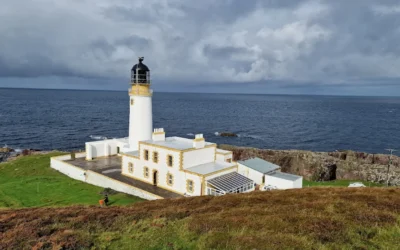
Rua Reidh Lighthouse
Rua Reidh Lighthouse: Wild Wester Ross Beacon Above Loch Ewe's WWII Convoys Three miles beyond the last village on a private track across the moorland of Wester Ross, where the headland of Rubha Rèidh — the Gaelic for flat headland — reaches out into the Minch, a...
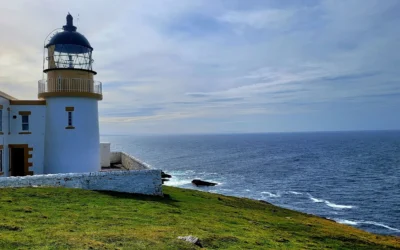
Stoer Lighthouse
Stoer Lighthouse: On Scotland's NC500, Two Miles From the Old Man of Stoer Two miles north of Stoer Lighthouse, the cliff edge drops away and the Old Man of Stoer rises from the sea — a 62-metre sandstone stack, sheer on all sides, standing apart from the headland as...
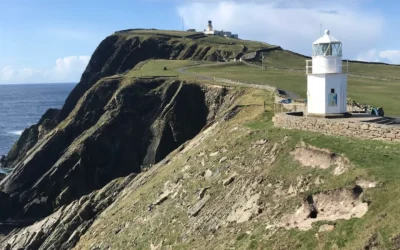
Sumburgh Head Lighthouse
Sumburgh Head Lighthouse: Robert Stevenson's 1821 Beacon on Shetland's Puffin Cliffs At the southernmost tip of Mainland Shetland, where the North Sea and the Atlantic meet in the turbulent tidal race known as the Sumburgh Roost, Robert Stevenson — the founder of the...
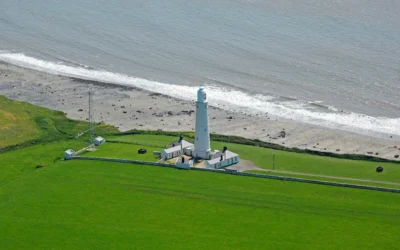
Nash Point Lighthouse
Nash Point Lighthouse: The Last Light in Wales to See Its Keeper Go In 1998, the keeper at Nash Point Lighthouse on the Glamorgan Heritage Coast turned off the oil lamps for the last time, handed the keys to Trinity House and walked away, making Nash Point the last...
Noss Head Lighthouse
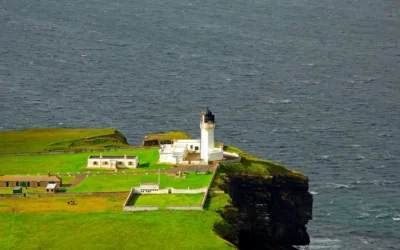
Noss Head Lighthouse: A North Coast 500 Gem With a World-First Lantern On the Noss Head peninsula three miles north-east of Wick, a lighthouse stands above Sinclairs Bay that is less famous than it deserves to be. When Alan Stevenson designed the lantern room here in...