
Nash Point Lighthouse
Nash Point Lighthouse: The Last Light in Wales to See Its Keeper Go
In 1998, the keeper at Nash Point Lighthouse on the Glamorgan Heritage Coast turned off the oil lamps for the last time, handed the keys to Trinity House and walked away, making Nash Point the last manned lighthouse in Wales to be automated. The light continued burning — it burns still — but the keeper’s cottages fell silent. Today, two of those cottages, Ariel and Stella, are restored holiday homes, and the twin towers of Nash Point still stand watch over the Bristol Channel, flashing their warning across the Nash Sands exactly as they have since 1832.
The twin-tower design is itself unusual and worth understanding. Nash Point has not one lighthouse but two — the High Lighthouse standing 121 feet tall and the Low Lighthouse at 82 feet — positioned 990 feet apart on the headland to create a precise leading line for ships navigating the treacherous Nash Sands. When mariners at sea saw the two towers in alignment, they knew they were on the safe course. It is a beautiful, practical solution to a deadly problem, and it gives Nash Point a profile unlike almost any other lighthouse in Wales. This guide covers everything you need to know about visiting and staying at Nash Point.
Where Is Nash Point Lighthouse?
Nash Point Lighthouse stands on the Glamorgan Heritage Coast in the Vale of Glamorgan, South Wales, on a headland above the Bristol Channel. It lies within easy reach of the towns of Cowbridge (8 miles) and Barry (around 10 miles), and is situated along the 28-mile coastal path that stretches from Penarth to Porthcawl.
The setting is spectacular coastal Wales: dramatic limestone cliffs, the wide estuary of the Bristol Channel, and the Glamorgan Heritage Coast’s distinctive geology and wildflowers. The headland is accessible by road, with parking near the lighthouse complex.
A Brief History of Nash Point Lighthouse
Nash Point’s story begins with a disaster. In 1830 the passenger steamer Frolic was wrecked off this coast with significant loss of life, her crew and passengers unable to navigate safely past the Nash Sands — a notorious shoal of sand and rock lurking beneath the Bristol Channel. The wreck prompted immediate action, and in 1832 Trinity House commissioned the engineer Joseph Nelson, their Engineer in Chief, to design and build a lighthouse at Nash Point.
Nelson’s solution was the distinctive twin-tower arrangement: the High Lighthouse at 121 feet and the Low Lighthouse at 82 feet, set 990 feet apart on the headland. The two towers, seen in line from the sea, created a perfect leading mark to guide mariners clear of the Nash Sands. By 1900 the original keeper’s dwellings had been extended and two additional cottages built, housing three keepers’ families for Nash Point and a fourth family for an offshore light keeper.
The fog signal was added in 1906, and the station remained a working manned lighthouse for the better part of two centuries — until 1998, when Nash Point became the last lighthouse in Wales to be automated. The keepers’ cottages, empty for the first time in nearly 170 years, were subsequently restored and opened as holiday accommodation.
The remarkable thing about Nash Point is what the twin towers achieve together. A single lighthouse tells you where you are — but two towers in alignment tell you exactly which way to go. When a mariner in the Bristol Channel saw the High and Low lights of Nash Point in line, they were on the one safe course clear of the Nash Sands. The engineering is simple, the geometry is elegant, and it saved a great many lives over the 166 years it was manned.
Architecture & The Light
The twin towers of Nash Point are the defining feature of this lighthouse complex. The High Lighthouse rises 121 feet (approximately 37 metres), the Low Lighthouse to 82 feet (approximately 25 metres), and the two stand 990 feet apart on the headland — creating the leading line that has guided Bristol Channel shipping since 1832. Both are solidly built in the functional Victorian style of Trinity House constructions, with the white-painted towers standing out clearly against the cliff and sky.
The fog signal, added in 1906, is one of the most interesting features of Nash Point today — uniquely, it is sounded twice a month for the benefit of visitors, one of the very few lighthouse fog signals in the UK still activated for public experience rather than purely for navigation. When it sounds, the deep horn echoes across the Bristol Channel, exactly as it has for over a century. The lighthouse remains fully operational and automated, monitored from Trinity House’s Operations Control Centre.
Visiting the Lighthouse
Nash Point is not open to the public for tower climbing, but the site has a visitor centre and the lighthouse complex is licensed for wedding and civil partnership ceremonies. The visitor centre provides information about the lighthouse’s history and the Bristol Channel; the twice-monthly fog signal demonstrations are a genuinely memorable experience and well worth timing a visit around.
The headland and the Glamorgan Heritage Coast path are freely accessible to all at all times, and the dramatic twin-tower profile of Nash Point makes it one of the most photogenic lighthouse sites in Wales.
There is no admission fee for the visitor centre or grounds; only the cottage stays carry a charge.
Staying at the Lighthouse
Two former lighthouse keepers’ cottages — Ariel and Stella — are available as self-catering holiday accommodation within the Nash Point lighthouse complex. Both have been carefully restored to blend the original character of their 19th-century heritage with modern comforts, and both sit close to the twin towers with views over the Bristol Channel and the Glamorgan Heritage Coast.
|
Cottage |
Sleeps |
Features |
|
Ariel |
Up to 5 |
Restored keeper’s cottage, coastal views, self-catering; confirm details on booking |
|
Stella |
Up to 5 |
3 bedrooms (single, twin, double), garden, TV, washer/dryer, parking; dogs welcome; welcome hamper of local produce |
Stella is dog-friendly, making it an excellent choice for those travelling with pets. Both cottages are non-smoking. As pricing varies by season and a minimum stay applies, check current availability and rates through the booking platform.
Find Lighthouse & Coastal Stays Near the Glamorgan Coast →
The Best Time to Visit
Spring (March to May) is a wonderful time on the Glamorgan Heritage Coast — the cliff wildflowers, including nationally rare species, are at their finest, and the Bristol Channel’s spring skies produce exceptional light for photography. Summer (June to September) brings the warmest weather, Blue Flag beach conditions on nearby shores and the best chance of spotting porpoises offshore — it is also the most popular time and the cottages book up earliest.
Autumn (September to November) offers quieter trails, dramatic Bristol Channel skies and excellent wildlife-watching as migrating birds pass along the coast. Winter (December to February) is bracing and atmospheric on this exposed headland, with the Bristol Channel at its most elemental, though some facilities may be reduced.
For a particularly special experience, time your stay around the twice-monthly fog signal demonstration — check the Nash Point website for demonstration dates. Weekday visits outside school holidays are calmest.
How to Get There
By car. The most practical option. Nash Point is in the Vale of Glamorgan, South Wales, reached via the B4265 from the A48. Follow the signs for Nash Point Lighthouse on the Glamorgan Heritage Coast. Parking is available near the lighthouse complex.
By public transport. Llantwit Major, the nearest village, is reachable by train from Cardiff. From there, Nash Point is approximately two miles, reachable by foot or taxi. Public transport directly to the headland is limited.
On foot. The 28-mile Glamorgan Heritage Coast path runs along the clifftops past Nash Point, making the lighthouse a rewarding destination for walkers exploring this stretch of the Welsh coast.
Compare Transfers & Local Transport in South Wales →
Wildlife & The Coast
The Glamorgan Heritage Coast around Nash Point is a Site of Special Scientific Interest, known for its rare limestone cliff flora and the wildlife of the Bristol Channel. Porpoises are regularly spotted from the headland near the Nash Sands buoy, and the cliffs support fulmars and other nesting seabirds through the spring and summer season. The headland’s limestone grassland is home to nationally rare plants including the tuberous thistle, and the wildflower displays on the cliffs in late spring are exceptional.
A pair of binoculars for wildlife watching is well worth bringing — the headland is a fine spot for scanning the Bristol Channel for porpoises and watching the cliff birds above the Heritage Coast path. The 28-mile coast path offers walking in both directions with rich wildlife throughout.
Nearby Attractions
Nash Point sits in the heart of the Vale of Glamorgan, with a range of excellent attractions nearby.
|
Attraction |
Why Visit |
Distance |
|
Glamorgan Heritage Coast Path |
28 miles of dramatic clifftop walking from Penarth to Porthcawl |
On-site |
|
Cowbridge |
A charming Vale of Glamorgan town with independent shops and excellent dining |
~8 miles |
|
St Donats Arts Centre |
A castle arts centre hosting film, theatre, music and exhibitions |
~4 miles |
|
Museum of Welsh Life, St Fagans |
One of Europe’s finest open-air museums — essential Welsh heritage |
~20-min drive |
|
Ogmore-by-Sea |
A Blue Flag beach ideal for coastal walks and windsurfing |
~4 miles |
A natural day out: walk the Heritage Coast path in the morning, visit Nash Point, then head to Cowbridge for the afternoon.
Browse South Wales Coast Tours & Experiences →
Safety & Accessibility
Safety. The cliffs of the Glamorgan Heritage Coast around Nash Point are dramatic and the drops are sheer — stay well back from the edges, follow the marked paths and supervise children at all times. This is an exposed Bristol Channel headland where the weather changes quickly; check the forecast and dress for wind and rain.
Accessibility. Parking is available at the lighthouse complex, and the cottages are accessible by road. The clifftop coast path is uneven in places and requires appropriate footwear. The lighthouse towers are not open for climbing. Visitors with specific access needs should check with the booking agent before reserving.
Families. The cottages are welcoming for families, and the Heritage Coast path is excellent for older children. The clifftops require supervision of younger children at all times.
Practical Tips
- Book your cottage stay well in advance — there are only two, in a unique and sought-after location, particularly busy in the Welsh school holidays and summer.
- Check whether the fog signal demonstration falls during your stay — the Nash Point website lists demonstration dates, and it is one of the most atmospheric lighthouse experiences in Wales.
- Wear waterproof walking boots — the Heritage Coast path and the clifftops are uneven and often wet.
- Pack a waterproof walking jacket; this Bristol Channel headland is fully exposed and the weather, especially sea mist, arrives quickly.
- Bring binoculars for the porpoises and cliff birds — the Bristol Channel here is excellent for marine wildlife.
- Overseas visitor? The UK uses Type G plugs, so a UK travel adapter is essential for charging your devices.
- Travelling with a dog? Stella Cottage is dog-friendly — confirm current pet policies when booking.
Conclusion
Nash Point carries a weight of Welsh maritime history that few lighthouses can match — twin towers that have guided Bristol Channel shipping since 1832, a fog signal that still sounds, and the distinction of being the last manned lighthouse in Wales when its final keeper left in 1998. To stay in Ariel or Stella is to occupy a piece of that history on a headland where the Bristol Channel stretches to the horizon and the Heritage Coast path winds away in both directions. Wales’s last keepers chose to live here for a reason, and one night in their cottages makes that reason obvious.
Frequently Asked Questions
What is the history of Nash Point Lighthouse?
Nash Point was built in 1832 following the wreck of the Frolic in 1830. Designed by Trinity House engineer Joseph Nelson, it features a rare twin-tower design — the High Lighthouse (121 feet) and Low Lighthouse (82 feet) — to create a leading line past the Nash Sands. It was the last lighthouse in Wales to be automated, in 1998.
Where is Nash Point Lighthouse located?
On the Glamorgan Heritage Coast in the Vale of Glamorgan, South Wales, on a headland above the Bristol Channel, approximately 8 miles from Cowbridge.
Can I visit Nash Point Lighthouse?
The lighthouse towers are not open for public climbing, but the site has a visitor centre and the fog signal is demonstrated twice a month for visitors. The surrounding Heritage Coast path and headland are freely accessible.
Can I stay overnight at Nash Point Lighthouse?
Yes. Two former keepers’ cottages, Ariel and Stella (each sleeping up to 5 guests), are available as self-catering holiday accommodation. Booking in advance is recommended.
What is special about the twin towers at Nash Point?
Nash Point has two towers — the High Lighthouse and the Low Lighthouse — positioned 990 feet apart to create a leading line for ships. When mariners saw the two towers in alignment, they knew they were on the safe course past the Nash Sands. It is a rare and elegant piece of navigational engineering.
What is the fog signal demonstration at Nash Point?
The fog signal at Nash Point is sounded twice a month for visitors — one of the very few lighthouse fog signals in the UK still activated for public experience. Check the Nash Point website for demonstration dates.
Are the cottages pet-friendly?
Stella Cottage welcomes dogs. Check current pet policy for Ariel when booking.
What wildlife can I see near Nash Point Lighthouse?
Porpoises are spotted regularly near the Nash Sands buoy, fulmars and other seabirds nest on the cliffs, and the limestone grassland hosts nationally rare wildflowers including the tuberous thistle.
What makes Nash Point Lighthouse unique?
Its twin-tower design creating a navigational leading line, its status as the last manned lighthouse in Wales, and the rare twice-monthly fog signal demonstration all set it apart from any other lighthouse in Wales.
What are the nearest attractions to Nash Point?
The 28-mile Glamorgan Heritage Coast path, St Donats Arts Centre, the Museum of Welsh Life at St Fagans, Cowbridge and the Blue Flag beaches of Ogmore-by-Sea are all within easy reach.
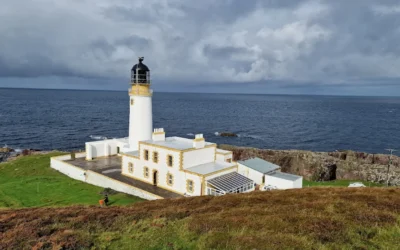
Rua Reidh Lighthouse
Rua Reidh Lighthouse: Wild Wester Ross Beacon Above Loch Ewe's WWII Convoys Three miles beyond the last village on a private track across the moorland of Wester Ross, where the headland of Rubha Rèidh — the Gaelic for flat headland — reaches out into the Minch, a...
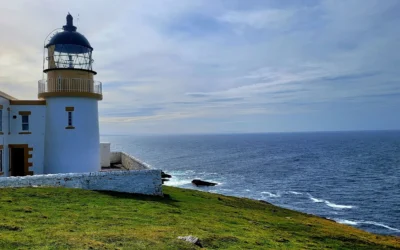
Stoer Lighthouse
Stoer Lighthouse: On Scotland's NC500, Two Miles From the Old Man of Stoer Two miles north of Stoer Lighthouse, the cliff edge drops away and the Old Man of Stoer rises from the sea — a 62-metre sandstone stack, sheer on all sides, standing apart from the headland as...
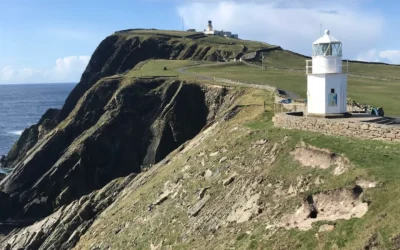
Sumburgh Head Lighthouse
Sumburgh Head Lighthouse: Robert Stevenson's 1821 Beacon on Shetland's Puffin Cliffs At the southernmost tip of Mainland Shetland, where the North Sea and the Atlantic meet in the turbulent tidal race known as the Sumburgh Roost, Robert Stevenson — the founder of the...
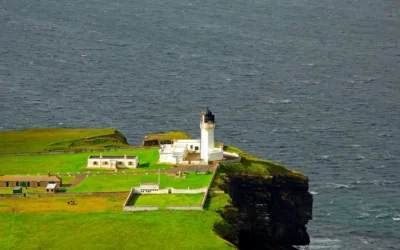
Noss Head Lighthouse
Noss Head Lighthouse: A North Coast 500 Gem With a World-First Lantern On the Noss Head peninsula three miles north-east of Wick, a lighthouse stands above Sinclairs Bay that is less famous than it deserves to be. When Alan Stevenson designed the lantern room here in...
Mull of Galloway Lighthouse
Mull of Galloway Lighthouse: Scotland's Southernmost Beacon, With Four Countries in View At the very tip of the Rhinns of Galloway — the long, narrow peninsula that stretches south from Stranraer like a finger pointing towards Ireland — Scotland ends at a set of sheer...