
Ardnamurchan Lighthouse
Ardnamurchan Lighthouse: Egypt on the Edge of the British Mainland
At the very tip of the Ardnamurchan Peninsula — the westernmost point of the British mainland, further west than any other part of England, Scotland or Wales — a lighthouse built from pink granite and decorated in the Egyptian style has watched over the Sea of the Hebrides since 1849. Beyond its beam, on a clear day, the islands rise out of the Atlantic: Mull to the south, Eigg and Rum and Muck across the water, Skye on the northern horizon. No lighthouse in Britain occupies a more remote or more dramatically beautiful position.
The Egyptian design is the first thing that surprises visitors. The tower is 36 metres of pink Mull granite, tapering in the Egyptian fashion, with stylised figurines decorating the lamp base and the same architectural motifs running through the keepers’ cottages and outbuildings. Ardnamurchan is the only Egyptian-style lighthouse in the United Kingdom — a deliberate choice by its designer, Alan Stevenson, of the celebrated Stevenson lighthouse-building dynasty, who seems to have decided that the westernmost lighthouse in Britain deserved a design as singular as its position. This guide covers everything you need to know about visiting and staying at Ardnamurchan.
Where Is Ardnamurchan Lighthouse?
Ardnamurchan Lighthouse stands at Ardnamurchan Point on the Ardnamurchan Peninsula in Lochaber, Highland Scotland. The postal address is Ardnamurchan Lighthouse Complex, Kilchoan, Acharacle, PH36 4LN. The lighthouse is approximately 10 kilometres west of Kilchoan and around 58 miles from Fort William — a journey of well over two hours by car, much of it on single-track roads with passing places.
Access is by car: via the Corran Ferry from near Fort William across Loch Linnhe, then along the peninsula road; or via the Tobermory–Kilchoan Ferry from the Isle of Mull. The final approach involves a steep, winding single-track road with traffic signals on the narrow causeway to the lighthouse. There is no public transport directly to the site.
A Brief History of Ardnamurchan Lighthouse
The lighthouse was commissioned to improve safety on Scotland’s perilous west coast, where the waters around the Ardnamurchan headland and the approaches to the Sea of the Hebrides had claimed countless vessels over the centuries. Trinity House’s Scottish counterpart, the Northern Lighthouse Board, purchased 20 acres of land at Ardnamurchan Point for £20 in 1845, and work began.
The project was not without drama. An outbreak of scurvy among the construction workers — a disease associated with long sea voyages, now appearing on a remote Scottish headland — interrupted progress. Despite this and the extreme remoteness of the site, Alan Stevenson’s design was completed in 1849 and the oil light first exhibited on 5 October of that year.
Alan Stevenson was a member of the most remarkable family in the history of British lighthouse engineering. The Stevensons designed the majority of Scotland’s lighthouses across three generations; Alan was the engineer behind some of the most ambitious and distinctive. He was also the uncle of Robert Louis Stevenson, who grew up with lighthouse engineering as the family profession and whose childhood journeys to inspect lighthouses with his father shaped the imagination that would eventually write Treasure Island.
The scurvy detail is the one that brings the construction home. In 1845, on a remote Highland peninsula, working with materials being shipped from Mull and further afield, the labourers building Ardnamurchan Lighthouse suffered an outbreak of a disease caused by inadequate access to fresh food. It is a reminder of how genuinely isolated this place was — and remains. The lighthouse they built has stood for nearly 180 years.
Architecture & The Light
Ardnamurchan is 36 metres (118 feet) tall, built from pink granite quarried on the Isle of Mull and transported to the peninsula by sea. The Egyptian motif — the tapering form, the stylised figurines at the lamp base, the decorative detail on the cottages and outbuildings — makes it unlike any other lighthouse in Britain. Whether you find the Egyptian style unexpected, eccentric or simply magnificent, it is impossible to call Ardnamurchan ordinary.
The light has a group flashing characteristic, producing two flashes every 20 seconds, with an elevation of 55 metres above sea level and a range of 18 nautical miles. LED technology was installed in 2019. The lighthouse is fully operational, managed remotely by the Northern Lighthouse Board from Edinburgh. The original fog horn is preserved in the workshop and forms part of the visitor experience.
Visiting the Lighthouse
Guided tours run every half hour from 11:00 AM to 4:00 PM, typically from April to October. The tower climb involves 152 steps and two ladders at the top — making it more physically demanding than most lighthouse climbs in Britain. The reward is a 360-degree panorama of West Ardnamurchan, Mull, Skye and the Small Isles, with the Atlantic stretching away to the west.
The “Kingdom of Light” exhibition centre, housed in the former keepers’ cottages, covers the lighthouse’s history, the region’s geology, natural history and cultural heritage, and includes exhibits on a 1986 royal visit. The restored engine room and workshop, with the original fog horn, are a highlight for anyone interested in Victorian engineering.
The Stables Coffee Shop serves light snacks, cakes and drinks. A small gift shop sells books, crafts and souvenirs. Advance booking for tower tours is recommended, particularly at busy periods.
|
Ticket |
Price (approx.) |
|
Adult |
~£7.50 |
|
Child (under 16) / Senior / Concession |
~£5.50 |
|
Family (4) |
~£20.00 |
As opening hours and admission prices are reviewed seasonally, check the official Ardnamurchan Lighthouse website before visiting.
Check Tickets & Tour Times for Ardnamurchan Lighthouse →
Staying at the Lighthouse
The Keeper’s Cottage at Ardnamurchan Lighthouse offers a genuinely remote and deeply special stay — right beside the westernmost lighthouse on the British mainland, with the Sea of the Hebrides and the Atlantic beyond. The cottage accommodates up to four guests in two bedrooms and has been updated with modern comforts while retaining its lighthouse character.
|
Accommodation |
Sleeps |
Features |
|
Keeper’s Cottage |
4 |
2 bedrooms (king + bunk beds), kitchen, Wi-Fi, panoramic sea views, proximity to café and gift shop |
A practical note: the water supply is from a private source and may appear brown due to peat — it is safe for consumption, but visitors may prefer to bring some drinking water. Bunk bed linen can be hired locally for a small additional charge. Book through the official lighthouse booking channel; as prices change seasonally, check current rates at the time of booking.
Find Lighthouse & Coastal Stays Near Ardnamurchan →
The Best Time to Visit
Late spring and summer (May to August) offer the best combination of open lighthouse tours, long Highland daylight (in June the light barely fades), warm enough temperatures for coastal walking, and the prime season for wildlife on the Hebridean Whale Trail. The whale and dolphin-watching season peaks in July and August. Spring (April to May) is also excellent — quieter, with the wildflowers beginning and the wildlife active. Autumn (September to October) brings the deer rut to the peninsula and extraordinary light on the sea, with fewer visitors than summer.
Be aware of Highland midges in summer — they are relentless in warm, still conditions, particularly in the evening. Bring insect repellent.
The lighthouse is in a very remote location and in a Highland climate. Weather can change rapidly at any time of year; always check the forecast and dress for wind, rain and cold even on apparently fine days. The tours run April to October; winter visits are possible for the exterior and grounds only.
How to Get There
By car. The main approach is via Fort William, then the Corran Ferry across Loch Linnhe (a short crossing, runs throughout the day), then along the B8007 through Ardnamurchan to Kilchoan and on to the lighthouse — around two and a half to three hours from Fort William. Alternatively, take the Caledonian MacBrayne ferry from Tobermory on Mull to Kilchoan, then drive the final ten kilometres.
The road along Ardnamurchan is single-track for much of its length, with passing places. The final approach to the lighthouse is steep and winding. Take your time and drive carefully.
By public transport. There is no direct public transport to the lighthouse. Kilchoan is the nearest village with any services.
Compare Transfers & Local Transport in Lochaber →
Wildlife & The Coast
Ardnamurchan is one of the finest wildlife-watching locations in Scotland, and the lighthouse is on the Hebridean Whale Trail — a network of sites around the Scottish west coast where whales, dolphins and other marine megafauna are regularly sighted. From the lighthouse clifftops and the surrounding coast, visitors may see:
- Minke whales and orcas — particularly in summer and early autumn
- Common and bottlenose dolphins and harbour porpoises
- Basking sharks — the world’s second largest fish, regularly seen in the Sea of the Hebrides in summer
- Otters — Ardnamurchan has one of the finest otter populations in Britain, often visible along the rocky shores
- Seals — grey seals hauled out on the rocks
- Golden eagles and white-tailed eagles — the peninsula has strong raptor populations
A pair of binoculars for wildlife watching is absolutely essential at Ardnamurchan — you will use them every day of any stay here, from the lighthouse tower, the clifftops and the shore.
Nearby Attractions
The Ardnamurchan Peninsula is one of the wildest and most unspoilt areas of the Scottish Highlands, with a wealth of natural and historical attractions.
|
Attraction |
Why Visit |
Distance |
|
Sanna Bay |
White sand beach with turquoise water and Hebridean island views — one of Scotland’s most beautiful |
~5 miles |
|
Ardnamurchan Natural History Centre |
Engaging family-friendly centre on the peninsula’s flora and fauna |
~12 miles |
|
Mingary Castle |
A 13th-century sea castle on the shore of Loch Sunart, recently restored |
~10 miles |
|
Loch Sunart |
Outstanding sea loch for wildlife watching — otters, red deer, eagles |
~10 miles |
|
Isle of Mull |
Day trip by ferry — wildlife, castles, walking and Tobermory’s colourful harbour |
Ferry from Kilchoan |
A natural day out: the lighthouse tower in the morning, coastal walk to Sanna Bay in the afternoon, wildlife-watching from the clifftops at dusk.
Browse West Highland & Hebrides Tours →
Safety & Accessibility
Safety. The tower climb includes 152 steps and two ladders and is strenuous — not suitable for children under 5, those with mobility difficulties or anyone with a fear of heights. Traffic signals on the causeway road must be observed. The coastline is rugged and remote; always check the weather before coastal walks and inform someone of your plans.
Accessibility. Two accessible parking spaces are available near the coffee shop. One accessible toilet is provided. The resurfaced parking and pathways are suitable for ambulant walkers and pushchairs; the gravelled areas and steep slopes present challenges for mobility scooters and wheelchairs. The tower itself is not accessible for disabled visitors.
Midges. Highland midges can be intense in summer, particularly in still, warm conditions. Bring insect repellent.
Families. The exhibition centre is family-friendly with hands-on displays. The tower has physical restrictions (no children under 5, and the ladders require confidence). The surrounding landscape and beaches are superb for families.
Practical Tips
- Book tower tours in advance, particularly in peak season — call or check the official website, as demand can exceed capacity.
- Bring insect repellent for summer visits — the Highland midges are a genuine consideration.
- Wear waterproof walking boots — the Ardnamurchan coastal paths and clifftops are uneven and often wet.
- Pack a waterproof walking jacket; Highland weather changes fast and the exposed headland at Ardnamurchan Point takes everything the Atlantic can send.
- Bring binoculars for the whales, dolphins, basking sharks, otters and eagles — this is one of the finest wildlife-watching areas in Britain and you will want them constantly.
- Overseas visitor? The UK uses Type G plugs, so a UK travel adapter is essential for charging your devices.
- Allow plenty of time for the drive — the single-track roads of Ardnamurchan are scenic but slow. The journey from Fort William should be treated as part of the experience.
- If staying in the Keeper’s Cottage, you may want to bring some drinking water — the private water supply is safe but may appear brown from peat.
Conclusion
Ardnamurchan Lighthouse is the most westerly lighthouse on the British mainland, Egyptian in design, built from Mull granite by the Stevensons, guarding the Sea of the Hebrides since 1849, with whales in the water below and eagles on the ridge above. It is one of the most remote, most distinctive and most rewarding lighthouse experiences in Britain — a place where the effort of getting there (and it does require effort) is repaid many times over by what you find when you arrive. In a country full of fine lighthouses, Ardnamurchan stands apart.
Frequently Asked Questions
What is the history of Ardnamurchan Lighthouse?
Designed by Alan Stevenson and built by the Northern Lighthouse Board, Ardnamurchan was completed in 1849 following a construction project that included an outbreak of scurvy among the workers. It has guided ships through the Sea of the Hebrides ever since.
Where is Ardnamurchan Lighthouse located?
At Ardnamurchan Point on the Ardnamurchan Peninsula in Lochaber, Scotland — the most westerly point of the British mainland. About 10 kilometres west of Kilchoan and 58 miles from Fort William.
Can I climb Ardnamurchan Lighthouse?
Yes — guided tours (April to October) allow visitors to climb 152 steps and two ladders to the top, where the views extend to Mull, Skye and the Small Isles. A reasonable level of fitness is required; not suitable for children under 5.
What are the opening hours of Ardnamurchan Lighthouse?
Tower tours run every half hour from 11:00 AM to 4:00 PM, April to October. The Stables Coffee Shop is open 10:00 AM to 4:30 PM during the same season. Check the official website for current dates.
How much does it cost to visit Ardnamurchan Lighthouse?
Adult tower tour plus exhibition centre approximately £7.50; concessions/children approximately £5.50; family (4) approximately £20.00. Check the official website for current pricing.
Can I stay overnight at Ardnamurchan Lighthouse?
Yes. The Keeper’s Cottage accommodates up to four guests in two bedrooms. Book through the official lighthouse booking channel; check current rates when reserving.
What wildlife can I see at Ardnamurchan Lighthouse?
Ardnamurchan is on the Hebridean Whale Trail. Minke whales, orcas, dolphins, basking sharks, otters, grey seals, golden eagles and white-tailed eagles are all regularly seen. Summer is the best time for whales and sharks.
How do I get to Ardnamurchan Lighthouse?
By car via the Corran Ferry from Fort William, then along the B8007 peninsula road (around 2.5–3 hours from Fort William). Alternatively, ferry from Tobermory on Mull to Kilchoan. There is no public transport directly to the lighthouse.
What is the Egyptian connection?
The lighthouse was designed by Alan Stevenson, who chose an Egyptian architectural style — unique among British lighthouses. The tower, cottages and outbuildings all feature Egyptian-influenced design elements including the tapering form and stylised figurines.
What is the best time to visit Ardnamurchan Lighthouse?
May to August for the full visitor experience, wildlife peak season and best weather. Be aware of Highland midges in summer and always check the forecast.
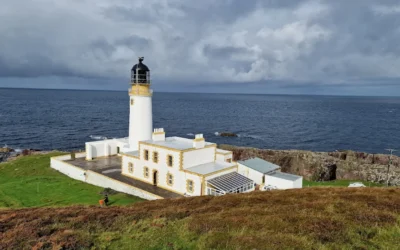
Rua Reidh Lighthouse
Rua Reidh Lighthouse: Wild Wester Ross Beacon Above Loch Ewe's WWII Convoys Three miles beyond the last village on a private track across the moorland of Wester Ross, where the headland of Rubha Rèidh — the Gaelic for flat headland — reaches out into the Minch, a...
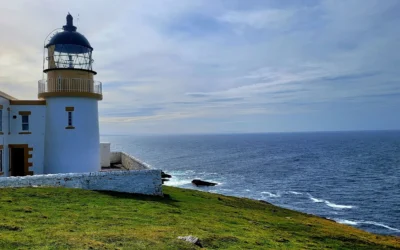
Stoer Lighthouse
Stoer Lighthouse: On Scotland's NC500, Two Miles From the Old Man of Stoer Two miles north of Stoer Lighthouse, the cliff edge drops away and the Old Man of Stoer rises from the sea — a 62-metre sandstone stack, sheer on all sides, standing apart from the headland as...
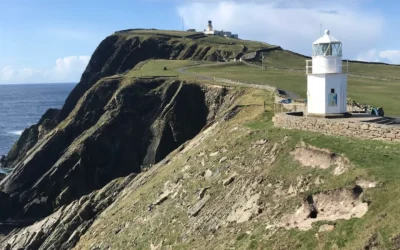
Sumburgh Head Lighthouse
Sumburgh Head Lighthouse: Robert Stevenson's 1821 Beacon on Shetland's Puffin Cliffs At the southernmost tip of Mainland Shetland, where the North Sea and the Atlantic meet in the turbulent tidal race known as the Sumburgh Roost, Robert Stevenson — the founder of the...
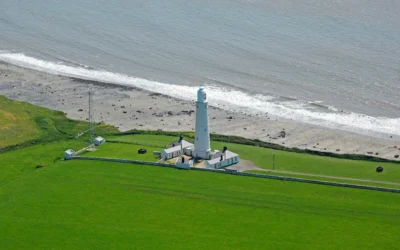
Nash Point Lighthouse
Nash Point Lighthouse: The Last Light in Wales to See Its Keeper Go In 1998, the keeper at Nash Point Lighthouse on the Glamorgan Heritage Coast turned off the oil lamps for the last time, handed the keys to Trinity House and walked away, making Nash Point the last...
Noss Head Lighthouse
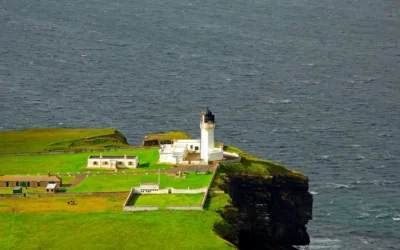
Noss Head Lighthouse: A North Coast 500 Gem With a World-First Lantern On the Noss Head peninsula three miles north-east of Wick, a lighthouse stands above Sinclairs Bay that is less famous than it deserves to be. When Alan Stevenson designed the lantern room here in...