
Aberdulais Falls
Aberdulais Falls: Where Wales’ Industrial Story Began
In the winter of 1584, a German engineer named Ulrich Frosse chose this gorge for a secret reason: the River Dulais plunging over its ridge of hard Pennant sandstone was exactly the power source he needed. Under his management, and with the quiet blessing of Queen Elizabeth I — who needed funds for warships against the Spanish Armada — the site became England and Wales’ first large-scale copper smelting works, hidden in a narrow, wooded valley near Neath where competitors could not observe what was being made.
That first act of industrial ingenuity set a pattern that persisted for four hundred years. Copper gave way to iron and grain milling, then to the tinplate works whose Victorian ruins still stand today, and now to a modern hydroelectric scheme generating clean electricity for the local neighbourhood. Throughout it all, the River Dulais has been doing the work.
The falls themselves — a flash flood river plunging over ancient sandstone into a steep gorge — remain the beating heart of the site. When rain falls in the Dulais catchment, the water rises quickly and dramatically. When it does, Aberdulais becomes one of the most atmospheric industrial heritage sites in Wales.
Here is everything you need to plan a visit.
About Aberdulais
Aberdulais Tin Works and Waterfall is a National Trust site at the confluence of the River Dulais and the River Neath, about three miles north-east of Neath. The falls form where the Dulais plunges over a ridge of Lower Pennant Sandstone — a hard rock that has resisted erosion while the softer coal seam beneath it has worn away, causing the limestone above to fracture and collapse. This process, which has been retreating slowly upstream for 20,000 years since a glacier carved the gorge, has produced the steep, dramatic waterfall visible today.
The River Dulais is a flash flood river — it rises and falls very quickly in response to rainfall in its catchment. In wet weather and winter, when the river is in full spate, the falls are genuinely thunderous; in a dry summer spell, they may be little more than a trickle. The effect after sustained rain is spectacular.
The waterwheel is the site’s most distinctive feature. At 8.2 metres (27 feet) in diameter with 72 buckets, it is Europe’s largest electricity-generating overshot waterwheel — built from steel, crafted by apprentices and students from British Steel in Port Talbot, and set in the original 19th-century wheel pit of the tinplate works. At full flow, it generates up to 20kW of electricity.
A separate turbine generates a further 200kW. Together they make the site self-sufficient in green energy, with surplus sold to the National Grid. Note: the waterwheel is currently undergoing specialist assessment and restoration — check the National Trust website for its current operational status before visiting.
The tinplate works, a Scheduled Ancient Monument, produced the iron sheets hand-dipped in molten tin that were shipped from Swansea docks to America, where they fuelled the revolutionary new tin can industry. At the industry’s peak in the 1890s, over 200 of Britain’s 225 tin mills were in South Wales. The ruins, along with an exhibition, short film and interpretation panels, tell this story in detail.
Getting there
By car, leave the M4 at Junction 43 (Llandarcy) and follow the A465 towards Merthyr Tydfil. Exit onto the A4109 signposted Seven Sisters/Blaendulais, take the third exit at the roundabout onto the A4109 (Main Road), and Aberdulais is 200 yards ahead on the left. From Neath town centre it is around 3 miles; from Swansea around 30 minutes. Free parking is available directly opposite the site entrance on the A4109.
By bus, services from Swansea and Neath stop directly outside the site gate — the Aberdulais Falls stop is just 15 metres from the entrance. Check Traveline Cymru for current timetables.
By bike or on foot, National Cycle Network Route 47 passes the property; access from Neath via the Neath Canal towpath from the B&Q store, a flat, scenic two-mile ride or walk.
If you are visiting from further afield and prefer a tour, local tours of the Vale of Neath frequently include Aberdulais.
Compare Transfers & Local Transport in South Wales →
Where does the name come from?
Aber is the Welsh word for a river mouth or confluence — the same prefix found across Wales in place names like Aberystwyth and Aberfan. Dulais is the name of the river itself. Together, Aberdulais means “the mouth of the River Dulais” — the point where the Dulais meets the Neath, which was the geographical reason the site was chosen in the first place. Water from the gorge, coal from the surrounding hills, timber for charcoal, and access to the coast via the River Neath: Aberdulais had everything.
The walk and the trails
The site itself is compact — most visitors explore the falls, the waterwheel and the tinworks ruins in 1.5–2 hours. Lifts provide access to the cinema, upper levels and waterfall viewpoints, making the site unusually accessible.
The Aberdulais Falls Circular Walk (3 miles, 1.5–2 hours, easy to moderate) extends beyond the site into the surrounding landscape. Starting from the car park, it passes through Craig Gwladys Country Park with views over the Neath Valley, then follows the Tennant Canal before looping back. The route takes in woodland birds — green woodpeckers, owls, buzzards and herons — as well as the industrial canal infrastructure.
The Aberdulais Heritage Trail (2 miles, 1 hour, easy) follows the Neath Canal towpath from Tonna to the Aberdulais Basin, passing the Tennant Canal Aqueduct — one of the engineering marvels of the canal age. It is entirely flat and well-maintained, and suitable for cyclists and walkers.
Parking
Free parking is available opposite the site entrance on the A4109, with space for 20–30 cars. A lay-by on the same side of the road provides additional spaces. There are no parking charges. A pedestrian crossing and cycle racks are provided.
Facilities
The National Trust site has a tearoom serving light refreshments, plus toilets and a small shop. Lifts give access to all levels including the upper waterfall viewpoints, making Aberdulais one of the more accessible waterfall sites in Wales. Manual wheelchairs are available to borrow — book via the National Trust website in advance.
The site is open on a limited number of days each week; check the National Trust website for current opening days and times before visiting. Some paths to the falls may occasionally be closed for maintenance — the website has current information.
Things to know before you go
Best time to visit. After heavy rain for the most dramatic waterfall — the Dulais is a flash flood river and its character changes completely with rainfall. Winter and autumn visits often give the most powerful display. In dry summer spells, the falls are gentler but the industrial ruins and woodland wildlife remain worth visiting.
Wildlife. The gorge is home to a resident colony of Daubenton’s bats, which use the waterfall pool for feeding on the insects rising from the surface. Dippers, grey wagtails and herons are regularly seen on the river; the woodland above holds green woodpeckers, buzzards and owls. Birdwatching from the upper viewpoints is excellent in early morning.
The waterwheel. The wheel is currently undergoing specialist assessment and restoration — check the National Trust website for its current status. When operational, it rotates at five revolutions per minute with a slow, deliberate rhythm that makes the mechanism very easy to follow.
Dogs. Dogs are welcome on short leads throughout the site.
Accessibility. Lifts provide access to the cinema, upper levels and waterfall viewpoints. Manual wheelchairs are available to borrow. Some paths are uneven — check the National Trust’s AccessAble guide for current details.
Swimming. Swimming is not permitted at the falls for safety reasons.
Where to stay
The closest practical base is Neath, three miles south — a Welsh market town with accommodation options and direct rail links from Cardiff, Swansea and beyond. Swansea (around 30 minutes) offers the widest range of accommodation and access to the Gower Peninsula.
Find Hotels & Stays in Neath →
What to pack
The site is compact and largely covered, but the gorge is permanently damp and the canal walks warrant proper footwear.
- A pair of waterproof walking boots — the paths around the gorge and the canal trail can be slippery and uneven.
- A waterproof jacket and layers; the narrow gorge funnels wind and spray, and South Wales weather is notoriously changeable.
- A pair of binoculars — the Daubenton’s bat colony, the dipper on the river and the buzzards overhead are all best appreciated up close.
- A travel tripod for long-exposure shots of the falls from the upper viewpoints and the waterwheel in its pit.
Nearby attractions and making a day of it
Aberdulais sits on the edge of the Vale of Neath — one of the finest waterfall landscapes in Wales — and within easy reach of Neath town’s own heritage.
| Attraction | Why Visit | Distance |
|---|---|---|
| Neath Abbey | The impressive remains of a 12th-century Cistercian monastery, one of the finest medieval ruins in Wales — free to visit | ~2 miles |
| Melin Court Falls | A dramatic and free 25-metre waterfall in a wooded gorge — one of the hidden gems of the Vale of Neath | ~3 miles |
| Gnoll Estate Country Park | A beautifully restored 18th-century designed landscape with cascades, ponds and woodland walks on the edge of Neath | ~3 miles |
| Henrhyd Falls | South Wales’ tallest waterfall at 90 feet — the Batcave from The Dark Knight Rises — in the Brecon Beacons National Park | ~10 miles |
| Cefn Coed Colliery Museum | A preserved colliery that brings Wales’ coal-mining heritage to life with original machinery and a winding engine house | ~5 miles |
For a full Vale of Neath day, combine Aberdulais with Melin Court Falls and Neath Abbey — three very different aspects of the same valley’s long story.
Browse South Wales Tours & Experiences →
Photography tips
The upper viewpoints, accessed by lift, give the widest perspective of the falls, the wheel pit and the gorge below — a single frame that tells the whole story of Aberdulais. The lower viewpoints bring you closer to the falling water, with mist and spray on wet days turning the gorge atmospheric.
The waterwheel in its pit is best photographed in the morning before the light hardens. A long exposure in the shaded gorge captures the wheel’s slow rotation — 5 revolutions per minute means each bucket is in frame long enough to blur smoothly. After rain, the falls fill the gorge with sound and mist; early morning in autumn is the most rewarding time for the full combination of colour, water and light.
The Tennant Canal on the heritage trail offers reflections and the geometric lines of the aqueduct — different but equally photographic.
Conclusion
Aberdulais is unique among UK waterfall sites: a place where the industrial story is as compelling as the natural one, where a flash flood river powers a four-hundred-year heritage in a hidden gorge, and where you can stand beside the largest electricity-generating waterwheel in Europe and watch it do what it has always done — turn the raw force of falling water into something useful. Plan your visit around wet weather, and come ready to hear the gorge roar.
FAQs
How tall is Aberdulais Falls?
The falls plunge over a ridge of Lower Pennant Sandstone into the gorge below — an exact figure is not the most useful way to understand them, since the River Dulais is a flash flood river and the height of the drop varies with flow and season. After heavy rain, they are genuinely dramatic; in dry spells, they are considerably more modest.
Is there a fee to visit Aberdulais?
Entry is free of charge. Donations are welcomed to help maintain and restore the site. National Trust members also visit free. Check the National Trust website for any updates to the fee structure.
What is the best time to visit Aberdulais?
After heavy rain for the fullest and most dramatic waterfall. Autumn and winter visits tend to give the best flow. The site is open on limited days each week — check the National Trust website for current opening days and times before travelling.
Are dogs allowed at Aberdulais?
Yes, dogs are welcome on short leads throughout the site.
Is Aberdulais accessible for wheelchairs?
Yes — lifts provide access to the cinema, upper levels and waterfall viewpoints. Manual wheelchairs can be borrowed; book in advance via the National Trust. Some paths are uneven; check the National Trust’s AccessAble guide for current details.
What are the parking options at Aberdulais?
Free parking is available opposite the site entrance on the A4109, with 20–30 spaces. A roadside lay-by provides additional parking nearby.
Can I swim at Aberdulais Falls?
No — swimming is not permitted at the falls for safety reasons.
What should I wear when visiting Aberdulais?
Sturdy waterproof footwear and a waterproof jacket. The gorge is permanently damp, and the canal and woodland paths can be slippery.
Who built the waterwheel?
The current waterwheel is a modern steel structure, built by apprentices and students from British Steel in Port Talbot and installed in the original 19th-century wheel pit of the tinplate works. At 8.2 metres in diameter with 72 buckets, it is Europe’s largest electricity-generating overshot waterwheel.
What’s nearby?
Neath Abbey (~2 miles), Melin Court Falls (~3 miles), Gnoll Estate (~3 miles), Cefn Coed Colliery Museum (~5 miles) and Henrhyd Falls (~10 miles).
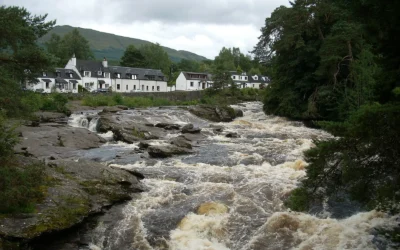
Falls of Dochart
Falls of Dochart: The Waterfall at the Heart of a Village Most waterfalls require a walk to find. The Falls of Dochart require no such effort at all — they run directly through the centre of Killin, beneath the old stone Bridge of Dochart, in full view of the...
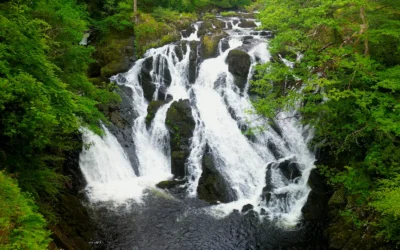
Swallow Falls
Swallow Falls: Wales' Highest Continuous Waterfall The River Llugwy has been performing for visitors at Swallow Falls for well over a century, and it still knows exactly what it is doing. The water tumbles 42 metres through a narrow, tree-lined gorge in a sequence of...
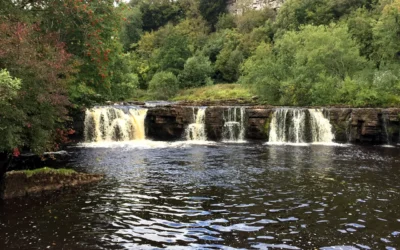
Wain Wath Force
Wain Wath Force: The Broadest Waterfall in Upper Swaledale Wain Wath Force will never win a prize for height. The River Swale drops only around a metre and a half here, sliding gently over a wide limestone ledge beneath the pale cliffs of Cotterby Scar. But what it...
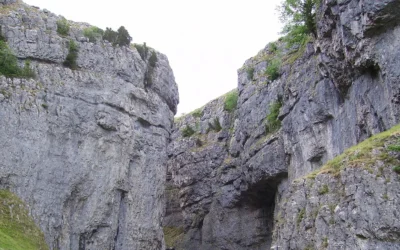
Gordale Scar
Gordale Scar: The Gorge That Stopped Wordsworth in His Tracks There is a moment as you walk the flat, pleasant path from Malham when the gorge closes around you without warning. The sky narrows to a strip above. The walls rear up on either side — overhanging...
Low Force
Low Force: Teesdale's Most Peaceful Waterfall High Force gets the crowds. Low Force gets the quiet. Just a mile and a half downstream from its more famous neighbour, where the River Tees spreads wide across a series of 18-foot cascades over the Whin Sill...