
Stirling Castle
Stirling Castle: Where Scotland's Destiny Was Decided, Above the River Forth
In 1304, Edward I of England assembled the largest siege machine ever built — a trebuchet named the Warwolf — and used it against Stirling Castle. The garrison had already offered to surrender. Edward refused to accept it until the Warwolf had been used at least once; he had brought it all this way and he was going to fire it.
Ten years later, at Bannockburn, Robert the Bruce defeated an English army just two miles from the castle's walls, and Stirling — the key to the River Forth and the crossing between the Highlands and the Lowlands — returned to Scottish hands.
This is what Stirling Castle has always meant: control of Stirling meant control of Scotland. Perched on a volcanic crag above the river, its strategic position made it the focal point of the Wars of Scottish Independence, the setting for royal coronations and Renaissance pageantry, and one of the most besieged and contested fortresses in Scottish history.
Mary Queen of Scots was crowned here on 9 September 1543 when she was nine months old — her father James V had died when she was six days old. The castle's Great Hall is the largest medieval banqueting hall in Scotland. The Recreation of the Hunt of the Unicorn tapestries in the Royal Palace, woven over many years as part of the restoration project completed in 2011, is one of the finest achievements in modern Scottish heritage craft. This guide covers everything you need to plan your visit.
Where Is Stirling Castle?
Stirling Castle is on Castle Wynd in the historic town of Stirling, central Scotland, atop the volcanic crag above the town centre. It is approximately 1 hour from Edinburgh by train and 45 minutes from Glasgow. Stirling's train and bus stations are a 15-minute uphill walk from the castle.
By car, the castle is accessed off the M9 motorway; limited esplanade parking is available, with larger car parks in the town centre. A postcode for navigation is FK8 1EJ.
A Brief History of Stirling Castle
Stirling's importance is geographical. The River Forth was the boundary between the Highlands and the Lowlands, and for much of Scottish history the only practical crossing was at Stirling. Whoever held the castle controlled the crossing, and whoever controlled the crossing could control Scotland. The castle is first recorded around 1110 under King Alexander I, but the crag had been used defensively long before that.
The Wars of Scottish Independence gave Stirling its most dramatic episodes. The castle changed hands repeatedly through the late 13th and early 14th centuries. In 1304, Edward I of England laid siege to it with a vast army and the Warwolf — the largest trebuchet ever constructed, built specifically for this siege. Edward held back the garrison's surrender until he could fire the machine at least once.
The garrison's response after the single shot has not been recorded. Ten years later, at the Battle of Bannockburn in June 1314, Robert the Bruce defeated Edward II's relieving army two miles from the castle walls in the engagement that effectively secured Scottish independence — and Stirling Castle returned to Scottish hands.
The Renaissance transformation of Stirling took place under the Stewart kings. James IV built the Great Hall in the 1490s — at 42 metres long it is Scotland's largest medieval banqueting hall, with an extraordinary hammerbeam ceiling.
James V added the Royal Palace in the 1530s and 1540s, a building of European ambition with French Renaissance architecture, German decorative elements and the Stirling Heads — carved oak roundels depicting monarchs and mythological figures that are among the finest Renaissance carvings in Britain. In 1543, Mary Queen of Scots, nine months old, was crowned in the Chapel Royal. She came back as Queen and held court here; Stirling was the heart of the Stewart court at its most glamorous.
The remarkable thing about Stirling Castle is the range of history it concentrates. The Warwolf. Bannockburn. A nine-month-old queen. Renaissance tapestries. And through it all, the same volcanic crag above the same river, still the key to Scotland.
Architecture & Design
Stirling Castle's architecture layers the medieval and Renaissance with unusual completeness. The North Gate, the oldest surviving structure, dates from the 1380s. The King's Old Building, completed around 1497 by James IV, has an octagonal stair tower and served as the royal lodging before the Palace was built. The Great Hall — restored to its original white-harled exterior in 1999 — is Scotland's largest medieval banqueting hall, 42 metres long, with a hammerbeam ceiling restored to something approaching its original splendour.
The Royal Palace, built by James V in the 1530s and 1540s, is the centrepiece of the 2011 restoration. Its exterior decorative programme — carved stone roundels, classical figures, heraldic beasts — is unique in Scotland, drawing on Continental influences assembled at the Stewart court.
Inside, the restoration recreated the painted interiors as they might have appeared in the 1540s, and the Hunt of the Unicorn tapestries — woven over many years as reproductions of the originals now at the Metropolitan Museum of Art in New York — hang in the Queen's Inner Hall, a feat of craft that required a generation of Stirling weavers and is among the finest achievements of the whole restoration.
Legends & Lore
Stirling Castle has accumulated ghost stories over its long and often violent history. The most famous is the Green Lady — according to tradition, the spirit of a servant who perished during a fire at the castle, her presence said to appear before misfortunes or fires as a warning.
The Pink Lady is a different tradition: a woman in a flowing pink gown, sometimes believed to be Mary Queen of Scots herself or a widow searching for a lost husband, seen moving towards the Church of the Holy Rude. Phantom footsteps in the Governor's Block are among the more commonly reported experiences. These traditions are told as part of the castle's long character rather than as documented fact.
The screen appearances are more reliably documented. Stirling Castle appeared in the 1970s television series Colditz and in the 2018 Netflix film Outlaw King, which dramatised Robert the Bruce's campaign following Bannockburn. The castle features on the Clydesdale Bank's £20 note alongside Robert the Bruce, a recognition of its central place in Scottish national symbolism.
Visiting the Castle
Stirling Castle is open daily throughout the year, managed by Historic Environment Scotland. The visit is large and rewards three to four hours. The Royal Palace and its tapestries are the undisputed centrepiece — the recreated interiors are extraordinary and the Hunt of the Unicorn tapestries are worth extended attention. The Great Hall, with its restored hammerbeam ceiling, gives the best sense of the Stewart court's ambition and scale. The Castle Exhibition provides historical context, and the Regimental Museum of the Argyll and Sutherland Highlanders covers the castle's military history.
The Great Kitchens are an unusually vivid installation, recreating the preparation of a Renaissance banquet with models, sounds and smells. The palace vaults offer interactive activities including period costume dressing and medieval instrument playing, particularly suited to families. Guided tours, included in the ticket price, run regularly and bring costumed performers to the castle's story.
The Queen Anne Gardens and the Unicorn Garden provide green spaces for rest, with a 200-year-old beech tree and a historic bowling green. The Unicorn Café serves food and drink; visitors may bring their own food for picnic areas. Photography is permitted for personal use; flash and tripod use may be restricted in certain areas. Booking tickets online in advance is recommended, particularly during summer.
Check Tickets & Tour Times for Stirling Castle →
For current opening hours and prices, check the official Historic Environment Scotland website before your visit.
Where to Stay Near Stirling Castle
Stirling Castle does not offer visitor accommodation. The town of Stirling has a good range of hotels, guesthouses and bed and breakfasts in the town centre and the historic Old Town below the castle — several are within a short walk of the esplanade. Staying in Stirling allows easy access to the castle at opening time and to the town's excellent range of other historic sites.
Find Hotels & Stays in Stirling →
The Best Time to Visit
Spring (April to June) is one of the finest times at Stirling — the castle is quieter than in summer, the town is at its most photogenic and the grounds are green. Summer (July to August) brings the busiest visitor numbers, the full events programme and the best weather; book in advance. Autumn (September to October) offers excellent light on the castle and the Forth valley, quieter weekdays and the annual Stirling literary and cultural programme.
Winter (November to March) sees shorter opening hours and fewer visitors — the castle in winter frost, with the Grampians visible to the north on clear days, is a powerful sight. The castle is closed Christmas Day and Boxing Day, with reduced hours on New Year's Day.
How to Get There
By train. Stirling station has direct services from Edinburgh (around one hour) and Glasgow (around 45 minutes). From the station, it is a 15-minute walk uphill to the castle.
By car. Exit the M9 at the Stirling junction and follow signs for the castle. Limited parking is available on the esplanade; larger town centre car parks and the Castleview Park and Ride are alternatives.
By bus. Stirling bus station is close to the train station and similarly a 15-minute uphill walk from the castle.
Compare Transfers & Local Transport in Stirling →
Nearby Attractions
Stirling sits at the centre of some of the most significant landscape and heritage in Scotland.
| Attraction | Why Visit | Distance |
|---|---|---|
| Battle of Bannockburn Visitor Centre | Immersive interactive experience covering the 1314 battle — one of the defining events in Scottish history | ~2 miles |
| National Wallace Monument | A soaring tower honouring William Wallace, with panoramic views across the Forth valley | ~1.5 miles |
| Argyll's Lodging | A beautifully restored 17th-century Renaissance townhouse — included in Stirling Castle admission | Adjacent |
| Doune Castle | The original Monty Python and the Holy Grail castle, also used in Game of Thrones — a dramatic medieval ruin | ~8 miles |
| Church of the Holy Rude | The medieval church where James VI was crowned — one of Scotland's finest medieval churches still in regular use | ~0.3 miles |
A natural day pairs Stirling Castle with the Bannockburn Visitor Centre in the afternoon — together they give the full story of Scotland's most decisive period of history.
Browse Stirling & Central Scotland Tours →
Family & Accessibility
Families. Stirling Castle is one of the best family historic attractions in Scotland. The interactive Great Kitchens installation, the period costume activities in the palace vaults, the guided tours with costumed performers, and the scale and drama of the castle itself all work excellently for families with children of school age. Allow three to four hours.
Accessibility. The castle has wheelchair access, mobility vehicles and five accessible parking spaces 65 metres from the entrance. Ear defenders are available for visitors with sensory sensitivities. As a historic castle on a volcanic crag, some areas involve steps and steep gradients — the accessibility guide on the Historic Environment Scotland website covers the routes in detail. Assistance dogs are permitted throughout the castle; other dogs are not admitted. Photography for personal use is permitted in most areas; flash and tripod use may be restricted in certain rooms — check with staff on arrival.
Practical Tips
- Book tickets online in advance for convenience and to guarantee entry during busy summer periods.
- Wear comfortable walking shoes — the uphill walk from the town and the castle's steep internal routes require good footwear.
- Allow three to four hours — the Royal Palace, Great Hall, Castle Exhibition, Regimental Museum and Great Kitchens all deserve time.
- Pack a compact travel umbrella; the esplanade and the exposed upper castle are fully subject to Scotland's weather.
- Bring a portable power bank for a full day of photography across the castle and grounds.
- Time your visit to catch a guided tour — they run regularly and are included in the price; the costumed performers make a real difference to the experience.
- Overseas visitor? Pack a UK travel adapter for Type G plugs.
Conclusion
Stirling Castle has stood at the centre of Scottish history for nearly a thousand years — besieged by Edward I's Warwolf, secured by Robert the Bruce at Bannockburn, the site of Mary Queen of Scots' coronation at nine months old, and the backdrop for the Stewart Renaissance at its most ambitious.
The Hunt of the Unicorn tapestries in the Royal Palace are among the finest works of heritage craft produced in Scotland in the last century. The view from the esplanade, across the Forth to the Highlands, is one of the great views from any castle in Britain. Few buildings carry so much of their country's history so completely within their walls.
Frequently Asked Questions
What are the opening hours of Stirling Castle?
The castle is open daily from 9:30am, with seasonal variations in last entry and closing times. It is closed Christmas Day and Boxing Day, with reduced hours on New Year's Day. Check the official Historic Environment Scotland website for current hours.
How much does it cost to visit Stirling Castle?
Admission fees vary by age, with concession rates available. Online booking is recommended for convenience and to guarantee entry. Check the Historic Environment Scotland website for current prices.
Who was Mary Queen of Scots and why was she crowned at Stirling?
Mary was crowned Queen of Scots on 9 September 1543 at Stirling Castle when she was just nine months old, following the death of her father James V just days after her birth. Stirling was the principal royal residence of the Stewart court.
What is the Warwolf?
The largest trebuchet ever constructed, built by Edward I of England specifically for the 1304 siege of Stirling Castle. Edward held back the garrison's surrender until he could fire the machine at least once — a remarkable act of military theatre that has become one of the most memorable footnotes in the castle's history.
What are the Hunt of the Unicorn tapestries?
A set of tapestries woven over many years as reproductions of the originals (now at the Metropolitan Museum of Art in New York), displayed in the Queen's Inner Hall of the restored Royal Palace. They were created as part of the 2011 restoration project and are among the finest examples of modern Scottish textile craft.
Is Stirling Castle suitable for children?
Yes — the Great Kitchens installation, period costume activities, costumed guided tours and the castle's dramatic scale and history make it one of the best family heritage visits in Scotland. Allow three to four hours.
Is Stirling Castle wheelchair accessible?
The castle has wheelchair access, mobility vehicles and accessible parking. Some areas involve steps and steep gradients; check the Historic Environment Scotland accessibility guide for full details before visiting.
Is there food at Stirling Castle?
The Unicorn Café serves hot and cold food and drinks. Visitors may bring their own food for picnics in designated areas.
How do I get to Stirling Castle?
By train from Edinburgh (around one hour) or Glasgow (around 45 minutes) to Stirling station, then a 15-minute uphill walk. By car via the M9, with limited esplanade parking or town centre alternatives.
What is the best way to see the castle?
Take a guided tour (included in the ticket price), which runs regularly with costumed performers. Then allocate time separately for the Royal Palace and its tapestries, the Great Hall and the Castle Exhibition — together they give the most complete experience.
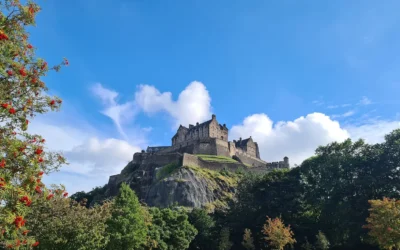
Edinburgh Castle
Edinburgh Castle: A Thousand Years Above the Capital, on Scotland's Volcanic Rock Castle Rock rises 130 metres above Edinburgh on a volcanic plug formed 350 million years ago — three sides sheer cliff, the fourth a long ridge descending to what became the Royal...
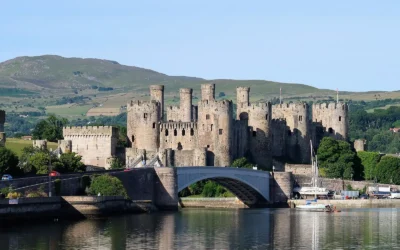
Conwy Castle
Conwy Castle: Eight Towers, Britain's Earliest Machicolations and a King in Hiding In 1399, King Richard II returned from Ireland to find his throne under threat from Henry Bolingbroke. He came to Conwy Castle — the massive fortress that Edward I had built in the...
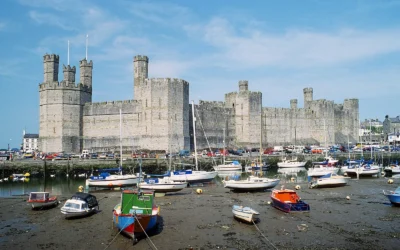
Caernarfon Castle
Caernarfon Castle: Edward I's Imperial Vision, Above the Menai Strait Edward I of England spent approximately £25,000 building Caernarfon Castle — a sum equivalent to around 90% of England's entire annual royal income. The construction took 47 years, from...
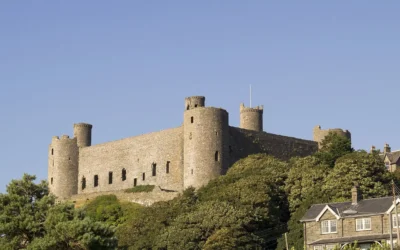
Harlech Castle
Harlech Castle: The Invincible Fortress That Fell to Owain Glyndŵr, Above the Bay In 1404, after four years of the most sustained Welsh uprising against English rule since the Conquest, Owain Glyndŵr took Harlech Castle — the fortress that Edward I had built in seven...
Raglan Castle
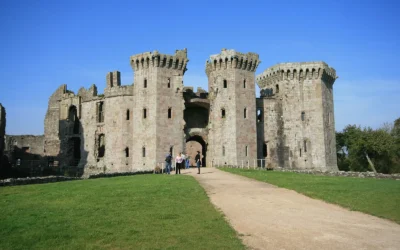
Raglan Castle: Where Henry Tudor Was Raised, Among Wales's Grandest Ruins Before Henry Tudor became King Henry VII of England — before he won the Battle of Bosworth in 1485 and founded the Tudor dynasty that would rule Britain for 118 years — he was a boy living...