
Conwy Castle
Conwy Castle: Eight Towers, Britain's Earliest Machicolations and a King in Hiding
In 1399, King Richard II returned from Ireland to find his throne under threat from Henry Bolingbroke. He came to Conwy Castle — the massive fortress that Edward I had built in the 1280s on the rock above the estuary — seeking protection. His enemies lured him out under false pretences. He was captured, transported to London and forced to abdicate. He died in prison the following year. The room in which he probably sheltered, in the best-preserved suite of medieval royal chambers in England and Wales, is still there. Visitors still stand in it.
Conwy Castle is the third of Edward I's Iron Ring of fortresses across North Wales — alongside Caernarfon, Harlech and Beaumaris, all now UNESCO World Heritage Sites together. It was built in five years between 1283 and 1289 at a cost of approximately £15,000, under Master James of St George, the greatest military architect of medieval Europe.
Its eight towers, each 70 feet tall, are connected by curtain walls up to 15 feet thick, constructed from local grey sandstone. In its original state, the whole castle was whitewashed with lime render — it would have gleamed white over the Conwy estuary in a way that announced English dominance as visibly as any proclamation. This guide covers everything you need to plan your visit.
Where Is Conwy Castle?
Conwy Castle is in the walled town of Conwy, on the north coast of Wales, off the A55 expressway. Conwy railway station, on the Crewe–Llandudno Junction–Holyhead line, is a five-minute walk from the castle, with regular services from Chester (around one hour) and Holyhead. Bus route 5 stops 200 metres from the castle. Pay-and-display car parks are available near the visitor centre and outside the town walls.
A Brief History of Conwy Castle
Edward I began building Conwy Castle immediately after his conquest of Wales, following the death of Llywelyn ap Gruffudd in 1282. Master James of St George directed the construction, which took five years — an extraordinary feat given that Caernarfon, begun in the same year, would take 47 years. The entire building programme at Conwy, including both the castle and the 1.3-kilometre medieval town walls, was completed by 1289.
The castle's history is one of contested occupation. In 1294–95, it withstood a siege by Madog ap Llywelyn's Welsh rebellion — the garrison resupplied through a water gate, as at Harlech. In 1401, forces loyal to Owain Glyndŵr briefly captured it in a daring surprise attack.
The most historically resonant episode came in 1399, when Richard II took refuge at Conwy before being lured out and captured by Henry Bolingbroke's allies — the deception at Conwy leading directly to the Lancastrian usurpation and the deposition of a king. During the Civil War, the castle was a Royalist stronghold, surrendering in 1646 after which Parliament began to dismantle it. By 1665, the iron and lead had been stripped. The castle entered its long life as a ruin, preserved and managed today by Cadw.
The remarkable thing about Conwy is the survival of its royal apartments. Most medieval castles either have their interiors standing but stripped or are purely defensive ruins with no domestic fabric surviving. Conwy's Inner Ward preserves what historian Jeremy Ashbee has described as the best-preserved suite of medieval private royal chambers in England and Wales — an achievement that gives the castle a quality of inhabitation, of rooms that were once lived in, that comparatively few British ruins can match.
Architecture & Design
Conwy is a rectangular enclosure castle, divided into an Inner and Outer Ward by a cross-wall — a layout that reflects both the shape of the rock it sits on and the functional requirements of a castle that was expected to serve both as a fortress and a royal residence. The eight towers, each roughly cylindrical and 70 feet high, are evenly distributed around the perimeter, giving the circuit an appearance of military regularity that would have been impressive even to contemporary eyes.
The castle includes Britain's earliest surviving stone machicolations — the projecting parapet brackets with gaps through which missiles could be dropped on attackers below — an innovation that would become standard in later medieval military architecture.
The Inner Ward contains the royal apartments: the great chamber, the presence chamber, the private chapel. These rooms, relatively complete in their fabric, allow a genuine understanding of medieval royal domestic life that the empty interiors of many other castles deny. The bow-shaped great hall in the Outer Ward, a 91-foot-deep spring-fed well and the castle chapel are among the other significant surviving features.
The medieval town walls — 1.3 kilometres long, with 21 towers and 3 gatehouses, free to walk at any time — are among the most complete town walls in Europe and form part of the same UNESCO World Heritage Site. Walking the full circuit gives an appreciation of the scale of Edward I's ambition: not just a castle but an entire defended English town, planted in conquered Wales.
Legends & Lore
Conwy Castle's ghost traditions are particularly vivid. Visitors have long reported the figures of two hooded monks — believed to be echoes of the Cistercian monastery that previously occupied part of the site — seen in the courtyards, occasionally appearing to move without their feet touching the ground. A spectral guard is said to patrol the battlements on stormy nights, the sound of armour carrying across the walls.
The castle's dungeons are associated with a prisoner who died attempting to escape through a passage to the River Conwy; tradition says his presence remains. The chapel has been associated with an unexplained scent of incense by visitors who report it without any obvious source. These stories are told as local folklore rather than documented fact, but Conwy's Halloween ghost tours draw substantial numbers each year.
The historical drama is no less compelling: Richard II's 1399 stay, his capture and his death after leaving these rooms are the kind of story that gives castle walls their particular weight.
Visiting the Castle
Conwy Castle is managed by Cadw and is open year-round, with longer hours in summer and shorter in winter. Cadw members enter free.
The visit covers the full circuit of the walls and towers — walkable via restored spiral staircases — and the royal apartments of the Inner Ward, which provide the most intimate and historically significant experience. The panoramic views from the tower tops encompass the Conwy estuary, Snowdonia and the coastal landscape of North Wales.
A joint ticket combining Conwy Castle with Plas Mawr — the magnificently preserved Elizabethan townhouse in the town centre — is available. The two buildings together give an exceptional account of 700 years of Welsh history in a single afternoon. Check the Cadw website for current joint ticket arrangements.
There are no catering facilities inside the castle itself; the town of Conwy, immediately outside the walls, has cafés and restaurants. Photography for personal use is permitted throughout; tripods may require prior approval.
Assistance dogs only are permitted inside the castle.
Check Tickets & Tour Times for Conwy Castle →
For current opening hours and prices, check the official Cadw website before your visit.
Where to Stay Near Conwy Castle
Conwy town, enclosed by the medieval walls, has a small but atmospheric selection of hotels and guesthouses. Llandudno, the Victorian seaside resort 6 miles north, offers a much wider range of accommodation. Betws-y-Coed, 14 miles south in the Conwy Valley, is an ideal base for those combining the castle with Snowdonia walking.
Find Hotels & Stays in Conwy →
The Best Time to Visit
Spring (April to June) and early autumn (September to October) are the best times at Conwy — the weather is generally pleasant, the estuary views are clear and the castle is quieter than in July and August. Summer (July to August) brings the best weather and the longest hours; the views from the towers in good summer light over the estuary and towards Snowdonia are exceptional.
The town walls can be walked at any time of year, free of charge — the dawn view of the castle from the walls, or the castle lit at night from the suspension bridge across the estuary, are memorable at any season.
How to Get There
By train. Conwy station (on the Crewe–Holyhead line) is a five-minute walk from the castle. Services from Chester take around one hour; the line runs along the North Wales coast.
By car. From the A55 North Wales Expressway, follow signs for Conwy. Pay-and-display car parks are near the visitor centre and outside the town walls.
By bus. Route 5 between Llandudno and Caernarfon stops 200 metres from the castle.
Compare Transfers & Local Transport in North Wales →
Nearby Attractions
Conwy sits at the heart of one of the finest heritage and landscape areas in Wales.
| Attraction | Why Visit | Distance |
|---|---|---|
| Conwy Town Walls (UNESCO) | 1.3 km of medieval town walls — 21 towers, 3 gatehouses, free to walk at any time, part of the same UNESCO site | Adjacent |
| Plas Mawr (Cadw) | The best-preserved Elizabethan townhouse in Wales — a joint ticket with the castle is available | ~0.3 miles |
| Smallest House in Great Britain | A genuine curiosity on the quayside — the narrowest house in Britain, measuring just 72 inches wide | ~0.3 miles |
| Caernarfon Castle (Cadw, UNESCO) | The capital of Edward I's Iron Ring — our separate guide covers it fully | ~20 miles |
| Eryri National Park (Snowdonia) | The highest mountain in England and Wales, the Conwy Valley and some of Britain's finest upland scenery | ~14 miles |
A natural North Wales day combines Conwy Castle and the town walls in the morning, Plas Mawr in the afternoon, and dinner in one of Conwy's excellent independent restaurants — one of the most complete heritage town experiences in Wales.
Browse Conwy & Snowdonia Tours →
Family & Accessibility
Families. Conwy is excellent for families. The walkable walls, the eight accessible towers, the royal apartments and the ghost traditions all work well for different ages. The town walls (free) add a significant additional outdoor experience. The Smallest House in Great Britain is a perennial delight for children.
Accessibility. The castle involves a steep 50-metre path with steps from the visitor centre, limiting access for wheelchair users. Accessible toilets are available. The town walls have sections that are accessible. Check the Cadw accessibility guide before visiting. Assistance dogs only inside the castle.
Practical Tips
- Walk the full circuit of the town walls — free at any time, the 1.3km walk takes around 45 minutes and gives outstanding views of the castle from the outside.
- Wear comfortable walking shoes — both the castle and the town walls involve steep sections and uneven surfaces.
- Pack a compact travel umbrella; North Wales coastal weather is variable.
- Bring a portable power bank for photography — the estuary and Snowdonia views from the towers are outstanding.
- Consider the joint Plas Mawr ticket — the Elizabethan townhouse is one of the best in Wales and a natural complement to the medieval castle.
- Photography for personal use is permitted throughout.
- Overseas visitor? Pack a UK travel adapter for Type G plugs.
Conclusion
Conwy Castle was built in five years by the greatest military architect of medieval Europe, whitewashed to gleam white over the estuary, and designed to hold an English town against a conquered Welsh people. It contains the best-preserved medieval royal chambers in England and Wales — the room where Richard II sheltered before his capture and abdication still stands.
The town walls that surround the castle are the finest in Europe. And the walk from the railway station through the medieval gatehouses to the castle entrance is one of the most complete heritage arrivals anywhere in Britain. Edward I's Iron Ring is complete.
Frequently Asked Questions
What are the opening hours of Conwy Castle?
The castle is open year-round, with longer hours in summer and shorter in winter. Check the official Cadw website for current times before travelling.
How much does it cost to visit Conwy Castle?
Admission fees vary by age; Cadw members enter free. A joint ticket with Plas Mawr is available. Check the Cadw website for current prices and any online booking options.
Is Conwy Castle a UNESCO World Heritage Site?
Yes — it is part of "Castles and Town Walls of King Edward in Gwynedd," designated in 1986, alongside Caernarfon, Harlech and Beaumaris castles.
What happened to Richard II at Conwy Castle?
In 1399, Richard II took refuge at Conwy Castle after returning from Ireland to find Henry Bolingbroke (later Henry IV) challenging his throne. He was lured out from the castle under false pretences of a negotiated settlement, captured and transported to London. He was forced to abdicate and died in captivity.
What makes Conwy Castle architecturally significant?
It contains Britain's earliest surviving stone machicolations — the projecting parapet brackets that allowed defenders to drop missiles on attackers below. The Inner Ward preserves the best-maintained suite of medieval private royal chambers in England and Wales.
Are the town walls free to visit?
Yes — the medieval town walls of Conwy are free to walk at any time. They are part of the same UNESCO World Heritage Site as the castle and offer outstanding views of the fortress and the estuary.
Is there food at Conwy Castle?
There are no catering facilities inside the castle itself. Conwy town, immediately outside the walls, has a good range of cafés and restaurants.
Are dogs allowed at Conwy Castle?
Only assistance dogs are permitted inside the castle. The town of Conwy and the town walls are accessible with dogs on leads.
Is Conwy Castle wheelchair accessible?
The castle involves a steep 50-metre path with steps from the visitor centre, limiting wheelchair access. Accessible toilets are available. Check the Cadw accessibility guide for detailed information.
How do I get to Conwy Castle?
By train to Conwy station (5 minutes' walk from the castle; Crewe–Holyhead line, around 1 hour from Chester). By car from the A55 with pay-and-display parking near the visitor centre.
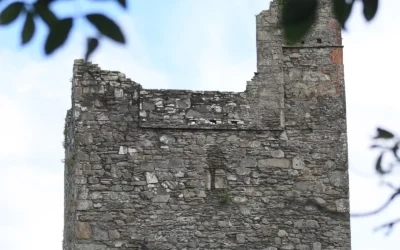
Audley’s Castle
Audley's Castle: The Free Tower House Above Strangford Lough, Where Game of Thrones Arrived In the first season of Game of Thrones, the fields and approaches to Castle Ward became Winterfell — the ancestral seat of the Starks. The fields around Audley's...
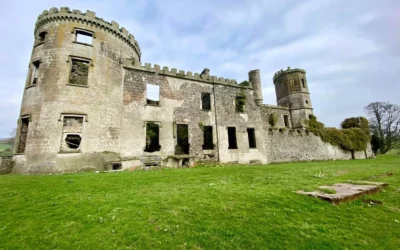
Kilwaughter Castle
Kilwaughter Castle: John Nash's Antrim Ruin, Declared Enemy Property in the Second World War In 1803, John Nash — the architect who designed Regent Street, remodelled Buckingham Palace and built the Royal Pavilion at Brighton — came to County Antrim and...
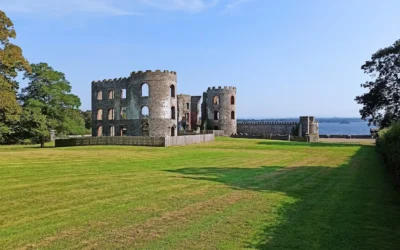
Shane’s Castle
Shane's Castle: The O'Neill Estate on Lough Neagh, Touched by John Nash and Twice Burned In 1809, John Nash — the architect who designed Regent Street, Carlton House Terrace and remodelled Buckingham Palace for George IV — began redesigning a castle on the...
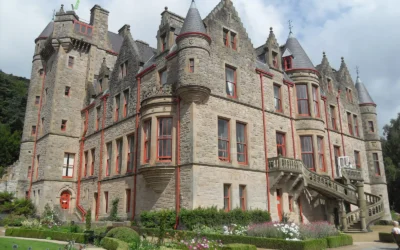
Belfast Castle
Belfast Castle: The Free Victorian Castle Above the City, with Nine Hidden Cats The legend says the castle will be safe — or its residents will have good fortune — as long as a white cat lives within its walls. The castle's response to this piece of local...
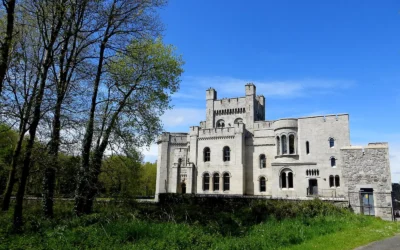
Gosford Castle
Gosford Castle: Ulster's Largest Listed Building — and Game of Thrones' Riverrun When Robin Fedden of the National Trust surveyed Gosford Castle in 1952, he described it as "one of the most original buildings of its time" and noted that it had...