
Shane’s Castle
Shane's Castle: The O'Neill Estate on Lough Neagh, Touched by John Nash and Twice Burned
In 1809, John Nash — the architect who designed Regent Street, Carlton House Terrace and remodelled Buckingham Palace for George IV — began redesigning a castle on the north-eastern shore of Lough Neagh in County Antrim for the Viscount O'Neill. Nash planned to face the building southwards, and built a conservatory as a replica of the one at his own home, East Cowes Castle on the Isle of Wight. In 1816, before the redesign was complete, a fire destroyed the main castle.
Nash's conservatory and terrace survived. A Victorian-Gothic castle was built on the estate in the 1860s. The Irish Republican Army burned that one down in 1922. What remains at Shane's Castle today are the ruins of two structures touched by two of the most significant events in Irish and British architecture of the 19th and 20th centuries, in a working estate of 1,800 acres on the shore of the largest lake in the British Isles.
Shane's Castle is the ancestral home of the O'Neill family of Clandeboy, one of the great Gaelic dynasties of Ulster, and the estate has been in their family since the original castle was built in 1345. Visits are by appointment only, from April to September — the estate is not a regular visitor attraction. This guide covers its history, its legends and how to arrange a visit.
Where Is Shane's Castle?
Shane's Castle is on the north-eastern shore of Lough Neagh, approximately 2.7 miles from Randalstown, County Antrim, via the A6 road from Antrim town. From Belfast, the drive takes around 30 minutes. Public transport to the estate is limited; driving is the most practical approach.
A Brief History of Shane's Castle
The castle was built in 1345 by the Clandeboy O'Neill dynasty, who named it Edenduffcarrick — from the Irish for "brow of black rock." The site's defensive position on Lough Neagh, the largest lake in the British Isles, gave it strategic control over the northern shore. The castle was renamed in the early 18th century after Shane McBrian McPhelim O'Neill, who ruled Lower Clandeboy from 1595 to 1617, and it has been known as Shane's Castle since.
In 1809, the reigning Viscount O'Neill commissioned John Nash — then at the height of his powers as the most fashionable architect in the country — to redesign the castle to face south. Nash began the work and completed a conservatory modelled on the one at his own East Cowes Castle. In 1816, a fire destroyed the main castle. Nash's conservatory and terrace survived. The 1816 fire inspired John Neal's poem "Castle Shane," published the same year.
A Victorian-Gothic castle was built on the estate in the 1860s to replace the Nash structure. In 1922, during the Irish Civil War, the Irish Republican Army burned it down. The ruins of both structures, together with Nash's surviving conservatory — now the Camellia House — are the fabric of the estate today.
The estate has its own history of innovation: a hydro-electrical power system was installed around 1905, one of the earliest private electricity systems in Ireland. During the Second World War, British and American soldiers used the estate for agricultural training, harvesting oats in 1942.
The remarkable thing about Shane's Castle is the accumulation of architectural ambition and subsequent loss. The Nash redesign, the Victorian-Gothic successor, the Camellia House — each speaks to the ambitions of the estate at different periods, and each ended in fire or ruin. What remains is a working estate of 1,800 acres, the ruined fabric of two castles, and a conservatory-turned-Camellia House on the shore of Lough Neagh.
Architecture & Design
The surviving architectural element is the Camellia House — the Nash-era conservatory, now housing camellias and other tender plants, and the only structure from the Nash redesign to survive the 1816 fire. The surviving terrace and the Camellia House represent a fragment of what Nash envisioned, and their survival gives the estate a direct, if partial, connection to one of the great architects of Regency Britain.
The ruins of the Victorian-Gothic castle of the 1860s are visible across the estate — the shell of a substantial building, its walls standing but roofless and open to the sky. The estate grounds — 800 acres of farmland and 1,000 acres of woodland — include a rockery, pond, and kitchen garden, all maintained as part of the working estate. The Lough Neagh shoreline gives the whole a setting of considerable quiet beauty.
Legends & Lore
Shane's Castle carries one of the most atmospheric pieces of Gaelic folklore attached to any estate in Ulster. According to local tradition, the O'Neill chieftain's daughter Kathleen was taken by the fairy people to the bottom of Lough Neagh after her father cut a branch from a sacred thorn tree in order to free a cow that had become tangled in it.
Her spirit is said to remain in the lough, and to shriek when danger threatens the O'Neill family — a banshee-like warning attached specifically to this household and this loch. The legend is told as folklore rather than fact, and it gives the Lough Neagh shoreline at Shane's Castle a particular quality of listening.
Game of Thrones used parts of the estate as a filming location, adding a layer of contemporary cultural recognition to a site whose history goes back to 1345.
Visiting the Estate
Shane's Castle is a private estate and visits are by appointment only, from April to September. The estate is not a regularly staffed visitor attraction; access is arranged directly with the estate management and is primarily available for group visits, events and weddings. If you want to visit, contact the estate via its official website to discuss arrangements.
The estate hosts a range of private events including weddings, and Escarmouche operates a paintball enterprise on the grounds.
Explore Lough Neagh & County Antrim →
For visit enquiries, contact the estate directly via the official Shane's Castle website.
Where to Stay Near Shane's Castle
Randalstown (2.7 miles) has local accommodation. Antrim town (around 5 miles south) has a wider range, and Belfast (30 minutes) offers the full city range of hotels and guesthouses.
Find Hotels & Stays in Antrim →
The Best Time to Visit
The estate is accessible by appointment from April to September only. Late spring (May to June) is the finest time for the grounds and woodland — the Lough Neagh shore is vivid and the Camellia House's plants are at their best. Summer (July to August) offers the warmest conditions for outdoor exploration.
How to Get There
By car. From Antrim town, take the A6 towards Randalstown; the estate is approximately 2.7 miles from Randalstown. From Belfast, allow around 30 minutes.
By public transport. Bus services to Randalstown from Antrim and Belfast are available; a taxi from Randalstown covers the remaining 2.7 miles.
Compare Transfers & Local Transport near Lough Neagh →
Nearby Attractions
Shane's Castle sits on Lough Neagh, the largest lake in the British Isles, at the heart of County Antrim.
| Attraction | Why Visit | Distance |
|---|---|---|
| Antrim Castle Gardens (Clotworthy House) | A recreated 17th-century formal garden with canal, mound garden and walled garden — a significant piece of Ulster's designed landscape heritage | ~5 miles |
| Lough Shore Park, Antrim | A lakeside park on Lough Neagh offering walking paths, birdwatching and water's edge access to the largest lake in the British Isles | ~5 miles |
| Randalstown Forest Nature Reserve | Ancient woodland and river valleys around Randalstown — outstanding for walking and natural history | ~1.5 miles |
| Carrickfergus Castle | Ireland's finest Norman fortress — 800 years of military history on Belfast Lough (our separate guide) | ~15 miles |
| Belfast | The city's full range of heritage and cultural attractions, including Titanic Belfast | ~30 mins |
Browse Lough Neagh & County Antrim Tours →
Family & Accessibility
Families. For families with a visit arranged, the 1,800 acres of working estate, woodland and Lough Neagh shore offer substantial outdoor exploration. The paintball enterprise (Escarmouche) is available for groups.
Accessibility. Contact the estate directly when arranging a visit to discuss accessibility requirements.
Practical Tips
- Shane's Castle is by appointment only (April to September) — contact the estate before making any travel arrangements. It is not a walk-in visitor attraction.
- Wear comfortable walking shoes with good grip for the estate grounds, woodland and Lough Neagh shore.
- Pack a waterproof walking jacket — the Lough Neagh shore is exposed.
- Bring a portable power bank for photography of the ruins, the Camellia House and the lough views.
- Check the estate's official website for current contact details and visit arrangement procedures.
- Overseas visitor? Pack a UK travel adapter for Type G plugs.
Conclusion
Shane's Castle was built in 1345. John Nash worked on it in 1809. A fire took the castle in 1816 and the poem came immediately after. The Victorian-Gothic replacement went in 1922. Nash's Camellia House survived both fires. The O'Neill family has held the land since the beginning. Kathleen is in the lough. And the whole estate, by appointment only between April and September, sits on the shore of the largest lake in the British Isles, in a working landscape that has been shaped and burned and rebuilt across seven centuries.
Frequently Asked Questions
Is Shane's Castle open to the public?
Shane's Castle is accessible by appointment only, from April to September. It is a private working estate and not a regular walk-in visitor attraction. Contact the estate directly to arrange a visit.
Who was John Nash and what did he do at Shane's Castle?
John Nash (1752–1835) was one of the most influential British architects of the Regency period — responsible for Regent Street, Carlton House Terrace and the remodelling of Buckingham Palace. He began redesigning Shane's Castle in 1809, building a conservatory as a replica of the one at his own home, East Cowes Castle. The main castle was destroyed by fire in 1816 before the redesign was complete; Nash's conservatory survived and is now the Camellia House.
What is the Camellia House at Shane's Castle?
The surviving Nash-era conservatory, now housing camellias and other tender plants. It is the only structure from Nash's 1809 redesign to have survived the 1816 fire and remains one of the most historically significant elements of the estate.
What is Kathleen's legend at Shane's Castle?
According to local tradition, Kathleen — an O'Neill chieftain's daughter — was taken by the fairy people to the bottom of Lough Neagh after her father cut a branch from a sacred thorn tree. Her spirit is said to give warning shrieks when danger threatens the O'Neill family. The legend is told as Gaelic folklore.
Why was the Victorian-Gothic castle burned in 1922?
The castle was set on fire by the Irish Republican Army during the Irish Civil War in 1922, in an episode that was part of a wider pattern of attacks on estates associated with the Unionist and Protestant landed gentry during that period.
What is Lough Neagh?
Lough Neagh is the largest lake in the British Isles by surface area — 383 square kilometres — and forms a large part of the landscape of central Ulster. Shane's Castle sits on its north-eastern shore.
Is Shane's Castle connected to Game of Thrones?
Yes — parts of the Shane's Castle estate were used as filming locations for Game of Thrones.
How do I arrange a visit to Shane's Castle?
Contact the estate directly through the official Shane's Castle website. Visits are by appointment only, April to September.
How do I get to Shane's Castle?
By car from Belfast (around 30 minutes), or from Antrim town via the A6 (around 5 miles). The estate is 2.7 miles from Randalstown. Public transport to Randalstown is available; a taxi covers the remaining distance.
Are dogs allowed at Shane's Castle?
As a private working estate, dogs on leads may be welcome in the grounds — confirm when arranging your visit. The estate operates a working farm with a dairy herd and sheep, so dogs must be kept under close control at all times.
Audley’s Castle
Audley's Castle: The Free Tower House Above Strangford Lough, Where Game of Thrones Arrived In the first season of Game of Thrones, the fields and approaches to Castle Ward became Winterfell — the ancestral seat of the Starks. The fields around Audley's...
Kilwaughter Castle
Kilwaughter Castle: John Nash's Antrim Ruin, Declared Enemy Property in the Second World War In 1803, John Nash — the architect who designed Regent Street, remodelled Buckingham Palace and built the Royal Pavilion at Brighton — came to County Antrim and...
Belfast Castle
Belfast Castle: The Free Victorian Castle Above the City, with Nine Hidden Cats The legend says the castle will be safe — or its residents will have good fortune — as long as a white cat lives within its walls. The castle's response to this piece of local...
Gosford Castle
Gosford Castle: Ulster's Largest Listed Building — and Game of Thrones' Riverrun When Robin Fedden of the National Trust surveyed Gosford Castle in 1952, he described it as "one of the most original buildings of its time" and noted that it had...
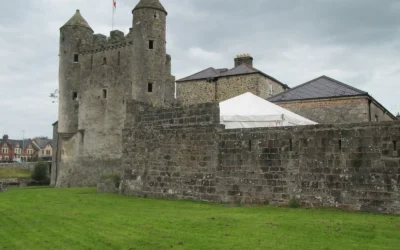
Enniskillen Castle
Enniskillen Castle: The Maguire Clan's Lough Erne Fortress, Home to Two Museums Hugh Maguire built his castle at Enniskillen around 1428. His nickname — 'the Hospitable' — suggests a lord who understood the politics of generosity as well as the politics...