
Enniskillen Castle
Enniskillen Castle: The Maguire Clan's Lough Erne Fortress, Home to Two Museums
Hugh Maguire built his castle at Enniskillen around 1428. His nickname — 'the Hospitable' — suggests a lord who understood the politics of generosity as well as the politics of defence, and his choice of site was both. The fortification sat at a critical pass into Ulster, guarding the crossing between Upper and Lower Lough Erne at the point where the River Erne narrowed between them.
The castle that first appeared in the Annals of Ulster in 1439 changed hands repeatedly over the following century and a half, seized and counter-seized by the O'Donnells, the English and the Maguires in turn, before passing finally out of Gaelic Irish control in the early 17th century.
Enniskillen Castle is now home to two award-winning museums — the Fermanagh County Museum and The Inniskillings Museum — and its Jacobean Watergate, added in 1609, is one of the most architecturally distinctive structures in Northern Ireland. The castle stands in the heart of Enniskillen, which has the distinction of being Northern Ireland's only island town, sitting on an island between Upper and Lower Lough Erne. This guide covers everything you need to plan your visit.
Where Is Enniskillen Castle?
Enniskillen Castle is on Wellington Road, in the centre of Enniskillen, County Fermanagh, Northern Ireland. From Belfast, the drive takes around one and a half hours via the M1 and A4. From Dublin, allow approximately two hours via the M3 and A509. Free parking is available adjacent to the castle.
Enniskillen Bus Centre, served by Ulsterbus from Belfast (around two and a half hours) and Bus Éireann from Dublin (around the same), is a three-minute walk from the castle. County Fermanagh has no railway services — all public transport to Enniskillen is by bus.
A Brief History of Enniskillen Castle
The Maguire clan were the Gaelic lords of Fermanagh from the 13th century, and Enniskillen — the island crossing at the heart of the lough system — was the strategic key to the county. Hugh 'the Hospitable' Maguire built the initial castle around 1428; by 1439, it was significant enough to appear in the Annals of Ulster, a chronicle of Irish events compiled by Gaelic scholars.
The subsequent century and a half was a period of intense contest for the castle: Hugh O'Donnell captured it from Rory Maguire in 1508; English forces took it in 1594; Hugh Maguire recaptured it in 1595; by 1602, Niall Garve O'Donnell had secured it for the English crown.
The transformation from Gaelic stronghold to English garrison came with Captain William Cole, who took command in 1607 and purchased the castle outright in 1623. Cole added the Watergate in 1609 — the twin-turreted Jacobean structure that has become the most distinctive element of Enniskillen's riverside silhouette. The Watergate's twin turrets, decorative stonework and corbelled tourelles reflect strong Scottish architectural influence, brought to Ireland by planters who arrived during the Plantation of Ulster.
The castle served as a barracks through the 17th, 18th and 19th centuries, remodelled in 1796 and housing regiments including the 27th Regiment of Foot. The Royal Inniskilling Fusiliers and 5th Royal Inniskilling Dragoon Guards — two of the most distinguished regiments in British Army history, with their roots in this town — are commemorated in the Inniskillings Museum. Decommissioned in 1950, the castle became a heritage centre and now houses both museums.
The remarkable thing about Enniskillen is the continuity of its strategic significance. The island crossing that Hugh Maguire controlled in 1428 is the same island on which the castle stands today, the same town from which the Inniskillings went to Waterloo and the Somme. The rivers and loughs that made it strategically vital are still there, and the Watergate still overlooks them.
Architecture & Design
The Castle Keep at the heart of the complex is the oldest surviving element — a central tower with robust stonework reflecting the Gaelic fortification tradition of the 15th century, with bartizans (small corner turrets) on the curtain wall. The Watergate (1609) is the architectural highlight: a Jacobean gateway of considerable sophistication, with twin turrets flanking the entrance, corbelled tourelles at upper level, and decorative stonework showing the Scottish Baronial influence that characterised early Plantation architecture in Ulster.
The castle's courtyard and grounds connect the medieval keep with the Jacobean gateway and the Victorian-era barracks buildings, creating a layered complex in which five centuries of building history are legible. Visitors can climb the keep for panoramic views of Enniskillen and Lough Erne.
Legends & Lore
Enniskillen Castle's lore is largely historical — the documented sieges and counter-sieges of the 16th and 17th centuries are dramatic enough to sustain any visit. Local tradition has added the ghost of Rory Maguire, a former lord of Fermanagh, said to haunt the castle corridors — possibly tied to the 1641 rebellion when he failed to retake the castle from the Protestant settlers sheltering within. This is presented as folklore rather than documented fact.
Local legend also speaks of buried Maguire clan treasure, hidden somewhere in or near the castle and never recovered — a story that reflects the wealth of the Maguires at their height as Gaelic lords of Fermanagh.
Visiting the Castle
Enniskillen Castle Museums are managed by Fermanagh and Omagh District Council and are open Monday to Saturday, with Sunday opening in summer (June to September). Admission fees apply; under-fives are free. Check the official website for current hours and any seasonal variations in the opening of the two museums.
The Fermanagh County Museum covers the region's history from prehistoric times through to the modern period — including the Kingdom of Lough Erne and its early Christian crannogs (ancient lake dwellings), the county's distinctive crafts tradition, and Belleek Pottery. A genealogy service is available for those tracing Fermanagh family connections.
The Inniskillings Museum chronicles over 300 years of military history through the Royal Inniskilling Fusiliers and the 5th Royal Inniskilling Dragoon Guards — uniforms, medals, campaign histories and personal artefacts from two regiments whose service included Waterloo, Gallipoli and the Somme. The collection is one of the finest regimental museums in Northern Ireland.
The castle grounds include redeveloped gardens and walkways with views of Lough Erne. A gift shop is on site. Photography policies may vary between the museums and the grounds — confirm with staff on arrival. Assistance dogs are welcome inside; other dogs are permitted on leads in the grounds.
Check Tickets & Tour Times for Enniskillen Castle →
For current opening hours and prices, check the official Enniskillen Castle website before your visit.
Where to Stay Near Enniskillen Castle
Enniskillen town centre, adjacent to the castle, has a range of hotels and guesthouses within walking distance. The town is an excellent base for exploring the wider County Fermanagh lakelands and the Marble Arch Caves area.
Find Hotels & Stays in Enniskillen →
The Best Time to Visit
Spring (April to June) and early autumn (September to October) are the best seasons for Enniskillen — the Lough Erne landscape is vivid, the town is accessible and the museums are less busy than in peak summer. Summer (July to August) brings the longest days and extended Sunday opening.
County Fermanagh is often overlooked by visitors focused on the Causeway Coastal Route, and this works to the advantage of those who find it — the castle, the loughs and the surrounding countryside are generally quiet by Northern Ireland standards throughout the year.
How to Get There
By car. From Belfast, take the M1 west to the A4 — around one and a half hours. From Dublin, take the M3 and A509 north — around two hours. Free parking adjacent to the castle.
By bus. Ulsterbus services from Belfast Europa Bus Centre serve Enniskillen (around two and a half hours). Bus Éireann operates from Dublin Busáras. Enniskillen Bus Centre is a three-minute walk from the castle. Note: County Fermanagh has no railway.
Compare Transfers & Local Transport in County Fermanagh →
Nearby Attractions
County Fermanagh is one of Northern Ireland's most beautiful and least-visited counties — a landscape of lakes, caves and country houses.
| Attraction | Why Visit | Distance |
|---|---|---|
| Marble Arch Caves (UNESCO Global Geopark) | One of the finest show cave systems in Europe — a spectacular underground world with guided boat tours through vast chambers | ~12 miles |
| Florence Court (National Trust) | An 18th-century Irish country house with beautiful formal gardens and estate walks | ~10 miles |
| Castle Coole (National Trust) | A grand neoclassical mansion with Regency furnishings, parkland and a National Trust tea room | ~1.5 miles |
| Cuilcagh Boardwalk Trail | The "Stairway to Heaven" — a spectacular boardwalk and mountain trail across the Cuilcagh plateau with panoramic views | ~15 miles |
| Lough Erne | An 80-mile lake system with islands, early Christian monuments and watersports — one of the finest freshwater landscapes in Ireland | Adjacent |
A natural Fermanagh day combines Enniskillen Castle with Marble Arch Caves — the town's medieval-to-Jacobean fortress history paired with one of Europe's finest cave systems.
Browse Enniskillen & Fermanagh Lakelands Tours →
Family & Accessibility
Families. Enniskillen Castle is well suited to families of all ages — the interactive displays and quizzes in both museums engage children, the castle grounds give space to explore, and the Inniskillings Museum's uniforms and medals capture younger visitors' imaginations. Under-fives enter free.
Accessibility. The castle is wheelchair accessible, with a free wheelchair available to hire. Assistance dogs are permitted inside the buildings. Other dogs are welcome on leads in the grounds.
Practical Tips
- Wear comfortable walking shoes — the castle grounds include cobbled and uneven surfaces.
- Pack a compact travel umbrella; County Fermanagh weather is changeable.
- Bring a portable power bank for photography — the Watergate and Lough Erne views are both excellent.
- Plan for both museums — the Fermanagh County Museum and the Inniskillings Museum together make for a full morning or afternoon; check the current opening days for each before you visit.
- The genealogy service in the Fermanagh County Museum is worth using for anyone with Fermanagh family connections.
- Overseas visitor? Pack a UK travel adapter for Type G plugs.
Conclusion
Hugh 'the Hospitable' Maguire built his fortress at Enniskillen in 1428 because the island crossing between Upper and Lower Lough Erne was the strategic key to Fermanagh. William Cole added the Jacobean Watergate in 1609. The Royal Inniskilling Fusiliers went to Waterloo and the Somme from this town.
The loughs that made the location strategically vital in the 15th century still surround the island town today. Marble Arch Caves are 12 miles to the south-west. Castle Coole is a mile and a half away. And County Fermanagh — one of the most beautiful counties in Ireland and one of the least visited — has been waiting patiently for its moment.
Frequently Asked Questions
What are the opening hours of Enniskillen Castle?
The castle is open Monday to Saturday throughout the year, with Sunday opening during summer months (broadly June to September). Hours vary seasonally. Check the official Enniskillen Castle website for current times.
How much does it cost to visit Enniskillen Castle Museums?
Admission fees vary by age; under-fives enter free, and concession rates are available for seniors, students and children. Check the official website for current prices.
What are the two museums at Enniskillen Castle?
The Fermanagh County Museum covers the region's history from prehistoric times to the present, including Lough Erne's early Christian heritage, crannogs and traditional crafts. The Inniskillings Museum chronicles the history of the Royal Inniskilling Fusiliers and 5th Royal Inniskilling Dragoon Guards through 300 years of military service.
What is the Watergate at Enniskillen Castle?
The Watergate (added 1609) is a Jacobean gateway with twin turrets, corbelled tourelles and decorative stonework, added by Captain William Cole during the Plantation of Ulster. It shows strong Scottish architectural influence and is one of the finest examples of Jacobean architecture in Northern Ireland.
What is the Inniskillings Museum?
A regimental museum commemorating the Royal Inniskilling Fusiliers and the 5th Royal Inniskilling Dragoon Guards — two regiments with roots in Enniskillen and service records spanning Waterloo, Gallipoli and the Somme.
Is Enniskillen Castle wheelchair accessible?
Yes — the castle is wheelchair accessible, and a free wheelchair is available to hire on site. Assistance dogs are permitted inside.
Are dogs allowed at Enniskillen Castle?
Assistance dogs are permitted inside the castle buildings. Other dogs are welcome on leads in the grounds.
Is there a genealogy service at Enniskillen Castle?
Yes — the Fermanagh County Museum offers a genealogy service for those tracing family connections to County Fermanagh.
How do I get to Enniskillen Castle?
By car from Belfast (around 1h 30m via M1/A4) or Dublin (around 2h via M3/A509), with free parking adjacent. By bus from Belfast Europa Bus Centre or Dublin Busáras to Enniskillen Bus Centre (3-minute walk from the castle). Note that County Fermanagh has no railway services.
What are the nearest major attractions to Enniskillen Castle?
Castle Coole (National Trust, 1.5 miles), Marble Arch Caves UNESCO Global Geopark (12 miles) and the Florence Court estate (10 miles) are the principal nearby heritage attractions.
Audley’s Castle
Audley's Castle: The Free Tower House Above Strangford Lough, Where Game of Thrones Arrived In the first season of Game of Thrones, the fields and approaches to Castle Ward became Winterfell — the ancestral seat of the Starks. The fields around Audley's...
Kilwaughter Castle
Kilwaughter Castle: John Nash's Antrim Ruin, Declared Enemy Property in the Second World War In 1803, John Nash — the architect who designed Regent Street, remodelled Buckingham Palace and built the Royal Pavilion at Brighton — came to County Antrim and...
Shane’s Castle
Shane's Castle: The O'Neill Estate on Lough Neagh, Touched by John Nash and Twice Burned In 1809, John Nash — the architect who designed Regent Street, Carlton House Terrace and remodelled Buckingham Palace for George IV — began redesigning a castle on the...
Belfast Castle
Belfast Castle: The Free Victorian Castle Above the City, with Nine Hidden Cats The legend says the castle will be safe — or its residents will have good fortune — as long as a white cat lives within its walls. The castle's response to this piece of local...
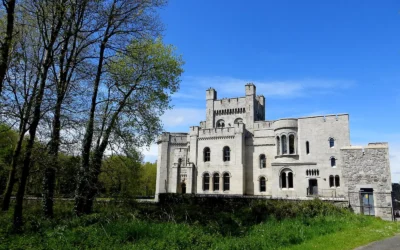
Gosford Castle
Gosford Castle: Ulster's Largest Listed Building — and Game of Thrones' Riverrun When Robin Fedden of the National Trust surveyed Gosford Castle in 1952, he described it as "one of the most original buildings of its time" and noted that it had...