
Kilwaughter Castle
Kilwaughter Castle: John Nash's Antrim Ruin, Declared Enemy Property in the Second World War
In 1803, John Nash — the architect who designed Regent Street, remodelled Buckingham Palace and built the Royal Pavilion at Brighton — came to County Antrim and redesigned the Agnew family's 17th-century tower house at Kilwaughter into a castle-like mansion. He added an octagonal tower and a glass-roofed library; the estate's parkland may have been designed by John Sutherland around 1810.
By 1940, the castle was owned by the Italian Balzani family — descendants of an Agnew daughter who had married an Italian count — and when Italy entered the Second World War on the Axis side, the British government declared Kilwaughter "enemy property." The American 644th Tank Destroyer Battalion trained here in preparation for D-Day, in a castle that had been seized from their allies' enemies and pressed into Allied service.
After the war, the castle was sold to a scrap merchant, stripped of its lead, roof and fixtures, and left to the rain and the ivy.
Kilwaughter Castle near Larne is a private property and is not regularly open to the public. Access is limited to occasional open days organised by the Kilwaughter Castle Restoration Group. This guide covers its extraordinary history and how to find out about visiting.
Where Is Kilwaughter Castle?
Kilwaughter Castle is in the Kilwaughter demesne near Larne, County Antrim, accessible via the gate lodge entrance from Deerpark Road. From Belfast, take the M2 and A8 northwards towards Larne, then follow local signs — around 30 to 40 minutes. Public transport to the castle is limited; driving or a taxi from Larne is the practical approach.
A Brief History of Kilwaughter Castle
The Agnew family were granted lands in County Antrim by King James VI and built a T-plan tower house in the Scottish Baronial style in the 17th century. The earliest substantial Agnew presence is documented with Sir Patrick Agnew, 8th Sheriff of Galloway, who established the family's foothold in the area from 1620. For three centuries, the Agnews were significant County Antrim landowners, serving as tax collectors for the county.
In 1803, Edward Jones Agnew commissioned John Nash — at this point the most fashionable architect in Britain, who would go on to design Regent Street for the Prince Regent — to transform the tower house into a grander residence.
Nash incorporated the original structure, added an octagonal tower and a glass-roofed library, and created a building that reflected the Agnews' wealth and ambition. Nash would later apply similar thinking to a neighbouring estate: the redesign of Shane's Castle on Lough Neagh, begun in 1809, was another Nash project in County Antrim — both are now ruins.
In 1891, Elizabeth "Bessie" Galt Smith, an American socialite, and her husband John Galt Smith leased Kilwaughter and modernised its interiors. An American presence in a County Antrim country house in the 1890s was unusual, and Bessie's improvements ran through until 1922. During the First World War, the castle served as a refuge for wounded American officers — the American connection to Kilwaughter ran longer and deeper than most Ulster estates of the period.
The most remarkable chapter came in the Second World War. The castle had passed by descent to the Italian Balzani family — who had inherited through an Agnew daughter who married an Italian count. When Italy entered the war on the Axis side in 1940, the British government declared the property enemy property and requisitioned it. The American 644th Tank Destroyer Battalion used Kilwaughter for training in preparation for D-Day, 1944 — training in a castle that had been seized from their allies' enemies and repurposed for the Allied cause.
After the war, the castle was sold to a scrap merchant. The lead was stripped. The roof was taken. The fixtures were removed. Without a roof to keep the rain out, the floors collapsed and the walls began to deteriorate. What remains is the shell of Nash's octagonal tower and the walls of the original Agnew tower house — handsome even in ruin, their architectural quality still readable.
The Kilwaughter Castle Restoration Group works to halt further deterioration and to preserve what remains. The castle is private property; access is by open day only.
Architecture & Design
The original 17th-century structure was a T-plan tower house in the Scottish Baronial tradition — four storeys with bartizan turrets and a defensive bawn wall, typical of the Ulster Plantation era. Nash's 1803 remodelling incorporated and extended this structure, adding the octagonal tower and the glass-roofed library as the most distinctive new elements. The roofs were originally sheathed in sand and tar, and the Gothic-style window tracery gave the castle a romantic medieval character that was characteristic of Nash's picturesque approach.
The parkland surrounding the castle may have been designed by John Sutherland, the landscape designer, around 1810 — which would give Kilwaughter both a Nash house and a Sutherland landscape, an unusually distinguished combination for County Antrim. A walled garden and artificial lake once featured in the grounds; both are now largely overgrown.
Legends & Lore
Kilwaughter Castle has no established ghost tradition. Its real history — Scottish noble family, American socialite tenants, Italian descendants, enemy property declaration, D-Day Tank Battalion — provides more dramatic material than any ghost story could supply.
The decline itself adds a particular atmosphere. Walking around the exterior of Nash's octagonal tower, knowing that the glass-roofed library once filled the space now open to the sky, gives the ruin a quality of specific, recoverable loss that more thoroughly demolished buildings do not have.
Visiting the Estate
Kilwaughter Castle is private property and is not regularly open to the public. Visits are limited to occasional open days organised by the Kilwaughter Castle Restoration Group. The castle's exterior can generally be viewed from the perimeter, but the interior ruin should not be entered — the collapsed floors and unstable masonry make it genuinely dangerous.
The grounds and nearby woodlands of the Kilwaughter demesne reflect the landscape of a once-grand private estate. Local museums in Larne and Carrickfergus occasionally host exhibitions on the castle's history with photographs and artefacts — worth checking before a visit to the area.
Photography of the exterior is generally fine; always seek permission on private property and never enter the ruined interior.
To find out about open days, check the Kilwaughter Castle Restoration Group's official channels or contact Mid and East Antrim Borough Council.
Explore the Antrim Coast & Glens →
Where to Stay Near Kilwaughter Castle
Larne town, a few miles south, has hotels and guesthouses. Carrickfergus, around 15 miles south on Belfast Lough, is another convenient base — and its Norman castle (our separate guide) is one of Ireland's finest.
Find Hotels & Stays in Larne →
The Best Time to Visit
If an open day is announced, spring (April to June) and early autumn (September to October) offer the best conditions for viewing the exterior and the surrounding demesne — mild weather, the woodland and parkland at their most vivid, and the Antrim Coast at its finest.
For general visits to the area without an open day — driving by, viewing the exterior, walking the surrounding countryside — any season is suitable.
How to Get There
By car. From Belfast, take the M2 northwards, then the A8 to Larne and the A36, following local signs for Kilwaughter. Allow 30 to 40 minutes from Belfast. The gate lodge entrance from Deerpark Road provides access to the demesne.
By public transport. Buses from Belfast serve Larne; from Larne a taxi covers the remaining distance to the castle.
Compare Transfers & Local Transport on the Antrim Coast →
Nearby Attractions
Kilwaughter sits just inland from the Antrim Coastal Route, one of Northern Ireland's most scenic drives.
| Attraction | Why Visit | Distance |
|---|---|---|
| Carnfunnock Country Park | 191 hectares of mixed woodland, gardens and walking trails near Larne with panoramic views of the Antrim Coast and North Channel | ~3 miles |
| The Gobbins Cliff Path | A dramatic coastal walk cut into the basalt cliffs near Islandmagee — one of Northern Ireland's most striking cliff-face paths | ~8 miles |
| Antrim Coastal Route | The famous coastal drive begins at Larne and runs north through the Glens of Antrim to the Giant's Causeway — one of the finest coastal drives in Europe | Adjacent |
| Larne Museum | The local history museum in Larne's Carnegie Library building, which occasionally holds exhibitions on Kilwaughter Castle | ~5 miles |
| Carrickfergus Castle | Ireland's finest Norman fortress — 800 years of sieges on Belfast Lough, 10 miles south | ~15 miles |
A natural County Antrim day combines Kilwaughter (exterior viewing or open day) with the Antrim Coastal Route drive north to the Gobbins or Carnlough, ending at Glenarm Castle (our guide).
Browse Antrim Coast & Glens Tours →
Family & Accessibility
Families. The castle exterior and demesne are interesting for families with older children who engage with history; the ruined fabric and wartime stories are particularly compelling for teenagers. The surrounding countryside is good walking territory.
Accessibility. The ruined state and uneven terrain of the castle exterior make access difficult for wheelchair users. The demesne grounds may be more accessible. Contact the Restoration Group or Borough Council for specific accessibility details during open days.
Practical Tips
- Kilwaughter is private property — do not enter the ruins without permission, and never enter the ruined interior (unstable structure). Open days are the only regular access route.
- Check the Kilwaughter Castle Restoration Group's official channels for announced open days.
- Wear comfortable walking shoes for the demesne grounds.
- Pack a compact travel umbrella — County Antrim weather is changeable.
- Bring a portable power bank for photography of the Nash exterior and demesne views.
- Combine with Larne Museum to find any current Kilwaughter exhibitions and background before viewing the castle.
- Overseas visitor? Pack a UK travel adapter for Type G plugs.
Conclusion
John Nash redesigned Kilwaughter in 1803, a few years before he would redesign Shane's Castle on Lough Neagh — two County Antrim commissions from the most celebrated architect of Regency Britain, both now ruins. The Italian family who inherited Kilwaughter by descent had their property seized as enemy property in 1940.
The American 644th Tank Destroyer Battalion trained here for D-Day in a castle belonging to allies' enemies. The scrap merchant came after the war and took the roof. What remains is the Nash shell in the County Antrim countryside, private, occasionally open, and still architecturally significant in ruin.
Frequently Asked Questions
Is Kilwaughter Castle open to the public?
Kilwaughter Castle is private property and is not regularly open. Visits are limited to occasional open days organised by the Kilwaughter Castle Restoration Group. Check their official channels or Mid and East Antrim Borough Council for announcements.
Who was John Nash and what did he design at Kilwaughter?
John Nash (1752–1835) was the leading architect of Regency Britain, responsible for Regent Street, Carlton House Terrace and the remodelling of Buckingham Palace. He redesigned Kilwaughter Castle in 1803, incorporating the original tower house and adding an octagonal tower and a glass-roofed library. He also redesigned Shane's Castle, another County Antrim estate, in 1809 — both are now ruins.
Why was Kilwaughter declared "enemy property" in WWII?
The castle was owned by the Italian Balzani family, who had inherited it through an Agnew daughter who married an Italian count. When Italy entered the war on the Axis side in 1940, the British government classified their property as enemy property and requisitioned it.
What was the 644th Tank Destroyer Battalion?
An American military unit that trained at Kilwaughter Castle in preparation for the D-Day landings of June 1944. The castle's WWII history includes both WWI service as a refuge for wounded American officers and WWII use by American forces preparing for the liberation of Europe.
Who was Bessie Galt Smith?
An American socialite — Elizabeth "Bessie" Galt Smith — who leased Kilwaughter with her husband John Galt Smith from 1891 and modernised the castle's interiors. An unusual American tenant in a County Antrim country house, she oversaw improvements until 1922.
Why is Kilwaughter Castle in ruins?
After the war, the castle was sold to a scrap merchant who removed the lead, roof and fixtures. Without a roof, the floors and upper walls collapsed in the subsequent decades. The Kilwaughter Castle Restoration Group now works to halt further deterioration.
Can I photograph Kilwaughter Castle?
Photography of the exterior from the demesne is generally acceptable. Never enter the ruined interior. Always seek permission when on private property, and follow any instructions given on open days.
How do I get to Kilwaughter Castle?
By car from Belfast via the M2 and A8 towards Larne (around 30–40 minutes), then following local signs for Kilwaughter and the Deerpark Road gate lodge entrance. Public transport options to the castle itself are limited; buses serve Larne, from where a taxi covers the remaining distance.
Are dogs allowed at Kilwaughter Castle?
As a private working estate, dogs on leads may be welcome in the grounds. Confirm when attending an open day, and always keep dogs under close control near any livestock.
Is Kilwaughter Castle wheelchair accessible?
The ruined state and uneven terrain make wheelchair access difficult. Contact the Restoration Group or Borough Council for specific information during open days.
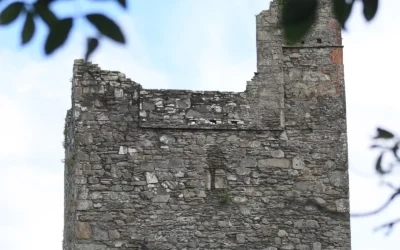
Audley’s Castle
Audley's Castle: The Free Tower House Above Strangford Lough, Where Game of Thrones Arrived In the first season of Game of Thrones, the fields and approaches to Castle Ward became Winterfell — the ancestral seat of the Starks. The fields around Audley's...
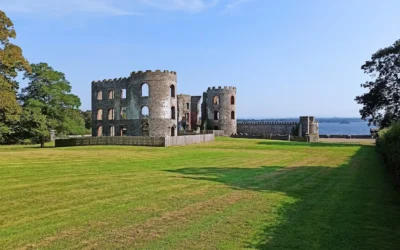
Shane’s Castle
Shane's Castle: The O'Neill Estate on Lough Neagh, Touched by John Nash and Twice Burned In 1809, John Nash — the architect who designed Regent Street, Carlton House Terrace and remodelled Buckingham Palace for George IV — began redesigning a castle on the...
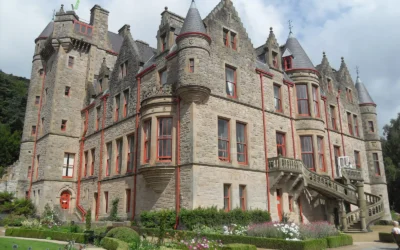
Belfast Castle
Belfast Castle: The Free Victorian Castle Above the City, with Nine Hidden Cats The legend says the castle will be safe — or its residents will have good fortune — as long as a white cat lives within its walls. The castle's response to this piece of local...
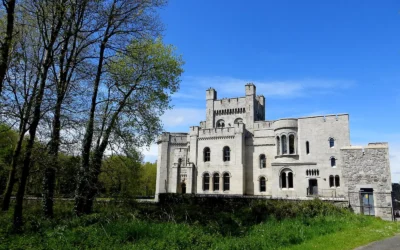
Gosford Castle
Gosford Castle: Ulster's Largest Listed Building — and Game of Thrones' Riverrun When Robin Fedden of the National Trust surveyed Gosford Castle in 1952, he described it as "one of the most original buildings of its time" and noted that it had...
Enniskillen Castle
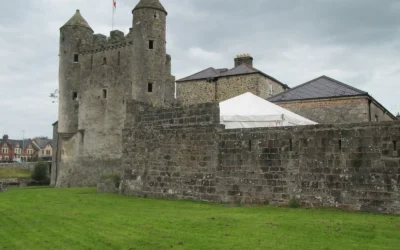
Enniskillen Castle: The Maguire Clan's Lough Erne Fortress, Home to Two Museums Hugh Maguire built his castle at Enniskillen around 1428. His nickname — 'the Hospitable' — suggests a lord who understood the politics of generosity as well as the politics...