
Leeds Castle
Leeds Castle: The Lake Island Fortress of Six Medieval Queens
There are castles built on cliffs, castles built on hills, and castles built for war. Leeds Castle was built for queens. When Edward I acquired it in 1278 as a gift for his wife Eleanor of Castile, he began a tradition that would define the castle for the next two and a half centuries: Leeds became a residence for medieval queens, passing through six of them, including Catherine of Aragon, the first wife of Henry VIII.
It sits on two small islands in a lake formed by the River Len in the heart of the Kent countryside, the water surrounding it on all sides, and its reflection shimmering in the lake at dusk is the image that earned it the name, often repeated, of the loveliest castle in the world.
Today Leeds Castle is a registered charity, and all admission proceeds support its conservation. The grounds extend over 500 acres of parkland, gardens and woodland, with a maze and underground grotto, falconry displays, a 12-hole adventure golf course, and the world’s only Dog Collar Museum — a collection of five centuries of canine accessories that is, in its own way, as remarkable as anything else the castle contains.
The medieval rooms, the lake and the gardens together make Leeds one of the most complete and varied castle visits in England. This guide covers everything you need to plan your day.
Where Is Leeds Castle?
Leeds Castle is located 7 miles south-east of Maidstone in Kent, approximately one hour from central London and around 30 minutes from the Channel Tunnel terminal and the Channel Ports. The postcode for sat-nav is ME17 1RG. From the M20, exit at Junction 8 and follow the brown tourist signs; free parking is on site.
By train, the nearest stations are Bearsted and Hollingbourne, both served by Southeastern trains. A shuttle bus runs from Bearsted to the castle during peak season; from Hollingbourne a short taxi ride covers the distance. Leeds Castle’s Kent location makes it an ideal day out from London or a natural stop on a journey to or from the Channel.
A Brief History of Leeds Castle
The estate was first recorded in 857 AD as a Saxon manor belonging to a chief called Ledian — the name Leeds almost certainly derives from this early owner. In 1119, Robert de Crevecoeur transformed it into a Norman stone castle. In 1278 Edward I purchased Leeds for his queen, Eleanor of Castile, and it was here that the royal connection that defines the castle began.
Edward created the lake and constructed the remarkable three-part barbican — one of the most sophisticated defensive arrangements in medieval England — and Leeds became one of the most beloved of all the royal residences.
Over the following two centuries Leeds was home to six medieval queens. Eleanor of Castile was the first; Catherine of Aragon, Henry VIII’s first queen, was among the last. Henry himself used it as a stopping point on the diplomatic progress known as the Field of the Cloth of Gold in 1520. The castle passed out of royal hands after the Tudor period and through a succession of private owners, falling into various states of repair and renovation.
Its final transformation came in the 1920s, when the Anglo-American heiress Olive, Lady Baillie, purchased Leeds and undertook a complete restoration that gave the interiors their present elegance. Lady Baillie was a notable host: Winston Churchill, Charlie Chaplin, Errol Flynn and a generation of European royalty and political figures were guests at Leeds between the 1930s and the 1970s. On her death in 1974, she left the castle to the Leeds Castle Foundation, which has managed it as a public attraction ever since.
The remarkable thing about Leeds is how entirely its history has been shaped by the women who lived here. Six medieval queens, and then Olive Lady Baillie — the castle’s character bears their stamp far more than that of any king or male owner in its nine centuries.
Architecture & Design
Leeds Castle’s defining architectural feature is its setting: the castle occupies two islands in the River Len lake, the water forming a natural moat that surrounds the buildings on all sides. Approaching across the lake, with the Gloriette — the raised keep — rising above the water, it is one of the most immediately striking entrances of any castle in England.
The present structure is primarily from the early 19th century, incorporating older elements: the Gloriette retains medieval fabric, and the Queen’s Bath in the basement is considered one of England’s earliest surviving bathhouses. The three-part barbican built by Edward I, spanning three islands with drawbridges, gateways and portcullises, is the most remarkable piece of medieval defensive engineering on the site.
The castle is built in Kentish ragstone and Caen stone, and Lady Baillie’s restoration decorated the interiors with fine antique furniture, tapestries and paintings that give the rooms their present opulent character. The 500-acre grounds, which include the Culpeper Garden, the Princess Alexandra Gardens, the Vineyard Garden and a wildflower meadow, have been developed and maintained to a high standard as part of the Foundation’s conservation programme.
Legends & Lore
Leeds Castle is unusual among great English castles in having no well-established ghost stories or supernatural legends — perhaps because its history has been defined by wealth, beauty and royal patronage rather than by siege and violence.
The stories told here are of real people rather than spectres: of Eleanor of Castile, the beloved Spanish queen for whom Edward built the lake; of Catherine of Aragon, whose marriage to Henry would eventually unravel the medieval church in England; and above all of Olive Lady Baillie, the 20th century’s most glamorous restorer of English castles, whose guest list in the 1930s read like a roll-call of European history in the making.
The castle has, however, been a consistent draw for filmmakers — its lake-island setting and the combination of medieval and Edwardian elegance make it one of the most photogenic castle exteriors in England. It has served as a backdrop for numerous television productions and film shoots, and its visual character is sufficiently distinctive that it tends to be recognisable wherever it appears.
The castle also hosts one of the most genuinely eccentric attractions in the south of England: the Dog Collar Museum, containing a collection of dog collars spanning five centuries, assembled over decades and donated to the Foundation. It is the only museum of its kind in the world.
Visiting the Castle
A visit to Leeds takes a full day comfortably, and an annual ticket (which covers unlimited return visits throughout the year) is available and genuinely worth considering given how much there is to see. Inside the castle, the medieval and Edwardian rooms contain the antique furnishings, tapestries and paintings assembled by Lady Baillie, and the Gloriette offers views over the lake.
The Dog Collar Museum in the cellar is one of the most unexpected and absorbing collections in any English castle — five centuries of collars, from spiked iron hunting collars to gilded 18th-century confections for lapdogs. The Queen’s Bath is an early surviving example of an English bathhouse, and the medieval interiors throughout feel intimate and personal in a way that larger palaces do not.
Outside, the 500-acre grounds offer the formal gardens — the Culpeper Garden, the Princess Alexandra Gardens, the Vineyard Garden — alongside the maze with its underground grotto, the 12-hole adventure golf course and a Knight’s Stronghold adventure playground.
The falconry displays, featuring hawks, owls and vultures, are a highlight for all ages. Seasonal events including outdoor concerts and craft shows take place throughout the year — check the official website for the current calendar. Multimedia self-guided tours cover the castle; expert-led garden tours are also available.
Picnics are welcome, with designated picnic areas throughout the grounds. On-site dining includes the Castle View Restaurant, the Maze Café and a Courtyard Kiosk. Photography is permitted for personal use; tripods and flash may be restricted in certain areas.
Check Tickets & Tour Times for Leeds Castle →
Check the official Leeds Castle website for current opening times, prices and special events before you travel.
Where to Stay Near Leeds Castle
Leeds Castle does not offer visitor accommodation, but the surrounding Kent countryside has a good range of options. Maidstone, 7 miles to the north-west, is the nearest town with a wide selection of hotels and guesthouses. For those who prefer a village setting, the picturesque villages of the Kent Weald — within easy reach of the castle — offer charming bed and breakfasts and self-catering cottages.
The castle’s location between London and the Channel makes it a natural overnight stop for visitors travelling to or from the Continent, and the wider Kent countryside — orchards, hop gardens, medieval villages and the North Downs — rewards a longer stay.
Find Hotels & Stays Near Maidstone →
The Best Time to Visit
Spring (April to June) is exceptional at Leeds — the Culpeper Garden and the meadows are coming into bloom, the lake reflections in the spring light are outstanding, and visitor numbers are lower than in high summer. The falconry programme is fully running by April. Summer (July and August) brings the full activity programme, the longest days and the outdoor events season, but also the largest crowds — arriving early and booking online is essential.
Autumn (September and October) is a favourite among those who know the castle well — the parkland in autumn colour, the quieter grounds and the reduced ticket rates make it one of the best-value times. Winter (November to March) sees reduced hours, but the castle decorated for Christmas is particularly beautiful, and the lake and grounds in winter light have their own appeal. The castle is closed on Christmas Day and on certain other days each year — check the official calendar before travelling.
How to Get There
By car. Exit the M20 at Junction 8 and follow the brown tourist signs to Leeds Castle (postcode ME17 1RG). Free parking is on site. The castle is roughly one hour from central London and 30 minutes from the Channel Tunnel.
By train. Southeastern services run to Bearsted station; a shuttle bus operates from Bearsted to the castle during the peak season (typically April to September). From Hollingbourne station a short taxi covers the distance year-round.
From the Channel. Leeds Castle is one of the first major attractions visitors encounter arriving from France or Belgium via the Channel Tunnel or Dover, making it a natural first or last stop on a UK visit.
Compare Transfers & Local Transport in Kent →
Nearby Attractions
Leeds sits in one of the most historically rich counties in England, with several outstanding attractions within easy reach.
| Attraction | Why Visit | Distance |
|---|---|---|
| Sissinghurst Castle Garden (National Trust) | One of the most celebrated gardens in England — Vita Sackville-West’s extraordinary creation | ~12 miles |
| Canterbury Cathedral | The mother church of the Church of England and a UNESCO World Heritage Site — one of England’s greatest medieval buildings | ~25 miles |
| Maidstone Museum & Gallery | A wide-ranging collection including an Egyptian mummy, medieval artefacts and Kentish art — free to enter | ~7 miles |
| White Cliffs of Dover | The iconic chalk cliffs above the English Channel — dramatic walking and views across to France | ~30 miles |
| Chartwell (National Trust) | Winston Churchill’s beloved home — a deep connection to one of Leeds Castle’s most famous guests | ~20 miles |
A natural Kent day pairs Leeds Castle with Sissinghurst Garden for a spectacular gardens-and-history itinerary; or combine Leeds with Canterbury for one of the great UNESCO World Heritage experiences in the country.
Browse Kent Tours & Day Trips →
Family & Accessibility
Families. Leeds is one of the finest family castles in England. The maze, underground grotto, falconry displays and adventure playground keep children enthusiastically occupied, the adventure golf suits all ages, and the Dog Collar Museum is the sort of unexpected delight that tends to win over even reluctant younger visitors. The spacious grounds also give children room to run freely between attractions.
Accessibility. Leeds Castle takes accessibility seriously: the grounds are largely accessible, ramps and lifts serve the castle interior, and wheelchairs are available on loan. A mobility bus operates within the estate for visitors who need it. Assistance dogs are permitted throughout. The castle is also working towards becoming dementia-friendly. Check the official accessibility information before your visit for full details.
Practical Tips
- Buy tickets online in advance — tickets are annual passes valid for unlimited return visits throughout the year, making online purchase even more worthwhile than usual.
- Bring a picnic — Leeds actively encourages it, with designated picnic areas throughout the beautiful grounds.
- Wear comfortable walking shoes — the 500-acre grounds involve substantial walking on grass and gravel paths.
- Allow time for the Dog Collar Museum in the castle cellar — it is one of the genuinely unique collections in English heritage and is frequently underestimated.
- Pack a compact travel umbrella — the grounds are open and much of the best of Leeds is outdoors, so British weather applies.
- Bring a portable power bank for a long day of photography across the grounds and lake.
- Check the seasonal events calendar — the outdoor concerts and special events are worth planning a visit around.
- Overseas visitor? Pack a UK travel adapter for Type G plugs.
Conclusion
Leeds Castle has been the gift of kings to queens, the playground of medieval royalty and the passion project of a 20th-century heiress who welcomed Churchill and Chaplin to its lakeside rooms. Sitting on its two islands in the River Len, surrounded by 500 acres of Kent parkland and gardens, it is the castle that most completely earns the word “beautiful” — and beneath the beauty lies a history as rich as any in England.
From the Queen’s Bath to the Dog Collar Museum, from the Gloriette above the lake to the maze in the grounds, there is more here than a single visit will exhaust.
Frequently Asked Questions
What are the opening hours of Leeds Castle?
Opening times vary by season — generally from 10am, with the castle itself opening at 10:30am, and the grounds closing between 5pm and 6pm depending on the season. The castle is closed on Christmas Day and on certain other days each year. Check the official website for the current seasonal calendar.
How much does it cost to visit Leeds Castle?
Tickets purchased online are cheaper than on-site prices and are valid as annual passes for unlimited return visits throughout the year, excluding special ticketed events. Check the official website for current prices.
What is the Dog Collar Museum at Leeds Castle?
A collection of dog collars spanning five centuries, assembled over decades and housed in the castle cellar — the only museum of its kind in the world. It ranges from medieval hunting collars to ornate 18th-century examples and is one of the most genuinely unusual collections in English heritage.
Which queens lived at Leeds Castle?
Leeds was home to six medieval queens, including Eleanor of Castile (for whom Edward I created the lake in 1278) and Catherine of Aragon, the first wife of Henry VIII. More queens in residence than any other English castle.
Can you stay overnight at Leeds Castle?
Leeds Castle does not offer visitor accommodation, but nearby Maidstone and the Kent countryside have a wide range of hotels, inns and self-catering options.
Is Leeds Castle suitable for children?
Very much so — the maze, underground grotto, falconry displays, adventure golf and adventure playground make it one of the best family castle visits in the south of England.
Is Leeds Castle wheelchair accessible?
Yes — the castle has ramps, lifts and wheelchairs available on loan, and a mobility bus operates within the estate. Assistance dogs are permitted throughout. Check the official accessibility information for full details.
Is there food at Leeds Castle?
Yes — the Castle View Restaurant, Maze Café and Courtyard Kiosk offer everything from snacks to full meals. Picnics are welcome, with designated picnic areas throughout the grounds.
Can I take photos at Leeds Castle?
Personal photography is permitted throughout. Tripods and flash may be restricted in certain indoor areas; professional photography requires prior permission from the hospitality team.
How do I get to Leeds Castle?
By car via Junction 8 of the M20 (postcode ME17 1RG), about one hour from London. By train to Bearsted station, with a shuttle bus to the castle in peak season; or to Hollingbourne, then a short taxi ride.
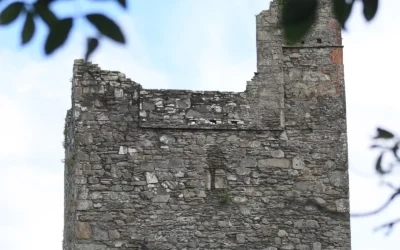
Audley’s Castle
Audley's Castle: The Free Tower House Above Strangford Lough, Where Game of Thrones Arrived In the first season of Game of Thrones, the fields and approaches to Castle Ward became Winterfell — the ancestral seat of the Starks. The fields around Audley's...
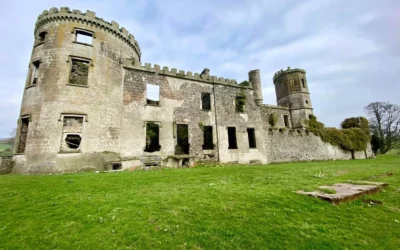
Kilwaughter Castle
Kilwaughter Castle: John Nash's Antrim Ruin, Declared Enemy Property in the Second World War In 1803, John Nash — the architect who designed Regent Street, remodelled Buckingham Palace and built the Royal Pavilion at Brighton — came to County Antrim and...
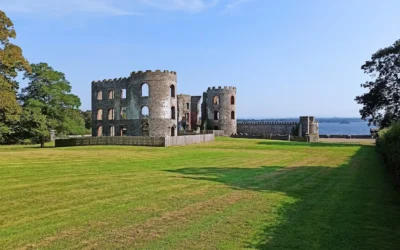
Shane’s Castle
Shane's Castle: The O'Neill Estate on Lough Neagh, Touched by John Nash and Twice Burned In 1809, John Nash — the architect who designed Regent Street, Carlton House Terrace and remodelled Buckingham Palace for George IV — began redesigning a castle on the...
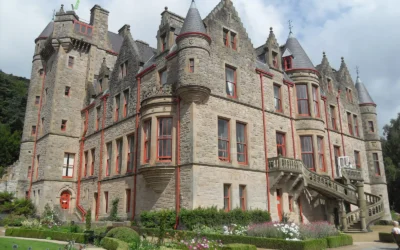
Belfast Castle
Belfast Castle: The Free Victorian Castle Above the City, with Nine Hidden Cats The legend says the castle will be safe — or its residents will have good fortune — as long as a white cat lives within its walls. The castle's response to this piece of local...
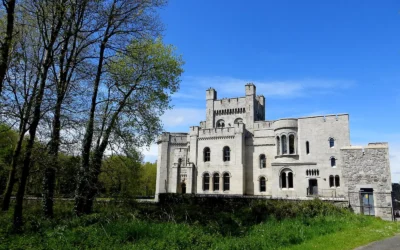
Gosford Castle
Gosford Castle: Ulster's Largest Listed Building — and Game of Thrones' Riverrun When Robin Fedden of the National Trust surveyed Gosford Castle in 1952, he described it as "one of the most original buildings of its time" and noted that it had...