
Glenarm Castle
Glenarm Castle: Six Centuries of the McDonnell Earls, Among the Glens of Antrim
In the 1920s, a fire broke out at Glenarm Castle — allegedly started in an attempt to keep the 11th Earl of Antrim's featherless parrot warm. The castle had to be substantially rebuilt. That particular episode is perhaps the most unusual moment in a history stretching back to the 13th century: Glenarm Castle has been the home of the McDonnell family, Earls of Antrim, since 1636, and the current 15th Earl and his family still live there.
When you visit the castle, you are visiting a genuinely inhabited private home that has belonged to the same family for nearly 400 years, on a site that has been a MacDonnell stronghold for centuries longer.
The castle was built by Sir Randal MacDonnell, 1st Earl of Antrim, in 1636, on the site of an earlier settlement established by John Bisset in the 13th century. The MacDonnell clan — who also controlled Dunluce Castle on the Antrim coast — brought home treasures salvaged from the 1588 wreck of the Spanish Armada's Girona, and some of those artefacts are displayed at Glenarm today.
The walled garden, the Tea Room, the Mini Land Rover Experience for children, and guided tours led by the Castle Butler make this one of the most varied and family-friendly privately owned estate visits in Northern Ireland. The castle is open from spring to autumn and is on the Causeway Coastal Route. This guide covers everything you need to plan your visit.
Where Is Glenarm Castle?
Glenarm Castle is in the village of Glenarm, County Antrim, Northern Ireland, on the A2 coastal road, approximately 23 miles north of Larne and about 45 minutes' drive from Belfast. Glenarm sits at the southern end of the Glens of Antrim, with the castle and its walled garden running along the Glenarm River.
By public transport, buses run to Glenarm from Larne, and Larne is served by regular trains from Belfast (around 40 minutes). From Larne, a bus or taxi completes the journey. On-site parking is available, with a possible small fee during peak times.
A Brief History of Glenarm Castle
The site's recorded history begins in the 13th century with John Bisset, who established a castle, kitchen garden, orchard and mill here. The MacDonnell clan — who were becoming the dominant power on the north Antrim coast — eventually acquired Glenarm, and in 1636 Sir Randal MacDonnell, 1st Earl of Antrim, built the castle that forms the basis of the present structure.
The MacDonnells of Antrim were an extraordinary family: their power base spanned both north-east Ulster and the Scottish Hebrides, and their clan chief Sorely Boy MacDonnell — who also controlled Dunluce Castle — salvaged the cargo of the Girona when the Armada ship wrecked on the rocks nearby in 1588. Some of that Armada salvage came to Glenarm; items from the Girona wreck, whose main treasure is now at the Ulster Museum in Belfast, are among the artefacts shown on the castle's guided tours.
In the 18th century, the 5th Earl of Antrim worked with engineer Christopher Myers to transform the castle after the family's previous residence, Ballymagarry, burned down in 1750. The rebuilt castle took on a grander Palladian character. Then came the 1920s fire — apparently ignited in the effort to warm the 11th Earl's featherless parrot — which led to the most recent substantial rebuilding. The Scottish Baronial character of the present castle, with its towers, turrets and Barbican Gate, is partly a product of that reconstruction.
The remarkable thing about Glenarm is its continuity. The 15th Earl and his family live here now. The castle has never been sold, never been abandoned, never passed out of the McDonnell family. The guided tours take place in rooms that are still in residential use — a quality that distinguishes Glenarm from most heritage castle visits.
Architecture & Design
The Barbican Gate is the castle's iconic entrance feature: a dramatic turreted gateway that announces the transition from the village of Glenarm into the estate. The castle itself, in Scottish Baronial style with towers, turrets and intricate stonework, combines the original 17th-century core with 18th-century Palladian additions and the post-fire 20th-century reconstruction.
Inside, the period furnishings, family portraits and Girona artefacts constitute a collection that spans several centuries of MacDonnell family life. The state rooms are shown on guided tours led by the Castle Butler.
The walled garden is the estate's most celebrated feature outside the castle walls: an enclosed garden with vibrant flowerbeds, a yew circle, herb gardens and peaceful pathways, all graced by resident peacocks. The garden has been recognised as one of the finest privately maintained walled gardens in Northern Ireland and is worth extended time on any visit.
Legends & Lore
Glenarm Castle has no widely documented ghost tradition — unlike many of its counterparts on the Antrim coast, it has never accumulated the kind of dramatic folklore that surrounds, say, Dunluce or Kinbane. What Glenarm has instead is historical depth and genuine family continuity that requires no embellishment.
The Dalriada connection is the deepest thread: the MacDonnells traced their lineage to the ancient Kingdom of Dalriada — the Gaelic kingdom that spanned north-east Ireland and western Scotland, and which is at the root of both Irish and Scottish Gaelic culture. The Dalriada Festival, held at Glenarm each summer, celebrates Ulster Scots culture and the shared heritage of the Irish and Scottish Gaelic tradition, and takes its name from this ancient kingdom.
The Girona artefacts are their own form of lore: objects salvaged from a Spanish Armada flagship in 1588 now displayed in a family home that has stood for four centuries. And the featherless parrot fire — whatever its precise truth — is simply one of the best castle anecdotes in Northern Ireland.
Visiting the Castle
Glenarm Castle is open from spring to autumn (broadly March to October). It is a privately owned estate, and the McDonnell family still live in the main castle. Admission fees apply; members of selected heritage and garden membership schemes may enter free — check the official website for current member admission details.
Guided tours of the castle interior are led by the Castle Butler and offer an intimate account of the family's history, the collection and the Girona artefacts. Advance booking is recommended for tours.
The walled garden with its peacocks, yew circle and herb gardens is the primary outdoor attraction. The Tea Room in the former Mushroom House serves homemade meals with views of the kitchen garden — a distinctive and charming setting. The Milk Parlour offers gourmet ice cream made from local Shorthorn dairy cattle.
The Mini Land Rover Experience — where children drive scaled-down Land Rovers on an off-road course — is a popular family activity. E-bikes are available for exploring the estate. The Antrim McDonnell Heritage Centre provides further historical context. The Byre gift shop offers fashion, accessories and exclusive souvenirs.
Photography is permitted in the gardens and outdoor areas. Restrictions apply inside the castle during tours to protect the historic interiors — confirm with staff on arrival.
Check Tickets & Tour Times for Glenarm Castle →
For current opening hours, prices and tour availability, check the official Glenarm Castle website before your visit.
Where to Stay Near Glenarm Castle
Glenarm village has limited accommodation. Larne, 23 miles south, has hotels and guesthouses with good transport connections to Belfast. Carnlough, a short drive north, has guesthouses and a fine harbour. Ballycastle, further north, is ideal for combining with the wider Causeway Coastal Route.
Find Hotels & Stays Near Glenarm →
The Best Time to Visit
Spring (April to June) is particularly fine at Glenarm — the walled garden is coming into bloom, the peacocks are at their most colourful and the Glens of Antrim around the estate are brilliant green. Summer (July to August) is the busiest period and typically when the Dalriada Festival takes place.
Autumn (September to October) brings quieter visits and the garden in its late-season beauty. The castle closes in winter — check the official website for the exact opening period each year.
How to Get There
By car. From Belfast, take the M2 and A8 to Larne, then the A2 coastal road north to Glenarm — around 45 minutes. Free parking is generally available, with a possible small fee at peak times.
By train and bus. Trains from Belfast reach Larne in around 40 minutes. From Larne, buses serve the Antrim coastal road including Glenarm.
Compare Transfers & Local Transport on the Antrim Coast →
Nearby Attractions
Glenarm sits in the southern Glens of Antrim, with the Causeway Coastal Route running north and Belfast to the south.
| Attraction | Why Visit | Distance |
|---|---|---|
| Glenariff Forest Park | One of the nine Glens of Antrim — a spectacular woodland with waterfalls, gorge trails and a forest café | ~8 miles |
| Carnlough | A picturesque harbour village with a good sandy beach and connections to the Churchill family (Winston Churchill's family used to holiday here) | ~3 miles |
| Carrickfergus Castle | Ireland's finest Norman fortress — 800 years of sieges, King William III's landing point and inspiration for the famous folk song | ~15 miles |
| Dunluce Castle | The dramatic MacDonnell clifftop ruin — the same clan as Glenarm's McDonnells built and controlled it, and the Girona Armada link connects both sites | ~35 miles |
| Ballycastle | A lively coastal town and departure point for the Rathlin Island ferry — the start of the Causeway Coast proper | ~25 miles |
A natural Glens of Antrim day combines Glenarm Castle with Glenariff Forest Park — estate garden and waterfall gorge in the same afternoon.
Browse Glens of Antrim & Northern Ireland Tours →
Family & Accessibility
Families. Glenarm is one of the best family castle estates in Northern Ireland. The Mini Land Rover Experience, the peacocks, the ice cream parlour and the estate's E-bikes engage children of all ages. The guided castle tour works well for older children and teenagers with an interest in history. Check whether dogs are welcome before bringing them — as a working private estate the policy may vary.
Accessibility. Most areas of the estate are accessible for wheelchair and buggy users, though some gravel paths and historic areas have uneven terrain. Accessible toilets are in the walled garden and Tea Room. Check the castle's accessibility page for current details.
Practical Tips
- Book guided tours in advance — the Castle Butler's tours are popular and fill quickly in summer.
- Wear comfortable walking shoes for the walled garden paths and estate grounds.
- Pack a compact travel umbrella — Antrim coast weather is changeable.
- Bring a portable power bank for photography — the peacocks, the Barbican Gate and the Glens setting are all excellent.
- Allow at least two hours — the walled garden alone deserves 45 minutes; the castle tour is around the same.
- Photography is permitted outdoors; restrictions inside the castle during tours — confirm with staff.
- Overseas visitor? Pack a UK travel adapter for Type G plugs.
Conclusion
Glenarm Castle has been in the same family for nearly four centuries. The 15th Earl still lives there. The artefacts from the Girona shipwreck sit in the same rooms where they have sat for generations. Peacocks wander the walled garden. The featherless parrot that allegedly started the 1920s fire has long since moved on.
And somewhere in the Glens of Antrim around it, the ancient Kingdom of Dalriada leaves its name on a summer festival that the same family still hosts each year. Glenarm is a genuinely inhabited piece of living history, and that gives it a quality that no amount of heritage presentation can manufacture.
Frequently Asked Questions
What are the opening months for Glenarm Castle?
The castle is open from spring to autumn, broadly March to October. Check the official website for exact opening dates and hours for the current year.
How much does it cost to visit Glenarm Castle?
Admission fees vary by age; members of selected heritage and garden membership schemes may enter free. Check the Glenarm Castle official website for current prices.
Who lives at Glenarm Castle?
The 15th Earl of Antrim and his family still live in the castle. The McDonnell family have been Earls of Antrim and residents of Glenarm since 1636 — approaching 400 years of continuous family occupation.
What are the Girona artefacts at Glenarm Castle?
In 1588, the Spanish Armada ship Girona wrecked on the Antrim coast near Dunluce Castle. The MacDonnell clan salvaged cargo from the wreck, and some artefacts from the Girona are displayed at Glenarm Castle on guided tours. The main Girona treasure is at the Ulster Museum in Belfast.
What is the Mini Land Rover Experience?
A family activity in which children drive scaled-down Land Rover vehicles around an off-road course on the estate grounds. Advance booking is recommended.
Are there peacocks at Glenarm Castle?
Yes — peacocks are resident in the walled garden and are a memorable feature of the estate.
Is there food at Glenarm Castle?
The Tea Room in the former Mushroom House serves homemade meals with views of the kitchen garden. The Milk Parlour offers gourmet ice cream made from local Shorthorn dairy cattle.
Is Glenarm Castle wheelchair accessible?
Most areas are accessible for wheelchair and buggy users. Some gravel paths and historic areas may have uneven terrain. Accessible toilets are available in the walled garden and Tea Room. Check the official accessibility information before visiting.
How do I get to Glenarm Castle from Belfast?
By car, approximately 45 minutes via the M2, A8 and A2 coastal road. By train to Larne (around 40 minutes from Belfast), then bus along the coastal road to Glenarm.
Can I take photos at Glenarm Castle?
Photography is permitted in the gardens and outdoor areas. Restrictions apply inside the castle during guided tours — confirm with staff on arrival.
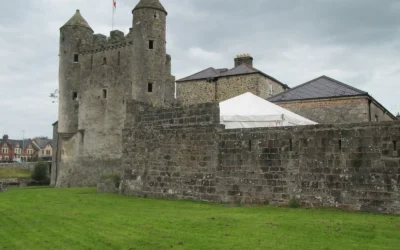
Enniskillen Castle
Enniskillen Castle: The Maguire Clan's Lough Erne Fortress, Home to Two Museums Hugh Maguire built his castle at Enniskillen around 1428. His nickname — 'the Hospitable' — suggests a lord who understood the politics of generosity as well as the politics...
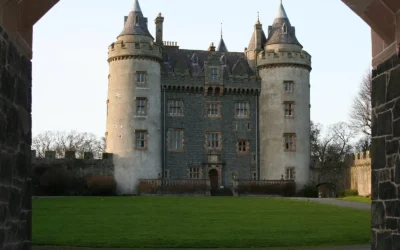
Killyleagh Castle
Killyleagh Castle: Ireland's Oldest Inhabited Castle, Above Strangford Lough Sir Hans Sloane was born in Killyleagh in 1660. The physician, naturalist and collector who grew up in this County Down village on the shore of Strangford Lough went on to assemble a...
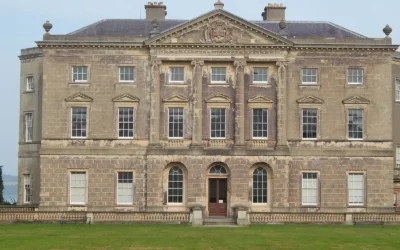
Castle Ward
Castle Ward: The House That Couldn't Agree on a Style — and Became Winterfell Bernard Ward, 1st Viscount Bangor, and his wife Lady Ann Bligh could not agree on what kind of house they wanted to build at their County Down estate in the 1760s. He wanted classical...
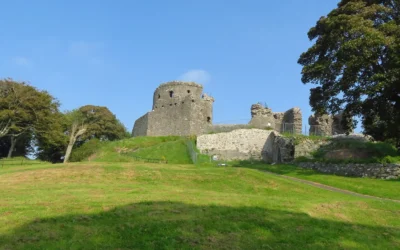
Dundrum Castle
Dundrum Castle: Where John de Courcy's Norman Ulster Meets the Mourne Mountains In 1177, the same year that John de Courcy built Carrickfergus Castle on Belfast Lough, he also established a fortress on a rocky hill above Dundrum Bay in County Down. The two...
Carrickfergus Castle
Carrickfergus Castle: Ireland's Greatest Norman Fortress, Above Belfast Lough In 1315, Robert the Bruce's brother Edward invaded Ireland with an army and besieged Carrickfergus Castle. The siege went on so long, and provisions ran so completely dry, that the...