
Dunvegan Castle
Dunvegan Castle: The Fairy Flag, Eight Hundred Years of MacLeod and the Loch of Skye
The Chiefs of Clan MacLeod have lived at Dunvegan Castle for over 800 years. Not visited occasionally, not returned to — lived in, continuously, for more than eight centuries. No other castle in Scotland has been in single-family occupation for so long, which makes Dunvegan the oldest continuously inhabited castle in the country.
When Dr Samuel Johnson visited in 1773, writing his account of the Highlands and Western Islands, he found the MacLeods here. Sir Walter Scott visited in 1814. Queen Elizabeth II visited. King Charles III has visited. The castle still belongs to the MacLeods, the current chief still lives here, and the most sacred relic of the clan — the Fairy Flag — is still in the room where it has been kept for centuries.
Dunvegan Castle stands on a basalt rock 50 feet above Loch Dunvegan, on the north-west coast of the Isle of Skye. The loch stretches before it; seals haul out in the sea beyond, and the castle runs boat trips to watch them. The five-acre gardens, begun in the 18th century, include a Water Garden, a Round Garden and a Monkey Puzzle tree. The interiors hold treasures accumulated by the MacLeod chiefs across eight centuries: the Fairy Flag, Rory Mor's ceremonial drinking horn, the Dunvegan Cup. This guide covers everything you need to plan your visit.
Where Is Dunvegan Castle?
Dunvegan Castle is 1 mile north of Dunvegan village, on the north-west coast of the Isle of Skye, in the Outer Hebrides district of Highland Scotland. By car from the Scottish mainland, the journey takes four to five hours from Glasgow or Edinburgh via the A82 and A87 to Kyle of Lochalsh, then over the free Skye Bridge. From Kyle of Lochalsh it is 45 miles to Dunvegan via the A850. From Portree, Skye's main town, allow around 45 minutes.
Buses run from Portree and other parts of Skye to Dunvegan village, from where the castle is a one-mile walk or a short taxi ride. Free parking is available at the castle.
A Brief History of Dunvegan Castle
The earliest structure at Dunvegan was a curtain wall built in the 13th century to fortify the rocky promontory. A four-storey tower house was added in the late 14th century. Around 1500, Alasdair Crotach — the 8th MacLeod Chief — added what became known as the Fairy Tower, named for the clan's most treasured possession, the Fairy Flag, which was kept there.
Further building in the 17th century connected the various elements, and in the 1840s the 25th chief, Norman MacLeod, commissioned architect Robert Brown to unify the disparate structures into the Gothic Revival composition visitors see today, adding mock battlements, a drawbridge and the romanticised exterior that gave the castle its present unified appearance.
The MacLeods' continuous occupation of the castle represents one of the longest unbroken periods of family occupation in the history of any building in Britain. The castle has absorbed the whole of Scottish history — the clan wars, the Jacobite risings (the MacLeods stood largely apart from both main conflicts), the clearances, the Empire, the 20th century — without ever being abandoned or sold to an outside family.
The remarkable thing about Dunvegan is the persistence of what matters most. The Fairy Flag, the drinking horn, the cup — these objects have been in the family's possession for five, six, seven centuries. In a world where most historic houses have been sold, demolished, converted or institutionalised, Dunvegan is still a home.
Architecture & Design
The castle's present Gothic Revival exterior, with its mock battlements, turrets and dramatic cliff-edge position above the loch, dates from the 1840s remodelling. But beneath the Victorian romanticisation lie the actual medieval and post-medieval structures: the 13th-century curtain wall, the 14th-century keep and the 15th-century Fairy Tower. The basalt rock on which the castle stands rises 50 feet above the loch, giving the building both its visual drama and its natural defensive strength.
Inside, the public rooms display the accumulated treasures of eight centuries of MacLeod occupation. Period furniture, portraits and objects reflect the clan's history and the tastes of successive chiefs. The five-acre gardens, begun in the 18th century and developed by successive generations, contrast with the rugged Skye landscape outside: the Water Garden with its ornate bridges and streams, the Round Garden with its formal parterre, the exotic plantings including a Monkey Puzzle tree, and the views from the terraces across the loch to the Cuillin range.
Legends & Lore
The Fairy Flag is the most famous clan relic in Scotland. This fragile silk banner — preserved under glass in the castle — is said to have been given to the MacLeods by fairies, with the power, when waved three times, to save the clan in its hour of greatest need. The flag has supposedly been waved twice already, and the clan holds one remaining use.
The silk has been tested and identified as probably 4th- to 7th-century Syrian or Middle Eastern in origin, which has prompted speculation about how it might have reached Skye — brought back by a Crusader, acquired in Viking trade networks, or otherwise carried across the medieval world before entering the MacLeod inheritance. None of the explanations fully satisfies. The flag remains, and its origin remains genuinely mysterious.
The Dunvegan Cup and Rory Mor's Horn — a great ceremonial drinking horn of the 15th chief that inaugurates new clan chiefs in traditional ceremony — are displayed alongside the flag, each with its own layer of clan tradition. That these objects have been kept in the same family's possession, in this castle, for five centuries and more, is itself a kind of legend.
Visiting the Castle
Dunvegan Castle is open seasonally from spring to mid-autumn, daily. The visit takes in the castle's public rooms — with the Fairy Flag, Rory Mor's Horn, the Dunvegan Cup and the accumulated portraits and furnishings of the MacLeod chiefs across the centuries — and the five acres of gardens. Guided tours run throughout the day during opening hours; no booking is required.
The standout additional experience at Dunvegan is the seal-watching boat trip on Loch Dunvegan, departing from the castle's own jetty from spring to autumn, weather permitting. The common and grey seals that haul out on the loch islands are viewed at close range from the boat — a 25-minute trip that gives a perspective of the castle from the water found nowhere else.
The MacLeod Tables Café provides refreshments. The castle gift shop sells souvenirs, crafts and knitwear. Non-commercial photography is permitted inside the castle without flash, tripods or selfie sticks. Dogs are welcome in the gardens on leads; only assistance dogs are admitted inside the castle. An armchair visit with a video screening is available for visitors unable to access the castle interior.
Check Tickets & Tour Times for Dunvegan Castle →
For current opening dates, times and prices, check the official Dunvegan Castle website before your visit.
Where to Stay Near Dunvegan Castle
Dunvegan Castle does not offer visitor accommodation. Dunvegan village, 1 mile south, has a small number of guesthouses and self-catering options. For a wider choice, Portree — Skye's main town, 22 miles east — offers hotels and guesthouses across all budgets, and is an excellent base for exploring both Dunvegan and the wider island.
Find Hotels & Stays in Dunvegan →
The Best Time to Visit
May and early June are excellent months for Dunvegan — the gardens are coming into bloom, the Skye midges have not yet reached their summer peak, and the castle is quieter than in peak summer. July and August bring the most reliable weather and the most daylight for exploring both the castle and the wider island, but also the highest visitor numbers; arrive early. September is one of the loveliest months for Skye as a whole — the summer crowds begin to thin, the light is extraordinary and the gardens are at their richest.
Seal-watching boat trips run from spring to autumn, weather permitting. If seal trips are a priority, the shoulder seasons of May and September offer reasonable chances with fewer people competing for places.
How to Get There
By car. From the Scottish mainland, take the A82 north and then the A87 west to Kyle of Lochalsh and the Skye Bridge (free). From Kyle of Lochalsh, take the A850 north and west to Dunvegan — around 45 miles, allow one to one and a half hours. Skye's roads include single-track sections; take care with passing places.
By bus. Services from Portree and other parts of Skye reach Dunvegan village, from where the castle is 1 mile.
Compare Transfers & Local Transport on Skye →
Nearby Attractions
Dunvegan is on the Duirinish peninsula of north-west Skye, within reach of some of the island's finest landscapes and sites.
| Attraction | Why Visit | Distance |
|---|---|---|
| The Fairy Pools | Crystal-clear glacial pools and waterfalls at the foot of the Black Cuillin — one of the most beautiful walks on Skye | ~30 mins |
| Old Man of Storr | The iconic basalt pinnacle on the Trotternish Ridge — a short but dramatic walk with extraordinary views | ~1 hour |
| Quiraing | The dramatic landslipped landscape of Trotternish — some of the most surreal scenery in the British Isles | ~1 hour |
| Eilean Donan Castle | The most photographed castle in Scotland, 15 minutes from the Skye Bridge — our separate guide covers it | ~1 hour |
| Skye Museum of Island Life | A beautifully preserved crofting township showing traditional Highland island life | ~30 mins |
A natural Skye day pairs Dunvegan Castle in the morning — castle, gardens and seals — with a walk to the Fairy Pools in the afternoon before returning through the Cuillin landscape at golden hour.
Browse Isle of Skye Tours & Day Trips →
Family & Accessibility
Families. Dunvegan is excellent for families. The Fairy Flag and its legend engage children powerfully; the seal-watching boat trips are a highlight for all ages; the gardens give space to run; and seasonal activities including a Wild Wood Trail and school holiday events make the castle particularly family-focused at busy times of year.
Accessibility. The gardens are accessible via level paths from dedicated parking bays, with accessible toilets in the car park and café. The castle interior has limited access due to steps, and powered wheelchairs are not permitted inside; an armchair visit with video screening is available. The café and gift shop are accessible via ramps. Check the official accessibility information before visiting.
Practical Tips
- Book the seal-watching boat trips on arrival — places are limited and sell out on busy summer days. Check the official website for current departure times.
- Wear comfortable walking shoes — the castle grounds and gardens involve uneven terrain, steps and grass paths.
- Pack a waterproof walking jacket — Skye weather is famously changeable even in July.
- Bring a portable power bank for a full day of photography across the castle, gardens and loch.
- Start with the castle, then the gardens, then the seals — this sequence takes advantage of the morning light inside.
- Photography inside: no flash, no tripods, no selfie sticks — keep this in mind for photographing the Fairy Flag.
- Overseas visitor? Pack a UK travel adapter for Type G plugs.
Conclusion
Dunvegan Castle has been the home of the Chiefs of Clan MacLeod for over 800 years, which makes it the oldest continuously inhabited castle in Scotland and one of the oldest inhabited buildings anywhere in the British Isles.
The Fairy Flag — an ancient silk banner of genuinely mysterious origin, preserved in the same castle for perhaps five centuries — is the most famous clan relic in Scotland. The seals on Loch Dunvegan can be reached by boat from the castle's own jetty. And the Cuillin range rises behind the whole scene, visible from the garden on a clear day. There is nowhere else in Scotland quite like it.
Frequently Asked Questions
When is Dunvegan Castle open?
The castle is open seasonally from spring to mid-autumn, generally April to mid-October, daily. Check the official website for the current season's exact dates and times.
How much does it cost to visit Dunvegan Castle?
Admission fees vary by age, with separate tickets available for castle and gardens combined, gardens only, and the seal-watching boat trips. Check the official website for current prices.
What is the Fairy Flag?
A fragile silk banner preserved under glass at Dunvegan Castle, said to have been gifted to the MacLeods by fairies with the power to save the clan in extremis if waved three times. The silk has been tested and is thought to date from the 4th to 7th century, with probable Middle Eastern origin — how it reached Skye remains genuinely unknown.
Can I go on a seal-watching trip from Dunvegan Castle?
Yes — boat trips on Loch Dunvegan run from the castle jetty from spring to autumn, weather permitting, taking visitors to see the grey and common seals on the sea loch islands. Places are limited and should be secured on arrival.
Is Dunvegan Castle really the oldest inhabited castle in Scotland?
Yes — the MacLeod family has been in continuous occupation of Dunvegan Castle for over 800 years, making it the oldest continuously inhabited castle in Scotland.
Is Dunvegan Castle suitable for children?
Very much so — the Fairy Flag legend, the seal-watching boat trips, the Wild Wood Trail and the seasonal activities make it one of the most child-friendly castle visits on Skye.
Is Dunvegan Castle wheelchair accessible?
The gardens are accessible via level paths, and the café and gift shop are accessible by ramp. The castle interior has limited access due to steps; powered wheelchairs are not permitted inside. An armchair visit with video screening is available for those unable to enter. Accessible toilets are in the car park and café.
Is there food at Dunvegan Castle?
The MacLeod Tables Café provides refreshments at the castle.
Are dogs allowed at Dunvegan Castle?
Dogs are welcome in the gardens on leads. Only assistance dogs are permitted inside the castle.
Can I take photos inside Dunvegan Castle?
Non-commercial photography is permitted inside the castle without flash, tripods or selfie sticks. Drone filming requires prior approval from the castle.
Audley’s Castle
Audley's Castle: The Free Tower House Above Strangford Lough, Where Game of Thrones Arrived In the first season of Game of Thrones, the fields and approaches to Castle Ward became Winterfell — the ancestral seat of the Starks. The fields around Audley's...
Kilwaughter Castle
Kilwaughter Castle: John Nash's Antrim Ruin, Declared Enemy Property in the Second World War In 1803, John Nash — the architect who designed Regent Street, remodelled Buckingham Palace and built the Royal Pavilion at Brighton — came to County Antrim and...
Shane’s Castle
Shane's Castle: The O'Neill Estate on Lough Neagh, Touched by John Nash and Twice Burned In 1809, John Nash — the architect who designed Regent Street, Carlton House Terrace and remodelled Buckingham Palace for George IV — began redesigning a castle on the...
Belfast Castle
Belfast Castle: The Free Victorian Castle Above the City, with Nine Hidden Cats The legend says the castle will be safe — or its residents will have good fortune — as long as a white cat lives within its walls. The castle's response to this piece of local...
Gosford Castle
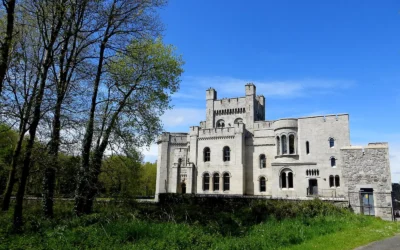
Gosford Castle: Ulster's Largest Listed Building — and Game of Thrones' Riverrun When Robin Fedden of the National Trust surveyed Gosford Castle in 1952, he described it as "one of the most original buildings of its time" and noted that it had...