
Dunluce Castle
Dunluce Castle: The Clifftop Ruin Where Game of Thrones Met Narnia, Above the Antrim Coast
In 1588, a Spanish Armada ship called the Girona wrecked on the rocks near Dunluce Castle. The MacDonnell clan — who had controlled the castle since the 1550s — salvaged the Girona's cargo, including her cannons, and used the proceeds to fortify their clifftop stronghold. The gatehouses they built with Armada money still stand above the North Atlantic, connected to the mainland by a stone bridge over a sheer drop to the sea.
In 1639, a storm supposedly sent the castle's kitchens — cooks and all — plunging into the sea below. Whether or not the story is precisely accurate, the cliff is real, and the sea below it is real, and the ruins of Dunluce Castle clinging to their basalt outcrop are among the most dramatically sited medieval remains in Europe.
Dunluce Castle has been the seat of the MacDonnell earls of Antrim, a filming location for HBO's Game of Thrones, and — in the view of many literary scholars — the probable inspiration for C.S. Lewis's Cair Paravel in The Chronicles of Narnia.
Lewis grew up in Belfast and spent summers on the Antrim coast; the clifftop castle above the sea appears in the Narnia books in a form that its landscape unmistakably suggests. A natural cave beneath the castle, accessible by 115 steep steps, carries its own legend of a captured mermaid. This guide covers everything you need to plan your visit.
Where Is Dunluce Castle?
Dunluce Castle is on the A2 coastal road in County Antrim, Northern Ireland, between the towns of Portrush (around 3 miles west) and Bushmills (around 2 miles east). From Belfast, the drive takes around one hour, covering approximately 56 miles. Free parking is available on site, though spaces fill at peak times.
By public transport, trains from Belfast reach Portrush in around two hours; from Portrush, the Translink line 402 bus reaches Dunluce Castle in approximately 10 minutes. From Bushmills, the same bus takes around 8 minutes.
A Brief History of Dunluce Castle
The site was first fortified by Richard Óg de Burgh, 2nd Earl of Ulster, in the 13th century, but the castle as it stands today was largely constructed around 1500 by the MacQuillan family, with the earliest written record dating from 1513. In the 1550s, the MacDonnells — a powerful clan with roots in both Ulster and the Scottish Hebrides — seized the castle under the warrior chieftain Sorely Boy MacDonnell and made Dunluce the centre of their power in Ulster.
It was Sorely Boy's use of the Girona salvage that gave the castle its most distinctive surviving feature. When the Spanish Armada flagship Girona wrecked on the nearby rocks in October 1588, the MacDonnells recovered substantial material from the wreck, including cannon, and used the proceeds to build fortified gatehouses armed with artillery — a direct line between the Armada's wreck and the stones that visitors walk through today. The Girona's recovered treasure is now held in the Ulster Museum in Belfast.
By the 17th century, Randal MacDonnell, the 1st Earl of Antrim, established a small planned town adjacent to the castle in 1608 — the "lost town of Dunluce," which featured a grid street layout and, remarkably, indoor sanitation. The town thrived briefly but was razed in 1641. Archaeological excavations have been revealing its remains since 2011.
The castle declined after the Battle of the Boyne in 1690 and was gradually abandoned. It passed into state care in 1928 and is now managed by the Department for Communities.
The remarkable thing about Dunluce is the physical reality of its peril. The castle sits on a basalt stack connected to the cliff by a narrow bridge. The sea is directly below. In 1639, during a dinner party, part of the kitchen wing fell into the sea — whether all the details of the story are accurate, the geology of the site makes it entirely plausible.
Architecture & Design
Dunluce's architecture is shaped entirely by the basalt outcrop it occupies. The two large drum towers on the eastern side, each approximately 9 metres in diameter, were the MacQuillan construction — the earliest surviving substantial elements of the castle. The Armada-funded gatehouses, built after 1588, are the most distinctive addition: fortified entrances designed to carry cannon, making the cliff approach a defended killing ground.
Within the castle, the remains of a Jacobean mansion built around 1620 speak to the ambition of the MacDonnell earls in their period of greatest power. A loggia — a covered gallery — survives in fragmentary form. The entire complex is connected to the mainland by a stone bridge replacing an original drawbridge.
The Mermaid's Cave, a natural sea cave beneath the cliff and accessible from the castle by 115 steep steps, is one of the most unusual features at any castle in these islands — a cave reached from within the castle ruin, opening onto the sea.
Legends & Lore
Dunluce's folklore is as dramatic as its history. Maeve Roe is the most vivid figure in the local tradition: according to legend, she was the daughter of a castle lord who drowned in the waters below while attempting to elope with her true love, and her cries — a banshee's warning — are said to echo through the ruins on stormy nights. This is told as folklore rather than fact.
Local tradition also speaks of a sorceress said to have cast a protection over the castle — a legend that has grown around the building's improbable survival on its narrow rock. The tale is passed on as folk tradition.
The Mermaid's Cave carries its own story: that a mermaid was captured and held in the cave before escaping to the sea. The cave itself — reached by 115 steps, opening onto the Atlantic — gives the legend a vivid setting.
On screen, Dunluce's twin drum towers and clifftop location served as the seat of House Greyjoy in HBO's Game of Thrones, with CGI enhancing the sea stacks and the Iron Islands atmosphere. And C.S. Lewis — who grew up in Belfast and knew this coastline — is widely believed to have drawn on Dunluce for the clifftop castle of Cair Paravel in The Chronicles of Narnia. The literary connection is unconfirmed but persistent, and the landscape makes it entirely convincing.
Visiting the Castle
Dunluce Castle is managed by the Department for Communities and is open daily. A visitor centre with an exhibition and short film provides an introduction to the castle's history and the ongoing archaeological work on the lost town.
Visitors explore the castle ruins on a self-guided basis: the gatehouses, the drum towers, the Jacobean mansion remains and the bridge over the cliff drop are all accessible. The Mermaid's Cave descent (115 steep steps) should be attempted only in dry conditions and suitable footwear. Guided tours can be arranged in advance through the castle.
There is no café at Dunluce Castle. Bring your own food and drinks, or plan to eat in Bushmills or Portrush before or after. A gift shop is on site.
Safety: Dunluce Castle is a clifftop ruin with sheer drops to the sea. Keep to the marked paths, mind the cliff edges at all times, and supervise children carefully throughout the visit. Suitable footwear is essential — the basalt surfaces become very slippery when wet.
Photography is permitted throughout. No dogs are allowed at the castle except assistance dogs.
Check Tickets & Tour Times for Dunluce Castle →
For current opening hours and prices, check the official Discover Northern Ireland website before your visit.
Where to Stay Near Dunluce Castle
Bushmills, 2 miles east, is the nearest village and has a small selection of guesthouses. Portrush, 3 miles west, is a larger seaside town with a wide range of hotels and guesthouses and good restaurants. Portstewart, 4 miles west, is quieter and has excellent accommodation on the Strand.
Find Hotels & Stays in Portrush →
The Best Time to Visit
Spring (April to June) and early autumn (September to October) are the best seasons for Dunluce — the Antrim coast is vivid, the castle is less crowded than in July and August, and the light on the cliffs and the sea is exceptional. The Causeway Coastal Route is outstanding in spring.
Summer (July to August) is the busiest period — arrive early to secure parking. The long Ulster evenings in late June and July give the clifftop ruins extraordinary golden-hour light.
Winter brings the most dramatic atmosphere — storms over the North Atlantic, the castle walls in driving rain — but visitor facilities are reduced and conditions can be severe.
How to Get There
By car. Take the A2 coast road between Portrush and Bushmills; the castle is signposted. From Belfast, allow around one hour. Free parking on site.
By bus. From Portrush (around 10 minutes) or Bushmills (around 8 minutes), the Translink line 402 bus stops at the castle.
By train. Belfast to Portrush takes around two hours; change for the bus from Portrush.
Compare Transfers & Local Transport on the Antrim Coast →
Nearby Attractions
Dunluce is on the Causeway Coastal Route, widely regarded as one of the finest coastal drives in the world.
| Attraction | Why Visit | Distance |
|---|---|---|
| Giant's Causeway (UNESCO) | The extraordinary basalt column formations created by ancient volcanic activity — a UNESCO World Heritage Site and Northern Ireland's most visited natural landmark | ~12 minutes |
| Carrick-a-Rede Rope Bridge | A 20-metre rope bridge suspended 30 metres above the sea between the mainland and a small rocky island — one of the most thrilling short walks on the Antrim coast | ~20 minutes |
| The Dark Hedges | The beech tree avenue used in Game of Thrones (the Kingsroad) — one of the most photographed natural features in Northern Ireland | ~15 miles |
| Portrush | A seaside town with two beaches, good restaurants and Royal Portrush Golf Club (host of The Open Championship) | ~3 miles |
| Ulster Museum, Belfast | The treasure recovered from the Girona — the Armada cannons and jewellery that paid for Dunluce's gatehouses — is displayed here | ~55 miles |
A natural Causeway Coast day combines Dunluce Castle in the morning with the Giant's Causeway in the afternoon — the Antrim coast's two most dramatic places in one visit, barely 12 minutes apart.
Browse Causeway Coastal Route & Antrim Tours →
Family & Accessibility
Families. Dunluce is excellent for families — the Game of Thrones connection, the cliff-edge drama, the Mermaid's Cave and the Narnia connection engage children of all ages. Children must be supervised at all times given the cliff drops. No dogs except assistance dogs.
Accessibility. The cliff site, cobbled paths and uneven basalt surfaces limit wheelchair access in some areas. Visitors with mobility requirements should contact the castle before visiting. Disabled access is available to some parts of the site.
Practical Tips
- Wear sturdy, non-slip shoes — the basalt surfaces become treacherous when wet, and the Mermaid's Cave steps (115 of them) require care even in dry conditions.
- Pack a waterproof walking jacket — the Antrim coast is exposed and the weather changes rapidly.
- Bring a portable power bank for photography — the clifftop views, the gatehouses and the sea are exceptional.
- Wear comfortable walking shoes with grip throughout.
- No café on site — bring food and drinks, or plan refreshment stops in Bushmills or Portrush.
- Keep to marked paths and mind the cliff edges — the drops are sheer and the surfaces uneven.
- Photography is permitted throughout.
- Overseas visitor? Pack a UK travel adapter for Type G plugs.
Conclusion
Dunluce Castle has survived on its basalt stack above the Atlantic for six centuries, funded at one point by an Armada shipwreck, mythologised by a banshee legend, used by Game of Thrones and possibly the model for Cair Paravel. The kitchen may or may not have fallen into the sea in 1639.
The Mermaid's Cave is 115 steps below. The Girona's treasure is in Belfast. And the castle itself is still there, on the cliff, connected to the mainland by a bridge over a drop to the sea. Of all the ruined castles on the coasts of these islands, Dunluce makes the most vivid argument for its own continued existence.
Frequently Asked Questions
What are the opening hours of Dunluce Castle?
The castle is open daily, generally from 9:30am with last admission at 4:30pm, though hours may vary seasonally. Check the official Discover Northern Ireland website for current times.
How much does it cost to visit Dunluce Castle?
Admission fees vary by age — adults, children, concessions and family tickets are available. Check the Department for Communities website for current prices.
What is Dunluce Castle's connection to Game of Thrones?
Dunluce Castle served as the seat of House Greyjoy in HBO's Game of Thrones, with its clifftop location and twin drum towers enhanced by CGI for the series. It is one of the principal Game of Thrones filming locations on the Antrim coast.
Did C.S. Lewis base Cair Paravel on Dunluce Castle?
The connection is unconfirmed but widely held. Lewis grew up in Belfast and knew the Antrim coast well; the clifftop castle in The Chronicles of Narnia corresponds closely in setting and appearance to Dunluce. Lewis never stated it explicitly, but the similarity is striking and persistent in literary discussion.
What happened to the kitchen at Dunluce Castle?
According to a well-known story, part of the kitchen wing plunged into the sea during a storm in 1639, possibly during a dinner party. Some evidence suggests the details may have been embellished over time, but the geology of the site — a narrow basalt stack with sheer drops to the sea — makes such an event entirely plausible.
What is the Mermaid's Cave?
A natural sea cave directly beneath the castle, accessible from the castle by 115 steep steps. Local legend holds that a mermaid was captured and kept in the cave before escaping to the sea. The cave opens onto the Atlantic and is best visited in dry conditions with suitable footwear.
Is there a café at Dunluce Castle?
No — there are no catering facilities at the castle. Bring your own food and drinks, or plan to eat in Bushmills (2 miles east) or Portrush (3 miles west).
Are dogs allowed at Dunluce Castle?
No dogs are permitted at the castle except assistance dogs.
Is Dunluce Castle safe to visit?
The castle is a clifftop ruin with sheer drops to the sea. Keep to marked paths, do not approach cliff edges, and supervise children at all times. Wear sturdy non-slip footwear, especially in wet weather.
How does Dunluce Castle connect to the Spanish Armada?
In 1588, the Spanish Armada ship Girona wrecked on the rocks near Dunluce. The MacDonnell clan salvaged her cargo including cannon, and used the proceeds to build fortified gatehouses at the castle. The Girona's recovered treasure — cannon, jewellery and coins — is now displayed at the Ulster Museum in Belfast.
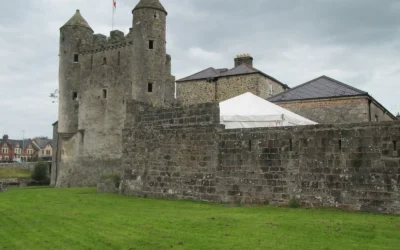
Enniskillen Castle
Enniskillen Castle: The Maguire Clan's Lough Erne Fortress, Home to Two Museums Hugh Maguire built his castle at Enniskillen around 1428. His nickname — 'the Hospitable' — suggests a lord who understood the politics of generosity as well as the politics...
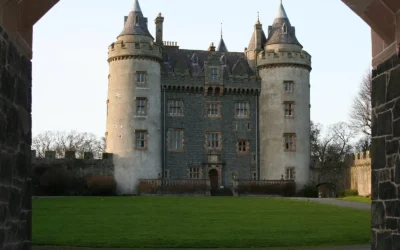
Killyleagh Castle
Killyleagh Castle: Ireland's Oldest Inhabited Castle, Above Strangford Lough Sir Hans Sloane was born in Killyleagh in 1660. The physician, naturalist and collector who grew up in this County Down village on the shore of Strangford Lough went on to assemble a...
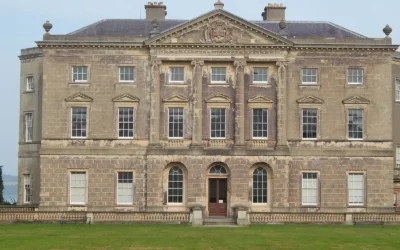
Castle Ward
Castle Ward: The House That Couldn't Agree on a Style — and Became Winterfell Bernard Ward, 1st Viscount Bangor, and his wife Lady Ann Bligh could not agree on what kind of house they wanted to build at their County Down estate in the 1760s. He wanted classical...
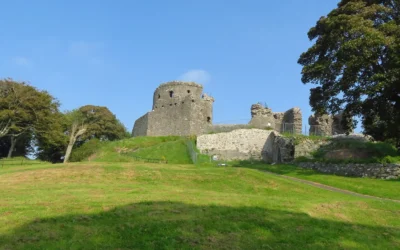
Dundrum Castle
Dundrum Castle: Where John de Courcy's Norman Ulster Meets the Mourne Mountains In 1177, the same year that John de Courcy built Carrickfergus Castle on Belfast Lough, he also established a fortress on a rocky hill above Dundrum Bay in County Down. The two...
Glenarm Castle
Glenarm Castle: Six Centuries of the McDonnell Earls, Among the Glens of Antrim In the 1920s, a fire broke out at Glenarm Castle — allegedly started in an attempt to keep the 11th Earl of Antrim's featherless parrot warm. The castle had to be substantially...