
Dalhousie Castle
Dalhousie Castle: The Medieval Hotel Where Cromwell Slept, Eight Miles from Edinburgh
King Edward I used it as a staging post during his campaigns against Scotland. Oliver Cromwell occupied it briefly during the English Civil War. Sir Walter Scott was a guest. Queen Victoria visited.
The list of illustrious visitors to Dalhousie Castle in Midlothian reads like a roll-call of British history across eight centuries, and the castle on the banks of the River Esk, 8 miles south of Edinburgh, has been receiving visitors with distinction for most of that time. Today it receives them as a luxury hotel — 29 individually designed bedrooms within the historic walls, an award-winning restaurant in the castle vaults and a spa overlooking the river.
Dalhousie Castle was first built in the 13th century as the seat of the Ramsay Clan, though the main structure visible today dates from around 1450, when local red sandstone from the opposite bank of the River Esk was used to rebuild it on a larger scale.
A careful restoration in 2003 converted the castle into a hotel while preserving the historical integrity of the building — the vaulted ceilings, the thick stone walls, the sense of layered centuries — making it one of the most atmospheric hotel experiences within easy reach of Edinburgh. This guide covers everything you need to plan your stay or visit.
Where Is Dalhousie Castle?
Dalhousie Castle is in Cockpen, near Bonnyrigg, Midlothian, approximately 8 miles south of Edinburgh city centre on the A7 road. The journey from Edinburgh takes around 20 to 30 minutes by car; from Edinburgh Airport around 25 minutes. The nearest railway station is Newtongrange on the Borders Railway, approximately 1.7 miles from the castle; a taxi from there covers the remaining distance. Free parking is available on site.
A Brief History of Dalhousie Castle
The castle's origins date to the 13th century when the foundation walls and vaults — some of which survive in the hotel today — were first constructed as a Ramsay Clan stronghold. The main structure was substantially rebuilt around 1450 in red sandstone quarried from the opposite bank of the South Esk, giving the castle the warm stone character it retains today.
The Ramsay family held it for centuries through some of the most turbulent periods in Scottish history, and the castle's position close to Edinburgh — and on the main road south — brought significant visitors to its gates.
Edward I of England is among the earliest documented visitors; Oliver Cromwell occupied the castle during his Scottish campaign. Sir Walter Scott, who knew the Scottish Borders intimately, was a guest, and Queen Victoria added her name to the roll in the 19th century. The castle passed out of Ramsay family ownership and underwent various uses before its 2003 restoration as a luxury hotel, which returned the building to its proper purpose as a place of welcome and kept it in active use rather than preservation.
The remarkable thing about Dalhousie is the atmosphere that the restoration maintained. The Dungeon Restaurant occupies the original medieval vaults — the lowest and oldest part of the castle, with vaulted ceilings of the original construction. The stairways and secret passages remain. The stone walls and the river view survived the restoration intact.
Architecture & Design
Dalhousie Castle is built in the Scottish medieval tradition — robust stone construction with turrets, towers and walls of local red sandstone that glow warmly in the Midlothian light. The castle's arrangement of rooms connected by grand staircases and secret passages gives the building a labyrinthine quality that rewards exploration. The vaulted ceilings of the medieval structure survive in the Dungeon Restaurant and the lower rooms, providing some of the most atmospheric dining and event spaces in Scotland.
The 2003 hotel restoration preserved and highlighted the original fabric while introducing the furnishings and facilities of a contemporary luxury hotel: tapestries, suits of armour and period decor throughout the public rooms, with individually designed bedrooms that reflect the castle's character. The Aqueous Spa is housed in a purpose-built wing overlooking the River Esk, with a hydro pool, steam room and sauna in a riverside setting.
Legends & Lore
Dalhousie Castle's lore is primarily historical rather than supernatural — the accumulation of eight centuries of documented occupation and distinguished visitors gives it a weight of history that ghost stories are almost redundant beside. The castle does have a reported haunting, occasionally referenced in accounts of the building, adding atmosphere without overriding the documented record.
The strongest cultural connection is Rosslyn Chapel, a short drive from the castle. The 15th-century chapel — famous long before its appearance in Dan Brown's The Da Vinci Code for its extraordinary carved stonework and its unresolved mysteries — is one of the most evocative medieval buildings in Scotland. Its proximity to Dalhousie makes the castle an ideal base for anyone visiting the chapel, and the two together — medieval castle and medieval chapel — make for an exceptional Midlothian day.
Staying at Dalhousie Castle
Dalhousie Castle operates as a hotel and spa. The 29 bedrooms within the historic castle walls are individually designed, each reflecting the building's character rather than a standard hotel aesthetic. Castle Rocks Lodge, in the grounds, provides 6 additional rooms with a more contemporary feel.
| Accommodation | Character | Notes |
|---|---|---|
| Castle Bedrooms | 29 rooms within the historic walls | Individually designed; vaulted ceilings, period furnishings in many |
| Castle Rocks Lodge | 6 rooms in a modern lodge in the grounds | Ground-floor accessibility; contemporary style |
The hotel is also available for non-resident visitors for spa days and dining. The Aqueous Spa offers treatments, a hydro pool, steam room and sauna with riverside views; spa access for hotel residents is pre-booked.
The Dungeon Restaurant serves modern British cuisine with 2 rosettes in the original medieval vaults — one of the most atmospheric dining rooms in the Edinburgh area. The Orangery Restaurant provides a lighter dining option. Children under 16 are not admitted to the spa, and the Dungeon Restaurant has a minimum age policy for evening dining; check current policies when booking.
Photography is generally permitted in the castle's public areas; confirm with staff for any private or event-restricted spaces.
Find Rooms & Rates at Dalhousie Castle →
Check the official Dalhousie Castle website for current room availability, spa packages and dining reservations.
Where to Stay Near Dalhousie Castle (Day Visitors)
For day visitors to Rosslyn Chapel or the wider Midlothian area who are not staying at Dalhousie, Edinburgh city centre (8 miles north) offers a vast range of accommodation for all budgets, from budget hostels on the Royal Mile to five-star hotels in the New Town.
Find Hotels & Stays in Edinburgh →
The Best Time to Visit
Spring (April to June) and early autumn (September) are the finest times for Dalhousie and the Midlothian countryside — the woodland grounds are beautiful, the drive from Edinburgh along the Esk valley is lovely and the castle gardens are at their best. Summer (July to August) is busiest and benefits from the longest days; booking well in advance is essential. Winter makes use of Dalhousie's indoor atmosphere — the candlelit Dungeon Restaurant in December is exceptional.
The hotel is open year-round.
How to Get There
By car. From Edinburgh city centre, take the A7 south; the castle is on the left approximately 8 miles from the city, well signposted. Free parking on site. From Edinburgh Airport, the A720 city bypass leads to the A7 south; allow around 25 minutes.
By train. The Borders Railway from Edinburgh Waverley stops at Newtongrange (around 20 minutes from the city), approximately 1.7 miles from the castle; a taxi covers the last stretch.
Compare Transfers & Local Transport in Edinburgh →
Nearby Attractions
Dalhousie sits in Midlothian, immediately south of Edinburgh and within easy reach of some of the finest heritage in the Lothians and Borders.
| Attraction | Why Visit | Distance |
|---|---|---|
| Rosslyn Chapel | The 15th-century chapel with extraordinary carved stonework — famous long before The Da Vinci Code, and worth a visit regardless | ~3 miles |
| Edinburgh City | The full range of the capital's heritage — the Old Town, the Royal Mile, Edinburgh Castle, Holyroodhouse | ~8 miles |
| Scottish Mining Museum (Newtongrange) | A well-presented account of Midlothian's industrial heritage at Lady Victoria Colliery | ~2 miles |
| Crichton Castle (Historic Environment Scotland) | A dramatic ruined tower house above the Tyne valley — free to visit, off the beaten track | ~5 miles |
| Pentland Hills Regional Park | Outstanding walking and cycling directly south of Edinburgh — the closest wild landscape to the capital | ~6 miles |
A natural Midlothian day pairs a morning at Dalhousie with Rosslyn Chapel in the afternoon — two of the most atmospheric medieval buildings in Scotland within 3 miles of each other.
Browse Edinburgh & Midlothian Day Trips →
Family & Accessibility
Families. Dalhousie is well suited to families seeking a memorable hotel experience — the castle's atmosphere engages children, and Edinburgh's extensive family attractions are 20 minutes away. Note that children under 16 are not admitted to the spa, and the Dungeon Restaurant has minimum age policies for evening dining; check current policies when booking.
Accessibility. The historic castle structure limits full wheelchair access throughout the building and there is no lift. Ground-floor rooms at Castle Rocks Lodge are available for guests with mobility requirements. Contact the hotel directly before booking to discuss specific needs.
Practical Tips
- Book well in advance, particularly for weekend stays, the Dungeon Restaurant and any spa packages — all are consistently popular.
- Wear comfortable walking shoes for exploring the castle's staircases and the woodland riverside paths.
- Pack a compact travel umbrella for walks along the River Esk — Midlothian weather is changeable.
- Bring a portable power bank for photography across the castle, grounds and a day trip to Rosslyn.
- Combine with Rosslyn Chapel — the chapel is 3 miles from the castle and together they represent the finest medieval heritage in Midlothian.
- Overseas visitor? Pack a UK travel adapter for Type G plugs.
Conclusion
Dalhousie Castle has hosted Edward I, Oliver Cromwell, Sir Walter Scott and Queen Victoria — a guest list that more or less covers the principal characters in Scottish and British history across eight centuries. Today it hosts guests in 29 individually designed bedrooms, feeds them in a 2 rosette restaurant in medieval vaults, and offers a spa on the River Esk. Rosslyn Chapel is 3 miles away. Edinburgh is 20 minutes. The red sandstone walls are the same ones that Cromwell occupied. It is a genuinely useful combination.
Frequently Asked Questions
Is Dalhousie Castle open to non-residents?
Yes — the castle accepts bookings for spa days and for dining in the Dungeon Restaurant and Orangery Restaurant from non-resident guests. Advance booking is strongly recommended.
Who are some of the famous historical visitors to Dalhousie Castle?
Documented visitors include King Edward I of England, Oliver Cromwell (who occupied it during his Scottish campaign), Sir Walter Scott and Queen Victoria.
What is the Dungeon Restaurant?
The castle's award-winning (2 rosette) restaurant, located in the original medieval vaults of the 13th-century structure, with vaulted ceilings and candlelit atmosphere. It serves modern British cuisine and is one of the most atmospheric dining rooms in the Edinburgh area.
What is the Aqueous Spa at Dalhousie Castle?
A spa facility in a purpose-built wing overlooking the River Esk, offering a hydro pool, steam room, sauna and treatment rooms. Access for hotel residents is on a pre-booked basis. Children under 16 are not admitted.
How far is Dalhousie Castle from Edinburgh?
Approximately 8 miles south of Edinburgh city centre — around 20 to 30 minutes by car on the A7.
Is Rosslyn Chapel near Dalhousie Castle?
Yes — Rosslyn Chapel is approximately 3 miles from the castle, making Dalhousie an ideal base for visiting the chapel. The two together are the finest medieval heritage combination in Midlothian.
Is Dalhousie Castle wheelchair accessible?
The historic castle structure limits full wheelchair access throughout. There is no lift. Ground-floor accommodation is available at Castle Rocks Lodge within the hotel grounds. Contact the hotel directly before booking to discuss requirements.
Is there parking at Dalhousie Castle?
Free parking is available on site.
Can I get to Dalhousie Castle by public transport?
The Borders Railway from Edinburgh Waverley reaches Newtongrange in around 20 minutes; from there a taxi covers the 1.7 miles to the castle.
Are dogs allowed at Dalhousie Castle?
Check current dog policy with the hotel before booking — policies vary and may have changed.
Audley’s Castle
Audley's Castle: The Free Tower House Above Strangford Lough, Where Game of Thrones Arrived In the first season of Game of Thrones, the fields and approaches to Castle Ward became Winterfell — the ancestral seat of the Starks. The fields around Audley's...
Kilwaughter Castle
Kilwaughter Castle: John Nash's Antrim Ruin, Declared Enemy Property in the Second World War In 1803, John Nash — the architect who designed Regent Street, remodelled Buckingham Palace and built the Royal Pavilion at Brighton — came to County Antrim and...
Shane’s Castle
Shane's Castle: The O'Neill Estate on Lough Neagh, Touched by John Nash and Twice Burned In 1809, John Nash — the architect who designed Regent Street, Carlton House Terrace and remodelled Buckingham Palace for George IV — began redesigning a castle on the...
Belfast Castle
Belfast Castle: The Free Victorian Castle Above the City, with Nine Hidden Cats The legend says the castle will be safe — or its residents will have good fortune — as long as a white cat lives within its walls. The castle's response to this piece of local...
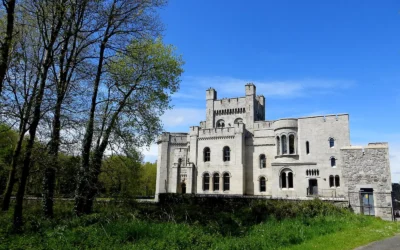
Gosford Castle
Gosford Castle: Ulster's Largest Listed Building — and Game of Thrones' Riverrun When Robin Fedden of the National Trust surveyed Gosford Castle in 1952, he described it as "one of the most original buildings of its time" and noted that it had...