
Chillingham Castle
Chillingham Castle: Britain's Most Haunted Fortress, Above the Cheviot Hills
In the 600-acre park that surrounds Chillingham Castle, a herd of wild white cattle has roamed freely since the land was first enclosed in the 13th century. They have never been domesticated. No hand has ever touched them. They are thought to be descended from the wild aurochs of prehistoric Britain, and the herd at Chillingham is among the most ancient and genetically isolated cattle populations in the world.
They share the park with a castle that is routinely described as the most haunted building in Britain — a medieval fortress continuously owned by the same family line since 1246, whose dungeons, torture chamber and Great Hall have accumulated nearly eight centuries of stories.
Chillingham Castle is in the village of Chillingham in Northumberland, a few miles from Alnwick and roughly equidistant from the border castles of Northumberland's remarkable heritage coast. It opened to the public in recent decades after falling into near-ruin in the 20th century and being painstakingly restored by the current owner. The restoration is ongoing, and the castle has a rawness and authenticity that more polished heritage attractions do not. This guide covers everything you need to plan your visit.
Where Is Chillingham Castle?
Chillingham Castle is in the village of Chillingham, Northumberland, approximately 6 miles south-east of Wooler and 12 miles north-west of Alnwick. From the A1, take the road signposted Chatton and Wooler — ignore the first sign for Chillingham/North Charlton. The castle is also accessible from the A697 between Newcastle and Wooler.
Nearest railway stations are Alnmouth (for Alnwick, around 12 miles) and Berwick-upon-Tweed (around 20 miles), from where taxis cover the remaining distance. The castle's rural position means that a car is by far the most practical way to visit.
A Brief History of Chillingham Castle
The site at Chillingham was associated with a monastery before 1246, when the castle first appears in the historical record. In 1344, a Royal Licence to Crenellate — the medieval document giving permission to fortify a building — was granted, formalising the castle's status as a military stronghold.
Through the medieval period it served as a base for English operations against Scotland, and its position in the border country between the two kingdoms gave it a strategic importance that invited repeated royal attention: King Edward I — Hammer of the Scots — visited in 1298 during his campaigns in Scotland, and James I visited in 1617.
The castle has been in the same family line since 1246 — the Grey family held it first, and it passed to the Bennet family, Earls of Tankerville, through whom it descends to the present owner.
In the 18th and 19th centuries the grounds were landscaped and the building refined, with notable work by Sir Jeffry Wyattville — the architect responsible for significant work at Windsor Castle — who lent the gardens something of the Windsor character. By the 20th century the castle had fallen into serious disrepair; the restoration that has brought it to its present state is the work of recent decades, and the process continues.
The remarkable thing about Chillingham is its unbroken thread. The same family line has owned and occupied this castle for nearly eight centuries. The wild cattle in the park have been there for nearly as long, unchanged. The medieval features — the torture chamber, the dungeons, the Great Hall — survive not as museum reconstructions but as original fabric. Chillingham is one of the least mediated castle experiences in England.
Architecture & Design
Chillingham Castle is a Grade I listed building, its medieval and Tudor fabric substantially intact. The original quadrangular plan — the classic form of a 14th-century fortified house — survives, with towers at each corner and the Great Hall at the centre of the complex. The Royal Licence to Crenellate of 1344 is one of the castle's most prized documentary possessions, giving a precise date to the phase of fortification that defined the building's character.
The state rooms carry the accumulated layers of the family's long occupation: tapestries, arms and armour, portraits and furniture gathered across eight centuries. The torture chamber and dungeons survive as genuinely original spaces — not reconstructed for effect but simply intact, their iron fixtures and stone walls unchanged from the period of their use.
The 600-acre park, enclosed in the 13th century and never opened since, is the setting for the wild cattle herd: formal topiary in the castle gardens transitions into open parkland where the Chillingham cattle move entirely on their own terms, observed but not approached.
Legends & Lore
Chillingham Castle is widely known as the most haunted castle in Britain, and the claim rests on a substantial accumulation of reported experiences rather than a single dramatic story. The most famous apparition is the Grey Lady, said to be Lady Mary Berkeley, whose presence is associated with certain rooms in the castle.
The Blue Boy is another well-established tradition: according to local legend, the ghost of a young child is heard and seen near a particular part of the castle, and the story connects to the discovery during restoration of the skeletal remains of a child found within the walls, dressed in blue. These stories are told as legend and atmosphere rather than as documented fact.
The castle's genuine historical darkness is real enough without embellishment. The torture chamber is not a museum exhibit but the original room, its equipment intact. The dungeons held prisoners in conditions that are difficult to imagine. The border history of Northumberland — the centuries of raids, warfare and reprisal between England and Scotland — runs through every stone of Chillingham. Its reputation for the paranormal has made it a popular destination for those with a particular interest in the subject; evening ghost tours are offered, providing a very different experience from the daytime visit.
Visiting the Castle
Chillingham Castle is open seasonally from spring to early autumn. The visit is guided — knowledgeable guides lead groups through the castle's rooms — and takes in the Great Hall, the state rooms with their tapestries, arms and armour, the chapel, the dungeons and the torture chamber, with historical context for each space. The guided format suits this castle well: Chillingham is not a self-guided walking-around experience but a place where the stories of each room are essential to understanding what you are looking at.
Evening ghost tours are offered separately — a multi-hour paranormal investigation experience for visitors with a particular interest in the castle's supernatural reputation. These are popular and should be booked in advance through the official website.
The Minstrels Tearoom is open throughout the visitor season for refreshments. There is a gift shop. Photography for personal use is generally permitted; flash photography may be restricted in certain areas to protect the fabric and artefacts.
Check Tickets & Tour Times for Chillingham Castle →
Check the official Chillingham Castle website for current opening dates, tour times and prices before you travel.
Where to Stay Near Chillingham Castle
The castle may offer self-catering accommodation within the castle complex — check the official website for current availability, as on-site stays have been available in the past. For the widest choice, the town of Alnwick (12 miles south) has a good range of hotels and guesthouses, and the Northumberland coast between Alnwick and Bamburgh offers outstanding self-catering options with sea views.
Find Hotels & Stays Near Alnwick →
The Best Time to Visit
Late spring (May to June) and early autumn (September to October) are the best times at Chillingham — the weather is generally pleasant, the Cheviot Hills backdrop is at its most vivid, and the castle is quieter than in peak summer. Summer (July to August) brings the full visitor programme and the best weather for the parkland and the cattle, but also the highest visitor numbers.
The castle opens for a season from spring to early autumn — check the official website for the current year's opening dates, as they vary. For the paranormal-focused evening tours, these can be booked throughout the season and are a very different experience from the daytime visit.
How to Get There
By car. From the A1 between Alnwick and Berwick-upon-Tweed, take the Chatton/Wooler road. Do not take the first sign for Chillingham/North Charlton. The castle is also accessible from the A697 between Newcastle and Wooler. Free parking is available at the castle.
By public transport. The nearest mainline stations are Alnmouth (for Alnwick) and Berwick-upon-Tweed. From either, a taxi covers the remaining distance — around 12 to 20 miles depending on which station you use. The Northumberland rural bus network is limited in this area, so a car or taxi is strongly recommended.
Compare Transfers & Local Transport in Northumberland →
Nearby Attractions
Chillingham sits in the richest concentration of castles and heritage in Northumberland, within easy reach of several of the finest sites in the north of England.
| Attraction | Why Visit | Distance |
|---|---|---|
| Alnwick Castle | The Duke of Northumberland's fortress — Harry Potter's Hogwarts, 700 years of Percy history — our separate guide covers it fully | ~12 miles |
| Bamburgh Castle | One of England's most dramatically sited coastal fortresses, with the Farne Islands offshore — our separate guide covers it | ~14 miles |
| Holy Island (Lindisfarne) | A tidal island with a medieval priory and Lindisfarne Castle — one of the most atmospheric places in northern England | ~20 miles |
| Warkworth Castle | A magnificent Percy family ruin above the River Coquet — one of the finest ruined castles in Northumberland | ~20 miles |
| Norham Castle (English Heritage) | A striking red sandstone ruin on the Tweed at the old border — Turner painted it repeatedly | ~18 miles |
A natural Northumberland day combines Chillingham Castle with Bamburgh and a boat trip to the Farne Islands — one of the finest wildlife and heritage days in northern England.
Browse Northumberland Tours & Heritage →
Family & Accessibility
Families. Chillingham is a genuinely immersive experience for older children and teenagers, particularly those interested in history, medieval life or the castle's supernatural reputation. The guided tour format, the original dungeons and torture chamber, and the wild cattle in the park all make for an unusual and memorable visit. Younger children may find the darkness of some of the subject matter challenging.
Accessibility. The castle's medieval structure means access is limited — uneven floors, steep staircases and narrow passages in many areas. Some parts of the grounds and lower castle areas are more accessible. Disabled parking is available adjacent to the castle. Contact the castle in advance to discuss specific requirements before visiting.
Practical Tips
- Book in advance, particularly for the evening ghost tours, which are popular and have limited capacity.
- Wear comfortable walking shoes with good grip — the castle's medieval floors are uneven.
- Pack a waterproof walking jacket; the Northumberland countryside weather is changeable and the park involves outdoor walking.
- Visit the wild cattle park as well as the castle — the Chillingham cattle are entirely separate from the castle experience and are accessible separately; check at the ticket office for current arrangements.
- Photography is generally permitted for personal use; check with staff for any flash restrictions inside the rooms.
- Bring a portable power bank for a full day of photography across the castle and park.
- Overseas visitor? Pack a UK travel adapter for Type G plugs.
Conclusion
Chillingham Castle has been in the same family since 1246, its torture chamber and dungeons intact, its wild white cattle moving through the park unchanged since the Middle Ages, its ghosts accumulating across eight centuries of occupation. It is the least sanitised of all the castle experiences in this guide — rawer, less polished, more physically immediate than any heritage attraction in the south.
The Cheviot Hills rise behind it to the Scottish border. The Border country that Edward I rode through in 1298 looks much the same. And in the evening, after the daytime visitors have gone, you can book yourself into a ghost tour and spend the night in the most haunted building in Britain.
Frequently Asked Questions
When is Chillingham Castle open?
The castle is open seasonally from spring to early autumn. Check the official Chillingham Castle website for current opening dates, as they vary by year.
How much does it cost to visit Chillingham Castle?
Admission prices vary; check the official website for current rates. Guided ghost tours are priced separately — check for current costs and availability.
What are the wild Chillingham cattle?
A herd of wild white cattle that has lived in the castle's 600-acre enclosed park since the 13th century. They have never been domesticated, are genetically unique and are thought to be descended from the wild cattle of prehistoric Britain. They are managed by the Chillingham Wild Cattle Association and can be viewed from a safe distance during guided visits.
Is Chillingham Castle really the most haunted in Britain?
The claim is widely made and rests on a long accumulation of reported experiences by visitors and staff across generations, rather than any single dramatic event. The Grey Lady and the Blue Boy are the two most frequently cited presences. Evening ghost tours explore the castle's paranormal reputation in depth.
Are guided tours the only way to visit Chillingham Castle?
The castle's interior is accessed on guided tours, which provide the historical and legendary context essential to understanding the building. Evening ghost tours offer a separate, more extended experience.
Is Chillingham Castle suitable for children?
It works well for older children and teenagers interested in history or the castle's supernatural reputation. The dungeon and torture chamber, and the darkness of some of the subject matter, may not be suitable for younger children.
Is Chillingham Castle wheelchair accessible?
Access is limited by the castle's medieval structure — uneven floors, steep stairs and narrow passages affect most areas. Some areas and the grounds are more accessible. Contact the castle in advance to discuss specific requirements.
Is there food at Chillingham Castle?
The Minstrels Tearoom provides refreshments during opening hours. Picnics may be possible in the grounds — check with staff on arrival.
Are dogs allowed at Chillingham Castle?
Check the current policy with the castle before bringing a dog; given the presence of the wild cattle herd in the park, restrictions apply. Assistance dogs are welcome.
Can I stay overnight at Chillingham Castle?
The castle may offer self-catering accommodation within the castle complex — check the official website for current availability.
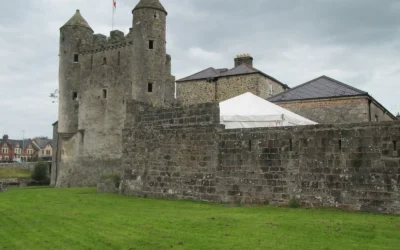
Enniskillen Castle
Enniskillen Castle: The Maguire Clan's Lough Erne Fortress, Home to Two Museums Hugh Maguire built his castle at Enniskillen around 1428. His nickname — 'the Hospitable' — suggests a lord who understood the politics of generosity as well as the politics...
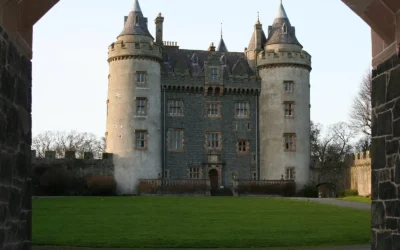
Killyleagh Castle
Killyleagh Castle: Ireland's Oldest Inhabited Castle, Above Strangford Lough Sir Hans Sloane was born in Killyleagh in 1660. The physician, naturalist and collector who grew up in this County Down village on the shore of Strangford Lough went on to assemble a...
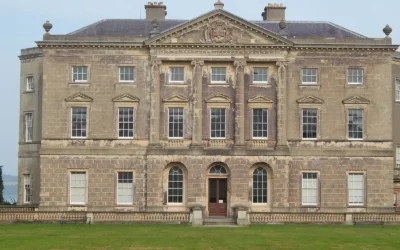
Castle Ward
Castle Ward: The House That Couldn't Agree on a Style — and Became Winterfell Bernard Ward, 1st Viscount Bangor, and his wife Lady Ann Bligh could not agree on what kind of house they wanted to build at their County Down estate in the 1760s. He wanted classical...
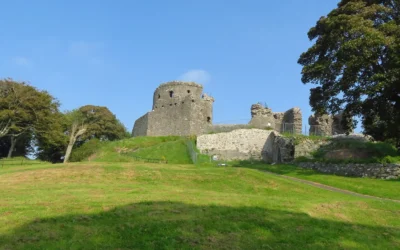
Dundrum Castle
Dundrum Castle: Where John de Courcy's Norman Ulster Meets the Mourne Mountains In 1177, the same year that John de Courcy built Carrickfergus Castle on Belfast Lough, he also established a fortress on a rocky hill above Dundrum Bay in County Down. The two...
Glenarm Castle
Glenarm Castle: Six Centuries of the McDonnell Earls, Among the Glens of Antrim In the 1920s, a fire broke out at Glenarm Castle — allegedly started in an attempt to keep the 11th Earl of Antrim's featherless parrot warm. The castle had to be substantially...