
Castell Coch
Castell Coch: William Burges's Fairytale Towers, Rising from the Welsh Forest Above Cardiff
The 3rd Marquess of Bute was the wealthiest man in Britain in the 1860s — the fortune built on Cardiff's coal docks, which had made the city the world's greatest coal-exporting port. William Burges was the most imaginative Gothic Revival architect of his generation, a man whose designs blended medieval archaeology with personal fantasy in equal measure. When Burges died in 1881, he left instructions for his team to complete the interiors of the castle he had been building for the Marquess in the woodland above Tongwynlais, north of Cardiff.
What they completed was Castell Coch: conical towers of red sandstone rising from ancient beech forest, with a working drawbridge, a portcullis and rooms of such extraordinary decorative richness — domed ceilings, a double-dome Moorish bedroom, a drawing room with a minstrels' gallery and vaulted stone ribs — that the castle has repeatedly been voted the favourite building in Wales.
Castell Coch — the Red Castle in Welsh, named for the red sandstone of its walls — was rebuilt from 1875 on the site of a 13th-century fortification originally built by Gilbert de Clare (the same earl who built Caerphilly Castle seven miles away).
It was designed as a summer retreat and barely used: the Marquess and his family preferred their other residences. In 1950, the 5th Marquess placed it under state care. Managed today by Cadw, it is one of the most visited and most immediately recognisable buildings in Wales. This guide covers everything you need to plan your visit.
Where Is Castell Coch?
Castell Coch is in the village of Tongwynlais, approximately 7 miles north of Cardiff city centre, at the point where the Fforest Fawr woodland meets the Taff Valley. By car from Cardiff, allow 15 to 20 minutes via the A470 from Junction 32 of the M4. Free parking is available at the castle.
By public transport, trains from Cardiff Central reach Taff's Well station in around 15 minutes; from there the castle is around 2.5 kilometres. Bus routes 26 and 132 serve Tongwynlais, a kilometre from the castle. The Taff Trail (National Cycle Network Route 8) connects Cardiff to the castle.
A Brief History of Castell Coch
The first castle on this site was built after the Norman conquest of Wales to control the Taff Valley approach to Cardiff. Gilbert de Clare — the Red Earl, who also built Caerphilly Castle — raised a more substantial stone fortification here between 1267 and 1277, using it as a hunting lodge. This castle fell into ruin and was largely forgotten until the 1860s, when the ruins came into the possession of the 3rd Marquess of Bute.
John Crichton-Stuart, 3rd Marquess of Bute, inherited what was then the largest private fortune in Britain at the age of six months in 1848. By the time he commissioned Burges to rebuild Castell Coch in 1871, he had already engaged the same architect on the transformation of Cardiff Castle, and the two men shared a passionate interest in medieval archaeology and Gothic decoration.
Burges designed a castle that would be archaeologically coherent with what was known of the 13th-century original while filling the interiors with decorative schemes of extraordinary imaginative richness — medieval forms pushed to a Victorian extreme. The exterior was largely complete by 1879; Burges died in 1881, and his design team completed the extraordinary interiors by 1891. The Marquess of Bute used the castle rarely; its expense and ambition were those of a collector rather than a resident.
One historical footnote: in 1873, the Marquess planted a vineyard on the south-facing slope below the castle — perhaps the most unlikely agricultural venture in Victorian Britain — which operated until the First World War. The vines have long gone, but the ambition was entirely characteristic.
The remarkable thing about Castell Coch is that it is less a restoration than an act of imagination. Burges used the medieval archaeology as a starting point and then gave free rein to his vision of what a great Gothic castle should look and feel like. The result is not a fake medieval building but something stranger and more interesting: a genuine Victorian interpretation of the medieval world, executed with complete conviction.
Architecture & Design
Burges designed three circular towers for Castell Coch — the Keep Tower, the Kitchen Tower and the Well Tower — each crowned with a steep conical roof and copper-gilt weather vane, recalling the châteaux of the Loire Valley rather than the more rugged castles of Wales. The exterior is precisely cut red Pennant sandstone over the 13th-century rubble core, with a gatehouse that incorporates a working drawbridge and portcullis — functional medieval mechanisms, not decorative reproductions. A Madonna and Child statue by the sculptor Ceccardo Fucigna occupies a niche above the gateway.
The interiors are the revelation. The Banqueting Hall is the grandest public space, with a vaulted ceiling and elaborate fireplace, the walls and ceiling covered with Burges's characteristic decorative painting. The octagonal Drawing Room is among the finest Victorian interiors in Wales, its stone-ribbed vaulted ceiling, minstrels' gallery and painted walls creating an extraordinary decorative unity.
And Lady Bute's Bedroom is the most spectacular room in the castle: a coffered double-dome ceiling above a scarlet and gold bed in the Moorish style, the walls richly painted, every surface covered with decorative invention. The castle holds a Grade I listing as a building of exceptional architectural importance.
Legends & Lore
Castell Coch's ghost tradition has accumulated around the building since its Victorian construction on a site of genuine medieval antiquity. The White Lady is the most evocative: according to local tradition, she is a grieving mother searching the castle grounds for a son who drowned in the castle pool.
The Cavalier Ghost appears in accounts from the castle's household staff. And the Servant Boy — said to have died falling down stairs — is reported to play poltergeist-like tricks in the kitchen and passages, moving objects and leaving sounds of laughter. These traditions are told as folklore.
A different tradition speaks of a secret passage between Castell Coch and Cardiff Castle, allegedly guarding hidden treasure protected by mythical eagles associated with the historical Welsh chieftain Ivor Bach. This is entirely unverified legend, but it reflects the deep association between the two Bute castles in the popular imagination.
The castle's screen career is well documented. Doctor Who, The Worst Witch and Wolf Hall are among the productions that have used Castell Coch's extraordinary exterior and interiors, its visual distinctiveness making it recognisable in any period setting.
Visiting the Castle
Castell Coch is managed by Cadw and is open year-round, with longer hours in summer and shorter in winter. Cadw members enter free. An audio guide is included with admission, providing historical context for the rooms and the Burges–Bute collaboration.
The visit is self-guided through the principal rooms — the Banqueting Hall, the Drawing Room and Lady Bute's Bedroom are the must-see spaces. The working drawbridge and portcullis are visible at the entrance and are genuinely functional. The towers can be ascended for views over the Taff Valley and the Fforest Fawr woodland.
Outside, the ancient Fforest Fawr — beech woodland of considerable age surrounding the castle — offers walking trails that provide views of the conical towers from the woodland below and above. The combination of Gothic Revival castle and ancient Welsh forest is unique in Britain. A café serves light refreshments; picnics are welcome in the surrounding woodland. There is a gift shop.
Some areas of the castle are subject to ongoing conservation work and may be inaccessible during your visit — check the official Cadw website for current access information.
Photography is permitted for personal use inside and throughout the castle.
Check Tickets & Tour Times for Castell Coch →
For current opening hours, prices and access information, check the official Cadw website before your visit.
Where to Stay Near Castell Coch
Castell Coch does not offer visitor accommodation. Cardiff, 7 miles south, offers an exceptionally wide range of hotels, guesthouses and self-catering accommodation at all budgets and is one of the most easily explored compact capital cities in Britain. Tongwynlais and the Taff Valley have limited local options.
Find Hotels & Stays in Cardiff →
The Best Time to Visit
Spring (March to May) is perhaps the finest time for Castell Coch — the beech woodland of Fforest Fawr is coming into leaf, the conical towers are visible through the new green, and the castle is significantly quieter than in summer. The combination of woodland and towers in spring light is exceptional.
Summer (June to August) brings the longest opening hours and the best weather for the woodland walks; it is also the busiest period. Autumn (September to October) sees the Fforest Fawr turning golden around the towers — one of the most photogenic castle settings in Wales. Winter brings shorter hours and the castle without crowds, the towers stark against winter sky.
How to Get There
By car. From Cardiff, take the A470 north from Junction 32 of the M4 towards Merthyr Tydfil, following signs for Castell Coch at Tongwynlais. Free parking is available, with accessible bays near the entrance.
By train. From Cardiff Central, trains reach Taff's Well in around 15 minutes; the castle is approximately 2.5 kilometres from the station.
By bus. Routes 26 and 132 serve Tongwynlais, around 1 kilometre from the castle.
By bike. The Taff Trail (National Cycle Network Route 8) runs through the valley below the castle, with connections from central Cardiff.
Compare Transfers & Local Transport in Cardiff →
Nearby Attractions
Castell Coch sits at the edge of Cardiff's northern countryside, within easy reach of some of the finest heritage in South Wales.
| Attraction | Why Visit | Distance |
|---|---|---|
| Cardiff Castle | The other Burges–Bute masterpiece — extraordinary Victorian Gothic State Apartments within a Norman motte in the city centre | ~7 miles |
| Caerphilly Castle (Cadw) | Wales's largest castle — also originally built by Gilbert de Clare, the same 13th-century lord who built Castell Coch's predecessor | ~9 miles |
| Fforest Fawr | Ancient beech woodland surrounding the castle — outstanding walking with castle views through the canopy | Adjacent |
| St Fagans National Museum of History | One of Europe's finest open-air museums — Welsh historic buildings from across the centuries, reassembled on a country estate | ~8 miles |
| Taff Trail | The 55-mile walking and cycling trail from Cardiff Bay to Brecon Beacons — passes directly below the castle | Adjacent |
A natural Cardiff day combines Castell Coch in the morning (arriving early for the woodland) with Cardiff Castle in the afternoon — two Burges–Bute masterpieces on the same day, showing the same architectural imagination at two very different scales.
Browse Cardiff & South Wales Day Trips →
Family & Accessibility
Families. Castell Coch is excellent for families. The fairytale exterior and the spectacular decorated interiors engage children from the moment of arrival; the working drawbridge and portcullis are endlessly interesting; and the woodland trails give younger visitors space outside. The audio guide is included with admission.
Accessibility. The castle has accessible parking and toilets, but its historic structure — including steps and narrow passages — limits wheelchair and pushchair access to some areas. An access guide is available. Disabled visitors and one companion are admitted free. Only assistance dogs are permitted inside the castle.
Practical Tips
- Arrive early — the morning light on the conical towers through the beech forest is exceptionally photogenic, and the castle is quietest in the first hour.
- Wear comfortable walking shoes — the approach through the woodland and the castle stairs require good footwear.
- Pack a compact travel umbrella for Welsh weather.
- Bring a portable power bank for a day of photography across the castle and woodland.
- Combine with Cardiff Castle on the same day — the Burges–Bute partnership produced both buildings, and seeing them together doubles the understanding of what Burges was trying to achieve.
- Ongoing conservation work may affect access to some areas; check the Cadw website before travelling.
- Overseas visitor? Pack a UK travel adapter for Type G plugs.
Conclusion
Castell Coch was built by the richest man in Britain with the most imaginative Gothic Revival architect of his generation, on the ruins of a 13th-century castle originally built by the same medieval lord who built Caerphilly. The conical towers in the Welsh forest, the drawbridge and portcullis that actually work, Lady Bute's double-dome Moorish bedroom in scarlet and gold — this is Victorian Gothic Revival at its most extreme, and it has repeatedly been voted the favourite building in Wales. From Cardiff it is 15 minutes by car and a world away in atmosphere.
Frequently Asked Questions
What are the opening hours of Castell Coch?
The castle is open year-round, with longer hours in summer (broadly April to October) and shorter hours in winter. Check the official Cadw website for exact current times before visiting.
How much does it cost to visit Castell Coch?
Admission fees vary by age; Cadw members and disabled visitors with one companion enter free. An audio guide is included with admission. Check the Cadw website for current prices and any online booking discounts.
Who designed Castell Coch?
William Burges designed the rebuilt castle from 1871 for the 3rd Marquess of Bute. Burges died in 1881 before the interiors were complete; his design team finished the work by 1891. The same partnership also transformed Cardiff Castle.
Is Castell Coch a real medieval castle?
The exterior is built over genuine 13th-century foundations, and the archaeological evidence of Gilbert de Clare's original castle informed the rebuilding. However, the castle as visitors see it is fundamentally a Victorian creation — a 19th-century interpretation of medieval forms rather than a medieval building.
What films and TV shows have used Castell Coch?
Doctor Who, The Worst Witch and Wolf Hall are among the productions filmed at the castle, which is regularly chosen for its immediately distinctive Gothic Revival exterior.
Is there a café at Castell Coch?
Yes — an on-site café serves light refreshments. Access may vary at peak times; check locally on arrival.
Are dogs allowed at Castell Coch?
Only assistance dogs are permitted inside the castle. Dogs on leads are welcome in the surrounding Fforest Fawr woodland.
Is Castell Coch wheelchair accessible?
Accessible parking and toilets are available. The historic structure limits access in some areas. An access guide is available, and disabled visitors with one companion enter free.
How do I get to Castell Coch from Cardiff?
By car, 15 to 20 minutes via the A470 (M4 Junction 32). By train to Taff's Well (around 15 minutes from Cardiff Central), then 2.5 km. By bus routes 26 or 132 to Tongwynlais, then 1 km. The Taff Trail cycle/walking route also passes below the castle.
Can I take photos inside Castell Coch?
Photography for personal use is permitted throughout the castle. Flash and tripods may be restricted in some areas — confirm with staff on arrival.
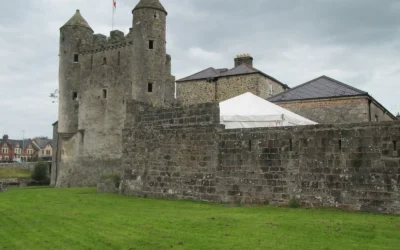
Enniskillen Castle
Enniskillen Castle: The Maguire Clan's Lough Erne Fortress, Home to Two Museums Hugh Maguire built his castle at Enniskillen around 1428. His nickname — 'the Hospitable' — suggests a lord who understood the politics of generosity as well as the politics...
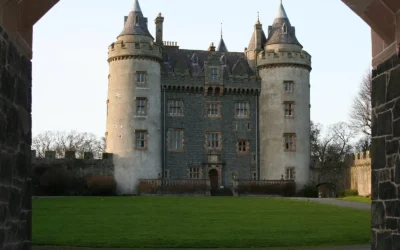
Killyleagh Castle
Killyleagh Castle: Ireland's Oldest Inhabited Castle, Above Strangford Lough Sir Hans Sloane was born in Killyleagh in 1660. The physician, naturalist and collector who grew up in this County Down village on the shore of Strangford Lough went on to assemble a...
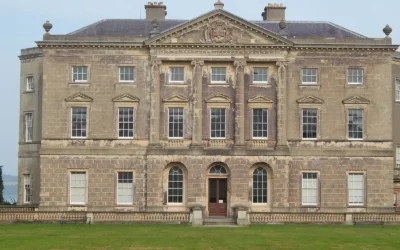
Castle Ward
Castle Ward: The House That Couldn't Agree on a Style — and Became Winterfell Bernard Ward, 1st Viscount Bangor, and his wife Lady Ann Bligh could not agree on what kind of house they wanted to build at their County Down estate in the 1760s. He wanted classical...
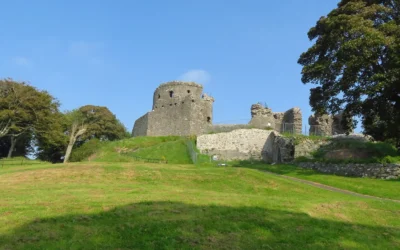
Dundrum Castle
Dundrum Castle: Where John de Courcy's Norman Ulster Meets the Mourne Mountains In 1177, the same year that John de Courcy built Carrickfergus Castle on Belfast Lough, he also established a fortress on a rocky hill above Dundrum Bay in County Down. The two...
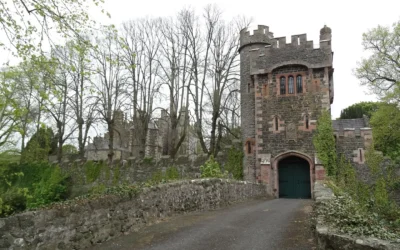
Glenarm Castle
Glenarm Castle: Six Centuries of the McDonnell Earls, Among the Glens of Antrim In the 1920s, a fire broke out at Glenarm Castle — allegedly started in an attempt to keep the 11th Earl of Antrim's featherless parrot warm. The castle had to be substantially...