
Bamburgh Castle
Bamburgh Castle: A Basalt Crag Above the North Sea, Inhabited Since 420 AD
On the Northumberland coast, where the North Sea breaks against a volcanic crag 150 feet above the beach, a fortress has stood for over 1,400 years. The Britons called it Din Guarie and made it the capital of the kingdom of Bernicia around 420 AD. The Anglo-Saxons took it, and King Æthelfrith named it Bebbanburh after his queen Bebba around 600 AD.
The Normans rebuilt it in stone. It was besieged nine months in 1464 — the first castle in England to fall to gunpowder artillery. Victorian industrialist William Armstrong restored it between 1894 and 1904, filling it with the armour, art and curiosities that visitors see today.
Fans of The Last Kingdom know it as Bebbanburg, the fortress that Uhtred of Bebbanston spends the entire series trying to reclaim; the castle ran its own Uhtred-themed tours in the show’s wake.
Bamburgh Castle is in the village of Bamburgh, on the Northumberland coast, with the Farne Islands offshore, Holy Island visible to the north and Alnwick 15 miles to the south. It is one of the largest inhabited castles in the United Kingdom and among the most dramatically sited — from the battlements the North Sea stretches to the horizon and the Farne Islands rise from the water below.
This guide covers everything you need to plan your visit.
Where Is Bamburgh Castle?
Bamburgh Castle is in the village of Bamburgh on the Northumberland coast, roughly 50 miles north of Newcastle and 70 miles south of Edinburgh. It is reached by car via the A1 north from Newcastle or south from Edinburgh, then the B1342 or B1340 into Bamburgh village; from the village the castle is a short walk.
The nearest mainline railway station is Chathill, about 5 miles away — a taxi or bus from there covers the final stretch. The X18 bus connects Newcastle and Berwick-upon-Tweed with Bamburgh. For visitors travelling from Edinburgh, the coastal road south through East Lothian and Berwickshire is one of the most scenic approaches in Britain.
A Brief History of Bamburgh Castle
Bamburgh’s recorded history begins centuries before the Normans arrived. A Celtic Brittonic fort known as Din Guarie occupied this basalt outcrop from around 420 AD, possibly serving as the capital of the ancient kingdom of Bernicia.
In 547 King Ida of Bernicia captured it; his successor King Æthelfrith gave it its enduring name — Bebbanburh, after Queen Bebba — around 600 AD. The site changed hands repeatedly between Britons and Anglo-Saxons through the turbulent centuries of the early medieval period, and it was already one of the most significant strongholds in northern England before the Normans arrived.
The Normans built the stone castle in the 11th century, forming the core of the structure that survives today. In 1095 it became royal property after a failed revolt by Robert de Mowbray. The castle’s military credentials were tested repeatedly through the medieval period: David II of Scotland was imprisoned here after his capture at the Battle of Neville’s Cross in 1346.
The siege of 1464, during the Wars of the Roses, earned Bamburgh its most remarkable distinction — it was the first castle in English history to be brought down by gunpowder artillery, an event that changed the calculus of siege warfare for ever. By the 17th century the castle had fallen into serious disrepair.
It was rescued in 1894 when William Armstrong, the Victorian industrialist and inventor of the breech-loading gun, purchased it and undertook a thorough restoration completed by 1904, bringing it back to its present impressive state.
The remarkable thing about Bamburgh is the depth of its inhabited history. From a Celtic hillfort of the 5th century through Anglo-Saxon kingdom, Norman fortress, medieval stronghold and Victorian restoration to the living castle visited today, no single pause of more than a century has broken the occupation of this basalt crag above the North Sea.
Architecture & Design
Bamburgh’s defining feature is its position: the castle sits on a volcanic basalt outcrop 150 feet above the beach, its walls rising directly from the rock on every side, with the North Sea to the east and the Northumberland coastal plain to the west. The 12th-century Norman keep — with its high plinth, round-arched doorway and battlemented parapet — remains the architectural centrepiece, built of the warm local sandstone that characterises the whole complex.
William Armstrong’s restoration, carried out between 1894 and 1904 to designs by the architect C.J. Ferguson, introduced Perpendicular and early Tudor elements alongside the medieval fabric. The east ward’s King’s Hall is the showpiece of this period: a vast room with a false hammerbeam roof in teak and Arts and Crafts detailing, built on a scale befitting Armstrong’s ambitions.
The medieval kitchen, with its high pointed tunnel vaults and enormous fireplaces, survives largely intact. The Armstrong and Aviation Artefacts Museum, housed within the castle, documents Armstrong’s extraordinary industrial legacy — from hydraulic cranes to the guns that revolutionised 19th-century warfare — alongside a collection of aviation history.
Together they make Bamburgh a castle that rewards as much time in its interiors as on its famous battlements.
Legends & Lore
Bamburgh has collected legends across the full span of its long history. The most ancient is its Arthurian connection: medieval tradition holds that Bamburgh may be the original of Joyous Garde, the castle belonging to Sir Lancelot in the Arthurian cycle — a claim that no one can prove but that sits naturally on a fortress of this drama and antiquity.
The Pink Lady is a more recent tradition: according to local legend, the melancholy figure of a woman in pink is said to appear on the castle battlements every seven years, gazing out to sea. Visitors have also reported the sound of a woman’s cries on the castle steps. These stories are told as legend and atmosphere, part of the texture of a place that has accumulated nearly sixteen centuries of human occupation.
The screen fame, by contrast, is entirely documented. Bamburgh served as Bebbanburg — Uhtred’s ancestral stronghold and the heart of the entire narrative — throughout the BBC/Netflix series The Last Kingdom, based on Bernard Cornwell’s Saxon Stories novels.
The Uhtred guided tour, which traces the castle’s role in the series against its genuine Anglo-Saxon history, has become one of the most popular offerings. The castle also appeared in Indiana Jones and the Dial of Destiny, Macbeth (2015) and Elizabeth (1998), and its medieval profile and coastal drama make it one of the most filmed castle exteriors in England.
Visiting the Castle
Bamburgh rewards a half-day at minimum and a full day if the weather is kind and the Farne Islands are on the itinerary. The castle opens across 14 rooms, and the sequence from the medieval kitchen and great hall through to the King’s Hall gives a strong sense of the building’s layered history. The King’s Hall, with its teak hammerbeam roof and scale, is the interior showpiece.
The Armstrong and Aviation Artefacts Museum is genuinely unusual — the combination of 19th-century industrial invention and aviation history in a medieval fortress is unexpected and compelling. The medieval kitchen, with its surviving vaults and fireplaces, is one of the most atmospheric spaces in any Northumberland castle.
The battlements are the exterior highlight, with views across the North Sea to the Farne Islands and along the Northumberland coast in both directions. Guided tours — including the Uhtred tour for Last Kingdom enthusiasts — are available and add substantial depth to the visit. The castle hosts live jousting tournaments and seasonal events throughout the year; check the official website for the current calendar.
The Clock Tower Café serves fresh coffee, sandwiches and cakes using local produce, and visitors may bring their own food for the grounds. There is a gift shop stocking books, local crafts and souvenirs. Photography for personal use is generally permitted — check with staff for any specific restrictions.
Check Tickets & Tour Times for Bamburgh Castle →
Check the official Bamburgh Castle website for current opening times, seasonal hours and prices.
Where to Stay Near Bamburgh Castle
Bamburgh does not offer visitor accommodation, but the village of Bamburgh itself — one of the most beautiful villages on the Northumberland coast — has a small selection of hotels, inns and guesthouses. Staying in the village allows early morning and evening visits to the castle’s exterior and the beach when the day visitors have gone.
For a wider choice, Alnwick (about 15 miles south) has a good range of hotels and inns, and the Northumberland coast between Bamburgh and Seahouses offers outstanding self-catering options with direct sea views.
Find Hotels & Stays Near Bamburgh →
The Best Time to Visit
Spring (April to June) is one of the finest times on the Northumberland coast — the castle is relatively quiet, the light on the sea is exceptional, and the puffins and grey seals are arriving on the Farne Islands (April onwards), making a combined castle and Farne Islands day particularly rewarding.
Summer (July and August) brings the best weather, the complete events programme, the longest days and — from Seahouses — the peak season for Farne Islands boat trips, though visitor numbers at the castle are at their highest.
Autumn (September and October) is often the most atmospheric time on this coast — lower crowds, dramatic skies over the North Sea, and the seals at the Farne Islands pupping season in late autumn. Winter is quiet and stark, the castle most clearly a fortress, and the views from the battlements on a clear winter day can extend far along the coast.
How to Get There
By car. From Newcastle, take the A1 north and turn off onto the B1342 for Bamburgh — around 50 miles and an hour’s drive. From Edinburgh, the A1 south and B1340 bring you in around 70 miles in an hour and a half. Paid parking is available at the castle’s private car park; additional parking is in Bamburgh village.
By train and bus. The East Coast Main Line runs to Chathill station, about 5 miles from Bamburgh; a taxi or the X18 bus (which runs between Newcastle and Berwick-upon-Tweed) covers the final stretch. The X18 also stops at Seahouses and Alnwick.
On foot. From the village centre, the castle is a short and pleasant uphill walk.
Compare Transfers & Local Transport in Northumberland →
Nearby Attractions
The Northumberland coast around Bamburgh is one of the most rewarding stretches of coastline in England.
| Attraction | Why Visit | Distance |
|---|---|---|
| Farne Islands (from Seahouses) | Boat trips to one of England’s finest wildlife islands — puffins, grey seals and vast seabird colonies | ~5 miles |
| RNLI Grace Darling Museum | The story of the lighthouse keeper’s daughter who rowed out in a storm in 1838 to rescue survivors — one of the great Victorian heroism tales | ~0.5 miles (Bamburgh village) |
| Holy Island (Lindisfarne) | A tidal island with a medieval priory and Lindisfarne Castle — one of the most atmospheric places in northern England | ~15 miles |
| Alnwick Castle | The Duke of Northumberland’s fortress and Harry Potter’s Hogwarts — a full-day visit in its own right | ~15 miles |
| Dunstanburgh Castle | A haunting clifftop ruin accessible only on foot — one of the most dramatic castle ruins in northern England | ~10 miles |
A natural Northumberland coast day pairs Bamburgh Castle in the morning with an afternoon boat trip from Seahouses to the Farne Islands — puffins, seals and seabirds in some of the most accessible numbers anywhere in Britain.
Browse Northumberland Coast Tours →
Family & Accessibility
Families. Bamburgh is an excellent family castle. The Last Kingdom connection gives it immediate screen recognition for older children and teenagers; the medieval kitchen, the armour collection and the King’s Hall hold younger imaginations; and the battlements with their sweeping North Sea views are genuinely dramatic. The Farne Islands boat trips from nearby Seahouses — puffins at close range — make the wider day outstanding for families.
Accessibility. A shuttle buggy service assists visitors with reduced mobility around the castle grounds. However, the upper levels of the castle involve 86 steps and wheelchair access beyond the King’s Hall is not possible. Dogs are welcome in the castle grounds on leads. Check the official accessibility information before visiting for full details.
Practical Tips
- Wear comfortable walking shoes — the castle grounds include cobbles, steps and the climb to the battlements.
- Pack a waterproof walking jacket; the castle is fully exposed to the North Sea and the Northumberland coast weather can turn quickly.
- Book Farne Islands boat trips in advance from Seahouses — summer sailings fill up fast and the puffins are only present from April to July.
- Bring a portable power bank for a full day of coastal photography.
- Photography is generally permitted for personal use; check with staff for any specific indoor restrictions.
- Combine with Alnwick Castle for a two-castle Northumberland day — they are 15 miles apart and together give the full range of the county’s castle heritage.
- Overseas visitor? Pack a UK travel adapter for Type G plugs.
Conclusion
Bamburgh Castle has stood on its basalt crag above the North Sea for 1,400 years — Celtic hillfort, Anglo-Saxon kingdom, Norman fortress, medieval stronghold and Victorian restoration, all on the same volcanic rock.
From the battlements the Farne Islands are visible, puffins nesting in summer; Holy Island and Lindisfarne lie to the north; and the Northumberland coast stretches away in both directions, one of the finest stretches of shoreline in England. Whether you come for the history, the Last Kingdom, Indiana Jones or simply the view, Bamburgh makes a powerful case for being the most dramatically sited castle in England.
Frequently Asked Questions
What are the opening hours of Bamburgh Castle?
Bamburgh Castle is generally open daily, with seasonal variations in opening and closing times. Check the official website for current seasonal hours before travelling.
How much does it cost to visit Bamburgh Castle?
Admission prices vary by age group, and pre-booking online is recommended for fast-track entry and to confirm availability. Check the official website for current prices.
What is the Last Kingdom connection at Bamburgh Castle?
The BBC/Netflix series The Last Kingdom — based on Bernard Cornwell’s Saxon Stories — used Bamburgh Castle as Bebbanburg, Uhtred’s ancestral home and the dramatic centrepiece of the whole series. The castle runs a dedicated Uhtred guided tour exploring the real history behind the story.
How long should I spend at Bamburgh Castle?
Allow at least a half-day for the castle itself. Adding a Farne Islands boat trip from nearby Seahouses turns it into a full-day or overnight itinerary.
Can you stay overnight at Bamburgh Castle?
No — the castle does not offer visitor accommodation, but the village of Bamburgh has hotels and guesthouses, and the Northumberland coast has excellent self-catering options.
Is Bamburgh Castle suitable for children?
Yes — the Last Kingdom connection, the medieval rooms, the armour and the battlements work well for families, and the Farne Islands puffins from Seahouses are outstanding for children.
Is Bamburgh Castle wheelchair accessible?
A shuttle buggy assists around the grounds, and the King’s Hall is accessible. Upper levels involve 86 steps and are not accessible to wheelchairs. Check the official information before visiting.
Is there food at Bamburgh Castle?
Yes — the Clock Tower Café serves fresh coffee, sandwiches and cakes using local produce. Visitors may bring their own food for the grounds.
Are dogs allowed at Bamburgh Castle?
Dogs are welcome in the castle grounds on leads.
Can I take photos at Bamburgh Castle?
Photography for personal use is generally permitted. Check with staff for any specific restrictions in indoor areas.
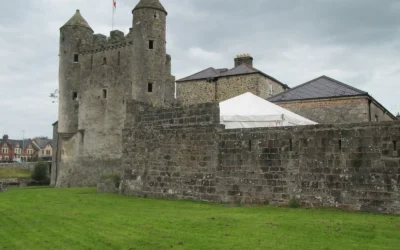
Enniskillen Castle
Enniskillen Castle: The Maguire Clan's Lough Erne Fortress, Home to Two Museums Hugh Maguire built his castle at Enniskillen around 1428. His nickname — 'the Hospitable' — suggests a lord who understood the politics of generosity as well as the politics...
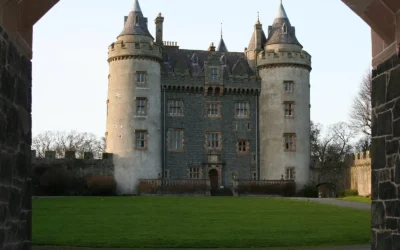
Killyleagh Castle
Killyleagh Castle: Ireland's Oldest Inhabited Castle, Above Strangford Lough Sir Hans Sloane was born in Killyleagh in 1660. The physician, naturalist and collector who grew up in this County Down village on the shore of Strangford Lough went on to assemble a...
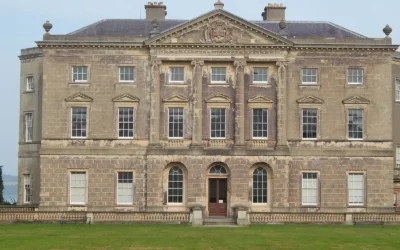
Castle Ward
Castle Ward: The House That Couldn't Agree on a Style — and Became Winterfell Bernard Ward, 1st Viscount Bangor, and his wife Lady Ann Bligh could not agree on what kind of house they wanted to build at their County Down estate in the 1760s. He wanted classical...
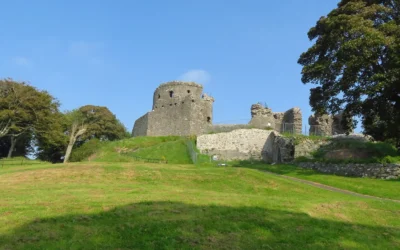
Dundrum Castle
Dundrum Castle: Where John de Courcy's Norman Ulster Meets the Mourne Mountains In 1177, the same year that John de Courcy built Carrickfergus Castle on Belfast Lough, he also established a fortress on a rocky hill above Dundrum Bay in County Down. The two...
Glenarm Castle
Glenarm Castle: Six Centuries of the McDonnell Earls, Among the Glens of Antrim In the 1920s, a fire broke out at Glenarm Castle — allegedly started in an attempt to keep the 11th Earl of Antrim's featherless parrot warm. The castle had to be substantially...