
Ballindalloch Castle
Ballindalloch Castle: The Pearl of the North, Home to the Macpherson-Grants Since 1546
According to local tradition, the original laird of Ballindalloch chose the wrong site for his castle. Everything he built during the day was mysteriously demolished by the following morning. When he finally heeded a voice telling him to build instead on the "cow haughs" — the river meadows beside the River Avon — the building proceeded undisturbed, and there it has stood ever since: the same family in the same castle, continuously, since 1546. In nearly five centuries, the Macpherson-Grant family has never left.
Ballindalloch Castle is known as the Pearl of the North, and the name fits. The Scottish Baronial tower house above the River Avon in Speyside, Moray, is exactly the kind of place the phrase suggests: not enormous, not famous in the way that Edinburgh or Stirling are famous, but quietly exceptional — its formal gardens, its riverside walks, its family history and its genuine sense of continuous habitation giving it a character that the grandest and most visited castles often lack. This guide covers everything you need to plan your visit.
Where Is Ballindalloch Castle?
Ballindalloch Castle is on the A95, approximately 14 miles north-east of Grantown-on-Spey, in Speyside, Moray. From Inverness it is around 50 miles (about an hour by car); from Aberdeen around 60 miles (around one and a half hours). Free parking is available on site.
Public transport in this rural area is limited — the nearest railway stations are at Elgin and Aviemore, from where local bus connections can be researched, but driving is by far the most practical option.
A Brief History of Ballindalloch Castle
John Grant, grandson of the first laird of Ballindalloch, built the original fortified tower house in 1546 — a Z-plan design typical of 16th-century Scottish tower houses, with round towers at diagonally opposite corners giving all-round defensive coverage. In 1645, during the civil wars of the Covenanting period, James Graham, the Marquess of Montrose, plundered and burned the castle as part of his campaign through the Highlands. It was restored shortly afterwards, and the Macpherson-Grants continued in occupation without further displacement.
The Black Watch connection is one of the castle's more historically significant threads. In 1725, Colonel William Grant — the 9th Laird of Ballindalloch — commanded one of the independent companies formed to police the Highlands in the aftermath of the 1715 Jacobite Rising, patrolling against cattle-rustling and smuggling. These companies were later consolidated into the regiment known as the Black Watch. Victorian-era renovations in the 19th century transformed the castle into the elegant country house it is today, adding comfortable interiors while preserving the original tower structure.
The remarkable thing about Ballindalloch is the unbroken line of occupation. The Macpherson-Grant family have been here through the Reformation, the Covenanting wars, the Jacobite Risings, the Clearances, two world wars and the present century. The castle feels like a home because it is one.
Architecture & Design
Ballindalloch Castle is built on the Z-plan — the distinctively Scottish 16th-century tower house layout in which two round towers are placed at diagonally opposite corners of the main block, allowing defenders to cover all sides of the building with fire. The original tower house form survives within the expanded Victorian composition, accessible via an ancient stone staircase that connects the medieval core to the later additions.
The castle's exterior features towers, turrets and intricate stonework in the Scottish Baronial manner. The entrance is carved with the Macpherson-Grant arms in freestone, with a biblical inscription. The Highland Tower provides panoramic views over the Speyside landscape.
The Pink Tower — a bedroom associated with the castle's most famous ghost tradition — is one of the more intimately characterful spaces in the building. Inside, the formal rooms are furnished with 18th-century elegance, family heirlooms and the accumulated objects of nearly five centuries of continuous family occupation: a warm combination of grandeur and personal history that few historic houses quite replicate.
Legends & Lore
Ballindalloch's ghost tradition is gentle rather than frightening, which seems fitting for a family home. The most famous is the Green Lady — a spectral figure said to haunt the dining room, her presence noted by visitors and staff over many generations.
In the Pink Tower, a "beautiful lady" is said to be occasionally seen seated in an armchair; tradition describes her as a guardian rather than a haunting, a protective presence watching over the family rather than frightening them. Both traditions are told with the kind of affectionate familiarity that suggests long familiarity with the subject.
The castle's founding legend — the mysterious demolition of the first building site and the voice directing the laird to the cow haughs by the river — is the oldest of Ballindalloch's stories, and the most evocative: the idea that a castle found its own right place by supernatural guidance, and that the family's 500-year stay is somehow the result of being where they were meant to be.
Visiting the Castle
Important: Ballindalloch Castle is open Sunday to Thursday only during its visitor season (spring to autumn). It is closed on Fridays and Saturdays throughout. Always confirm opening days on the official website before travelling.
The visit is self-guided — information sheets provided in each room explain the history and significance of the spaces, and an audio-visual film in the castle provides a broader introduction to its story. This format allows visitors to move at their own pace through the historic rooms, including the family portrait collection, the formal 18th-century rooms and the older medieval tower sections.
Outside, the formal gardens — established in the 19th century — include herbaceous borders and structured planting set against the Speyside landscape. Woodland and riverside walks along the River Avon are a particular pleasure, and a children's playground and picnic area make Ballindalloch well suited to family visits. The courtyard café serves coffee, cakes and light meals; a gift shop is also available. Photography for personal use is generally permitted — confirm with staff for any room-specific restrictions.
Check Tickets & Tour Times for Ballindalloch Castle →
For current opening dates, hours and prices, check the official Ballindalloch Castle website before you travel.
Where to Stay Near Ballindalloch Castle
Ballindalloch Castle does not offer visitor accommodation. Grantown-on-Spey, 14 miles west, is a well-appointed Georgian planned town with a range of hotels and guesthouses and good access to the Cairngorms National Park. Aviemore, around 25 miles west, offers a wider choice of accommodation and excellent transport connections. Ballater and Royal Deeside (around 25 miles south-east) are also accessible for those combining a visit with Balmoral Castle.
Find Hotels & Stays Near Grantown-on-Spey →
The Best Time to Visit
Late spring (April to June) is a fine time for Ballindalloch — the formal gardens are coming into bloom, the River Avon is running well for the riverside walks and the castle is quieter than in July and August. Summer (July to August) brings the best weather and the longest days for exploring the grounds, though this is also the busiest period. Early September is excellent — slightly quieter, the Speyside landscape is moving towards its autumn colours and the gardens are at their late-season richness.
The castle generally opens in late March and closes in late September; check the official website for current dates.
How to Get There
By car. From Inverness, take the A9 south and then the A95 east to Ballindalloch — around one hour. From Aberdeen, take the A944 west and then the A97 north to join the A95 — around one and a half hours. Free parking is available on site.
By public transport. The nearest railway stations are Aviemore (West Highland Line, Inverness-Perth) and Elgin. Local buses connect these towns to Grantown-on-Spey and onwards; specific connections to the castle are limited — check timetables before travelling.
Compare Transfers & Local Transport in Speyside →
Nearby Attractions
Speyside and the surrounding Moray and Cairngorms area offer excellent heritage and natural attractions.
| Attraction | Why Visit | Distance |
|---|---|---|
| Drumin Castle | A hilltop medieval ruin on a rocky outcrop — a dramatic and freely accessible historical site | ~5 miles |
| Inveravon Pictish Stone | An important Pictish symbol stone embedded in the parish church wall at Inveravon — a rare and accessible example | ~3 miles |
| Corgarff Castle (Historic Environment Scotland) | A star-shaped fortification tower used as a military barracks — one of the most unusual castle designs in Scotland | ~20 miles |
| Grantown-on-Spey | A handsome 18th-century planned town on the River Spey — excellent base and pleasant to explore | ~14 miles |
| Cairngorms National Park | Britain's largest national park — exceptional walking, wildlife and landscapes beginning from Aviemore | ~25 miles |
A natural Speyside day pairs Ballindalloch Castle with the Inveravon Pictish Stone and a walk above the River Avon, then an afternoon drive into the Cairngorms.
Browse Cairngorms & Speyside Tours →
Family & Accessibility
Families. Ballindalloch is well suited to families. The children's playground, the picnic area, the riverside walks and the self-guided format that allows visitors to move at their own pace all work in its favour. The castle's ghost traditions — gentle and family-friendly rather than frightening — add an extra layer of storytelling interest for younger visitors.
Accessibility. The castle is wheelchair accessible, with facilities for disabled visitors. Some areas of the historic building may have limitations — check directly with the castle before visiting if you have specific requirements. Dogs are welcome in the castle grounds on leads; check the current policy for any restrictions.
Practical Tips
- The castle is closed on Fridays and Saturdays — plan your visit for Sunday through Thursday. This is the most important thing to know before travelling.
- Wear comfortable walking shoes — the riverside and woodland walks involve natural terrain and can be muddy after rain.
- Pack a waterproof walking jacket; Speyside weather is changeable across all seasons.
- Bring a portable power bank for photography across the castle and its extensive grounds.
- Allow time for the riverside walk alongside the River Avon — it is one of the most pleasant aspects of a Ballindalloch visit and often overlooked in favour of the castle itself.
- Photography is generally permitted for personal use; confirm with staff for any room-specific guidance.
- Overseas visitor? Pack a UK travel adapter for Type G plugs.
Conclusion
Ballindalloch Castle has been in the same family's possession since 1546, which makes it one of the longest continuously inhabited private castles in Scotland. The tradition that a mysterious voice directed the original laird to the right building site on the river meadows — and that the family has never left — gives Ballindalloch a sense of place and belonging that is rare even among Scotland's privately owned castles.
The formal gardens, the River Avon, the ghost of the Green Lady in the dining room, and the Pearl of the North above the Speyside landscape: it is a castle that rewards an unhurried visit.
Frequently Asked Questions
What days is Ballindalloch Castle open?
The castle is open Sunday to Thursday during its visitor season. It is closed on Fridays and Saturdays throughout. Check the official website for the current year's opening dates, as these vary.
How much does it cost to visit Ballindalloch Castle?
Admission prices are not publicly listed. Check the official Ballindalloch Castle website for current pricing before you travel.
How long has the same family lived at Ballindalloch Castle?
The Macpherson-Grant family have been in continuous occupation of Ballindalloch Castle since 1546 — nearly five centuries, making it one of the longest unbroken single-family occupations of any castle in Scotland.
What is the founding legend of Ballindalloch Castle?
According to local tradition, the original building site proved impossible — structures erected during the day were demolished by the following morning. A mysterious voice eventually directed the laird to build on the "cow haughs" by the River Avon, where the castle has stood undisturbed ever since.
What are the ghost stories at Ballindalloch Castle?
The most famous is the Green Lady, said to haunt the dining room. In the Pink Tower, a "beautiful lady" is said to be occasionally seen in an armchair, described in tradition as a protective guardian of the family rather than a frightening presence.
Is Ballindalloch Castle suitable for families?
Yes — the children's playground, picnic area, riverside walks and self-guided format make it a good family visit. The castle's ghost traditions are gentle and family-friendly.
Is there food at Ballindalloch Castle?
The courtyard café serves coffee, cakes and light meals. A picnic area is available for visitors bringing their own food.
Are dogs allowed at Ballindalloch Castle?
Dogs are welcome in the castle grounds on leads. Check the current policy with the castle before your visit.
How do I get to Ballindalloch Castle?
By car from Inverness (A9 south then A95 east, around 1 hour) or from Aberdeen (A944/A97/A95, around 1.5 hours). Public transport options are limited — the nearest stations are Aviemore and Elgin.
Can I take photos at Ballindalloch Castle?
Photography for personal use is generally permitted. Confirm with staff on arrival for any room-specific restrictions.
Audley’s Castle
Audley's Castle: The Free Tower House Above Strangford Lough, Where Game of Thrones Arrived In the first season of Game of Thrones, the fields and approaches to Castle Ward became Winterfell — the ancestral seat of the Starks. The fields around Audley's...
Kilwaughter Castle
Kilwaughter Castle: John Nash's Antrim Ruin, Declared Enemy Property in the Second World War In 1803, John Nash — the architect who designed Regent Street, remodelled Buckingham Palace and built the Royal Pavilion at Brighton — came to County Antrim and...
Shane’s Castle
Shane's Castle: The O'Neill Estate on Lough Neagh, Touched by John Nash and Twice Burned In 1809, John Nash — the architect who designed Regent Street, Carlton House Terrace and remodelled Buckingham Palace for George IV — began redesigning a castle on the...
Belfast Castle
Belfast Castle: The Free Victorian Castle Above the City, with Nine Hidden Cats The legend says the castle will be safe — or its residents will have good fortune — as long as a white cat lives within its walls. The castle's response to this piece of local...
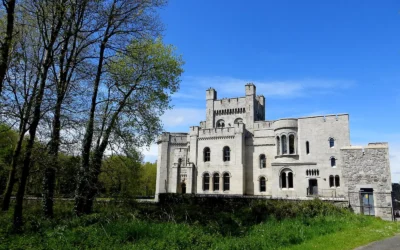
Gosford Castle
Gosford Castle: Ulster's Largest Listed Building — and Game of Thrones' Riverrun When Robin Fedden of the National Trust surveyed Gosford Castle in 1952, he described it as "one of the most original buildings of its time" and noted that it had...