
Tintagel Castle
Tintagel Castle Cornwall | Everything You Need to Know
On a headland of dark slate cliffs above the Atlantic, cut almost entirely from the mainland by erosion over two millennia, stand the ruins of a place that has attracted pilgrims of imagination for as long as anyone can remember. Tintagel Castle is where Geoffrey of Monmouth, writing in 1136, placed the conception of King Arthur.
It is where Richard, Earl of Cornwall, built a castle in the 1230s specifically because of its Arthurian associations. And it is where archaeologists, excavating in 2016 and 2017, found the remains of a 5th and 6th-century palace with evidence of literacy — raising the possibility that the legend and the history are not entirely separate after all.
The castle ruins, the award-winning cantilevered footbridge that connects mainland to island, Merlin's Cave accessible at low tide beneath the headland, the sweeping Atlantic views and the Gallos sculpture — a life-sized bronze of a figure that might be a king — make Tintagel one of the most dramatically sited and most atmospherically charged heritage sites in Britain. It is managed by English Heritage, and it genuinely earns its reputation. This guide covers everything you need to know before you go.
Where Is Tintagel Castle?
Tintagel Castle is located at Castle Road, Tintagel, Cornwall, PL34 0HE, on the north coast of Cornwall, adjacent to the village of Tintagel. The castle entrance is a 600-metre walk from the village along an uneven track.
Nearby landmarks include the Tintagel Visitor Centre, St Materiana's Church and the Tintagel Old Post Office (National Trust). For navigation, the postcode PL34 0HE will bring you to the village car parks, from which the castle is a short walk.
Opening Hours
Tintagel Castle is typically open daily from 10:00 AM to 6:00 PM, with last entry at 5:00 PM.
The castle may close due to high winds or severe weather — Atlantic storms can arrive quickly on this coast. Before travelling, always check the English Heritage website or call the site (01840 770328) for the latest opening information.
How to Get to Tintagel Castle
By car. The most practical option. Drive to Tintagel village, where pay-and-display car parks are available around 600 metres from the castle entrance. Parking fills quickly in summer — arriving early is strongly advisable. There is no on-site or disabled parking at the castle itself.
By public transport. The nearest train station is Bodmin Parkway, around 19 miles away. From there, Bus 11 to Wadebridge and then Bus 95 to Tintagel Visitor Centre provides a connection, though the journey takes 90–120 minutes and services are infrequent. Bus 95 also connects Tintagel with Bude and Newquay. Check the Go Cornwall or Translink website for current timetables.
On foot. From Tintagel village, a scenic 600-metre walk along a track leads to the castle entrance. The track is uneven — sturdy footwear is required.
A land transport service between the village and castle is available (accommodating fold-up wheelchairs), though it is not fully accessible. Contact the site on 01840 770328 for details.
Compare Transfers & Local Transport in Cornwall →
The Best Time to Visit
Spring (April and May) and early autumn (September and October) are the most rewarding times — the wildflowers are on the clifftop path, the crowds are manageable and the Atlantic light is extraordinary. Summer (June to August) brings the largest visitor numbers, and parking and path congestion can be significant; early morning (before 11:00 AM) and the last entry slot of the day are the quietest windows. Winter is dramatic but unpredictable — closures due to high winds are common and some facilities may be reduced.
Merlin's Cave, beneath the headland at the base of the cliffs, is accessible only at lower tides — check tide times on TideTime or a similar service before visiting if you plan to explore it.
Tickets and Costs
All tickets must be booked online in advance for the best price. On-the-day tickets at the gate carry a higher price.
| Ticket Type | Advance Online Price (approx.) |
|---|---|
| Adult (18+) | ~£14.80 |
| Child (5–17) | ~£9.80 |
| Under-5 | Free (ticket required) |
| English Heritage Member | Free (membership card required) |
| Carer of disabled visitor | Free |
Family and concession tickets are available — check the English Heritage website for current pricing. A small donation option adds a modest amount to the ticket price. As prices are reviewed periodically, always check the English Heritage website for current rates before booking.
Book Tintagel Castle & Cornwall Experiences →
What to Expect
Tintagel Castle is not a single building but a complex of ruins, coastal paths, caves and views spread across a dramatic peninsula that is effectively an island at high tide.
The cantilevered footbridge — the award-winning structure opened in 2019, suspended between the mainland and the island section — is the gateway to the inner site. The crossing itself is a highlight: the bridge arcs over the cleft in the cliff, with the Atlantic visible below and the full scale of the headland apparent from its midpoint.
The castle ruins are those of Richard, Earl of Cornwall's 13th-century construction — the Great Hall, towers and walls that he built onto a site already ancient, already associated with Arthur. The outdoor displays explain the archaeology clearly. Below and around them, the visible remains of the 5th–7th century settlement — a defensive ditch, the foundations of buildings — are the elements that have most excited archaeologists and most complicated the legend.
Browse North Cornwall & Coastal Tours →
The Gallos sculpture — a life-sized bronze figure on the island's highest point, gazing out to sea, deliberately ambiguous about whether it represents a king, a warrior or something else entirely — is one of the most effective pieces of public art on any English heritage site. The visitor exhibition in the mainland building contains Mediterranean pottery fragments, writing slates and other artefacts from the excavations, with a 3D model of the site at its medieval height.
Merlin's Cave is the sea cave accessible at low tide beneath the headland — atmospheric, damp and genuinely ancient-feeling, regardless of whether Merlin actually existed. Check tide times before visiting; it is accessible for a limited window around low tide.
The site also has a small beach below the cliffs (no lifeguard), the Beach Café serving Cornish pasties and cakes, accessible toilets near the café, and a gift shop.
A typical visit takes one to two hours; three to four hours if you also explore the beach, the coastal path and the nearby village.
Safety and Accessibility
Safety. Tintagel's terrain is genuinely challenging: steep slopes, sheer drops, over 100 steps and uneven surfaces throughout. The one-way exit route involves a 140-step climb. Wear sturdy shoes, supervise children closely near cliffs and be prepared for slippery surfaces in wet conditions. Avoid the beach in high seas.
Accessibility. The site's geography makes full wheelchair accessibility impossible. A transport service from the village accommodates fold-up wheelchairs; step-free access is possible by returning via the bridge rather than the step exit. The island section is largely inaccessible for wheelchairs. Accessible toilets are near the café. Assistance dogs are welcome, with water bowls provided. For specific needs, contact the site at 01840 770328.
Families. The site is suitable for older children and teenagers, but the steps and cliffs make it unsuitable for very young children or those unable to manage uneven terrain. No pushchairs.
Where to Stay Near Tintagel Castle
Tintagel and the surrounding north Cornish coast offer a range of accommodation, from small B&Bs in the village itself to larger hotels in nearby Boscastle, Bude and Padstow.
A few areas worth considering:
- Tintagel village — the most immediate option, literally next to the castle, with guesthouses, a YHA and self-catering. Small and atmospheric.
- Boscastle — just along the coast, a dramatically beautiful harbour village, quieter than Tintagel and equally well placed for exploring.
- Bude — a larger coastal town with excellent surfing beaches and a broader range of accommodation, around 20 miles along the coast.
North Cornwall fills quickly in July and August — booking ahead is essential.
Find Hotels Near Tintagel Castle →
A Brief History of Tintagel Castle
The story of Tintagel begins long before the castle. Archaeological investigation has confirmed a significant settlement on the headland from at least the 5th century AD — pottery fragments from North Africa, the eastern Mediterranean and western France suggest a trading connection with the wider Mediterranean world, and the presence of high-status goods implies a seat of power. In 2016, excavations uncovered a 6th-century stone building of considerable size, with fragments of inscribed slate suggesting literacy — an exceptional find in early medieval Britain.
In the 12th century, Geoffrey of Monmouth's History of the Kings of Britain placed the conception of Arthur at Tintagel, transforming a remote Cornish headland into a site of national myth. A century later, Richard, Earl of Cornwall, built a castle here in the 1230s — almost certainly motivated by the Arthurian association rather than any strategic necessity, as the site was by then of limited military value. The castle fell into ruin in the 14th century.
By the 19th century, Tintagel had become a tourist destination, drawing visitors in search of Arthur. It was taken into state care and became one of the first sites managed by English Heritage.
The 2016 inscription: among the finds from recent excavations was a piece of 6th-century slate bearing a Latin inscription with a Greek element — the Artognou stone — containing a personal name. Whether or not that name connects to any historical Arthur, the find confirmed that literate, high-status individuals were present at Tintagel in exactly the period when the Arthur legend is set.
Nearby Attractions
North Cornwall has a remarkable concentration of coastal and heritage attractions close to Tintagel.
| Attraction | Why Visit | Distance |
|---|---|---|
| Tintagel Old Post Office (NT) | A 14th-century stone building — one of the oldest domestic buildings in Cornwall | ~0.6 miles |
| St Nectan's Glen | A beautiful woodland waterfall, one of Cornwall's best-kept secrets | ~2 miles |
| Rocky Valley | Ancient labyrinth carvings on rock faces — mysterious and little-visited | ~1 mile |
| Boscastle Harbour | A dramatic valley harbour village with a witchcraft museum and National Trust visitor centre | ~5 miles |
| Trebarwith Strand | A wide sandy beach with dramatic cliff scenery, accessible at low tide | ~2 miles |
Explore Cornwall's Heritage Sites →
Practical Tips for Your Visit
- Book in advance. Advance tickets are cheaper and guarantee entry; the site has limited capacity.
- Check tide times for Merlin's Cave. Accessible only around low tide — plan accordingly.
- Check weather and wind. The site can close at short notice in high winds. Confirm before travelling.
- Wear waterproof walking boots. Over 100 steps, steep paths, clifftop exposure and potential mud and rain require proper footwear — not trainers.
- Pack a waterproof jacket. North Cornwall's weather changes quickly. Atlantic wind can be fierce even on ostensibly pleasant days.
- Overseas visitor? The UK uses Type G plugs — a UK travel adapter is essential for charging your devices.
- Download the Bloomberg Connects app before visiting for a self-guided digital tour of the site.
- Dogs are welcome on leads, with water bowls provided at the site.
Frequently Asked Questions
What are the opening hours of Tintagel Castle Cornwall?
Typically 10:00 AM to 6:00 PM (last entry 5:00 PM). Seasonal variations apply and the castle may close in high winds. Always check the English Heritage website before travelling.
How much does it cost to visit Tintagel Castle Cornwall?
Adult advance online tickets are approximately £14.80; children (5–17) approximately £9.80. English Heritage members enter free. On-the-day tickets are more expensive — book online. Check the official English Heritage website for current rates.
Is Tintagel Castle suitable for children?
Suitable for older children and teenagers who can manage over 100 steps and uneven terrain. Not recommended for very young children or pushchairs. Close supervision near cliffs is essential.
Are there any discounts for Tintagel Castle?
English Heritage members enter free. Advance online booking is cheaper than the gate price. Check the website for family and concession rates.
How long does a visit to Tintagel Castle take?
The castle ruins, bridge and exhibition typically take one to two hours. Add the beach, Merlin's Cave and the village for three to four hours total.
Is photography allowed at Tintagel Castle Cornwall?
Yes — personal photography is welcome throughout. Be considerate of other visitors.
Are there guided tours available at Tintagel Castle?
No formal guided tours are offered regularly, but the Bloomberg Connects app provides a self-guided digital tour. Check the English Heritage website for any seasonal guided events.
What's the best way to get to Tintagel Castle from Newquay or Bude?
Bus 95 connects both Newquay and Bude to Tintagel Visitor Centre (timetables on Go Cornwall). From the visitor centre, it is around a one-mile walk to the castle.
Is Tintagel Castle wheelchair accessible?
Accessibility is severely limited by the terrain. A transport service from the village can accommodate fold-up wheelchairs, and some step-free access is possible via the bridge. The island section is not wheelchair-accessible. Contact the site in advance for specific information.
Are there dining options near Tintagel Castle?
The Beach Café at the castle site serves Cornish pasties and light refreshments. Tintagel village, 600 metres away, has cafés and tea rooms.
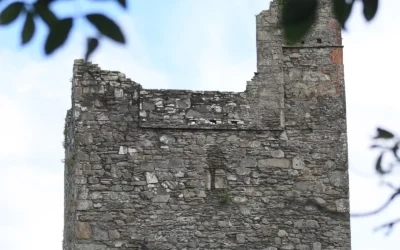
Audley’s Castle
Audley's Castle: The Free Tower House Above Strangford Lough, Where Game of Thrones Arrived In the first season of Game of Thrones, the fields and approaches to Castle Ward became Winterfell — the ancestral seat of the Starks. The fields around Audley's...
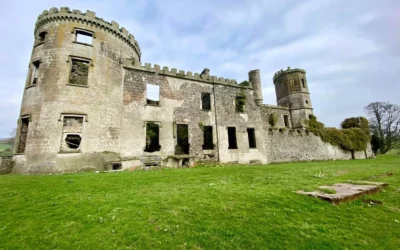
Kilwaughter Castle
Kilwaughter Castle: John Nash's Antrim Ruin, Declared Enemy Property in the Second World War In 1803, John Nash — the architect who designed Regent Street, remodelled Buckingham Palace and built the Royal Pavilion at Brighton — came to County Antrim and...
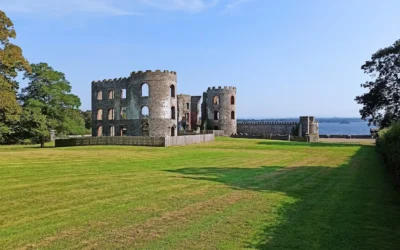
Shane’s Castle
Shane's Castle: The O'Neill Estate on Lough Neagh, Touched by John Nash and Twice Burned In 1809, John Nash — the architect who designed Regent Street, Carlton House Terrace and remodelled Buckingham Palace for George IV — began redesigning a castle on the...
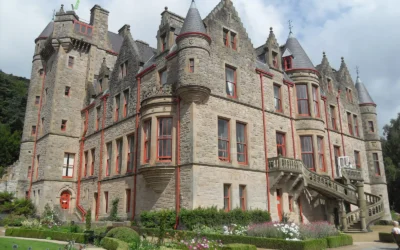
Belfast Castle
Belfast Castle: The Free Victorian Castle Above the City, with Nine Hidden Cats The legend says the castle will be safe — or its residents will have good fortune — as long as a white cat lives within its walls. The castle's response to this piece of local...
Gosford Castle
Gosford Castle: Ulster's Largest Listed Building — and Game of Thrones' Riverrun When Robin Fedden of the National Trust surveyed Gosford Castle in 1952, he described it as "one of the most original buildings of its time" and noted that it had...