
Harlech Castle
Harlech Castle: The Invincible Fortress That Fell to Owain Glyndŵr, Above the Bay
In 1404, after four years of the most sustained Welsh uprising against English rule since the Conquest, Owain Glyndŵr took Harlech Castle — the fortress that Edward I had built in seven years between 1282 and 1289 at the cost of roughly £8,190, one tenth of the entire budget for his Welsh castle-building programme. Glyndŵr made it his residence, his military headquarters and possibly the seat of the Welsh parliament at which he was recognised as Prince of Wales.
For five years, Harlech was the capital of the last native Welsh principality. Then Henry of Monmouth — later Henry V — besieged and retook it. Harlech has been one of the most contested fortresses in Wales ever since: the last castle to fall to Henry V, the last Lancastrian stronghold in the Wars of the Roses, the last Royalist garrison in the English Civil War. The song inspired by the seven-year siege of 1461 to 1468 — Men of Harlech — is still sung.
Harlech Castle stands on a rocky crag 60 metres above Cardigan Bay, with the peaks of Eryri (Snowdonia) behind it and the Irish Sea before it. It is part of the UNESCO World Heritage Site "Castles and Town Walls of King Edward in Gwynedd," recognised in 1986 as among the finest examples of medieval military architecture in Europe. This guide covers everything you need to plan your visit.
Where Is Harlech Castle?
Harlech Castle is in the town of Harlech, Gwynedd, North Wales, on the A496 coastal road. From Barmouth, 11 miles south, allow around 20 minutes. From Porthmadog, 10 miles north, allow around 15 minutes. Harlech railway station, on the Cambrian Coast Line from Shrewsbury to Pwllheli, is 200 metres from the castle. Bus routes 38 and 39 also stop close by.
A pay-and-display car park is available near the castle.
A Brief History of Harlech Castle
Edward I's decision to build at Harlech in 1282 came in the immediate aftermath of the death of Llywelyn ap Gruffudd — the last native Prince of Wales — in battle. The fortress was designed by Master James of St George, the greatest castle architect of medieval Europe, who had already built many castles in Savoy for the Count of Savoy and would go on to build further castles for Edward I across North Wales.
The result at Harlech was a concentric castle of extraordinary strength: a massive gatehouse, four circular towers at the inner ward corners, and a water gate with 127 steps connecting the castle to the sea when water reached the foot of the cliff — a supply route that allowed the garrison to be resupplied by ship during sieges.
That water gate proved its worth immediately. When the rebellion of Madog ap Llywelyn threatened the castle in 1294–1295, the garrison was resupplied by sea and held out. Harlech acquired a reputation for impregnability — which made the shock of its fall to Owain Glyndŵr in 1404 the more significant. Glyndŵr used the castle for five years as the centre of his principality, withdrawing the last time in 1409 when Henry of Monmouth laid siege with a large force and cutting off the sea supply route.
The Wars of the Roses brought a seven-year Lancastrian resistance at Harlech (1461–1468) that became a Welsh legend and the direct inspiration for the song Men of Harlech. In the Civil War, the garrison held for the Royalists until 1647 — the last Royalist fort in Britain to surrender. It was restored in the 20th century and came under Cadw management.
The remarkable thing about Harlech is how completely it played every role that a medieval castle was designed for: royal stronghold, rebel headquarters, last redoubt of a defeated cause, and — as a ruined monument above one of the finest views in Wales — an enduring symbol of the country's history.
Architecture & Design
Harlech's architecture is the work of Master James of St George at the peak of his career, and it shows. The concentric design — a powerful inner ward protected by an outer wall, both protected by the natural cliff — made the castle a remarkably efficient defensive system.
The massive gatehouse, the castle's most prominent feature, is flanked by two D-shaped towers, defended by three portcullises and heavy doors, and was likely used as high-status residential accommodation as well as a defensive entrance. The four circular towers of the inner ward — each with an individual name in the medieval records — contained the castle's chapel, kitchen, granary and great hall.
The water gate connected by 127 steps to the former shoreline is the feature that sets Harlech apart from most medieval castles: a supply route immune to siege, running directly from the sea to the castle itself. The cliff on which the castle sits has receded since the medieval period, so the sea no longer reaches the foot of the rock, but the water gate and its steps survive. A new 'floating' footbridge reinstated the original entrance route for the first time in over 600 years.
J.M.W. Turner and John Cotman both painted Harlech Castle, drawn by the combination of fortress silhouette and coastal drama.
Legends & Lore
Harlech's connection to Welsh mythology runs through the Mabinogion — the medieval collection of ancient Celtic tales that is the cornerstone of Welsh literary tradition. The second branch of the Mabinogion tells the story of Branwen, a Welsh princess whose wedding to the King of Ireland leads to war between the two nations.
Local tradition has long associated the site of Harlech with her story, and one of the castle's towers bears her name. Archaeologists note that no Welsh fortification demonstrably predated Edward I's castle on this site, but the mythological association reflects Harlech's deep place in the Welsh cultural imagination.
The historical lore is more than sufficient. Men of Harlech — the traditional Welsh song inspired by the 1461–1468 Lancastrian siege, which celebrated the garrison's years of defiance against the Yorkist forces — has become one of the best-known Welsh patriotic songs and is still performed at rugby internationals and ceremonial occasions. The castle the song celebrates is still here, and the view from its battlements is unchanged.
Visiting the Castle
Harlech Castle is managed by Cadw and is open year-round, with longer hours in summer and shorter in winter. Cadw members enter free.
The visit is primarily self-guided, with an on-site exhibition covering the castle's history. The gatehouse is the most dramatic space to enter — the portcullis slots, the arrowloops and the guardrooms all communicate the defensive engineering immediately.
The battlements can be walked for the full panoramic view: Cardigan Bay spread below to the west, Eryri rising behind to the east — one of the finest castle views in Wales. The water gate steps descend the cliff and are worth the detour. The 'floating' footbridge allows entry via the original route for the first time in centuries.
Caffi Castell serves refreshments on site, including coffee, cakes and vegan options. Picnics are welcome in designated areas. There is a gift shop. Photography for personal use is permitted throughout the castle.
Dogs on short leads are welcome.
Check Tickets & Tour Times for Harlech Castle →
For current opening hours and prices, check the official Cadw website before your visit.
Where to Stay Near Harlech Castle
Harlech town has hotels and guesthouses within walking distance of the castle. Cadw also offers holiday accommodation near the castle bookable through their website; check for availability. The wider Gwynedd coast — Barmouth and Porthmadog — offers further options for those combining Harlech with the wider Cardigan Bay and Eryri area.
Find Hotels & Stays in Harlech →
The Best Time to Visit
Spring (April to June) is exceptional at Harlech — the Cardigan Bay views are clear, Eryri's peaks are visible, the castle grounds are green and the visitor numbers are lower than in summer. The long evenings of late spring give time for a leisurely visit and a walk along the beach afterwards.
Summer (July to August) brings the longest opening hours and the best coastal weather; the Cardigan Bay sunsets from the battlements in July are outstanding. Autumn (September to October) is quieter, with autumn colour appearing on the Eryri slopes behind the castle.
How to Get There
By car. From Barmouth, take the A496 north (around 20 minutes). From Porthmadog, take the A487 and A496 south (around 15 minutes). A pay-and-display car park is near the castle.
By train. Harlech station, 200 metres from the castle, is on the Cambrian Coast Line from Shrewsbury to Pwllheli. Services run from Birmingham and the Midlands; the journey from Shrewsbury takes around two hours.
By bus. Routes 38 and 39 serve Harlech, stopping about 150 metres from the castle.
Compare Transfers & Local Transport in North Wales →
Nearby Attractions
Harlech sits within Eryri National Park, one of Britain's finest areas for landscape and heritage.
| Attraction | Why Visit | Distance |
|---|---|---|
| Harlech Beach | A superb dune-backed beach immediately below the castle — outstanding views back up to the fortress | Adjacent |
| Eryri National Park (Snowdonia) | Britain's second largest national park — Snowdon, the Ogwen Valley, Cadair Idris and some of the finest walking in Wales | ~10 miles |
| Criccieth Castle (Cadw) | A Welsh-built castle on a headland above Tremadoc Bay — a striking contrast to Edward I's English fortresses | ~12 miles |
| Barmouth | A popular Welsh seaside town at the mouth of the Mawddach Estuary, with a long beach and the historic Barmouth Bridge | ~11 miles |
| Taith Ardudwy Way | A long-distance walking route from Barmouth to Llandecwyn, passing through the hills above Harlech with castle views | Adjacent |
A natural Gwynedd day combines Harlech Castle in the morning with a beach walk below the walls, then a drive north to Criccieth Castle in the afternoon.
Browse Eryri & North Wales Tours →
Family & Accessibility
Families. Harlech is excellent for families. The gatehouse, the battlements and the water gate all engage children powerfully; the scale of the views from the top of the castle is one of the most immediately impressive anywhere in Wales. The new floating footbridge gives a novel entry experience. Dogs are welcome on short leads.
Accessibility. The castle has some accessibility features including a portable induction loop. The site involves uneven terrain and steps; check the Cadw accessibility guide before visiting for detailed information. Contact Cadw for specific requirements.
Practical Tips
- Climb to the battlements first — the views over Cardigan Bay and Eryri are the most memorable part of the visit and best enjoyed with morning light from the west.
- Wear comfortable walking shoes — the castle involves uneven stone surfaces and the water gate steps require care.
- Pack a waterproof walking jacket; the Gwynedd coast can be exposed to Atlantic weather.
- Bring a portable power bank for photography — the Cardigan Bay views and the Eryri backdrop are exceptional in good weather.
- Walk down to Harlech Beach after the castle — the view back up to the fortress from the dunes is one of the most reproduced castle images in Wales.
- Photography is permitted for personal use throughout.
- Overseas visitor? Pack a UK travel adapter for Type G plugs.
Conclusion
Harlech Castle was built in seven years, captured by Owain Glyndŵr, retaken by the future Henry V, defended for seven years during the Wars of the Roses, the last Royalist fortress to surrender in the Civil War, and recognised as a UNESCO World Heritage Site in 1986. The water gate steps descend to what was once the sea.
The floating footbridge reinstated the original entrance for the first time in six centuries. The view from the battlements — Cardigan Bay to the west, the Eryri peaks to the east — is one of the finest from any castle in Wales. Men of Harlech is still sung. The castle has earned it.
Frequently Asked Questions
What are the opening hours of Harlech Castle?
The castle is open year-round, with longer hours in summer (broadly April to October) and shorter hours in winter. Check the official Cadw website for current times before travelling.
How much does it cost to visit Harlech Castle?
Admission fees vary by age; Cadw members enter free. Online booking may offer a discount. Check the Cadw website for current prices.
Is Harlech Castle a UNESCO World Heritage Site?
Yes — it is part of "Castles and Town Walls of King Edward in Gwynedd," designated a UNESCO World Heritage Site in 1986, alongside Beaumaris, Caernarfon and Conwy castles.
What is the Men of Harlech connection?
The traditional Welsh song Men of Harlech celebrates the seven-year Lancastrian garrison's resistance at Harlech during the Wars of the Roses (1461–1468). It became one of Wales's most recognised patriotic songs and is regularly performed at national occasions.
What was Owain Glyndŵr's connection to Harlech?
Owain Glyndŵr captured Harlech in 1404 during his rebellion against English rule and used it as his headquarters and residence for five years. He may have held a Welsh parliament there and was recognised as Prince of Wales. The castle was retaken by English forces in 1409.
Is there food at Harlech Castle?
Caffi Castell serves coffee, cakes and vegan options on site. Picnics are welcome in designated areas.
Are dogs allowed at Harlech Castle?
Dogs on short leads are welcome throughout the castle.
Is Harlech Castle wheelchair accessible?
The castle has some accessibility features. Uneven terrain and steps limit access in some areas. Check the Cadw accessibility guide for detailed information.
How do I get to Harlech Castle?
By car from Barmouth (A496, 20 minutes) or Porthmadog (A487/A496, 15 minutes). By train to Harlech station (200 metres from the castle, Cambrian Coast Line from Shrewsbury). By bus routes 38 or 39.
Can I take photos at Harlech Castle?
Photography for personal use is permitted throughout the castle. Commercial photography requires prior approval from Cadw.
Audley’s Castle
Audley's Castle: The Free Tower House Above Strangford Lough, Where Game of Thrones Arrived In the first season of Game of Thrones, the fields and approaches to Castle Ward became Winterfell — the ancestral seat of the Starks. The fields around Audley's...
Kilwaughter Castle
Kilwaughter Castle: John Nash's Antrim Ruin, Declared Enemy Property in the Second World War In 1803, John Nash — the architect who designed Regent Street, remodelled Buckingham Palace and built the Royal Pavilion at Brighton — came to County Antrim and...
Shane’s Castle
Shane's Castle: The O'Neill Estate on Lough Neagh, Touched by John Nash and Twice Burned In 1809, John Nash — the architect who designed Regent Street, Carlton House Terrace and remodelled Buckingham Palace for George IV — began redesigning a castle on the...
Belfast Castle
Belfast Castle: The Free Victorian Castle Above the City, with Nine Hidden Cats The legend says the castle will be safe — or its residents will have good fortune — as long as a white cat lives within its walls. The castle's response to this piece of local...
Gosford Castle
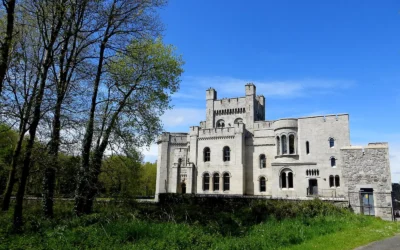
Gosford Castle: Ulster's Largest Listed Building — and Game of Thrones' Riverrun When Robin Fedden of the National Trust surveyed Gosford Castle in 1952, he described it as "one of the most original buildings of its time" and noted that it had...