
Castle Howard
Castle Howard: The Baroque Masterpiece Behind Brideshead, Above the Yorkshire Hills
John Vanbrugh had never designed a building in his life. He was a playwright — the author of The Relapse and The Provoked Wife, two of the most celebrated comedies of the Restoration stage — when Charles Howard, the 3rd Earl of Carlisle, commissioned him in 1699 to design a new house on the Howardian Hills of North Yorkshire.
What Vanbrugh produced, working alongside the architectural theorist Nicholas Hawksmoor, was Castle Howard: a building of Baroque grandeur so complete, so assured and so original that it immediately established its first-time architect as one of the most significant figures in English architectural history. He went on to design Blenheim Palace. Castle Howard was his first building.
The house has been in the Howard family since its construction, has survived a devastating fire that destroyed its famous dome in 1940 and has been restored, generation by generation, to something close to its original splendour. Its global fame rests on two screen appearances: the filming of Brideshead Revisited here in 1981 — which brought the house to international audiences and helped fund its restoration — and the more recent appearances in Bridgerton.
But neither the television fame nor the history quite prepares a visitor for the experience of approaching Castle Howard through the gates, along the avenue, and seeing the dome and the wings spread across the Yorkshire skyline for the first time. This guide covers everything you need to plan your visit.
Where Is Castle Howard?
Castle Howard is located in the Howardian Hills, approximately 15 miles north-east of York, off the A64 towards Scarborough. From York, follow the A64 east and look for the brown tourist signs; the journey takes around 30 minutes by car. Free parking is available on site.
By public transport, the Route 81 bus from York city centre runs to the castle during the season (typically April to October); private tour buses also operate from York. The nearest railway stations are York (15 miles) and Malton (7 miles), with taxis available from both. York itself is a superb base — one of England’s most historic cities — and combining Castle Howard with time in York is one of the finest history-and-architecture days out in the north of England.
A Brief History of Castle Howard
The Howard family connection with this part of North Yorkshire began in 1577 when Lord William Howard married Elizabeth Dacre and acquired the Henderskelfe estate. The current house was begun in 1699, when Charles Howard, 3rd Earl of Carlisle, decided to commission a new building of real ambition and chose the most unconventional architect imaginable — John Vanbrugh, a man of extraordinary ability and almost no relevant experience.
Vanbrugh’s collaboration with Nicholas Hawksmoor produced a building unlike anything previously seen in England: a Baroque composition of the kind more familiar in Rome or Vienna, dramatic, theatrical and entirely confident. Construction continued in phases for over a century, and the Long Gallery was not completed until 1811, more than a hundred years after the foundation stone.
In 1940 a catastrophic fire swept through the house, destroying the central dome and a substantial part of the east wing. The restoration that followed — painstaking, expensive and conducted across several decades — was the defining challenge of the 20th-century Howard family’s stewardship of the estate.
The filming of Brideshead Revisited in 1981, which brought crews and international attention to a house that the public had barely known, also brought crucial funding that accelerated the restoration programme. George Howard and Lady Cecilia were central figures in this effort, turning Castle Howard into both a family home and a major public attraction.
The remarkable thing about Castle Howard is that a playwright invented it. Architecture has always attracted brilliant amateurs — but few have produced, on their first attempt, a building of this scale, this confidence and this lasting importance.
Architecture & Design
Castle Howard’s central block is crowned by the dome — rebuilt after the 1940 fire and now fully restored — flanked by two symmetrical wings that enclose a courtyard, the whole composition aligned on a single dramatic axis visible from miles away across the hills.
The north front presents Roman Doric pilasters; the south front is more ornate, with Corinthian columns and carved detailing. The visual drama of the house is entirely Vanbrugh’s: he understood architecture as theatre, and the approach, the courtyard and the long south façade are all designed to be experienced sequentially, each revelation larger than the last.
Inside, the Great Hall beneath the dome is the centrepiece — a soaring space decorated with frescoes by Giovanni Antonio Pellegrini, the plasterwork and painted ceilings creating an interior of unusual richness. The house contains a substantial collection of art and furniture accumulated by the Howards over three centuries, including Old Master paintings, antique sculpture and tapestries.
The 1,000-acre grounds were laid out in the 18th century with formal parterres, an ornamental lake, the Atlas Fountain and a series of Baroque temples and follies set across the Howardian Hills — one of the finest 18th-century designed landscapes in England.
Legends & Lore
Castle Howard has no ghost stories to speak of — its history has been one of ambition, creativity and occasional catastrophe rather than violence — but its accumulated associations give it a character that is entirely its own. The fire of 1940 is the great trauma in the family’s modern history: the dome gone, rooms gutted, irreplaceable contents lost. The decades of restoration that followed are a story of determination and love for a building that might, in other hands, have been abandoned.
The screen story is where Castle Howard’s modern fame was made. When Charles Sturridge directed the 1981 television adaptation of Evelyn Waugh’s Brideshead Revisited at Castle Howard, he brought one of the most celebrated English novels to one of the most beautiful English houses, and the match was so perfect that it is now difficult to read the book without seeing the building.
The series is widely regarded as one of the finest achievements in British television drama. More recently, Castle Howard appeared in Bridgerton, reaching a new global audience and establishing the house as a location of genuine cinematic power. Few stately homes in England have been so consistently well served by their screen appearances — the house enhances the stories it frames, and the stories have repaid the house with generations of new visitors.
Visiting the Castle
Castle Howard is open to visitors typically from April to October, with the house and grounds accessible on most days during that period. Outside this season, check the official website for any winter openings or special events. The visit divides naturally between the house and the grounds, and both repay substantial time.
Inside the house, the Great Hall beneath the dome is the immediate architectural highlight — the Pellegrini frescoes, the soaring height and the restored plasterwork give it a scale and drama rare even among great English houses. The galleries and state rooms display the Howard family’s art collection alongside the rooms made familiar to millions through Brideshead Revisited.
Guided tours provide deeper context on the architecture, the family and the filming history, and are well worth booking. The house opens in the morning and closes in early afternoon, so it rewards an early visit.
Outside, the 1,000-acre grounds deserve as much time as the house. The Atlas Fountain, the ornamental lake, the Walled Garden, the 18th-century temples and follies, and the woodland paths through the Howardian Hills all repay unhurried exploration. The Yorkshire Arboretum, adjacent to the estate, has over 6,000 trees and is a destination in its own right.
Families will find the Skelf Island Adventure Playground — with treetop structures and slides — a significant draw for younger visitors. Seasonal events include summer outdoor concerts and a Christmas programme — check the website for the current calendar.
Picnics are welcome in designated areas, and there are several cafés, a farm shop and a garden centre on site. Photography is generally welcome in the grounds; check with staff inside the house for any room-specific restrictions. There is a gift shop.
Check Tickets & Tour Times for Castle Howard →
Check the official Castle Howard website for current opening times, prices and seasonal arrangements.
Where to Stay Near Castle Howard
Castle Howard does not offer visitor accommodation. The city of York, 15 miles to the south-west, is the natural base — one of England’s most historically rich and enjoyable cities, with a wide range of hotels, inns and guesthouses to suit all budgets, and the medieval core, York Minster, the Shambles and the Jorvik Viking Centre all within easy walking distance.
Malton, Yorkshire’s “food capital”, is closer at 7 miles and has a growing number of independent hotels and bed and breakfasts.
The Best Time to Visit
Spring (April to June) is lovely at Castle Howard — the gardens are coming into bloom, the atlas fountain is running, the Walled Garden is at its freshest and visitor numbers are lower than in high summer.
Summer (July and August) brings the outdoor concerts and the full programme of seasonal events, the longest opening hours and the best weather for exploring the grounds; book ahead for any specific events. Autumn (September and October) is particularly beautiful in the grounds — the Howardian Hills and the arboretum turn gold, and the walks through the estate are exceptional.
The house is generally open mornings only during the season; the grounds stay open longer. Weekday visits are consistently quieter than weekends, and arriving early gives the best experience of the house before the main visitor flow arrives mid-morning.
How to Get There
By car. From York take the A64 east towards Scarborough and follow the brown tourist signs to Castle Howard (the turn is well signposted). From Leeds, allow around an hour. Free parking is available on site, with Blue Badge spaces close to the entrance.
By bus. The Route 81 bus from York city centre runs to Castle Howard during the visitor season (typically April to October). Private tour buses from York also operate — check locally for current timetables.
By train. York is on the main East Coast Main Line with fast services from London King’s Cross (around 2 hours), Edinburgh and Manchester. Malton station is 7 miles from the castle; York is 15 miles. Taxis from both stations reach the castle in 20 to 30 minutes.
Compare Transfers & Local Transport in North Yorkshire →
Nearby Attractions
Castle Howard sits at the centre of one of the finest areas in the north of England for historic houses, landscapes and heritage.
| Attraction | Why Visit | Distance |
|---|---|---|
| City of York | York Minster, the Shambles, Jorvik Viking Centre and Roman walls — one of England’s most complete historic cities | ~15 miles |
| Yorkshire Arboretum | More than 6,000 trees from around the world — a serene complement to the Castle Howard grounds | Adjacent |
| Rievaulx Abbey (English Heritage) | One of England’s most magnificent ruined abbeys, in a dramatic wooded valley of the North York Moors | ~15 miles |
| Eden Camp Modern History Museum | A unique WWII museum housed in a former prisoner-of-war camp — vivid and immersive for all ages | ~8 miles |
| Byland Abbey (English Heritage) | A haunting medieval Cistercian ruin with exceptional medieval floor tiles | ~12 miles |
A natural North Yorkshire day pairs Castle Howard in the morning with an afternoon in York — the combination covers Baroque England and Viking/medieval England in a single day.
Browse North Yorkshire Tours & Day Trips →
Family & Accessibility
Families. Castle Howard is excellent for families with older children interested in history or screen connections. The Skelf Island Adventure Playground is a serious draw for younger visitors, and the 1,000-acre grounds give children real space to run between attractions. The arboretum and the ornamental lake are particularly good for a gentle family walk.
Accessibility. The house has wheelchair-accessible lifts, and a Kelly train operates around the grounds for visitors with limited mobility. Some areas of the house involve stairs; check the official accessibility information before visiting to plan the best route. Picnics are welcome in designated areas. Photography is generally permitted in the grounds; confirm with staff for any restrictions inside the house. Check the current dogs and pets policy on the official website before bringing a dog.
Practical Tips
- Buy tickets online in advance — online booking offers a discount over the gate price and is recommended for weekend visits.
- The house opens in the morning and closes in early afternoon during the season — arrive early for the quietest experience inside.
- Wear comfortable walking shoes — the 1,000-acre grounds involve substantial walking on grass and gravel paths.
- Pack a compact travel umbrella; the Yorkshire Hills weather is changeable and much of the best of Castle Howard is outdoors.
- Bring a portable power bank for a long day of photography across the house and grounds.
- Check the seasonal events calendar — the summer concerts and Christmas programme are worth planning a visit around.
- Overseas visitor? Pack a UK travel adapter for Type G plugs.
Conclusion
Castle Howard is the building that proved a playwright could be an architect. John Vanbrugh had never designed a structure when he began work here in 1699; what he and Hawksmoor produced became one of the most influential Baroque compositions in English architectural history.
Three centuries later, the house where Charles Ryder and Sebastian Flyte walked together in Brideshead Revisited still belongs to the Howard family, still opens its gates across the Howardian Hills, and still rewards every visitor who makes the 15-mile journey from York on a clear Yorkshire morning.
Frequently Asked Questions
What are the opening hours of Castle Howard?
Castle Howard is typically open from April to October, with the house open in the mornings and the grounds open until late afternoon. Hours vary by season — check the official Castle Howard website for the current schedule.
How much does it cost to visit Castle Howard?
Admission fees vary by age, and online booking offers a discount over gate prices. Check the official website for current prices.
What is the Brideshead Revisited connection?
The 1981 television adaptation of Evelyn Waugh’s Brideshead Revisited was filmed almost entirely at Castle Howard, which served as Brideshead itself. The production brought the house to international audiences and helped fund its restoration. More recently, the house appeared in Bridgerton.
Who designed Castle Howard?
John Vanbrugh, a playwright with no prior architectural experience, designed Castle Howard in 1699 in collaboration with Nicholas Hawksmoor. It was his first building; he went on to design Blenheim Palace.
Can you stay overnight at Castle Howard?
Castle Howard does not offer visitor accommodation. The city of York, 15 miles away, is the natural base, with a wide range of hotels and guesthouses.
Is Castle Howard suitable for children?
Yes — the Skelf Island Adventure Playground, the grounds and the arboretum make it a good family destination, and the house’s screen connections with Brideshead and Bridgerton engage older children and teenagers.
Is Castle Howard wheelchair accessible?
The house has wheelchair-accessible lifts, and a Kelly train operates around the grounds for visitors with limited mobility. Check the official accessibility information before visiting.
Is there food at Castle Howard?
Yes — several cafés, a farm shop and a garden centre are on site. Picnics are welcome in designated areas.
Can I take photos at Castle Howard?
Photography is generally permitted in the grounds and gardens. Check with staff inside the house for any room-specific restrictions.
How do I get to Castle Howard from York?
By car, take the A64 east from York and follow the brown tourist signs (about 30 minutes). By bus, the Route 81 service runs from York city centre during the visitor season.
Audley’s Castle
Audley's Castle: The Free Tower House Above Strangford Lough, Where Game of Thrones Arrived In the first season of Game of Thrones, the fields and approaches to Castle Ward became Winterfell — the ancestral seat of the Starks. The fields around Audley's...
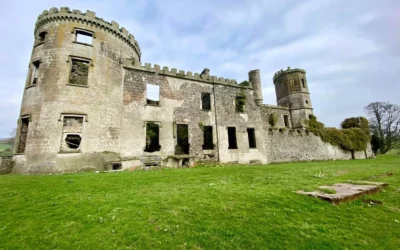
Kilwaughter Castle
Kilwaughter Castle: John Nash's Antrim Ruin, Declared Enemy Property in the Second World War In 1803, John Nash — the architect who designed Regent Street, remodelled Buckingham Palace and built the Royal Pavilion at Brighton — came to County Antrim and...
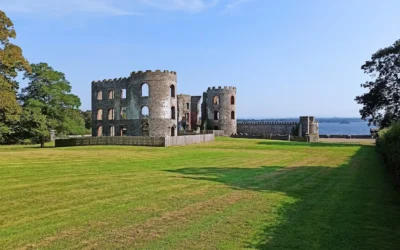
Shane’s Castle
Shane's Castle: The O'Neill Estate on Lough Neagh, Touched by John Nash and Twice Burned In 1809, John Nash — the architect who designed Regent Street, Carlton House Terrace and remodelled Buckingham Palace for George IV — began redesigning a castle on the...
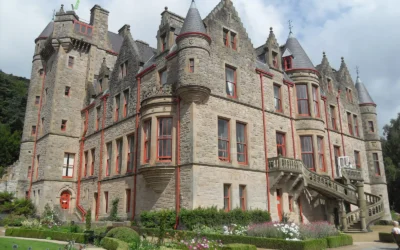
Belfast Castle
Belfast Castle: The Free Victorian Castle Above the City, with Nine Hidden Cats The legend says the castle will be safe — or its residents will have good fortune — as long as a white cat lives within its walls. The castle's response to this piece of local...
Gosford Castle
Gosford Castle: Ulster's Largest Listed Building — and Game of Thrones' Riverrun When Robin Fedden of the National Trust surveyed Gosford Castle in 1952, he described it as "one of the most original buildings of its time" and noted that it had...