
St Anthony’s Lighthouse
St Anthony’s Lighthouse: A Private Retreat at the Gate of Falmouth Harbour
At the very tip of the Roseland Peninsula, where the estuary of the River Fal opens into the English Channel, St Anthony’s Lighthouse has marked the eastern entrance to Falmouth Harbour since 1835. Its 22-nautical-mile beam sweeps the waters around one of the most treacherous hazards on this coast — the Manacles, a reef of submerged rocks that has wrecked ships for centuries — and a distinctive red sector of its light still covers them today, warning mariners of the danger below.
What makes St Anthony’s genuinely rare is that Sally Port Cottage, the former assistant keeper’s residence connected to the lighthouse by a covered walkway, is available as holiday accommodation — with no public access to the grounds whatsoever. When you stay here, the lighthouse headland, the National Trust cliffs around it and the extraordinary views across Falmouth Harbour are yours alone. The tower itself remains an active navigational aid and is not open to visitors, but few lighthouses in Cornwall offer so complete a sense of having the place entirely to yourself. This guide covers everything you need to know about staying at St Anthony’s.
Where Is St Anthony’s Lighthouse?
St Anthony’s Lighthouse stands on St Anthony Head at the southern tip of the Roseland Peninsula in Cornwall, at the eastern entrance to Falmouth Harbour. It is reached via the Roseland Peninsula from the A3078, with a car park near the headland, from which the cottage is a 300-metre walk down a steep tarmac path.
The setting is quintessential Roseland: National Trust cliffs, sheltered coves, estuary water to the north and the open Channel to the south, with the town of St Mawes a short distance along the peninsula and the mouth of Falmouth Harbour spread out before you.
A Brief History of St Anthony’s Lighthouse
St Anthony’s was built by Trinity House in 1835 to guide ships safely into Falmouth Harbour and to warn them of the Manacles — a notorious reef of submerged rocks lying to the south-east that has claimed vessels over the centuries. From its headland position, the light reaches 22 nautical miles out to sea; its distinctive red sector covers the Manacles directly, alerting any ship approaching from the south-east to steer clear.
The lighthouse was electrified in 1954 and automated in 1988, when the last keepers departed. Before automation, the principal keeper and their family lived in the tower itself, while the assistant keeper occupied Sally Port Cottage — connected to the tower by a covered walkway, a practical arrangement that allowed the keepers to move between their quarters and the light without facing the full force of coastal weather.
The remarkable thing about St Anthony’s light is what the red sector represents. For nearly two centuries, a narrow arc of red within the lighthouse’s beam has been shining precisely onto the Manacles reef. Every ship approaching Falmouth from the south-east knows that if they see red, they are heading for the rocks. It is a simple, elegant solution — a light that speaks directly of danger — and it has been saving ships in silence for nearly two centuries.
Architecture & The Light
St Anthony’s lighthouse tower rises 19 metres and stands 22 metres above sea level, a compact, elegant structure typical of the well-crafted Trinity House lighthouses of the early 19th century. The design suits its position perfectly — not tall enough to catch the sea mists, set just right on its clifftop to project its beam across the harbour entrance and out to the Channel.
The light flashes every 15 seconds, with the white sector covering the safe approach into Falmouth Harbour and the red sector marking the Manacles reef offshore. Its range of 22 nautical miles makes it visible well out into the Channel. An automatic electronic fog signal sounds during poor visibility to supplement the light — guests in Sally Port Cottage are provided with earplugs for foggy nights.
Visiting the Lighthouse
The lighthouse tower is not open to the public, as it remains an operational navigational aid. Access to the headland is restricted to cottage guests; there is no public access to the lighthouse grounds during private stays.
The surrounding National Trust land, however, is open to all. The coastal paths around St Anthony Head offer spectacular walking, with a bird hide around ten minutes from the cottage where visitors can watch for peregrine falcons, coastal birds and migrating species. The views across the mouth of Falmouth Harbour and out to sea are extraordinary.
There is no admission fee and no guided tours — the experience here is entirely about the landscape, the wildlife and the privilege of a private lighthouse stay.
Staying at the Lighthouse
Sally Port Cottage is the only accommodation at St Anthony’s Lighthouse, and with no public access to the grounds, it provides one of the most secluded lighthouse stays in Cornwall. The former assistant keeper’s residence — connected to the tower by a covered walkway — has been lovingly restored, combining the character of a genuine Victorian keeper’s home with comfortable, well-appointed self-catering facilities.
The cottage sleeps up to four guests across two bedrooms, and its standout feature is the observation room — a bright space with a large picture window and comfortable armchairs, designed for watching coastal weather rolling in off the Channel, the lighthouse beam sweeping in the dark, and the busy passage of ships through the harbour entrance.
|
Cottage |
Sleeps |
Features |
|
Sally Port Cottage |
4 |
2 bedrooms, observation room, full kitchen, en-suite, harbour views; no pets; children over 14 only |
A few practical details worth knowing: the cottage is reached via a 300-metre steep tarmac path from the car park; no pets are permitted; children must be over 14 years old; and babies cannot be accommodated. Barbecues, fireworks and drones are not permitted. Mobile signal on this headland is limited.
As this is the only cottage in an exclusively private setting, it books up well in advance — reserving early is essential, particularly for summer and school holidays.
Find Lighthouse & Coastal Stays Near Falmouth →
The Best Time to Visit
Spring (April to June) is exceptional on the Roseland — the National Trust cliffs are covered in wildflowers, the peregrine falcons are at the bird hide, and the light on Falmouth Harbour and the estuary is wonderfully clear. Summer (June to September) brings warm weather, long days and the best chance of calm seas for watching dolphins and the busy summer marine traffic from the observation room — but it is the most popular time and the cottage books up earliest.
Autumn (September to November) offers quieter days, dramatic Channel skies and the annual spectacle of migrating birds passing the headland — St Anthony Head is one of Cornwall’s finest birdwatching spots in autumn. Winter (December to February) is elemental: the fog signal may sound frequently, the storms are spectacular from the observation room, and the complete solitude of the headland is something rare and wonderful.
This is a year-round destination — the observation room and the cottage’s seclusion give it a particular appeal in the quieter seasons. Check the forecast before travelling, as this is an exposed coastal headland.
How to Get There
By car. The most practical option. Follow the A3078 onto the Roseland Peninsula towards St Mawes, then follow the signs for St Anthony Head and the car park. From the car park, the cottage is a 300-metre walk down a steep tarmac path. The road onto the Roseland is narrow in places.
By public transport. Public transport to this remote peninsula is very limited. The King Harry Ferry crosses the River Fal and provides access to the Roseland from Truro and the north; from St Mawes, a passenger ferry runs to Falmouth. But the lighthouse itself is only realistically reached by car.
On foot. The South West Coast Path passes through the area, and the National Trust clifftop paths around St Anthony Head are outstanding walking. The 300-metre path from the car park to the cottage is steep.
Compare Transfers & Local Transport in Cornwall →
Wildlife & The Coast
The cliffs, waters and skies around St Anthony Head are exceptionally rich in wildlife — this is one of the finest wildlife-watching spots on the Roseland Peninsula. A National Trust bird hide, around ten minutes’ walk from the cottage, is one of the best places in Cornwall to watch peregrine falcons, and the headland is a key spot for observing migrating birds in spring and autumn.
The Channel waters below are home to dolphins and porpoises, seen on calm days from the clifftops, while the sheltered waters of the Carrick Roads estuary to the north attract wintering wildfowl and wading birds. Seals haul out on rocks around the headland, and the clifftop grassland supports butterflies and rare coastal wildflowers in season.
A pair of binoculars for wildlife watching is absolutely essential here — for the peregrines at the bird hide, the dolphins offshore and the extraordinary range of birds that pass the headland in migration season. The observation room in the cottage with its picture window is purpose-built for this kind of patient, rewarding wildlife-watching.
Nearby Attractions
The Roseland Peninsula and the wider Falmouth area offer a wealth of attractions within easy reach.
|
Attraction |
Why Visit |
Distance |
|
St Mawes |
Charming harbour village with a Tudor castle and passenger ferry to Falmouth |
~3 miles |
|
Falmouth |
Cornwall’s maritime heart — National Maritime Museum, galleries, beaches |
~ferry/10 miles |
|
Eden Project |
The iconic biome complex — our guide covers it in full |
~30 miles |
|
Lost Gardens of Heligan |
Magnificently restored Victorian garden, a Cornwall classic |
~20 miles |
|
Truro |
Cornwall’s cathedral city with museums, markets and independent shops |
~15 miles |
A natural day out: explore the National Trust clifftops and bird hide in the morning, take the passenger ferry from St Mawes to Falmouth for lunch, then return in the afternoon.
Browse Falmouth & Roseland Tours & Boat Trips →
Safety & Accessibility
Safety. The cliffs around St Anthony Head are dramatic and the drops are sheer — keep well back from the edges, follow the marked paths and supervise any older children closely. This is an exposed headland where the weather changes quickly, so check the forecast and dress for wind and rain. The path from the car park to the cottage is steep and tarmacked.
Accessibility. The 300-metre path from the car park to the cottage is steep, which may present difficulties for some guests. The lighthouse tower is not accessible. Mobile signal on the headland is limited. Visitors with specific access needs should check with the booking agent before reserving.
Families. The cottage is not suitable for children under 14 or for babies — this is a specific condition of the accommodation, given the steep access path and cliff-edge location. Older children and teenagers are welcome.
Practical Tips
- Book well in advance — Sally Port Cottage is the only accommodation, in a uniquely private setting, and it fills quickly for summer and school holidays.
- Remember the 300-metre steep path from the car park — pack accordingly and wear comfortable footwear for the walk down and up.
- Bring binoculars — the bird hide, the peregrines, the dolphins and the harbour views make St Anthony Head one of Cornwall’s finest wildlife-watching spots.
- Wear waterproof walking boots for the clifftop walks and the coast path.
- Pack a waterproof walking jacket; the headland is exposed and the Channel weather arrives without much warning.
- Overseas visitor? The UK uses Type G plugs, so a UK travel adapter is essential for charging your devices.
- Note that mobile signal is limited on this headland — embrace the disconnection.
- The fog signal may sound at night in misty conditions — earplugs are provided.
Conclusion
St Anthony’s Lighthouse is everything a lighthouse stay should be: a working tower in an extraordinary setting, a cottage with history in its walls, complete privacy and a view that stretches from the mouth of Falmouth Harbour out to the open Channel. The red sector of its beam has been quietly marking the Manacles for nearly two centuries, and the observation room was made for watching it sweep the dark. For those who come to the Roseland in search of solitude, Cornwall’s wild coast and the deep romance of lighthouse life, Sally Port Cottage is one of the finest places on the peninsula to find it.
Frequently Asked Questions
Where is St Anthony’s Lighthouse located?
On St Anthony Head at the southern tip of the Roseland Peninsula in Cornwall, at the eastern entrance to Falmouth Harbour. It is reached via a 300-metre steep path from the car park near the headland.
What is the history of St Anthony’s Lighthouse?
Built by Trinity House in 1835 to guide ships into Falmouth Harbour and warn them of the Manacles reef. Electrified in 1954 and automated in 1988, it continues to serve as an active navigational aid.
Can I visit St Anthony’s Lighthouse?
The lighthouse tower is not open to the public as it remains operational. The surrounding National Trust clifftop paths are open to all, but the lighthouse grounds are private to cottage guests during their stay.
Can I stay overnight at St Anthony’s Lighthouse?
Yes. Sally Port Cottage, the former assistant keeper’s residence connected to the tower by a covered walkway, sleeps up to four guests. Booking well ahead is essential. Note that no pets are allowed and children must be over 14.
What is special about Sally Port Cottage?
It is the only accommodation at the lighthouse, with no public access to the grounds during a stay — completely private. It features an observation room with a large picture window, purpose-built for watching coastal weather, ships and wildlife.
Is St Anthony’s Lighthouse suitable for families?
Children must be over 14 years old and babies cannot be accommodated, due to the steep access path and clifftop location. Older teenagers and adults will find it exceptional.
What wildlife can I see near St Anthony’s Lighthouse?
Peregrine falcons at the nearby National Trust bird hide, dolphins and porpoises offshore, migrating birds in spring and autumn, seals on the rocks below and rich clifftop wildflowers. Bring binoculars.
What are the nearby attractions?
St Mawes (with its Tudor castle) and the passenger ferry to Falmouth are the closest; the Eden Project, Lost Gardens of Heligan and Truro are within easy driving distance.
What makes St Anthony’s Lighthouse unique?
The combination of complete privacy (no public access during your stay), the operational lighthouse with its famous red sector covering the Manacles, the connected keeper’s walkway and the outstanding Roseland Peninsula setting make it unlike almost any other lighthouse stay in Cornwall.
How do I book St Anthony’s Lighthouse cottage?
Through Trinity House or specialist holiday-let platforms. As the sole cottage in an exceptionally sought-after location, booking well in advance is essential.
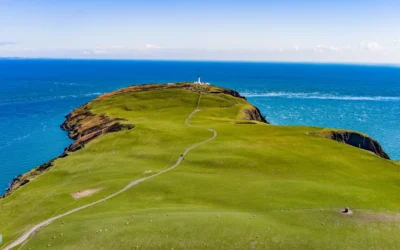
Mull of Galloway Lighthouse
Mull of Galloway Lighthouse: Scotland's Southernmost Beacon, With Four Countries in View At the very tip of the Rhinns of Galloway — the long, narrow peninsula that stretches south from Stranraer like a finger pointing towards Ireland — Scotland ends at a set of sheer...
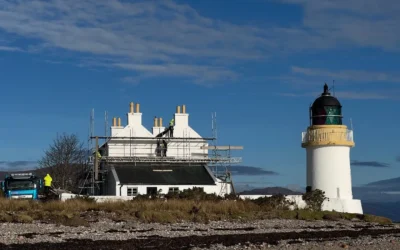
Corran Lighthouse Lodge
Corran Lighthouse Lodge: Britain's First Automated Light, on the Shore of Loch Linnhe Loch Linnhe is a tidal sea loch of the Scottish Highlands — deep, dark blue, its banks rising steeply to the Glencoe mountains on the east and the Ardgour hills on the west. Ben...
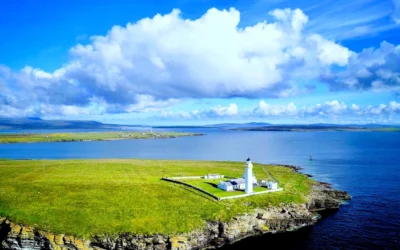
Cantick Head Lighthouse
Cantick Head Lighthouse: Above Scapa Flow at the Edge of Orkney Scapa Flow is one of the great natural anchorages of the world — a vast, sheltered expanse of water ringed by the Orkney Islands, used as a naval base for centuries and the stage for some of the most...
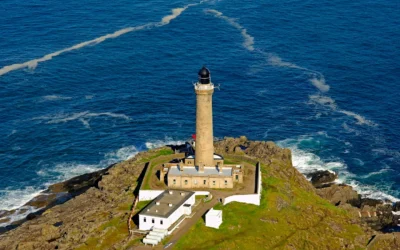
Ardnamurchan Lighthouse
Ardnamurchan Lighthouse: Egypt on the Edge of the British Mainland At the very tip of the Ardnamurchan Peninsula — the westernmost point of the British mainland, further west than any other part of England, Scotland or Wales — a lighthouse built from pink granite and...
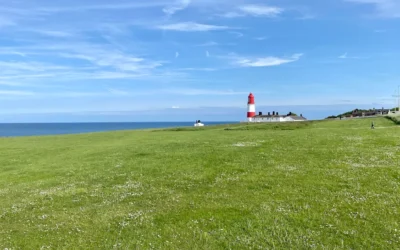
Souter Lighthouse
Souter Lighthouse: The World's First Electric Beacon on the Tyne Coast In 1871, something happened at a lighthouse on the cliffs between the Tyne and the Wear that changed the science of maritime navigation forever. On 11 January 1871, Souter Lighthouse was switched...