
Cantick Head Lighthouse
Cantick Head Lighthouse: Above Scapa Flow at the Edge of Orkney
Scapa Flow is one of the great natural anchorages of the world — a vast, sheltered expanse of water ringed by the Orkney Islands, used as a naval base for centuries and the stage for some of the most dramatic events in the history of the sea.
It was here that the British Grand Fleet was based in the First World War; here that, at the war’s end, the entire German High Seas Fleet — 74 ships — was deliberately scuttled by its own sailors rather than surrendered; here that HMS Royal Oak was torpedoed in 1939, less than two months into the Second World War, with the loss of 833 lives. Scapa Flow is a place where history lies heavy in the water.
Cantick Head Lighthouse stands on the cliffs of South Walls, at the southern entrance to Scapa Flow, guiding ships through the Pentland Firth and into the harbour since its first lighting in 1858. Designed by Thomas and David Stevenson — members of the great Stevenson lighthouse-building dynasty — it marks the tip of the island with its white cylindrical tower and walled compound of cottages.
The tower itself is not open to visitors, but the former keepers’ cottages are available as holiday accommodation, and from the private hot tub at the edge of the lighthouse grounds the views extend across Scapa Flow to the hills of Hoy, with orcas in the waters below in summer. This guide covers everything you need to know about visiting and staying at Cantick Head.
Where Is Cantick Head Lighthouse?
Cantick Head Lighthouse is located on the island of South Walls, part of the Orkney Islands, Scotland. South Walls is connected to the larger island of Hoy by a causeway, so visitors reach it by ferry: from Houton on the Orkney Mainland to Lyness on Hoy (around 30 minutes), then a short drive across the causeway to South Walls and along to the lighthouse near the village of Longhope.
The Orkney Mainland is itself reached by ferry from Scrabster (near Thurso) or Aberdeen on the Scottish mainland, or by air from several Scottish and UK airports. This is genuinely remote: allow a full day to travel from central Scotland.
A Brief History of Cantick Head Lighthouse
The need for a lighthouse at Cantick Head was identified by the Northern Lights Commissioners in 1854, as the volume of shipping navigating the southern approach to Scapa Flow and the treacherous Pentland Firth — one of the most powerful tidal waterways in the world — made a reliable beacon essential. Thomas and David Stevenson were commissioned to design the lighthouse; construction began in 1856 and the light was first exhibited on 15 July 1858.
The Pentland Firth runs between Orkney and the northern tip of the Scottish mainland, and the tidal races and currents it generates are among the most violent in the British Isles — the strait carries the tidal waters of the Atlantic and the North Sea past each other at speeds that have wrecked ships for millennia. Cantick Head was positioned to provide the critical leading mark for ships entering Scapa Flow from the south-west.
A foghorn was installed in 1913 to provide warning in the poor visibility that Orkney weather so frequently produces, and this remained in use until 1987. The lighthouse was automated in 1991, and the keeper’s cottages subsequently converted to holiday accommodation managed by the Northern Lighthouse Board.
The wartime chapter is what gives Cantick Head its deepest historical weight. From this lighthouse, keepers watched the Grand Fleet come and go from Scapa Flow through the First World War. They would have seen, or heard of, the German fleet’s extraordinary scuttling in June 1919 — seventy-four warships deliberately sunk by their own crews in the harbour below. And in the Second World War, they witnessed the aftermath of HMS Royal Oak’s sinking, when survivors were brought ashore on Orkney after the U-boat penetrated what had been thought an impregnable anchorage. Cantick Head is not just a lighthouse. It is a witness to some of the most significant events in Britain’s naval history.
Architecture & The Light
Cantick Head is a 22-metre (72-foot) cylindrical tower of stone, painted white, with a single gallery, a lantern room capped with a black cupola and ochre trim. The focal height of the light — 35 metres (115 feet) above sea level — gives the beam a range of 18 nautical miles, with a characteristic white flash every 20 seconds. The Fresnel lens at the heart of the optic is original equipment from the 19th century. The keeper’s cottages and outbuildings are enclosed within a walled compound with a sundial, creating a self-contained and handsome complex that reflects the Stevensons’ characteristic attention to both engineering function and architectural quality.
The lighthouse remains an active navigational aid, maintained by the Northern Lighthouse Board.
Visiting the Lighthouse
The lighthouse tower is not open to visitors. The grounds around the lighthouse and the surrounding clifftops are freely accessible, offering dramatic views over the Pentland Firth and Scapa Flow. The primary visitor experience at Cantick Head is staying in the former keepers’ cottages — from which the lighthouse, the sea and the hills of Hoy are constant presences.
The Scapa Flow Museum at Lyness and the Longhope Lifeboat Museum are both within easy reach and provide outstanding context for the maritime history of these waters.
Staying at the Lighthouse
The keeper’s cottage at Cantick Head Lighthouse offers one of the most dramatically located lighthouse stays in Scotland. The cottage accommodates up to four or five guests across two bedrooms, with modern facilities including a well-equipped kitchen, Wi-Fi and — most unusually — a private hot tub with sea views, from which on clear days the hills of Hoy rise above Scapa Flow and, in summer, orcas and dolphins are sometimes visible on the water below.
| Accommodation | Sleeps | Features |
| Keeper’s Cottage | 4–5 | 2 bedrooms (king + twin/king), kitchen, lounge with fireplace, private hot tub with sea views, Wi-Fi; dogs welcome |
The lounge features a fireplace, creating a warm and characterful retreat for the evenings, and the single-storey layout makes the cottage accessible for most guests. As Orkney’s location makes it genuinely remote, self-catering is well suited to a lighthouse stay of several days.
As prices vary by season and the booking arrangements are managed directly through the lighthouse, check current rates and availability when planning your visit.
Find Lighthouse & Coastal Stays Near Orkney →
The Best Time to Visit
Late spring and summer (May to August) offer the longest days — in June, Orkney barely gets fully dark — the calmest conditions for ferry crossings and the prime season for wildlife. Orca sightings in Orkney are most frequent between June and September; minke whales and dolphins are also regularly seen through the summer months. Spring (April to May) brings the Orkney seabirds back to the cliffs and wildflowers to the maritime grassland, with fewer visitors than the summer peak.
Autumn (September to October) is a wonderful time for those who love dramatic skies and quieter landscapes. Winter in Orkney is wild and dark — the Northern Lights are sometimes visible — but ferry services may be reduced and the stay requires good preparation and a genuine appetite for remoteness.
Orkney’s weather is famously variable at any time of year. Always check forecasts, bring waterproof layers and be prepared for the wind, which on these exposed Atlantic islands is almost constant.
How to Get There
By ferry to Orkney. Northlink Ferries runs from Scrabster (near Thurso in Caithness) to Stromness on the Orkney Mainland, and from Aberdeen to Kirkwall. Pentland Ferries also runs from Gills Bay (near John o’Groats) to St Margaret’s Hope.
By air to Orkney. Loganair operates flights to Kirkwall Airport from Edinburgh, Aberdeen, Inverness and several other Scottish and UK airports.
Orkney Mainland to South Walls. From Houton on the Mainland, take the Orkney Ferries passenger-and-vehicle ferry to Lyness on Hoy (around 30 minutes). From Lyness, drive across the causeway to South Walls and along to the lighthouse — a short and scenic drive.
Compare Transfers & Local Transport in Orkney →
Wildlife & The Coast
The waters around Cantick Head and Scapa Flow are exceptional for marine wildlife. Orcas (killer whales) are regularly sighted in Orkney’s waters, particularly between June and September, when their movements follow the grey seal populations around the islands. Minke whales, bottlenose dolphins and harbour porpoises are frequently seen, and the waters of the Pentland Firth — among the most productive in the British Isles — support rich populations of marine life.
The clifftops at Cantick Head support grey seals hauled out on the rocks below and seabirds nesting on the cliff faces through the summer. The broader Orkney landscape is exceptional for hen harriers, short-eared owls and Arctic skuas — birds not commonly seen further south.
A pair of binoculars for wildlife watching is absolutely essential at Cantick Head. The private hot tub is, somewhat remarkably, one of the finest wildlife-watching spots at any lighthouse in Britain — sitting in it at dawn or dusk with the Scapa Flow waters spread out below is an experience quite unlike anything else.
Nearby Attractions
South Walls and the island of Hoy have remarkable attractions for such remote islands.
| Attraction | Why Visit | Distance |
| Old Man of Hoy | The iconic 449-foot sea stack — one of the most famous rock formations in Britain | ~15-min drive + walk |
| Rackwick Bay | A spectacularly beautiful remote beach surrounded by the hills of Hoy | ~20-min drive |
| Scapa Flow Museum | The compelling history of Scapa Flow — the German scuttling, the wartime convoys | ~5 miles (Lyness) |
| Longhope Lifeboat Museum | The story of the lifeboat service in these treacherous waters | ~5 miles |
| Hill of White Hamars | Wildlife reserve — seabirds, grey seals, wildflowers | Short walk |
A natural day out: the lighthouse cliffs and Scapa Flow in the morning, Old Man of Hoy in the afternoon, Scapa Flow Museum at Lyness on the return.
Browse Orkney & Hoy Island Tours →
Safety & Accessibility
Safety. The clifftop paths at Cantick Head can be slippery, particularly in wet or windy weather — keep well back from the edges and stay on marked trails. Orkney weather can change very rapidly; always check the forecast and carry waterproof layers. Ferry services can be affected by weather; allow flexibility in travel plans.
Accessibility. The cottage is single-storey, but the terrain around the lighthouse includes uneven ground. Contact the booking agent for specific accessibility information.
Families. The dog-friendly cottage and the wildlife-rich setting make Cantick Head an excellent family destination. Cliff paths require supervision of children. Note the ferry journeys as part of the trip planning.
Practical Tips
- Allow a full day to travel to Orkney from central Scotland — this is genuinely remote, and the journey is part of the experience.
- Book ferry crossings well in advance for summer travel — Orkney Ferries and Northlink services fill up, particularly for vehicle spaces in peak season.
- Wear waterproof walking boots at all times — Orkney is wet, windy and the paths are rough.
- Pack a waterproof walking jacket; the wind on these Atlantic islands is relentless and the weather is changeable.
- Bring binoculars — for the orcas, dolphins, seals and seabirds. The hot tub is an extraordinary wildlife-watching spot.
- Overseas visitor? The UK uses Type G plugs, so a UK travel adapter is essential for charging your devices.
- Self-cater generously — supplies on Hoy are limited. Shop on the Orkney Mainland before taking the ferry to Lyness.
Conclusion
Cantick Head Lighthouse occupies a headland above one of the most historically charged stretches of water in the British Isles. Scapa Flow has seen the Grand Fleet, the scuttling of the German Navy and the tragedy of HMS Royal Oak. The lighthouse has watched it all, from its cliffs on the southern entrance, since 1858. To stay in the keeper’s cottage, to sit in the hot tub with Scapa Flow spread below and orcas occasionally visible on the water, and to have the Old Man of Hoy, Rackwick Bay and the wilder edges of Orkney within reach — this is as far into the true nature of the northern British Isles as a lighthouse stay can take you.
Frequently Asked Questions
What is the history of Cantick Head Lighthouse?
Designed by Thomas and David Stevenson and first lit in 1858, Cantick Head guided ships through the Pentland Firth and into Scapa Flow. A foghorn was added in 1913, and the lighthouse was automated in 1991.
Where is Cantick Head Lighthouse located?
On the island of South Walls, connected to Hoy by a causeway, in the Orkney Islands — reached by ferry from the Orkney Mainland (Houton to Lyness) or from mainland Scotland.
Can I visit Cantick Head Lighthouse?
The tower is not open to the public. Visitors can explore the clifftops and surrounding area, or stay in the keeper’s cottage.
Can I stay overnight at Cantick Head Lighthouse?
Yes. The keeper’s cottage sleeps 4–5 guests across two bedrooms and features a private hot tub with sea views. Dogs are welcome. Book directly through the lighthouse booking channel.
What is the hot tub experience like at Cantick Head?
The private hot tub has direct sea views over Scapa Flow and the hills of Hoy — one of the most dramatic lighthouse hot tub settings in the UK, with orcas and dolphins sometimes visible on the water.
What is Scapa Flow?
Scapa Flow is a vast sheltered anchorage in the Orkney Islands with enormous naval significance. The German High Seas Fleet was scuttled here in 1919 and HMS Royal Oak was torpedoed here in 1939. The Scapa Flow Museum at Lyness tells the full story.
What wildlife can I see near Cantick Head Lighthouse?
Orcas (killer whales) are regularly sighted in summer, alongside minke whales, dolphins and porpoises. Grey seals and nesting seabirds are on the clifftops, and the Orkney grassland supports hen harriers and short-eared owls.
How do I get to Cantick Head Lighthouse?
Travel to Orkney by ferry (from Scrabster, Gills Bay or Aberdeen) or air to Kirkwall. Then take Orkney Ferries from Houton to Lyness on Hoy, and drive across the causeway to South Walls.
Is Cantick Head Lighthouse suitable for families?
Yes — the dog-friendly cottage and the wildlife-rich setting are excellent for families. Cliff paths require supervision, and the ferry journeys should be factored into planning.
What is the best time to visit Cantick Head Lighthouse?
Late spring and summer (May to August) for orca sightings, long daylight and the full range of wildlife. Autumn for dramatic skies and quieter islands. Winter is possible but requires preparation for the remote conditions.
St John’s Point Lighthouse
St John's Point Lighthouse: The Yellow-Banded Giant of County Down In Van Morrison's song "Coney Island," the lighthouse at St John's Point is mentioned in a list of the things that make the Irish coast of County Down feel like home — somewhere between the Mourne...
Blackhead Lighthouse
Blackhead Lighthouse: The Titanic Passed Here, and You Can Stay the Night In April 1912, RMS Titanic — built at Harland and Wolff's yards on Queen's Island in Belfast, launched in 1911 and fitted out over the following months — left Belfast Lough for the last time on...
St Ann’s Head Lighthouse
St Ann's Head Lighthouse: The Last Shore-Based Light in Pembrokeshire, on the Tudor Coast In August 1485, a small fleet carrying Henry Tudor — exiled pretender to the English throne — rounded this headland and landed at Mill Bay, a sheltered cove just to the north of...
Point Lynas Lighthouse
Point Lynas Lighthouse: A Castle on the Cliffs of North Wales, Guiding Liverpool's Ships Since 1766 Most lighthouses are towers. Point Lynas is not. The lighthouse that stands on the rocky headland at the north-east corner of Anglesey is a low, castellated structure...
North Ronaldsay Lighthouse
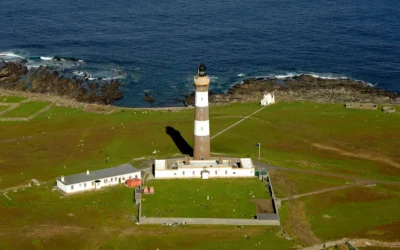
North Ronaldsay Lighthouse: The UK's Tallest, Above the Island of the Seaweed Sheep Around the shoreline of North Ronaldsay — the northernmost and most isolated of the Orkney Islands — runs a drystone wall several miles long called the Sheep Dyke. Its purpose is...