
London Underground
London Underground (The Tube) | Everything You Need to Know
There is a map on the wall of the Museum of Modern Art in New York, listed as a masterpiece of design. It is Harry Beck’s 1931 diagram of the London Underground — a coloured network of lines and circles that turned a chaotic tangle of Victorian railways into something beautiful, logical and instantly readable. That map is still in use today, barely changed, and the Tube it describes is still the most efficient way to move around one of the world’s greatest cities.
The London Underground was the world’s first underground railway, opened in January 1863 with steam engines hauling passenger carriages through tunnels beneath the streets. Today it runs 11 lines through 272 stations, carries up to five million passengers a day and stretches across nine fare zones from the heart of the city to the Buckinghamshire countryside. For any visitor to London — whether exploring for a weekend or staying for a month — understanding the Tube is the single most useful piece of practical knowledge you can have. This guide covers everything you need to know.
About the Network
The London Underground is not a single destination but a city-wide rapid transit network, operated by Transport for London (TfL). Its 11 lines span Greater London and parts of Buckinghamshire, Essex and Hertfordshire, covering 250 miles of track and nine fare zones — Zone 1 at the centre, Zone 9 at the outermost reaches.
Central London’s key interchanges include King’s Cross St Pancras, Oxford Circus, Liverpool Street, Waterloo and Victoria — stations where multiple lines converge and journeys can be planned across the network. The TfL website and the free Tube map (available at every station) are your essential tools.
Service Hours
The Tube runs daily, though hours vary by line and day:
- Monday to Saturday: typically 5:00 AM to around midnight
- Sunday: typically 7:00 AM to around 11:30 PM
- Night Tube (Friday and Saturday): 24-hour service on five lines — Central, Jubilee, Northern, Piccadilly and Victoria
Special schedules apply on bank holidays, with early closures on Christmas Eve and no service on Christmas Day. Service on individual lines can also be affected by planned engineering works, which are common at weekends. Check the TfL website or the TfL Go app before travelling for the current schedule.
How to Access the Network
The Tube is designed to be accessible from almost anywhere in London.
From Heathrow Airport. The Piccadilly line runs directly from Heathrow (all terminals) to central London — around 50 minutes to Piccadilly Circus. It is the cheapest way to get from the airport to the city.
From other airports. Gatwick connects via the Gatwick Express to Victoria (30 minutes, not on the Tube but seamlessly connected). Stansted uses the Stansted Express to Liverpool Street. Luton and London City have their own rail connections to the Tube network.
From major train stations. All of London’s main rail terminals — Euston, King’s Cross, Paddington, Victoria, Waterloo, Charing Cross, Liverpool Street — have Tube stations either within or directly adjacent to them.
Within London. The distinctive blue Underground sign (a red circle with a horizontal blue bar) marks every station entrance. London’s 272 stations are spread across the city, and in Zone 1 you are rarely more than a ten-minute walk from the nearest one.
Browse London Tours & Experiences →
The Best Time to Travel
For tourists, the easiest and cheapest time to travel is outside peak hours — after 9:30 AM on weekdays, and all day at weekends. During off-peak periods, fares are lower and trains are noticeably less crowded.
Peak hours (Monday to Friday, 6:30–9:30 AM and 4:00–7:00 PM) bring the heaviest commuter traffic, particularly on the Central, Northern, Jubilee and Victoria lines in Zone 1. If you are sightseeing, timing your journeys outside these windows makes for a far more pleasant experience.
Special events — the London Marathon, New Year’s Eve, major concerts and sporting finals — can cause closures and significant overcrowding on affected lines. Check TfL’s service updates in advance if your visit coincides with a major event.
Fares and Payment
The Tube uses a zone-based fare system. The further you travel and the more zones you cross, the more you pay. Here are the key options:
Oyster card — a reusable smartcard for pay-as-you-go travel. Tap in and out at yellow readers at the barriers. A small refundable deposit is charged when you get the card; top it up as needed. This is the easiest option for visitors making multiple journeys.
Contactless payment — your debit or credit card (or mobile payment like Apple Pay or Google Pay) can be used directly at the barriers, charging the same fares as an Oyster card. Contactless is accepted at all Tube stations — no separate card needed.
Travelcard — unlimited travel within chosen zones for a day, week or longer. Useful if you plan many journeys in a day; available for Zones 1–2 or wider. A one-day Zone 1–2 Travelcard is the most common tourist purchase.
Daily cap — when using Oyster or contactless, TfL automatically applies a cap so you never pay more than the equivalent Travelcard price in a single day, however many journeys you make. This makes Oyster/contactless effectively always at least as cheap as a Travelcard.
As fares are reviewed periodically and vary significantly by zone, time of day and journey type, always check the TfL website for current pricing before travelling. A Zone 1 single journey typically costs a few pounds; the daily cap for Zones 1–2 is usually well under £15.
Children under 11 travel free with an adult. Ages 11–15 pay reduced fares with a Zip Oyster photocard. Concessions for students, seniors and disabled travellers are available — check TfL for details.
What to Expect on the Tube
Travelling on the London Underground is a quintessentially London experience — busy, efficient, occasionally cramped, and full of character.
The trains arrive every two to ten minutes on most central lines during operating hours, with the busiest lines running every two to three minutes. Journeys between central London stations are quick: Westminster to Camden Town takes around fifteen minutes; King’s Cross to Oxford Circus around five.
The stations vary enormously in character, from the deep Victorian brick of Aldgate to the soaring modern vaults of the Elizabeth line’s Paddington and Bond Street. Many stations feature commissioned artworks — mosaics at Tottenham Court Road, photography at Canary Wharf, sculpture throughout the network. The deepest station on the network is Hampstead (Northern line), 58.5 metres below ground.
The atmosphere is unmistakably urban. Expect a mix of commuters, tourists and locals, often in close proximity. The famous “Mind the Gap” announcement (and the gap itself, at curved stations) is a genuine safety instruction as much as a cultural touchstone.
Etiquette: stand on the right on escalators, let passengers exit before boarding, offer seats to those who need them, and keep your voice and your phone at reasonable volumes. These are unwritten rules, but they are observed.
Safety and Accessibility
Safety. CCTV monitors all stations and trains. Staff are present at major stations with emergency help points on every platform. For non-emergencies, text 61016 (British Transport Police); call 999 in emergencies. Keep belongings secure in crowded carriages and be aware of your surroundings.
Step-free access. More than 90 stations currently offer step-free access from street to platform, with more being added as TfL’s accessibility upgrade programme continues. Key step-free stations include King’s Cross St Pancras, Green Park, Westminster, Paddington and the entire Elizabeth line. The TfL Go app and the accessibility map on the TfL website show current step-free stations.
Wheelchair users can request assistance via the TfL Go app or by calling TfL. Hearing loops are available at ticket offices and on some platforms. Guide and assistance dogs are welcome throughout the network.
Families. Strollers are allowed, though some older stations have steps rather than lifts. Children under 11 travel free, and baby-changing facilities are available at major stations.
Where to Stay in London for the Best Tube Access
Choosing accommodation near a good Tube connection transforms your experience of London. You don’t need to be in the most central location — you need to be near a line that serves the places you want to visit.
A few strategic choices worth considering:
- Zone 1 (central London — Westminster, Southwark, City) — maximum convenience, every major sight within a few stops, but more expensive. Best if you want to walk everywhere and Tube rarely.
- Zone 2 (Brixton, Hackney, Shoreditch, Clapham) — well connected, more affordable, characterful neighbourhoods with excellent food and independent culture.
- Near a main interchange (King’s Cross, Victoria, Paddington) — these hubs give you access to multiple lines and fast connections across the whole network, ideal for maximising your time.
One tip most visitors overlook: check which Tube line serves your hotel, not just which zone. A Zone 2 hotel on the Northern or Jubilee line is often better connected to central London than a Zone 1 hotel on a slow section of the District line.
Find Hotels with Great Tube Access in London →
A Brief History of the London Underground
The Metropolitan Railway opened on 10 January 1863 between Paddington and Farringdon — the world’s first underground passenger railway. The trains ran on steam, ventilated through shafts and gratings in the road above, and carried 38,000 passengers on their first day. Within a year, the Metropolitan was carrying 11 million passengers annually.
The network expanded steadily through the late 19th century. The first deep-level “tube” lines — bored through clay using shield tunnelling — opened with electric trains from 1890. By 1902, the Underground Electric Railways Company of London was consolidating the competing lines, introducing the now-iconic red roundel logo. In 1933, the network was unified under London Transport.
The Tube has survived the Blitz (its deep stations became civilian shelters during the Second World War bombing), decades of underinvestment and subsequent renewal, and was joined in 2022 by the Elizabeth line — the most significant addition to the network in a generation, running from Reading and Heathrow in the west to Shenfield and Abbey Wood in the east.
Harry Beck’s 1931 Tube map is the invention that made it all navigable — a schematic diagram that abandoned geographic accuracy in favour of clarity, using coloured lines and evenly spaced stops. It was initially rejected by TfL’s predecessor as “too radical,” then trialled in a small print run. The public loved it. It has been the template for transit maps around the world ever since.
Key Attractions and Their Tube Stations
The Tube connects directly to London’s most celebrated destinations.
| Attraction | Nearest Station(s) | Line(s) |
|---|---|---|
| Buckingham Palace | Green Park | Jubilee, Victoria, Piccadilly |
| Westminster Abbey & Houses of Parliament | Westminster | Circle, District, Jubilee |
| Tower of London | Tower Hill | Circle, District |
| British Museum | Holborn | Central, Piccadilly |
| National Gallery & Trafalgar Square | Charing Cross | Northern, Bakerloo |
| Covent Garden | Covent Garden | Piccadilly |
| St Paul’s Cathedral | St Paul’s | Central |
| Borough Market & The Shard | London Bridge | Northern, Jubilee |
Save on London Attractions with a London Pass →
Practical Tips for Using the Tube
- Always tap in AND out. Fail to tap out and you will be charged the maximum fare for your journey. This is the most common and most avoidable mistake.
- Get a free Tube map. Available at every station. Download it to your phone as a PDF so you can use it offline.
- Use the TfL Go app. Real-time service updates, accessibility information, step-free route planning and journey timing — all in one place.
- Travel off-peak for both lower fares and more comfortable journeys.
- Stand on the right on escalators — this is taken very seriously in London.
- Overseas visitor? The UK uses Type G plugs — a UK travel adapter is essential for keeping devices charged on the go.
- Bring earphones. Journeys are more enjoyable with them, and they help you tune in to audio guides at attractions too.
- Wear comfortable walking shoes. Every Tube journey involves walking — to stations, through long tunnels, up escalators — sometimes more than you expect.
Frequently Asked Questions
What are the opening hours of the London Underground?
Monday to Saturday: typically 5:00 AM to midnight. Sunday: typically 7:00 AM to 11:30 PM. The Night Tube runs 24 hours on Fridays and Saturdays on five lines (Central, Jubilee, Northern, Piccadilly and Victoria). Check TfL’s website for the current schedule and any planned engineering works.
How much does it cost to travel on the London Underground?
Fares are zone-based and vary by time of day. A single Zone 1 journey typically costs a few pounds, and daily caps ensure you never pay more than the Travelcard equivalent in a day. Oyster card and contactless payment are the cheapest options. Check TfL’s website for current fares, as these are reviewed periodically.
Is the London Underground suitable for children?
Yes — children under 11 travel free with a paying adult. Ages 11–15 pay reduced fares with a Zip Oyster photocard. Strollers are permitted, though some stations have steps rather than lifts.
Are there any discounts available for the London Underground?
Children under 11 travel free. Reduced fares are available for ages 11–15, students, seniors and disabled travellers. Carers travel free with a paying guest with proof. Off-peak travel is cheaper than peak. Check TfL for full discount details.
How long does a typical Underground journey take?
Central London journeys typically take 10–20 minutes. Airport-to-centre journeys (e.g., Heathrow to Piccadilly Circus on the Piccadilly line) take around 50 minutes. Check the TfL journey planner for specific route timings.
Is photography allowed on the London Underground?
Yes — personal photography is welcome. Flash photography and tripods are not permitted. Professional filming requires TfL permission.
Are there guided tours of the London Underground?
TfL offers occasional heritage tours of disused historic stations. The regular Tube map and TfL Go app support self-guided exploration of the network.
What is the best way to pay on the London Underground?
Tap in and out with a contactless debit or credit card (or mobile payment), or use an Oyster card. These are always cheaper than paper tickets and apply daily caps automatically.
Is the London Underground wheelchair accessible?
More than 90 stations currently offer step-free access, with more being added. The TfL Go app and the TfL accessibility guide show which stations are fully accessible. Assistance is available by calling TfL or requesting via the app.
Are there dining options near London Underground stations?
Major stations including King’s Cross, Victoria, Liverpool Street and Paddington have cafés and restaurants. Most Zone 1 stations are within easy walking distance of extensive dining options.
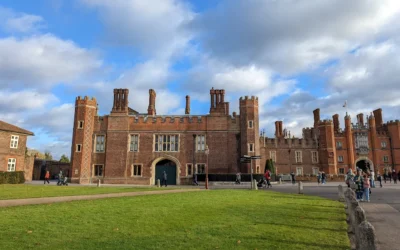
Hampton Court Palace
Hampton Court Palace | Everything You Need to Know Twelve miles south-west of central London, on the north bank of the Thames, stands a palace that encompasses the entire drama of Tudor England. Cardinal Wolsey built it. Henry VIII took it — and expanded it, feasted...
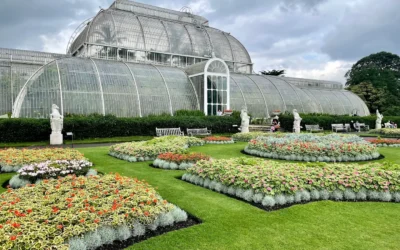
Royal Botanic Gardens Kew
Royal Botanic Gardens Kew London | Everything You Need to Know Ten kilometres south-west of central London, where the Thames curves gently through Richmond, there are 330 acres of gardens that contain more living plant species than almost anywhere else on earth. The...
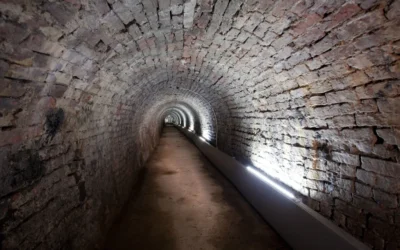
Victoria Tunnel Newcastle
Victoria Tunnel Newcastle | Everything You Need to Know Beneath the streets of Newcastle upon Tyne, 85 feet below the surface, runs a tunnel two and a half miles long. It was built in 1842 to carry coal from a colliery in Spital Tongues down to the River Tyne under...
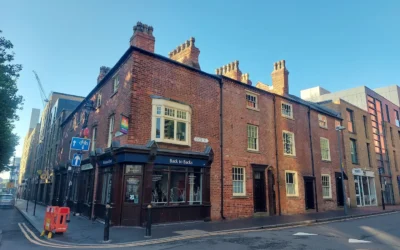
Birmingham Back to Backs
Birmingham Back to Backs | Everything You Need to Know In the middle of Birmingham, a short walk from the Bullring and New Street station, there is a court of eleven small houses built back-to-back — each one sharing a rear wall with its neighbour, facing inward onto...

The Chocolatarium Edinburgh
The Chocolatarium Edinburgh | Everything You Need to Know Just off the Royal Mile, tucked into a street in Edinburgh's historic Old Town, there is a chocolate factory. Not a large one — it's a micro-factory, intimate and handcrafted — but it takes its chocolate...