
Greenwich Park London
Greenwich Park London | Everything You Need to Know
On a hill in southeast London, where the land rises steeply from the Thames, there is a park from which you can see the full spread of the city: Canary Wharf’s towers glittering to the west, the Shard rising above London Bridge, St Paul’s Cathedral ten miles away. From this same hill, the Royal Observatory looks out over the river, and beneath its courtyard runs a brass line in the ground marking 0° longitude — the Greenwich Prime Meridian, from which the world’s time zones are measured. Greenwich Park is London’s oldest Royal Park, enclosed in 1433, and part of Maritime Greenwich, a UNESCO World Heritage Site since 1997.
The park has fallow and red deer in an enclosure, descendants of the animals Henry VIII introduced here in the 16th century. It has an 800-year-old oak beneath which Henry VIII is said to have courted Anne Boleyn. It has Roman remains, an Elizabethan walled garden, and some of the finest views of London available anywhere in the city, all free to explore. The Royal Observatory at its summit is the one attraction with an admission charge — but the view from the hill itself, and the experience of straddling the Meridian line, costs nothing. This guide covers everything you need to know before you go.
Where Is Greenwich Park?
Greenwich Park is located in Greenwich, southeast London, SE10 8QY. It sits immediately above Greenwich town centre and the River Thames, with the Royal Observatory at its highest point.
The park is part of the broader Maritime Greenwich UNESCO World Heritage Site, which also encompasses the Old Royal Naval College, the Queen’s House and the National Maritime Museum — all within a short walk. For navigation, the postcode SE10 8QY or “Greenwich Park” in any map app will bring you to the main entrances.
Opening Hours
Greenwich Park opens daily at 6:00 AM, with closing times varying by season:
- May to August: 9:00 PM
- March, April, September: 8:00 PM
- October: 7:00 PM
- November to February: approximately 4:00 PM (check the Royal Parks website for exact winter hours)
The park remains open on Christmas Day and New Year’s Day. As closing times can change seasonally, always confirm on the Royal Parks website before visiting.
How to Get to Greenwich Park
Greenwich’s location in southeast London is served by multiple excellent transport options — including a river approach that is one of the most enjoyable ways to reach any London park.
By DLR. Cutty Sark DLR station is the closest stop, a short walk from the park’s lower entrance and the Royal Museums Greenwich cluster.
By train. Greenwich station (Southeastern from London Bridge, Charing Cross and Cannon Street) is a short walk from the park entrance.
By river. Thames Clipper services run from Westminster, Embankment and Tower piers to Greenwich Pier — a scenic approach with the Old Royal Naval College, the Queen’s House and the hill of the park visible as you arrive. This is the most memorable way to arrive.
By bus. Routes 53, 386 and N53 (night bus) stop near the park.
By Underground. North Greenwich (Jubilee line) is around fifteen minutes’ walk from the park. The O2 is visible from this station — Greenwich is well connected for evening events as well.
By car. A car park is available within the park via Blackheath Gate, with charges applying. Spaces fill quickly on busy weekends.
Compare Transfers & Local Transport in London →
The Best Time to Visit
Spring (March to May) is particularly lovely — cherry blossom from late April, the walled gardens beginning to flower, and the views from the hill at their most lucid. Summer (June to August) offers long evenings and the park at its most animated, though the Royal Observatory and the hillside can become busy on weekends. Autumn (September to November) is arguably the finest season for the deer enclosure, with the stags in the early stages of their rut, the foliage turning and the paths quieter than in summer. Winter (December to February) brings shorter hours but a beautiful stillness, and Greenwich town centre has festive atmosphere in December.
For the quietest experience at any time of year, arrive early — the park opens at 6:00 AM and the first hour or two, before most visitors arrive, is genuinely special.
Tickets and Costs
Entry to Greenwich Park is completely free.
The Royal Observatory — within the park — is a separately ticketed attraction:
|
Attraction |
Adult |
Child |
Notes |
|
Greenwich Park |
Free |
Free |
Always |
|
Royal Observatory |
~£24 |
~£12 |
Book in advance |
|
Royal Museums Day Pass |
~£38 |
~£19 |
Includes Cutty Sark + Observatory |
The Prime Meridian line in the Observatory courtyard can be seen from outside the building without paying admission. As prices are reviewed periodically, check the Royal Museums Greenwich website for current rates before booking.
What to Expect
Greenwich Park rewards both the casual visitor and the one who returns repeatedly — there is more here than a single visit can absorb.
The view from the hill — looking north from just below the Royal Observatory — is one of the defining London panoramas. Canary Wharf rises above the curve of the river; the Shard catches the light; the elegant Baroque buildings of the Old Royal Naval College are directly below, framing a view of the Thames and the City beyond. The National Maritime Museum and the Queen’s House are part of the same composition. This view is free.
The Royal Observatory sits at the summit, founded by Charles II in 1675 to solve the problem of longitude at sea. It is where Greenwich Mean Time was established and where the Prime Meridian — 0° longitude — was defined. Standing on the brass line in the courtyard, one foot in the Eastern Hemisphere and one in the Western, is a popular photograph and a genuine sense of being at the world’s reference point.
Browse Greenwich & Maritime London Tours →
The deer enclosure in the southeast corner of the park holds fallow and red deer descended from animals Henry VIII introduced here — the continuity with Tudor England is quite real. The Flower Garden, Rose Garden and Herb Garden offer colour and scent through spring and summer. The Queen Elizabeth Oak — more than 800 years old — stands in the park’s centre, a hollow trunk into which people have reportedly sheltered through the centuries, and beneath which Henry VIII is said to have courted Anne Boleyn before their marriage in 1533.
Roman remains — the foundations of a temple — lie buried near the bandstand area, and the traces of an Anglo-Saxon cemetery have been identified in the park, giving Greenwich a human history stretching back more than 1,500 years before Henry VIII.
Facilities within the park include a café, a coffee kiosk, accessible restrooms and playgrounds for children.
Safety and Accessibility
Safety. The park is well managed by Royal Parks staff and rangers. Do not approach or feed the deer. Dogs must be on leads in certain areas, particularly the Flower Garden and near the deer enclosure.
Accessibility. Most paths in the lower park are paved and accessible for wheelchairs and strollers. The hillside path to the Royal Observatory is steep — the gentler approach via the zigzag path from the south is more accessible, though still a slope. Detailed accessibility information is available on the Royal Parks website.
Families. Play areas, the deer enclosure and the open hillside make Greenwich Park an excellent family destination. The National Maritime Museum nearby has particularly strong family programming.
Where to Stay Near Greenwich Park
Greenwich is one of London’s most characterful and historically rich neighbourhoods — a UNESCO World Heritage area with excellent cafés, a market and strong transport links east and west.
A few areas worth considering:
- Greenwich town centre — the most immediate option, with the park and the full cluster of Maritime Greenwich attractions on the doorstep. Well connected by DLR and river.
- Deptford & New Cross — just west, up-and-coming, more affordable, with good overground connections.
- Canary Wharf — across the river by DLR, a wider range of accommodation at various price points with a very short journey to Greenwich.
Find Hotels Near Greenwich Park London →
A Brief History of Greenwich Park
The land has been significant since at least Roman times — a Roman temple and an Anglo-Saxon cemetery have been identified within the park boundaries. Greenwich Palace (now vanished) was a favourite royal residence from the 15th century; Henry VIII was born here in 1491, and both Mary I and Elizabeth I were born at Greenwich.
The park was enclosed for royal use in 1433, making it the oldest of London’s Royal Parks. Henry VIII introduced deer to the park; their descendants are still here. Charles II employed André Le Nôtre — the landscape designer of Versailles — to redesign the park in the 1660s, and the formal avenue of chestnut trees he planted can still be seen.
The Royal Observatory was founded by Charles II in 1675, with John Flamsteed as its first Astronomer Royal, tasked with improving navigation by establishing accurate star charts. The Prime Meridian was defined at Greenwich in 1884, at the International Meridian Conference, making it the world’s reference point for longitude and time.
A detail that captures the depth of Greenwich’s history: when archaeologists excavated part of the park for drainage works, they found evidence of human use spanning nearly every century from the Roman period to the present. The ground beneath Greenwich Park is a stratigraphy of London’s history, layer upon layer.
Nearby Attractions
Greenwich Park sits at the centre of one of the richest cultural clusters in London.
|
Attraction |
Why Visit |
Distance |
|
Royal Observatory |
Birthplace of GMT, Prime Meridian, astronomy history |
Within the park |
|
National Maritime Museum |
Britain’s greatest maritime collection — free entry |
~5-min walk |
|
Queen’s House |
Inigo Jones’s revolutionary Palladian villa, a masterpiece of English architecture |
~5-min walk |
|
Old Royal Naval College |
Hawksmoor and Wren’s Baroque masterpiece, with the Painted Hall |
~10-min walk |
|
Cutty Sark |
The last surviving Victorian tea clipper, now a museum |
~10-min walk |
|
The O2 |
Major music and entertainment venue |
~15-min walk or DLR |
A natural day out: Greenwich Park in the morning (view from the hill, Meridian line), National Maritime Museum after lunch, Cutty Sark in the afternoon — all free or included in the Royal Museums Day Pass.
Explore Maritime Greenwich & the Thames →
Practical Tips for Your Visit
- Arrive early. Greenwich Park in the first hour after opening — the light on the Thames from the hill, the park largely empty — is a different and far better experience than midday.
- Walk up from the river. Arrive by Thames Clipper, walk through the Old Royal Naval College and up the hill — this is the most historically resonant approach to the park.
- Wear comfortable walking shoes. The hill is steep and the paths include both paved and grassy sections.
- Pack a compact travel umbrella. London weather is unreliable, and the hilltop is exposed.
- Overseas visitor? The UK uses Type G plugs — a UK travel adapter is essential for charging your devices.
- Book the Royal Observatory in advance. It sells out on busy days.
- The Prime Meridian line is free — visible from outside the Observatory courtyard without a ticket.
- Do not feed or approach the deer. Observe from the enclosure fence.
Frequently Asked Questions
What are the opening hours of Greenwich Park London?
The park opens at 6:00 AM daily. Closing times vary: 9:00 PM in summer (May to August), 8:00 PM in spring and early autumn, and approximately 4:00 PM in winter. Check the Royal Parks website for exact current hours.
How much does it cost to visit Greenwich Park London?
Park entry is free. The Royal Observatory charges around £24 for adults and £12 for children. A Royal Museums Day Pass (approximately £38 adult, £19 child) covers the Observatory and Cutty Sark. Check the Royal Museums Greenwich website for current rates.
Is Greenwich Park suitable for children?
Yes — playgrounds, the deer enclosure and the hilltop view make it excellent for families. The National Maritime Museum nearby has strong family programming.
Are there any discounts available for Greenwich Park London?
The park itself is free. Royal Museums Greenwich memberships offer unlimited entry to paid attractions. Check the website for family and concession rates.
How long does a visit to Greenwich Park take?
The park itself takes two to three hours. A full day combining the park, Royal Observatory, National Maritime Museum and Cutty Sark is easily filled.
Is photography allowed at Greenwich Park London?
Yes — photography is welcome throughout. The views from the hilltop and the Meridian line are popular subjects.
Are there guided tours available at Greenwich Park?
Guided tours are available at the Royal Observatory and Old Royal Naval College. Audio guides cover the main Maritime Greenwich sites.
What’s the best way to get to Greenwich Park from central London?
Take the DLR to Cutty Sark station (around 20 minutes from Bank) or a Thames Clipper river service from Westminster or Tower piers for the most scenic approach.
Is Greenwich Park wheelchair accessible?
Most paths in the lower park are accessible. The hilltop approach is steep. Accessible facilities are available at the main visitor points — check the Royal Parks website for specific accessibility information.
Are there dining options near Greenwich Park London?
A café and coffee kiosk are within the park. Greenwich town centre and Greenwich Market — five minutes’ walk — offer an excellent range of cafés, restaurants and street food.
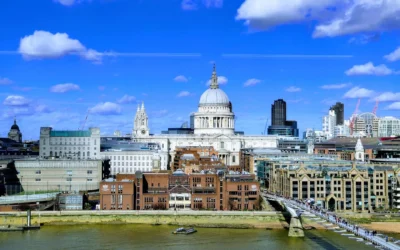
Tate Modern London
Tate Modern London | Everything You Need to Know On the south bank of the Thames, facing St Paul's Cathedral across the river, stands a former power station that was decommissioned in 1981 and reopened in 2000 as one of the most visited art museums in the world. Tate...
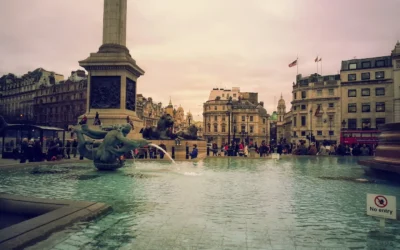
Trafalgar Square London
Trafalgar Square London | Everything You Need to Know At the centre of London — quite literally, since distances from the city have historically been measured from Charing Cross at its edge — there is a square that has been in continuous public life since the 1200s...
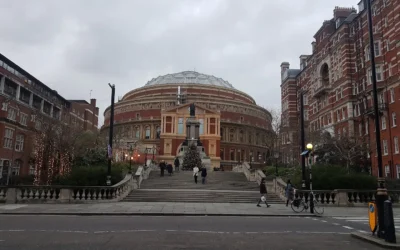
Science Museum London
Science Museum London | Everything You Need to Know In South Kensington, surrounded by some of the greatest museums in the world, there is a building that contains — among its 300,000 objects — a genuine Apollo 10 command module, one of the machines that took human...
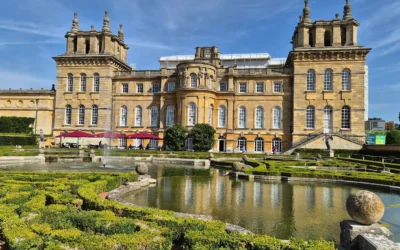
Blenheim Palace
Blenheim Palace Oxfordshire | Everything You Need to Know In 1704, the Duke of Marlborough won a battle near the Bavarian village of Blindheim and changed the course of European history. A grateful nation gave him something extraordinary in return: a palace. Not a...
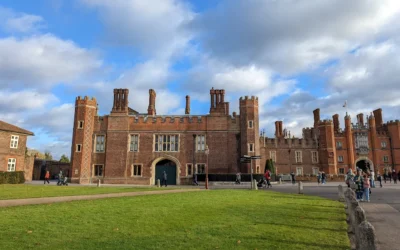
Hampton Court Palace
Hampton Court Palace | Everything You Need to Know Twelve miles south-west of central London, on the north bank of the Thames, stands a palace that encompasses the entire drama of Tudor England. Cardinal Wolsey built it. Henry VIII took it — and expanded it, feasted...