
Aber Falls
Aber Falls: Eryri's Easy 37-Metre Giant
Picture a single white column of water dropping 37 metres down a dark cliff at the head of a wooded valley, the Carneddau mountains rising behind it and ancient oak woodland all around. This is Aber Falls — Rhaeadr Fawr, the "Great Waterfall" — one of the most dramatic cascades in Eryri (Snowdonia), and one of the easiest big waterfalls in Wales to reach.
A gentle, well-made path leads you to it through a rare fragment of Celtic rainforest, past Bronze Age ruins and the ghosts of Welsh royalty — for the nearby village was once the court of the last true Prince of Wales. Best of all, the falls have a hidden twin waiting a little further along the trail.
Here's everything you need to plan a visit.
About Aber Falls
Aber Falls, or Rhaeadr Fawr, is a 37-metre (120-foot) plunge waterfall in the northern foothills of the Carneddau range. It forms where the Afon Goch — the "red river" — pours over a hard sill of igneous rock into a shallow, rocky pool. The river's names can be confusing: it's the Afon Goch at the falls, becomes the Afon Rhaeadr Fawr lower down (the stream the path follows), and finally the Afon Aber as it nears the Menai Strait.
The falls sit within the Coedydd Aber National Nature Reserve, looked after by Natural Resources Wales on the edge of the national park. The valley is cloaked in ancient oak, hazel and alder woodland — a "Celtic rainforest" rich in mosses, ferns and lichens, and alive with birds such as pied flycatchers, redstarts, dippers and the occasional peregrine overhead.
There's deep history here too. The path passes prehistoric settlement remains, including an excavated roundhouse and standing stones marked with information plaques. And the nearby village of Abergwyngregyn was once Aber Garth Celyn, the seat of Llywelyn ap Gruffudd — "Llywelyn Ein Llyw Olaf," Llywelyn Our Last Leader — the last sovereign Prince of Wales before Edward I's conquest in 1282.
Getting there
By car, leave the A55 (North Wales Expressway) at Junction 13 and follow the signs for Abergwyngregyn, then the brown tourist signs for "Rhaeadr Aber" or "Aber Falls." It's only a few minutes from the dual carriageway, though the village lanes are narrow, so take it slowly; the car park postcode is LL33 0LP. Bangor lies about five miles west and Conwy roughly eight miles east.
Public transport is limited but workable. Buses from Bangor, Conwy and Llanfairfechan call at Abergwyngregyn village, from where it's about a mile to the trailhead, and the nearest railway station is a few miles away at Llanfairfechan. Check the current timetables before you set off.
On foot, a signed path runs the mile or so up from the village to the car park, and the North Wales Path — the long-distance coastal route — crosses the bridge at the very foot of the falls.
If you're coming from further afield, the bus and train links stop short of the trailhead, so visitors arriving without a car often prefer to let a local driver handle the journey.
Compare Transfers & Local Transport in North Wales →
Where does the name come from?
The names here are pure Welsh. Aber means the mouth of a river, rhaeadr a waterfall, and fawr great — so Rhaeadr Fawr is simply "the great waterfall," while Afon Goch means "red river." The village name, Abergwyngregyn, translates beautifully as "the mouth of the river of white shells," a memory of the cockles and shellfish once gathered where the river meets the sea.
The real resonance, though, is historical rather than mythical. There's no famous dragon or water-spirit legend attached to the falls; instead the magic lies in the valley's extraordinary past as Aber Garth Celyn, the power base of the princes of Gwynedd and of Llywelyn, the last leader of an independent Wales.
The walk and the trails
The main route is the Aber Falls Path, an out-and-back walk of about 2.4 miles (3.8 km) there and back, taking most people one to two hours. It's well-made and gently graded, following the Afon Rhaeadr Fawr up through the woodland past the ancient settlement remains and a series of information boards, before opening out to a natural viewing area at the foot of the falls. A footbridge lets you cross and admire them from the other side.
The hidden treat is the circular option. Instead of simply turning back, you can continue across the head of the valley to Aber Falls' smaller twin, Rhaeadr Fach ("the little waterfall"), then loop back down the western side — a walk of around 4.2 miles (6.8 km) with some of the finest views saved for the return leg.
There's a steady climb of roughly 100 metres on the way up, and the sections nearest the falls are uneven. A steeper woodland alternative exists too, but it isn't suitable for wheelchairs or pushchairs, and longer routes climb on towards the high Carneddau peaks for experienced hillwalkers only.
Parking
There are two car parks (upper and lower) at the trailhead within Coedydd Aber National Nature Reserve, postcode LL33 0LP, with space for around 30 cars between them. A parking charge applies, payable by coins or card, with free parking for Blue Badge holders — check the official site for current rates. The upper car park has toilets and picnic tables.
It all fills quickly on summer days and weekends, so arriving early is wise. On busy days, the recommended alternative is the free car park on the edge of Abergwyngregyn village, about a mile from the trailhead, from where you can walk up. Avoid parking on the narrow lanes, which causes congestion.
Facilities
There are toilets and picnic tables at the upper car park, but no toilets or café on the trail itself, so go prepared for the walk. Information boards along the path explain the valley's wildlife and history as you go.
For refreshments, there's a small café in Abergwyngregyn village, and the city of Bangor a short drive away has plenty of cafés and shops. It's a good idea to bring water and a snack for the walk regardless.
Things to know before you go
Best time to visit. Aber Falls is fullest in spring and early summer, fed by melting snow off the Carneddau, when bluebells and wood anemones carpet the woodland floor. Autumn brings rich colour, and in a hard winter the falls can freeze into dramatic ice. Arrive early in the day during the busy summer months for the best chance of a parking space.
Dogs. Well-behaved dogs are welcome on leads, as there's livestock in the valley and steep drops near the falls.
Accessibility. This is, unusually, a big waterfall much of which can be reached by wheelchair or pushchair with care — the main path is well-surfaced, with the lower car park giving the most accessible start, though the sections closest to the falls become uneven. Remember the climb of around 100 metres: any downhill on the way out is uphill on the way back.
Families and safety. It's a wonderful family walk, and children love the river along the way, but keep them close near the falls, where the rocks are slippery and the drops are real.
Swimming. You can paddle or dip in the shallow rocky pool at the base, but the water is cold even at the height of summer and the rocks are slippery, so take real care — and keep a close eye on children.
Where to stay
Where you base yourself depends on the kind of stay you want.
For a characterful base with plenty to see, the walled town of Conwy, about eight miles east, is hard to beat — it has a fine range of accommodation and its own world-famous castle on the doorstep.
For the nearest option, the city of Bangor lies just a few miles west, with hotels and guesthouses, good transport links and easy access back to the A55 and the falls.
Find Hotels & Stays in Conwy →
What to pack
The walk is easy, but the Welsh weather and the spray near the falls reward a little preparation.
- A pair of waterproof walking boots for the path, which can be slippery near the falls.
- A waterproof jacket and warm layers; mountain weather changes quickly.
- A pair of binoculars for the woodland and cliff birdlife.
- A travel tripod for long-exposure shots of the cascade.
An OS Explorer OL17 map or GPS, a dry bag, and plenty of water and snacks round out the kit nicely.
Nearby attractions and making a day of it
This corner of North Wales is packed with things to do, with three great castles and the highest peak in Wales all close by.
| Attraction | Why Visit | Distance |
|---|---|---|
| Penrhyn Castle | A vast 19th-century neo-Norman fantasy in the care of the National Trust, with sweeping grounds, a fine art collection and a railway museum | ~3 miles |
| Beaumaris Castle | Edward I's beautifully symmetrical "great unfinished masterpiece" across the Menai Strait on Anglesey — a UNESCO World Heritage Site | ~4 miles |
| Conwy Castle | A magnificent 13th-century fortress and UNESCO World Heritage Site guarding the walled town of Conwy | ~8 miles |
| Yr Wyddfa (Snowdon) | The highest peak in Wales, with walking routes and the Snowdon Mountain Railway to the summit | ~20 miles |
| Rhaeadr Fach | The falls' own little sister, the "little waterfall," seen on the circular walk a short distance west | ~500 metres |
For a full day, pair Aber Falls with Penrhyn Castle near Bangor, or cross to Anglesey for Beaumaris. Bangor itself offers the restored Victorian Garth Pier and the Storiel museum.
Browse Eryri (Snowdonia) & North Wales Tours →
Photography tips
Aber Falls is a rewarding subject. The natural viewing area and the footbridge at the base give you the classic shot of the full plunge framed by mountains, and the benches along the trail offer pleasing middle-distance views on the approach.
Visit after rain for the strongest flow, and aim for soft early-morning or late-afternoon light. A wide-angle lens captures the falls against the Carneddau, while a tripod and a long exposure turn the water to silk — just watch your footing on the wet rocks, and save a frame or two for the hidden Rhaeadr Fach.
Conclusion
Aber Falls is proof that you don't need a hard slog to stand before something magnificent. A gentle walk through ancient, dripping woodland — past roundhouses raised in the Bronze Age and the court of Wales's last prince — delivers you to a 37-metre giant, with a quiet twin waterfall as your reward for going a little further. Time it for after the rain, take the full circular loop, and this accessible corner of Eryri will stay with you long after you've dried off.
FAQs
How tall is Aber Falls?
Aber Falls (Rhaeadr Fawr) is around 37 metres (120 feet) high, making it one of the most dramatic waterfalls in Wales.
Is there a fee to visit Aber Falls?
The falls themselves are free. The trailhead car parks charge for parking (free for Blue Badge holders), and there's a free car park in Abergwyngregyn village about a mile away. Check the official site for current rates.
What is the best time to visit Aber Falls?
Spring and early summer for the fullest flow and woodland flowers, autumn for colour, and winter for the chance of frozen falls — though paths can be icy.
Are dogs allowed at Aber Falls?
Yes, well-behaved dogs on leads are welcome, as there's livestock in the valley and steep drops near the falls.
Is Aber Falls wheelchair or pushchair accessible?
Much of the main path can be managed with care, with the lower car park giving the most accessible start, but the sections nearest the falls are uneven and there's a climb of around 100 metres.
What are the parking options at Aber Falls?
Two car parks at the trailhead charge for parking, with a free car park in Abergwyngregyn village about a mile away as an alternative. Both fill quickly in summer, so arrive early.
Can I swim at Aber Falls?
You can paddle in the shallow rocky pool at the base, but the water is cold even in summer and the rocks are slippery, so take great care and watch children closely.
What should I wear when visiting Aber Falls?
Sturdy, waterproof footwear and a waterproof jacket with warm layers. The path is easy but can be slippery near the falls, and the weather changes fast.
Are there guided tours of Aber Falls?
Guided walks are rare, and the path is well-signed and easy to follow on your own. Wider tours of Eryri (Snowdonia) and North Wales are widely available.
Is there a second waterfall near Aber Falls?
Yes — Rhaeadr Fach, the "little waterfall," lies about 500 metres to the west and can be seen on the circular walk.
What's nearby?
Penrhyn Castle near Bangor, Conwy Castle, Beaumaris Castle on Anglesey, Yr Wyddfa (Snowdon), and the city of Bangor with its Garth Pier and museum.
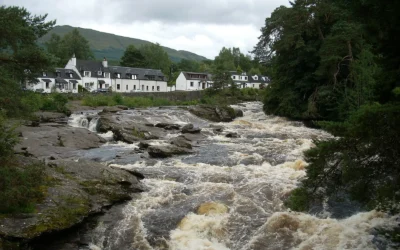
Falls of Dochart
Falls of Dochart: The Waterfall at the Heart of a Village Most waterfalls require a walk to find. The Falls of Dochart require no such effort at all — they run directly through the centre of Killin, beneath the old stone Bridge of Dochart, in full view of the...
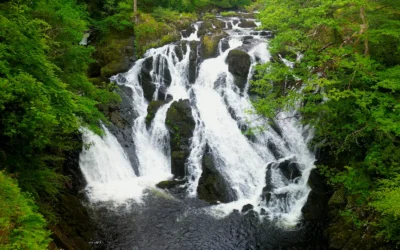
Swallow Falls
Swallow Falls: Wales' Highest Continuous Waterfall The River Llugwy has been performing for visitors at Swallow Falls for well over a century, and it still knows exactly what it is doing. The water tumbles 42 metres through a narrow, tree-lined gorge in a sequence of...
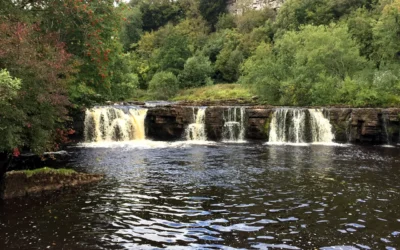
Wain Wath Force
Wain Wath Force: The Broadest Waterfall in Upper Swaledale Wain Wath Force will never win a prize for height. The River Swale drops only around a metre and a half here, sliding gently over a wide limestone ledge beneath the pale cliffs of Cotterby Scar. But what it...
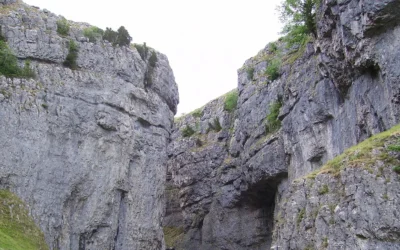
Gordale Scar
Gordale Scar: The Gorge That Stopped Wordsworth in His Tracks There is a moment as you walk the flat, pleasant path from Malham when the gorge closes around you without warning. The sky narrows to a strip above. The walls rear up on either side — overhanging...
Low Force
Low Force: Teesdale's Most Peaceful Waterfall High Force gets the crowds. Low Force gets the quiet. Just a mile and a half downstream from its more famous neighbour, where the River Tees spreads wide across a series of 18-foot cascades over the Whin Sill...