
Pistyll Rhaeadr
Pistyll Rhaeadr: One of the Seven Wonders of Wales
Deep in the Berwyn Mountains, where the lanes shrink to a single track and the hills fold in around you, a river called the Afon Disgynfa reaches the lip of a cliff and simply lets go. The water drops 73 metres in three long, silvery stages, threading halfway down through a natural rock arch before crashing into a dark pool below. This is Pistyll Rhaeadr — one of the Seven Wonders of Wales, and one of the most spectacular waterfalls in the country.
What makes it so loved is that nature has done all the hard work and asked almost nothing of you in return. The falls sit barely two hundred metres from the car park, at the head of a quiet valley near the village of Llanrhaeadr-ym-Mochnant. You can be standing in the spray within five minutes of closing the car door — or, if you fancy it, climbing to the very top of the cliff within twenty.
It is a place of soft Welsh drizzle, rushing water and old, half-remembered legend. Here is everything you need to plan the trip.
About Pistyll Rhaeadr
Pistyll Rhaeadr stands roughly 73 metres (240 feet) tall, which makes it one of the highest waterfalls in Wales. Rather than a single clean plunge, the water falls in three distinct stages, the uppermost and largest of which measures around 40 metres.
You'll often see it billed as the tallest waterfall in Wales, or even the highest single-drop fall in Britain. It's worth being honest here: that claim is genuinely disputed. Because the cascade falls in stages rather than one unbroken sheet, others point to falls such as the Devil's Appendix in Eryri (Snowdonia) as the true single-drop record-holder. Standing at the base, though, the distinction feels academic — it is a big, thundering, beautiful waterfall by any measure.
The fall is fed by the Afon Disgynfa from the high ground above; below the pool, the same river continues on as the Afon Rhaeadr. Halfway down, the water funnels through a natural stone arch, a quirk of erosion that gives Pistyll Rhaeadr its unmistakable, almost storybook shape. The wider Berwyn range around it is a Site of Special Scientific Interest, rich in upland birds and the mosses and ferns that thrive in the permanent spray.
Getting there
By car is comfortably the easiest way to arrive. From the village of Llanrhaeadr-ym-Mochnant, follow the aptly named Waterfall Street and continue for about four miles along a narrow lane to the car park at the very end. The postcode SY10 0BZ will guide you in.
Be ready for the road: the final few miles are single-track with passing places, so take it slowly and be prepared to reverse for oncoming cars. It's an easy drive in good weather, but not one to rush.
Public transport takes more planning. Tanat Valley Coaches run the 79A between Oswestry and Llanrhaeadr-ym-Mochnant, but the bus only reaches the village — from there it's still that four-mile lane to the falls, on foot or by taxi. There is no bus to the waterfall itself, so check the operator's current timetable before relying on it.
On foot or by bike, you can follow the same lane up from the village, a walk of roughly an hour and a half through gentle, green countryside. Cyclists should expect the same narrow road and summer traffic.
If you're travelling any distance, it's well worth turning the visit into an overnight stay, with the nearest proper choice of accommodation in Oswestry, just over the border. As there's no bus to the falls themselves, many visitors arriving from further afield prefer to let a local driver handle the journey.
Compare Transfers & Local Transport in North Wales →
Where does the name come from?
The name is pure Welsh poetry. Pistyll means a spout or spring — the gush of water through a narrow gap — while rhaeadr simply means a waterfall or cascade. Put together, it describes exactly what you see: water spouting over the cliff edge.
The real magic, though, is in the legend. Local tradition tells of the Gwybr — a winged serpent, or dragon, said to have lived in the lake high in the hills above the falls. Every few days it would fly down the valley to seize livestock, and even children, and carry them back to its lair.
Unable to fight it head-on, the villagers turned to cunning. They built a tall pillar studded with iron spikes and draped it in red cloth to enrage the beast. The Gwybr hurled itself at the decoy, impaled itself on the spikes, and died — and a standing stone known as the Pillar Coch (the Red Pillar) is still pointed out nearby as proof.
There's older folklore here too. Look for three great boulders at the foot of the falls, said to have been dropped by a giant, his wife and his maid as they strode across the hills towards nearby Pennant Melangell — each stone still carrying its own name in Welsh.
The walk and the trails
For most visitors, the walk is short and sweet. A level path of about two hundred metres leads from the car park to an iron footbridge at the base of the falls — the classic spot to stand, look up, and feel the cool drift of spray on your face.
From there, a steeper path zigzags up the right-hand side of the cliff to the top of the falls, gaining around seventy metres of height in a short, sharp climb. It takes most people fifteen to twenty minutes, and the reward is a giddy view back down the Tanat Valley and out over the smaller cascades and pools. The two viewpoints offer completely different experiences: power and scale from the bottom, exposure and a long view from the top.
Serious walkers can keep going. From the café, a tougher Berwyn ridge walk climbs towards Moel Sych and Cadair Berwyn — the high points of the range — returning past the lake of Llyn Lluncaws, a full day out of around twelve and a half kilometres. There's also a gentler circular route of about three miles that crosses the foot of the falls and loops back through old quarry workings and hillside.
Parking
There's a car park right at the foot of the falls, with space for around a hundred cars. It's a managed, paid car park, and it fills up quickly on fine weekends and through the summer — so arriving early in the day is the surest way to get a space.
A small amount of free roadside parking exists along the lane a little before the car park, but those spots disappear fast. For the current parking charges and opening times, check the official Pistyll Rhaeadr website before you set off.
Facilities
For a spot this remote, Pistyll Rhaeadr is surprisingly well looked after. At the foot of the falls sits Tan-y-Pistyll — the name means "the little house under the waterfall" — a long-established tearoom serving hot drinks, light meals, cakes and ice creams, with outdoor seating that looks straight up at the cascade.
There are public toilets at the car park as well. Facilities are limited and rustic rather than extensive, so don't expect a full visitor centre — but you won't be stuck for a cup of tea or a loo, which is more than many UK waterfalls can offer.
Things to know before you go
Best time to visit. Pistyll Rhaeadr is at its most dramatic after heavy rain, when the flow is at full thunder. Spring and autumn bring colour and thinner crowds; winter is quiet and atmospheric but can leave the paths icy and the lane treacherous.
Dogs. Well-behaved dogs are welcome, but keep them on a lead — there's livestock on the surrounding hills and serious drops near the top of the falls.
Accessibility. Be realistic here. The short path to the base includes steps, which makes it difficult for wheelchairs and pushchairs, and the climb to the top is steep, rocky and uneven. The car park and tearoom are the most accessible parts of the site.
Families and safety. Children love the falls, but two hazards deserve real respect. There is no barrier or fence at the top of the cliff, where the ground is often wet and slippery — keep little ones close and well back from the edge. The rocks around the pools are slick year-round, too.
Swimming. There's no marked swimming area and no lifeguards. On warm days you'll see people paddling and dipping in the pools, but the water is cold, the currents around a waterfall are unpredictable, and the rocks are slippery — so treat any dip with genuine caution, and never let children near the water unsupervised.
Where to stay
Because the falls sit at the end of a long country lane, where you base yourself depends on how close you want to be.
For the widest choice of hotels, inns and guesthouses, Oswestry is the nearest town — around sixteen miles away and an easy half-hour drive — and it makes a comfortable base for exploring the wider Berwyn and Tanat Valley.
To wake up almost on the doorstep, look for a room in or around the village of Llanrhaeadr-ym-Mochnant itself. A handful of small inns and guesthouses put you just four miles from the falls — perfect for catching them early, before the day-trippers arrive.
Find Hotels & Stays in Oswestry →
What to pack
The single most useful thing you can bring is decent footwear. Even the short walk has damp, uneven sections, and the climb to the top is properly steep.
- A pair of waterproof walking boots with good grip — the rocks stay slippery long after the rain stops.
- A waterproof jacket and warm layers; the spray and the Berwyn weather can chill you quickly, even in summer.
- A set of walking poles if you're tackling the steep top path or the ridge.
- A travel tripod for those silky long-exposure shots of the falls.
A dry bag for your phone and camera, a power bank, and plenty of water and snacks round things off nicely — there's little in the way of shops once you leave the village.
Nearby attractions and making a day of it
The Berwyn corner of Wales packs a lot into a small area, with everything from a medieval shrine to a UNESCO World Heritage aqueduct within reach.
| Attraction | Why Visit | Distance |
|---|---|---|
| St Melangell's Church, Pennant Melangell | A deeply atmospheric medieval shrine to the patron saint of hares, in the same valley the legendary giant was said to be heading for | ~3.5 miles |
| RSPB Lake Vyrnwy | A vast Victorian reservoir ringed by an RSPB nature reserve, with a fairytale Gothic straining tower and gentle lakeside trails | ~7 miles |
| Bala Lake (Llyn Tegid) | The largest natural lake in Wales, with open water, watersports and the charming narrow-gauge Bala Lake Railway | ~10 miles |
| Pontcysyllte Aqueduct | Thomas Telford's astonishing "stream in the sky" — a UNESCO World Heritage canal aqueduct 39 metres above the Dee valley | ~30 miles |
| Cadair Berwyn ridge | The high points of the Berwyn range, with a tough ridge walk climbing straight up from the falls past the lake of Llyn Lluncaws | From the falls |
For a relaxed day, pair the falls with the medieval shrine at Pennant Melangell and a stop at Lake Vyrnwy. Keen walkers can simply head uphill onto the Cadair Berwyn ridge straight from the falls.
Browse North Wales Tours & Experiences →
Photography tips
Pistyll Rhaeadr is a photographer's gift. The iron footbridge at the base gives you the classic head-on view, with the full three-stage drop and the rock arch in frame; climb to the top and you can shoot down the cliff and along the valley for something more vertiginous.
Soft early-morning light flatters the wet rock and keeps the crowds out of your shots. Visit after rain for maximum flow, and bring a tripod — a long exposure turns the falling water into the silky white threads that 19th-century travellers once compared to skeins of silk.
Conclusion
Pistyll Rhaeadr is proof that the very best of Wales doesn't always demand a long, hard slog. Drive to the end of the lane, walk two hundred metres, and there it is — a 73-metre cascade with a dragon's lake above it, a stone arch through its heart, and a cup of tea waiting at its foot. Catch it after rain, keep one eye on that unfenced top, and you'll understand exactly why the old rhyme counts it among the Seven Wonders of Wales.
FAQs
How tall is Pistyll Rhaeadr?
It stands around 73 metres (240 feet), falling in three stages, with the top stage — the largest — at roughly 40 metres.
Is there a fee to visit Pistyll Rhaeadr?
The waterfall itself is free to visit. There's a managed, paid car park at the foot of the falls, plus a small amount of free roadside parking nearby. Check the official website for current parking charges and opening times.
What is the best time to visit Pistyll Rhaeadr?
After heavy rain, when the flow is at its most powerful, or in spring and autumn for colour and fewer crowds. Winter is quiet but can be icy.
Are dogs allowed at Pistyll Rhaeadr?
Yes, but keep dogs on a lead because of livestock on the surrounding hills and the steep, unfenced drops near the top.
Is Pistyll Rhaeadr wheelchair or pushchair accessible?
Not easily. The short path to the base has steps, and the climb to the top is steep and rocky. The car park and tearoom are the most accessible areas.
What are the parking options at Pistyll Rhaeadr?
A car park at the foot of the falls holds around a hundred cars and fills quickly in summer; limited free roadside parking sits a little before it. Arrive early for the best chance of a space.
Can I swim at Pistyll Rhaeadr?
There's no marked swimming area or lifeguard. People do paddle in the pools on warm days, but cold water, currents and slippery rock make caution essential — and children should never be near the water unsupervised.
What should I wear when visiting Pistyll Rhaeadr?
Sturdy, waterproof footwear with good grip, a waterproof jacket and warm layers. The ground stays wet and slippery, and the upland weather changes fast.
Are there guided tours of Pistyll Rhaeadr?
There are no formal tours of the falls themselves; the paths are easy to follow and the on-site tearoom can help with local information. Regional day trips across North Wales are widely available.
What's nearby?
St Melangell's Church at Pennant Melangell, Lake Vyrnwy and its RSPB reserve, Bala Lake and its railway, the Pontcysyllte Aqueduct, and the Berwyn ridge walks are all within reach.
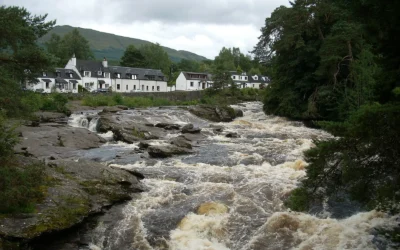
Falls of Dochart
Falls of Dochart: The Waterfall at the Heart of a Village Most waterfalls require a walk to find. The Falls of Dochart require no such effort at all — they run directly through the centre of Killin, beneath the old stone Bridge of Dochart, in full view of the...
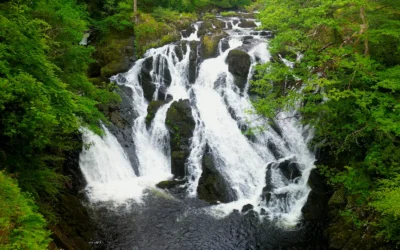
Swallow Falls
Swallow Falls: Wales' Highest Continuous Waterfall The River Llugwy has been performing for visitors at Swallow Falls for well over a century, and it still knows exactly what it is doing. The water tumbles 42 metres through a narrow, tree-lined gorge in a sequence of...
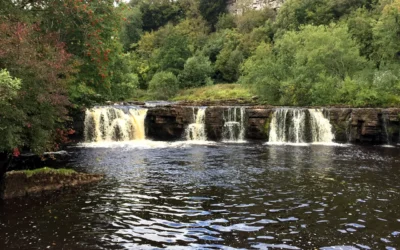
Wain Wath Force
Wain Wath Force: The Broadest Waterfall in Upper Swaledale Wain Wath Force will never win a prize for height. The River Swale drops only around a metre and a half here, sliding gently over a wide limestone ledge beneath the pale cliffs of Cotterby Scar. But what it...
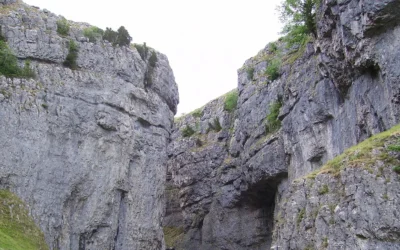
Gordale Scar
Gordale Scar: The Gorge That Stopped Wordsworth in His Tracks There is a moment as you walk the flat, pleasant path from Malham when the gorge closes around you without warning. The sky narrows to a strip above. The walls rear up on either side — overhanging...
Low Force
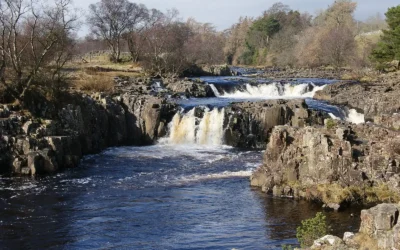
Low Force: Teesdale's Most Peaceful Waterfall High Force gets the crowds. Low Force gets the quiet. Just a mile and a half downstream from its more famous neighbour, where the River Tees spreads wide across a series of 18-foot cascades over the Whin Sill...