
Trafalgar Square London
Trafalgar Square London | Everything You Need to Know
At the centre of London — quite literally, since distances from the city have historically been measured from Charing Cross at its edge — there is a square that has been in continuous public life since the 1200s and in its current form since 1844. Trafalgar Square is where London gathers. It is where crowds assembled for VE Day, where New Year is celebrated, where political demonstrations and cultural festivals share the same stones. Nelson watches it all from the top of his 169-foot column, four bronze lions at his feet, the National Gallery behind him and the whole sweep of Whitehall opening to the south.
The square is named after the Battle of Trafalgar in 1805 — the naval engagement in which a British fleet under Vice Admiral Horatio Nelson defeated the combined French and Spanish fleets, securing British dominance at sea for a century. Nelson died during the battle. His column, erected between 1839 and 1843, commemorates both the victory and its cost. Entry to the square is free, and it is open at all hours. This guide covers everything you need to know before you go.
Where Is Trafalgar Square?
Trafalgar Square is located in the City of Westminster, Central London, at the junction of Whitehall, Charing Cross Road and The Strand. The address is Trafalgar Square, London WC2N 5DN.
The National Gallery stands on the north side of the square. St Martin-in-the-Fields church is to the north-east. Admiralty Arch, which opens onto The Mall towards Buckingham Palace, is to the south-west. For navigation, any map app using the postcode WC2N 5DN or “Trafalgar Square” will bring you directly there.
Opening Hours
Trafalgar Square is a public space, open 24 hours a day, every day of the year. Access to specific areas may be restricted during major events or maintenance — check the official City Hall London website for any temporary closures during your visit.
How to Get to Trafalgar Square
Trafalgar Square is exceptionally well connected at the absolute heart of London.
By Underground. Charing Cross station (Bakerloo and Northern lines) has an exit directly onto the square. Embankment (Bakerloo, Northern, District and Circle lines) is a five-minute walk. Leicester Square (Northern and Piccadilly lines) is also close.
By train. Charing Cross mainline station — serving Southern and Southeastern services — is about three minutes’ walk from the square.
By bus. One of London’s most-served locations: routes 3, 6, 9, 11, 13, 15, 23, 24, 29, 59, 87, 91, 98, 139, 176 and 453 all stop nearby.
On foot. From Covent Garden, the West End or Westminster, Trafalgar Square is an easy and pleasant walk. The route along Whitehall from Westminster is particularly historic.
Compare Transfers & Local Transport in London →
The Best Time to Visit
Trafalgar Square is worth visiting at any time, in any weather — but timing can significantly shape the experience.
Early mornings on weekdays are the most peaceful: Nelson’s Column in the low morning light, the fountains running, almost no one else there. This is the Trafalgar Square that photographers love and that most tourists never see.
Midday and summer weekends bring the square to its busiest — street performers, tourist groups, occasional demonstrations and the general animation of central London in full motion.
Seasonal events transform the square throughout the year. Chinese New Year fills it with colour and performance in January or February. The Vaisakhi festival celebrates Sikh heritage in spring. The summer programme brings cultural events and free outdoor performances. At Christmas, a large fir tree gifted annually by Norway since 1947 is erected and lit, and a crowd gathers for the tree lighting ceremony. New Year’s Eve draws very large numbers — plan carefully for crowds.
Tickets and Costs
Trafalgar Square is completely free to enter and explore. Nearby attractions including the National Gallery and the National Portrait Gallery also offer free admission to their permanent collections.
| Attraction | Cost |
|---|---|
| Trafalgar Square | Free |
| National Gallery | Free (special exhibitions may charge) |
| National Portrait Gallery | Free (special exhibitions may charge) |
The London Pass covers a range of paid London attractions nearby and can offer savings if you plan to visit multiple sites in a day.
What to Expect
Trafalgar Square is one of those places that is instantly recognisable and still surprising when you’re actually there — the scale of Nelson’s Column is genuinely impressive in person, and the square as a whole has a physical weight that photographs don’t quite capture.
Nelson’s Column rises 169 feet (52 metres) above the square — the column itself, topped by a 17-foot statue of the admiral. It took four years to complete (1839–1843) and Landseer’s four bronze lions at its base were added in 1867. The lions have since become one of London’s most photographed objects.
The fountains — two large basins with jets and sculpted fish — were added in 1845 and redesigned in the 1930s. In summer, they are a popular spot to sit beside; in cold weather, they remain running and beautifully lit after dark.
The Fourth Plinth in the north-west corner of the square is one of London’s most interesting ongoing cultural projects. Originally intended for an equestrian statue that was never commissioned, it has since 1999 hosted rotating contemporary artworks — each commission lasting approximately 18 months. Whatever is currently on the plinth will be unlike anything that was there before; check the current commission on the official Fourth Plinth website before visiting.
Browse London Walking Tours & Experiences →
The square hosts a continual stream of events throughout the year — cultural festivals, political gatherings, sporting celebrations, film premieres and seasonal events. Street performers are usually present. Public toilets are on the west side of the square at the base of the central staircase.
A typical visit to the square itself takes thirty minutes to an hour; combining it with the National Gallery or a walk along Whitehall extends this considerably.
Safety and Accessibility
Safety. Trafalgar Square is a safe and well-patrolled public space, with a visible police and security presence at all times, particularly during events. As with any busy tourist area, keep valuables secure and be aware of pickpockets in crowds.
Accessibility. The square is largely flat, with ramps available for the stepped sections. Public toilets are wheelchair-accessible. The National Gallery and National Portrait Gallery to the north both offer step-free access.
Families. The open space is excellent for families, with the lions a particular favourite for children. Supervise younger children near the fountains and the edges of the traffic flow. Events and street performers add spontaneous entertainment.
Where to Stay Near Trafalgar Square
Staying near Trafalgar Square places you at the very centre of London’s historic and cultural landscape — Buckingham Palace, Westminster Abbey, the Houses of Parliament, the West End and Covent Garden all within easy walking distance.
A few areas worth considering:
- Westminster & Charing Cross — the most immediate option, with the square, the National Gallery and Whitehall all within minutes. Central but can be expensive.
- Covent Garden & Strand — just north-east, vibrant and well connected, with the square a short walk.
- South Bank & Waterloo — across the river, a short walk over Hungerford Bridge, with excellent value accommodation and great transport links.
Central London fills very fast for major events — New Year’s Eve, major festivals and summer weekends in particular. Booking ahead is essential.
Find Hotels Near Trafalgar Square London →
A Brief History of Trafalgar Square
The site has been significant since at least the 1200s, when it was the location of the King’s Mews — the royal stabling for Whitehall Palace. Over the centuries the Mews were rebuilt and expanded, and the area remained a functional service space for the monarchy.
In the early 19th century, architect John Nash was involved in the redesign of the area as part of his broader vision for central London. The square took its current form gradually through the 1830s and 1840s, with Nelson’s Column at its centre and the National Gallery (completed 1838) defining its northern edge. The name commemorates the Battle of Trafalgar (21 October 1805), the decisive naval engagement at which Vice Admiral Horatio Nelson died at the moment of his greatest victory.
The square has been London’s principal public gathering space ever since — for celebrations, protests, cultural events and the expression of collective feeling at moments of national significance.
A detail that fixes the square’s place in the geography of Britain: the plaque in the pavement at the top of Whitehall, near the statue of Charles I, marks the site of the original Charing Cross. Distances from London on road signs across England are officially measured from this point — making Trafalgar Square, in a sense, the centre from which the whole country is measured.
Nearby Attractions
Trafalgar Square’s position at the junction of London’s great thoroughfares makes it the perfect starting point for a day exploring the capital’s most historic sites.
| Attraction | Why Visit | Distance |
|---|---|---|
| National Gallery | Over 2,300 paintings spanning the 13th to 19th centuries — one of the world’s great collections | Adjacent |
| National Portrait Gallery | Portraits of notable British figures across 500 years — reopened after major refurbishment | Adjacent |
| St Martin-in-the-Fields | Beautiful 18th-century church — free concerts, crypt café | ~2-min walk |
| Buckingham Palace | The monarch’s London residence, via Admiralty Arch and The Mall | ~10-min walk |
| Covent Garden | Market, street performers, independent shops and restaurants | ~5-min walk |
| Westminster Abbey | Over a millennium of royal history and coronations | ~15-min walk |
A natural day out: Trafalgar Square in the morning, the National Gallery, lunch at St Martin-in-the-Fields crypt café, then a walk along Whitehall to Westminster Abbey and the Houses of Parliament.
See More of London with a London Pass →
Practical Tips for Your Visit
- Come early in the morning for the most atmospheric experience — the square before the crowds, in the early light, is a very different place.
- Watch for the Fourth Plinth. Whatever artwork is currently installed there, it’s worth pausing to look up at.
- Wear comfortable walking shoes. Trafalgar Square is the starting point for a walk that typically extends much further than planned.
- Pack a compact travel umbrella. The square is fully open to the sky and London’s weather is always uncertain.
- Overseas visitor? The UK uses Type G plugs — a UK travel adapter is essential for charging your devices.
- Don’t feed the pigeons. Numbers have been significantly reduced through management measures — feeding is discouraged.
- Photography is entirely welcome throughout.
Frequently Asked Questions
What are the opening hours of Trafalgar Square London?
Trafalgar Square is open 24 hours a day, every day of the year. Access may be restricted during major events — check the City Hall London website for updates.
How much does it cost to visit Trafalgar Square London?
Entry to the square is completely free. The National Gallery and National Portrait Gallery adjacent to the square also offer free permanent collection entry. Special exhibitions at either may carry a charge.
Is Trafalgar Square suitable for children?
Yes — the open space, the lions, the fountains and the frequent events and street performers make it engaging for children. Supervise younger children near the fountains and traffic edges.
Are there any discounts available for attractions near Trafalgar Square London?
The National Gallery and National Portrait Gallery are free to enter. The London Pass covers a range of nearby paid attractions. Check individual venue websites for any concessions on special exhibitions.
How long does a visit to Trafalgar Square take?
The square itself takes thirty minutes to an hour. Combined with the National Gallery, a walk along Whitehall or a visit to nearby Westminster, a full half-day is easily spent.
Is photography allowed at Trafalgar Square London?
Yes — personal photography is welcome throughout.
Are there guided tours available at Trafalgar Square?
No official tours cover the square alone, but many London walking tours and sightseeing routes include it.
What’s the best way to get to Trafalgar Square from the city centre?
Take the Tube to Charing Cross station (Bakerloo and Northern lines), which exits directly onto the square. Or walk from Covent Garden, Westminster or the West End in five to fifteen minutes.
Is Trafalgar Square wheelchair accessible?
Yes — the square is largely flat, with ramps at the stepped sections. Public toilets are wheelchair-accessible. The National Gallery and National Portrait Gallery are both step-free.
Are there dining options near Trafalgar Square London?
There are no on-site cafés, but the crypt café at St Martin-in-the-Fields is an atmospheric option just steps away. The surrounding area — The Strand, Covent Garden, St James’s — has an extensive range of cafés and restaurants.
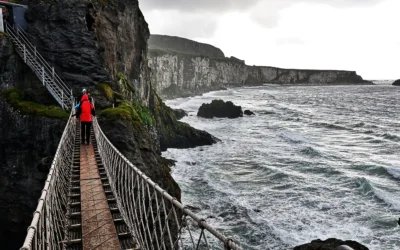
Carrick-a-Rede Rope Bridge
Carrick-a-Rede Rope Bridge | Everything You Need to Know On the northern coast of County Antrim, where the Causeway Coast meets the Atlantic in a series of basalt cliffs and sea stacks, a rope bridge 20 metres long and 30 metres above the ocean connects the mainland...
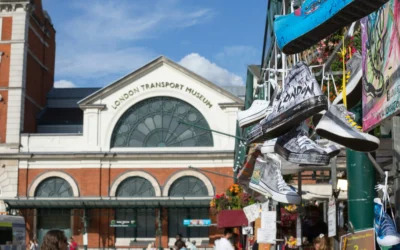
London Transport Museum
London Transport Museum | Everything You Need to Know In a Victorian iron and glass building that was once a flower market, in the heart of Covent Garden, one of the world's great transport collections tells the story of a city. The London Transport Museum covers two...

London Zoo
London Zoo | Everything You Need to Know In Regent's Park, where the formal gardens give way to the northern edge of the park's green expanse, there is an institution that has been housing and studying animals since 1828. London Zoo is the world's oldest scientific...
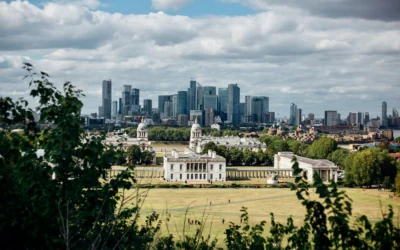
Greenwich Park London
Greenwich Park London | Everything You Need to Know On a hill in southeast London, where the land rises steeply from the Thames, there is a park from which you can see the full spread of the city: Canary Wharf's towers glittering to the west, the Shard rising above...
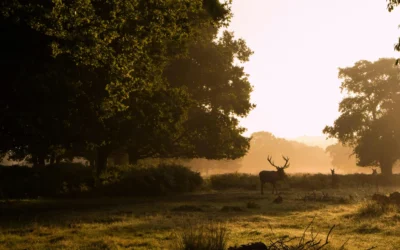
Richmond Park London
Richmond Park London | Everything You Need to Know Eight miles from central London, in the borough of Richmond upon Thames, a 12-foot wall built in 1637 by Charles I encloses 2,500 acres of parkland and has contained within it — largely unaltered since the 17th...