
Thornbury Castle
Thornbury Castle: The Tudor Castle Hotel Where Henry VIII Slept, Above the Cotswolds
In 1535, three years after the English Church had broken with Rome and two years after Henry VIII had crowned Anne Boleyn his queen, the royal couple arrived at Thornbury Castle for a ten-day stay. The castle had been built by Edward Stafford, the 3rd Duke of Buckingham, who had begun it in 1511 as a grand statement of his power and wealth — and whose ambitions had cost him his head for treason in 1521.
Henry had seized the confiscated estate, completed what Stafford had started, and now used it as a royal residence. When Henry and Anne rode away from Thornbury after those ten days, the castle disappeared from royal use and gradually into private hands. It has never lost the weight of that particular history.
Thornbury Castle is today a 26-room luxury hotel, a member of the prestigious Relais & Châteaux collection, set in 15 acres of grounds on the northern edge of the Gloucestershire market town of Thornbury. Its Tudor walled gardens — among the oldest in England — enclose the castle on three sides.
Its 2AA rosette restaurant serves modern British cooking from a kitchen garden. And its bedchambers, named after Tudor figures and furnished with four-poster beds and stone fireplaces, offer a stay in a genuinely historic building rather than a themed hotel. Twelve miles south lies Bristol; the edge of the Cotswolds is a few miles east. This guide covers everything you need to plan a visit or a stay.
Where Is Thornbury Castle?
Thornbury Castle is in the town of Thornbury, Gloucestershire, approximately 12 miles north of Bristol and close to the edge of the Cotswolds Area of Outstanding Natural Beauty. From the M5, exit at Junction 14 and follow the A38 and local signs to Thornbury; the journey from Bristol takes around 30 minutes.
By public transport, trains from London Paddington and central England reach Bristol Parkway in around one and a half to two hours; from there, a taxi to Thornbury takes around 15 to 20 minutes. Bristol Airport, about 15 miles away, is the most convenient airport for international visitors.
A Brief History of Thornbury Castle
Edward Stafford, 3rd Duke of Buckingham, began building Thornbury Castle in 1511. Stafford was the wealthiest nobleman in England at the time, and Thornbury was designed to express that wealth — not as a fortress but as a grand Tudor country house, its octagonal towers and battlements purely decorative, its scale intended to rival the royal palaces. He never finished it.
In 1521, accused of treason — his Plantagenet blood made him a potential rival to the Tudor throne — he was executed on Tower Hill, and the unfinished castle was seized by Henry VIII.
Henry completed certain parts of the building and used Thornbury periodically as a royal residence; in 1535 he and Anne Boleyn spent ten days here, one of the few specific, documented occasions when the castle hosted the Tudor court in its domestic entirety.
After Henry’s death the castle passed through several hands, fell into long periods of neglect, and was significantly restored by the Howard family in the 19th century. From 1966 to 1986 it operated as one of the most celebrated restaurants in Britain. It has been a luxury hotel since, joining the Relais & Châteaux collection in 2021.
The remarkable thing about Thornbury is the precision of its historical association. Many English castles can claim a connection to Henry VIII — he visited dozens. Thornbury is one of the few where the ten-day stay of 1535, complete with Anne Boleyn, is specifically documented. The rooms they occupied are the rooms that guests stay in today.
Architecture & Design
Thornbury Castle is early Tudor architecture at its most revealing. Unlike a medieval fortress, it was designed as a showpiece — its symmetrical entrance range, central gatehouse and octagonal corner towers chosen for elegance and display rather than defence.
The battlements are decorative; the towers are graceful rather than military; and the overall composition reflects a moment when the English nobility were beginning to think of their principal residences as palaces rather than strongholds.
The surviving ranges frame historic courts, and the interiors retain original features including stone-carved fireplaces, mullioned windows and the original Tudor walled gardens — among the most historically significant surviving garden features of the period in England. The bedchambers have been furnished to complement the architecture: four-poster beds, antique furniture and original stone details throughout.
The Catherine of Aragon Tower Suite, with its panoramic views of the gardens, contains what is reputedly the widest hotel bed in Britain. The 15-acre grounds, with their manicured lawns and walled kitchen garden, provide the ingredients for the restaurant and the setting for the outdoor activities.
Legends & Lore
Thornbury has no well-established ghost stories — it is not that kind of castle. Its legend is the historical record itself, and the record is extraordinary enough. A duke who built too boldly and was beheaded before his castle was finished. A king who seized the estate, completed it and brought his new queen to stay. The same rooms, the same stone fireplaces, the same view over the same Tudor gardens — available to anyone who books a room or a table.
The more recent history has its own colour. The Thornbury Castle restaurant, which operated from 1966 to 1986 under Kenneth Bell, was considered among the finest in Britain during those twenty years, and its influence on British cuisine is still acknowledged.
And there is one entirely whimsical footnote: a Great Western Railway Castle class steam locomotive, number 7027, carries the name Thornbury Castle and is preserved in working order — a Victorian iron castle named after a Tudor one.
Exploring the Castle
Thornbury Castle operates primarily as a hotel, and the fullest experience of the building and its history is available to guests. The bedchambers — 26 in total, each named after a Tudor figure — are the heart of the stay: four-poster beds, stone fireplaces, original Tudor details and views over the historic gardens or the walled courtyards.
The Catherine of Aragon Tower Suite is the most celebrated, with its tower position and reportedly the widest hotel bed in the country.
For guests, the grounds offer falconry, archery and croquet on the lawns — the kind of activities that feel entirely natural in a Tudor castle setting. The Tudor walled gardens, which survive from the original 1511-1521 construction, are extraordinarily rare and are tended as a working kitchen garden supplying the hotel restaurant.
The restaurant is open to non-guests as well as hotel guests, accepting dinner reservations for its modern British menu with 2AA rosette recognition, cooked from the castle’s kitchen and herb gardens. Non-guests visiting for dinner should book in advance; other access to the grounds and castle is generally limited to hotel guests. The castle is also a sought-after wedding and private events venue. Check the official Thornbury Castle website for current arrangements.
Where to Stay at Thornbury Castle
Staying at Thornbury Castle is the principal way to experience it, and the hotel has been welcoming guests in various forms for decades. The 26 bedchambers vary in size and character but share the same historical fabric — Tudor stone, period furniture and a genuinely historic atmosphere that a modern hotel cannot replicate.
| Accommodation | Style | Highlights |
|---|---|---|
| Tower Suites | Rooms in the original Tudor towers | Original stonework, panoramic garden views, the grandest scale |
| Catherine of Aragon Suite | Signature suite | Reputedly the widest hotel bed in Britain; named for Henry VIII’s first queen |
| Bedchambers | Historic rooms throughout | Four-poster beds, stone fireplaces, Tudor detailing; each named after a Tudor figure |
Rates vary significantly by room type and season. Check the official website for current availability and rates.
Find Stays at Thornbury Castle & Nearby →
The Best Time to Visit
Spring (April to June) is particularly lovely at Thornbury — the Tudor walled gardens come into their full beauty, the grounds are bright with spring planting, and the Cotswolds countryside nearby is at its most appealing. Summer (July and August) brings the longest days for garden walks and outdoor activities, though the castle is at its busiest.
Autumn (September and October) is atmospheric — the Gloucestershire countryside turns, the evening light in the walled gardens is exceptional, and the restaurant’s kitchen garden is at full harvest. Winter (November to February) is the quietest season, and the castle’s stone rooms and fireplaces make the most sense in cold weather; Christmas and New Year at Thornbury tend to be fully booked months ahead.
How to Get There
By car. From the M5 (Junction 14), follow the A38 north and then local signs to Thornbury. From Bristol city centre allow 30 minutes; from Bath around 45 minutes; from London allow approximately two hours via the M4 and M5. Parking is available at the hotel.
By train. London Paddington to Bristol Parkway takes around one and a half hours; from Bristol Parkway a taxi to Thornbury takes around 20 minutes. Services from Birmingham and the Midlands also reach Bristol Parkway.
By air. Bristol Airport, approximately 15 miles away, has connections to many UK, European and international destinations; a taxi from the airport to Thornbury takes around 30 minutes.
Compare Transfers & Local Transport in Gloucestershire →
Nearby Attractions
Thornbury’s position between Bristol and the Cotswolds makes it an exceptional base for the wider area.
| Attraction | Why Visit | Distance |
|---|---|---|
| Cotswolds AONB | Some of England’s most celebrated countryside — honey-stone villages, rolling hills, market towns | ~5 miles |
| Bristol | A vibrant, historic port city with the SS Great Britain, Brunel’s Clifton Suspension Bridge and outstanding food culture | ~12 miles |
| Bath (UNESCO World Heritage) | Roman Baths, Georgian architecture and the Royal Crescent — one of the finest small cities in Britain | ~30 miles |
| Berkeley Castle | A medieval fortress where Edward II was murdered in 1327 — one of the oldest continuously inhabited castles in England | ~8 miles |
| St Mary’s Church, Thornbury | A fine medieval church immediately beside the castle with Tudor connections | Adjacent |
A natural day out pairs the castle with a drive through the southern Cotswolds villages and lunch in Chipping Campden or Tetbury; or Bristol for the afternoon after breakfast in the walled gardens.
Browse Cotswolds & Bristol Tours →
Family & Accessibility
Families. Thornbury Castle suits families seeking a genuinely memorable stay rather than a theme park. The falconry, archery and croquet in the grounds work well for older children, and the historically named rooms create a natural framework for children with an interest in the Tudors. As a working hotel, it is best suited to families with children old enough to appreciate the historic setting.
Accessibility. As a Grade I listed Tudor building, Thornbury Castle has physical constraints that affect access — the historic structure limits what can be adapted. The castle is best placed to advise on what can be accommodated for guests with specific accessibility requirements; contact the hotel directly before booking. Assistance dogs are generally welcome in hotels.
Practical Tips
- Book well in advance, particularly for summer, Christmas and New Year — as a 26-room hotel, Thornbury fills quickly for popular dates.
- Non-guests can dine at the restaurant — booking a table is the most accessible way to experience the castle if not staying overnight.
- Wear comfortable walking shoes for exploring the 15 acres of grounds and the Tudor walled gardens.
- A compact travel umbrella is useful for the Gloucestershire climate; the grounds are best enjoyed in dry weather.
- Ask about falconry and archery when booking — these activities are available to hotel guests and can often be arranged in advance.
- Overseas visitor? The UK uses Type G plugs, so pack a UK travel adapter.
- Photography for personal use is generally permitted; for professional or commercial photography, check with the hotel in advance.
Conclusion
Thornbury Castle was begun by a duke whose ambitions exceeded his safety, seized by a king who brought his most famous queen to sleep in these rooms, and has survived five centuries of English history to become one of the most singular hotel experiences in the country. The Tudor walled gardens that Edward Stafford planted in 1511 still grow.
The stone fireplaces in the bedchambers are still the original ones. The rooms are named for the people who shaped the England of five hundred years ago, and the Cotswolds begin a few miles east. There is nowhere quite like it in Gloucestershire, and very few places like it anywhere in England.
Frequently Asked Questions
Can non-guests visit Thornbury Castle?
The castle operates primarily as a hotel; access to the grounds and interiors is generally limited to hotel guests. The restaurant accepts dinner reservations for non-guests — this is the main way to experience the castle without staying overnight.
When did Henry VIII visit Thornbury Castle?
Henry VIII and Anne Boleyn stayed at Thornbury Castle for ten days in 1535, making it one of a small number of English historic buildings where this royal visit is specifically documented.
What makes Thornbury Castle unique among English hotels?
It is the only Tudor castle in England operating as a luxury hotel with guests sleeping in original rooms behind original stone walls that date from 1511. The Tudor walled gardens, among the oldest in England, are also open to hotel guests.
What activities are available for hotel guests?
Falconry, archery, croquet and garden walks in the Tudor walled grounds are all available. The restaurant offers both dinner and private dining; the hotel also hosts weddings and corporate events.
How far is Thornbury Castle from the Cotswolds?
The edge of the Cotswolds Area of Outstanding Natural Beauty is approximately 5 miles from the castle, making it an excellent base for day trips into the villages and countryside.
Is Thornbury Castle suitable for a romantic break?
Yes — the combination of historic rooms, four-poster beds, walled gardens, falconry and fine dining makes it one of the most naturally suited hotels in England for a romantic stay.
Is Thornbury Castle wheelchair accessible?
As a Grade I listed Tudor building, access is physically constrained. Contact the hotel directly before booking to discuss specific requirements.
How do I get to Thornbury Castle?
By car from the M5 motorway (Junction 14), approximately 30 minutes from Bristol. By train to Bristol Parkway and then a taxi of around 20 minutes. Bristol Airport is approximately 30 minutes by taxi.
Is there parking at Thornbury Castle?
Yes, parking is available for hotel guests.
Can I bring a dog to Thornbury Castle?
As a Relais & Châteaux hotel, assistance dogs are generally welcome. Contact the hotel to confirm the current dog policy before booking if you are travelling with a pet.
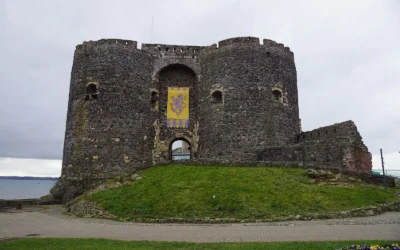
Carrickfergus Castle
Carrickfergus Castle: Ireland's Greatest Norman Fortress, Above Belfast Lough In 1315, Robert the Bruce's brother Edward invaded Ireland with an army and besieged Carrickfergus Castle. The siege went on so long, and provisions ran so completely dry, that the...
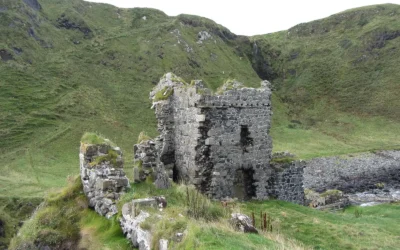
Kinbane Castle
Kinbane Castle: The White Head Castle at the End of 140 Steps, Above the Atlantic Kinbane means "white head" in Irish — Caisleán Ceinn Bán — and the name is immediately clear to anyone who looks at the limestone headland on which the castle stands: the cliff...
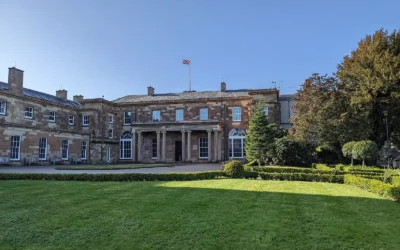
Hillsborough Castle
Hillsborough Castle: Where Northern Ireland's Peace Was Made, Twenty Minutes from Belfast In 1771, Wills Hill — the first Marquess of Downshire, one of the most powerful men in British colonial politics — received Benjamin Franklin at Hillsborough Castle. The...
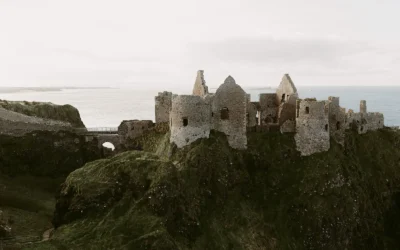
Dunluce Castle
Dunluce Castle: The Clifftop Ruin Where Game of Thrones Met Narnia, Above the Antrim Coast In 1588, a Spanish Armada ship called the Girona wrecked on the rocks near Dunluce Castle. The MacDonnell clan — who had controlled the castle since the 1550s — salvaged the...
Craig y Nos Castle
Craig y Nos Castle: The Victorian Opera Star Who Built Her Own Theatre in the Brecon Beacons Adelina Patti was the most celebrated opera singer of the Victorian era — a soprano who commanded the largest fees in the world and whose voice filled La Scala in Milan,...