
Tate Modern London
Tate Modern London | Everything You Need to Know
On the south bank of the Thames, facing St Paul’s Cathedral across the river, stands a former power station that was decommissioned in 1981 and reopened in 2000 as one of the most visited art museums in the world. Tate Modern’s building — a Grade II listed Bankside Power Station designed by Sir Giles Gilbert Scott — is part of the experience: the vast Turbine Hall, 155 metres long and 35 metres high, was once home to the enormous turbines that generated electricity for London. Today it hosts large-scale art installations that use the space in ways that would be impossible almost anywhere else.
The permanent collection — including major works by Pablo Picasso, Henri Matisse, Yayoi Kusama, Mark Rothko and hundreds of others — is free to enter. Temporary exhibitions, which tend to be some of the most talked-about art events in London, carry their own admission. Together they make Tate Modern the UK’s national collection of modern and contemporary art and a genuinely extraordinary place to spend a morning or afternoon. This guide covers everything you need to know before you go.
Where Is Tate Modern London?
Tate Modern is located at Bankside, London SE1 9TG, on the south bank of the River Thames. The Millennium Bridge, a pedestrian footbridge that connects directly to St Paul’s Cathedral on the north bank, is adjacent to the museum’s main entrance — a five-to-ten-minute walk across it is one of the finest approaches to any art gallery in Britain.
Nearby landmarks include Shakespeare’s Globe Theatre and Borough Market. For navigation, any map app using the postcode SE1 9TG or “Tate Modern” will bring you directly there.
Opening Hours
Tate Modern is open daily from 10:00 AM to 6:00 PM, with last entry at 5:30 PM.
Hours may vary during holidays, special events and late-night openings. As the schedule can change, always check the official Tate website before your visit.
How to Get to Tate Modern London
By Underground. Blackfriars station (Circle and District lines) is around 300 metres from the south exit — the closest option. Southwark (Jubilee line) is around 600 metres. London Bridge (Jubilee and Northern lines) is around a kilometre.
By train. Blackfriars, London Bridge, Cannon Street and Waterloo are all within walking distance.
By river. Thames Clipper services stop at Bankside Pier, right beside Tate Modern — the most scenic approach, and worth it for the view of the building from the water.
On foot. The five-to-ten-minute walk across the Millennium Bridge from St Paul’s Cathedral is one of the finest short walks in London, with views of the Thames in both directions.
By bus. Routes 47, 63, 100, 344 and 381 stop nearby — check Transport for London for current routes and times.
By car. Central London parking is limited and expensive. Public transport is strongly recommended.
Compare Transfers & Local Transport in London →
The Best Time to Visit
As an indoor museum, Tate Modern is excellent in any weather — particularly popular on rainy days, which can mean larger crowds. For the quietest experience, visit on weekday mornings, arriving at 10:00 AM. Weekends and school holidays are significantly busier, particularly in the Turbine Hall when a major installation is in place.
Turbine Hall installations — which change approximately once or twice a year — are among the most anticipated art events in London and typically draw significantly larger crowds during their opening weeks. Check the official website to see what’s currently installed and whether a new commission is imminent.
Temporary exhibitions also run throughout the year; some become very popular. Booking exhibition tickets in advance is recommended.
Tickets and Costs
Admission to Tate Modern’s permanent collection is completely free. No ticket or booking is required for the permanent galleries.
Temporary exhibitions carry their own admission fees:
| Ticket Type | Cost | Notes |
|---|---|---|
| Permanent Collection | Free | No booking required |
| Temporary Exhibitions | Around £20 (varies) | Prices vary by exhibition |
| Children (under 12) | Free | Up to 4 per paying adult for exhibitions |
| Family Child (12–18) | £5 | Exhibition entry |
| Tate Collective (16–25) | £5 | Discounted exhibition access |
| Tate Members | Free | Unlimited exhibition access |
Concession pricing is available for students, seniors and disabled visitors; companions of disabled visitors enter free. As prices vary by exhibition and are reviewed periodically, check the official Tate website for current rates and to book in advance for popular shows.
What to Expect
Tate Modern spreads across two interconnected buildings — the original Bankside Power Station (Natalie Bell Building) and the 2016 extension (Blavatnik Building) — offering multiple floors of galleries, the Turbine Hall and the underground Tanks.
The Turbine Hall is the first thing visitors encounter and the space most people remember longest. Wholly unlike any conventional gallery — the scale is overwhelming, the natural light extraordinary — it has hosted installations that have become defining moments in contemporary art: Louise Bourgeois’s giant spider in 2000, Olafur Eliasson’s artificial sun in 2003, Carsten Höller’s fairground slides in 2006. Whatever is installed during your visit will be specific to this space and to this moment.
The permanent collection is organised thematically across multiple floors, ranging from early 20th-century masters — Picasso, Matisse, Mondrian, Duchamp — through Abstract Expressionism, Arte Povera and Minimalism to contemporary work by artists active today. The collection is rotated and rehung regularly, so what you see on a given visit may differ from a previous one.
Browse South Bank & London Art Tours →
The Tanks — three circular concrete chambers beneath the main building, formerly used to store fuel oil for the power station — have been converted into performance spaces and cinema for live art, video work and sound installations. This area is unlike any other gallery space in London.
The Blavatnik Building’s top-floor viewing gallery offers a 360-degree panorama of London — the Thames, St Paul’s Cathedral, the City skyline and the South Bank — and is free to access.
Facilities include a café and restaurant, a gift shop with art-themed publications and prints, accessible restrooms and quiet rooms on Levels 2 and 4.
A typical visit to the permanent collection takes two to three hours; including exhibitions or events, longer.
Safety and Accessibility
Safety. Security staff are present throughout. Large bags must be stored in on-site lockers.
Accessibility. Tate Modern is largely wheelchair accessible, with lifts and ramps throughout both buildings. Accessible parking (twelve spaces) can be booked 24 hours in advance. Wheelchair and mobility scooter hire is available. A Changing Places toilet is on Level 0 of the Natalie Bell Building. Quiet rooms are on Levels 2 and 4 for sensory breaks. Access events include Touch Tours with BSL interpretation, audio descriptions and captioning. A visual story for autistic visitors is available.
Families. Tate Modern is family-friendly, with free entry for under-12s to the permanent collection and most exhibitions, stroller access throughout and family-oriented events and trails. The scale of the Turbine Hall alone tends to make a strong impression on children.
Where to Stay Near Tate Modern London
The South Bank and Bankside area offer an increasingly excellent range of accommodation — no longer just a place you pass through to reach the galleries, but a genuinely attractive neighbourhood to stay in.
A few areas worth considering:
- Bankside & Southwark — the most immediate option, with Tate Modern and the Globe on the doorstep and excellent transport links.
- Borough & London Bridge — just east, Borough Market and Bermondsey within walking distance, well connected by Jubilee and Northern lines.
- Waterloo & South Bank — slightly west, with the National Theatre, BFI and Southbank Centre nearby and Waterloo station offering excellent rail connections.
South Bank accommodation is popular year-round — booking ahead is recommended.
Find Hotels Near Tate Modern London →
A Brief History of Tate Modern London
Bankside Power Station was designed by Sir Giles Gilbert Scott — the same architect responsible for the red telephone box and Battersea Power Station — and operated from 1952 until its decommissioning in 1981. The building was listed Grade II, but lay empty for nearly two decades before the Tate trustees selected it in 1994 as the new home for the national collection of modern and contemporary art.
Swiss architects Herzog & de Meuron won the design competition and took the inspired decision to preserve the industrial character of the building rather than conceal it — retaining the chimney, the turbine hall and the raw concrete surfaces, and working with the space rather than against it. Tate Modern opened on 12 May 2000 to extraordinary public response, and within its first year had attracted more visitors than projected for five years.
The 2016 extension — the Switch House, now known as the Blavatnik Building — added gallery space, performance areas and the public viewing gallery.
The Tate network, of which Tate Modern is part, traces its origins to Sir Henry Tate, the sugar magnate who donated his collection and funds for a gallery to the nation in the 1890s — a collection that eventually became Tate Britain. The national collection of modern art was separated out and, after decades in the basement of Tate Britain, moved to Bankside at Tate Modern’s opening.
A detail that makes the building vivid: the Turbine Hall floor is 500 metres long — further than a five-minute walk — and during the Eliasson installation in 2003, Tate Modern invited visitors to lie on the ramp and look up at the ceiling, where a mirrored surface reflected a artificial sun made of hundreds of monofrequency lamps. Over two million people came. Many of them lay on the floor in silence looking at light.
Nearby Attractions
Tate Modern’s South Bank location places it within easy reach of some of London’s finest cultural and historic destinations.
| Attraction | Why Visit | Distance |
|---|---|---|
| Shakespeare’s Globe | Faithful reconstruction of the Elizabethan theatre — tours and live productions | ~5-min walk |
| Millennium Bridge | Walking the pedestrian bridge to St Paul’s offers one of London’s finest views | ~2-min walk |
| St Paul’s Cathedral | Wren’s Baroque masterpiece — across the river and a ten-minute walk | ~10-min walk |
| Borough Market | One of London’s oldest and most celebrated food markets | ~15-min walk |
| Southbank Centre | Royal Festival Hall, Hayward Gallery and a year-round cultural programme | ~10-min walk |
A natural day out: Tate Modern in the morning, walk the Millennium Bridge to St Paul’s, lunch at Borough Market, then an afternoon event at the Southbank Centre.
Explore the South Bank with a London Tour →
Practical Tips for Your Visit
- Arrive at 10:00 AM on a weekday for the quietest experience in the permanent collection.
- Book exhibition tickets in advance. Popular temporary shows can sell out weeks ahead.
- Visit the Turbine Hall first. Whatever is installed there sets the tone for the visit — and the scale is most striking when you’re not yet tired from walking.
- Take the viewing gallery. The top floor of the Blavatnik Building is free and the views are exceptional.
- Wear comfortable walking shoes. Multiple floors of gallery space across two buildings requires solid footwear.
- Pack a compact travel umbrella. The walk from the station or across the Millennium Bridge is exposed.
- Overseas visitor? The UK uses Type G plugs — a UK travel adapter is essential for charging your devices.
- Photography for personal use is permitted in most galleries; some exhibitions or specific artworks may have restrictions. Flash and tripods are not allowed.
Frequently Asked Questions
What are the opening hours of Tate Modern London?
Daily from 10:00 AM to 6:00 PM, with last entry at 5:30 PM. Hours may vary for special events and holidays — check the official Tate website before visiting.
How much does it cost to visit Tate Modern London?
The permanent collection is free. Temporary exhibition tickets are around £20 for adults (prices vary). Children under 12 enter exhibitions free. Tate Collective (ages 16–25) offers £5 exhibition tickets. Check the Tate website for current pricing.
Is Tate Modern suitable for children?
Yes — the permanent collection is free for under-12s, the scale of the Turbine Hall tends to make a strong impression, and family-oriented events and trails run throughout the year.
Are there any discounts available for Tate Modern London?
Student, senior and disability concessions apply to paid exhibitions. Children under 12 enter free. Ages 16–25 can access exhibitions for £5 via Tate Collective. Tate Members get unlimited free exhibition access.
How long does a visit to Tate Modern take?
Two to three hours for the permanent collection; longer if visiting exhibitions, the Tanks or events.
Is photography allowed at Tate Modern London?
Personal photography is permitted in most areas. Flash, tripods and selfie sticks are not allowed. Some exhibitions may have specific restrictions.
Are there guided tours available at Tate Modern?
Yes — curator-led tours and audio guides are available. Check the official website for current schedules.
What’s the best way to get to Tate Modern from central London?
Walk across the Millennium Bridge from St Paul’s (five to ten minutes) or take the Tube to Blackfriars station (a few minutes’ walk from the south exit).
Is Tate Modern wheelchair accessible?
Yes — lifts and ramps throughout, accessible parking (bookable in advance), wheelchair hire and a Changing Places facility are available.
Are there dining options near Tate Modern London?
On-site café and restaurant are available. Borough Market (fifteen minutes’ walk) and the Southbank Centre eateries provide a wide range of additional options.

Dartmoor National Park
Dartmoor National Park | Everything You Need to Know In the heart of Devon, a landscape rises out of the surrounding farmland that feels genuinely ancient — a high, open plateau of granite moorland crossed by rushing rivers, dotted with strange rock formations and...
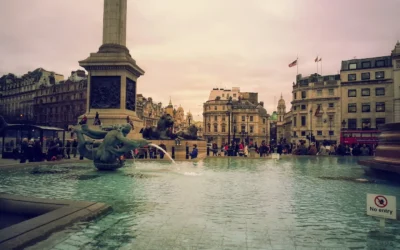
Trafalgar Square London
Trafalgar Square London | Everything You Need to Know At the centre of London — quite literally, since distances from the city have historically been measured from Charing Cross at its edge — there is a square that has been in continuous public life since the 1200s...
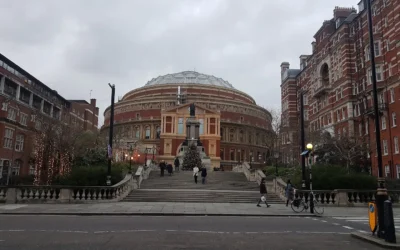
Science Museum London
Science Museum London | Everything You Need to Know In South Kensington, surrounded by some of the greatest museums in the world, there is a building that contains — among its 300,000 objects — a genuine Apollo 10 command module, one of the machines that took human...
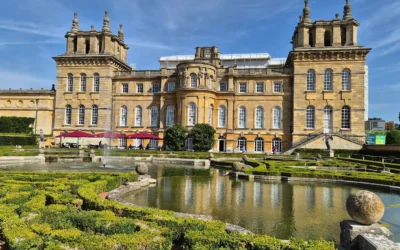
Blenheim Palace
Blenheim Palace Oxfordshire | Everything You Need to Know In 1704, the Duke of Marlborough won a battle near the Bavarian village of Blindheim and changed the course of European history. A grateful nation gave him something extraordinary in return: a palace. Not a...
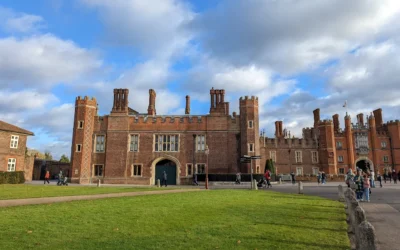
Hampton Court Palace
Hampton Court Palace | Everything You Need to Know Twelve miles south-west of central London, on the north bank of the Thames, stands a palace that encompasses the entire drama of Tudor England. Cardinal Wolsey built it. Henry VIII took it — and expanded it, feasted...