
Start Point Lighthouse
Start Point Lighthouse: A Beacon on Devon’s Sea-Swept Headland
Few lighthouses in England occupy so dramatic a position as Start Point. Set on a long, narrow finger of rock that reaches nearly a mile out into the English Channel, this is one of the most exposed headlands on the entire English coast — a place where the land seems to dissolve into the sea, and where on a stormy day the waves break clean over the cliffs. Since 1836, the lighthouse has stood at the very tip, its beam sweeping across Start Bay, guiding mariners past one of the most treacherous stretches of the South Devon coast.
Start Point sits in the South Hams Area of Outstanding Natural Beauty, between the harbour towns of Dartmouth and Salcombe, with the South West Coast Path running right past its door. It remains a working lighthouse, managed by Trinity House, and offers the best of both worlds: you can climb its tower on a guided tour for breathtaking 360-degree views, and you can stay the night in one of its two beautifully restored former keepers’ cottages, Landward and Beacon. This guide covers everything you need to know about visiting and staying at Start Point.
Where Is Start Point Lighthouse?
Start Point Lighthouse stands at the tip of a dramatic headland above Start Bay in South Devon, between the towns of Dartmouth and Salcombe, within the South Hams Area of Outstanding Natural Beauty. The peninsula extends almost a mile into the sea, making it one of the most exposed points on the English coast.
Access is via four miles of narrow country lanes from the main road, ending in a half-mile private, walled, tarmac drive that is shared with walkers on the South West Coast Path. The setting is wild and remote, with the coast path offering immediate access to spectacular cliff-top walks in both directions.
A Brief History of Start Point Lighthouse
Start Point Lighthouse was built in 1836 by the distinguished engineer James Walker, one of the foremost lighthouse engineers of the Victorian age, who served as engineer-in-chief to Trinity House. Its purpose was to guard one of the most dangerous headlands on the South Devon coast — a place where the long reef of Start Point reaches out into the busy shipping lanes of the Channel, and where countless vessels had come to grief over the centuries.
The 28-metre tower has guided ships for nearly two hundred years. It was electrified in 1959 and fully automated in 1993, when the last keepers departed and their cottages began a new life as holiday accommodation. Throughout its working life the lighthouse has been a vital mark for shipping, its light visible up to 18 miles out to sea.
The remarkable thing about Start Point is its sheer exposure. The headland on which it stands is among the most weather-beaten on the entire English coast, jutting nearly a mile into the open Channel where it takes the full force of Atlantic storms funnelling up the coast. To stand at the foot of the tower in a gale, with the sea raging on three sides, is to understand exactly why a lighthouse was needed here — and to marvel that the Victorians built one in such a place at all.
Architecture & The Light
Start Point is a 28-metre round tower, built in the robust, elegant style of the great Victorian lighthouse engineers, designed to withstand the ferocious weather of its exposed clifftop position. James Walker’s design combines the practical strength needed to survive Channel storms with the clean, classic lines characteristic of the best lighthouses of the period. A spiral staircase rises through the tower to the lantern room, from which the views extend across Start Bay and far out to sea.
The light was originally fuelled in the manner of its day, electrified in 1959, and remains an active beam visible up to 18 miles. An automatic fog signal still sounds during misty conditions, warning ships off the dangerous reef — guests staying in the cottages are provided with earplugs for the foggiest nights. The lighthouse has been automated since 1993 and continues its essential work guiding shipping through the Channel.
Visiting the Lighthouse
Start Point is one of the lighthouses where you can climb the tower. Guided tours, available through Trinity House, take visitors up through the tower to the lantern room, with the reward of spectacular 360-degree views across Start Bay, the Channel and the wild South Devon coastline. The tour offers a fascinating insight into the lighthouse’s history and operation, and the climb to the top is the highlight for most visitors.
The tower involves climbing a spiral staircase, which may not suit those with mobility difficulties or very young children. There is also a small visitor centre with a souvenir shop selling lighthouse-themed gifts.
As tour times, opening seasons and prices vary, check with the Trinity House visitor centre for current schedules and booking details before you travel.
Check Tickets & Tour Times for Start Point Lighthouse →
Staying at the Lighthouse
The real magic of Start Point is the chance to stay at the very tip of this wild headland, in one of two beautifully restored former keepers’ cottages — Landward and Beacon. To wake here, with the sea on three sides, to watch the lighthouse beam sweep across the bay at night, and to have the South West Coast Path at your door, is a genuinely unforgettable experience. Both cottages combine the historic character of lighthouse living with thoroughly modern comforts.
|
Cottage |
Sleeps |
Features |
|
Landward |
5 |
3 bedrooms, private patio with Start Bay views, sitting room, modern kitchen; up to 2 pets welcome |
|
Beacon |
6 |
3 bedrooms, decked cliff-edge patio, double-ended bath; no pets; children must be over 11 |
Both cottages are fully equipped for self-catering, with Wi-Fi, TVs and parking for two vehicles. A few practical notes: the access roads are narrow and winding, the foghorn may sound in misty weather (earplugs provided), and barbecues, fireworks, drones and electric-car charging are not permitted. Landward is baby-friendly with a cot and highchair available, while Beacon requires children to be over 11 for safety. As these are sought-after cottages in a remarkable location, they book up well ahead — reserving early is strongly advised, especially for the summer months.
Find Lighthouse & Coastal Stays Near Dartmouth →
The Best Time to Visit
Spring (March to May) brings clifftop wildflowers, returning seabirds and the clear light that makes the views from this far-reaching headland so spectacular, all before the summer crowds arrive. Summer (June to September) offers the warmest weather, the longest days, full access to tours and the best chance of calm seas for spotting dolphins offshore — but it is the busiest time and the cottages book up earliest, so reserve well ahead.
Autumn (September to November) is quieter, with dramatic Channel skies and excellent walking weather, while the migrating birds pass along the coast. Winter (December to February) is wild in the extreme on this most exposed of headlands — the storms are spectacular and the sense of isolation profound — though it is not for the faint-hearted and some facilities may be reduced.
For the calmest visit, weekday mornings outside the school holidays are best. This is one of the most exposed points on the English coast, where the weather changes fast and the wind can be ferocious, so always check the forecast and dress accordingly.
How to Get There
By car. The only really practical option. From the main road, the lighthouse is reached via four miles of narrow, winding country lanes, ending in a half-mile private drive shared with coast-path walkers. The lighthouse lies between Dartmouth and Salcombe in South Devon. Be prepared for the narrow access roads, and note that parking is for two vehicles per cottage.
By public transport. Public transport to this remote headland is very limited. The nearest towns — Dartmouth, Kingsbridge and Salcombe — are reachable by bus, but there is no direct public transport to the lighthouse itself, and a car is effectively essential for reaching it.
On foot. The South West Coast Path runs directly past the lighthouse, and the cliff-top walks in both directions are among the finest in South Devon. The half-mile private drive is shared with walkers. The terrain is rugged and exposed, so wear proper footwear and keep well back from the cliff edges.
Compare Transfers & Local Transport in South Devon →
Wildlife & The Coast
The seas and cliffs around Start Point are rich in wildlife. The waters of Start Bay and the Channel are home to seals, dolphins and porpoises, most often seen on calm days, while the cliffs support nesting seabirds through the spring and summer. The clifftop grassland and heath of this unspoilt corner of the South Hams are alive with wildflowers and butterflies, and nearby Slapton Ley — the largest natural freshwater lake in the South West — is a superb nature reserve for birdwatching.
A pair of binoculars for wildlife watching is well worth bringing — the far-reaching headland is a superb vantage point for scanning the sea for marine life and the cliffs for seabirds. The South West Coast Path stretches away in both directions, towards the lost village of Hallsands in one direction and East Prawle in the other, inviting walkers to make a full day of this magnificent and remote shore. Boat trips from nearby Salcombe offer further chances to spot seals and dolphins.
Nearby Attractions
Start Point sits in the beautiful South Hams, with a wealth of attractions within reach.
|
Attraction |
Why Visit |
Distance |
|
Slapton Sands & Ley |
Long shingle beach, freshwater nature reserve and WWII memorial |
~20-min drive |
|
Dartmouth Castle |
Coastal fortress guarding the mouth of the River Dart (English Heritage) |
~20-min drive |
|
Blackpool Sands |
One of South Devon’s finest sandy beaches |
~20-min drive |
|
Salcombe |
Picturesque sailing town with boat trips, shops and estuary beaches |
~20-min drive |
|
Hallsands |
The haunting remains of a village lost to the sea, on the coast path |
Coast path walk |
A natural day out: tour the lighthouse and climb the tower in the morning, walk a stretch of the coast path, then head to Slapton Sands or into Dartmouth for the afternoon.
Browse South Devon Tours & Boat Trips →
Safety & Accessibility
Safety. Start Point is one of the most exposed headlands on the English coast, with steep cliffs and sheer drops — stay well back from the edges, keep to the marked paths, and supervise children closely at all times. The weather and sea here can change with startling speed, and the wind can be ferocious; check the forecast and dress for it. Take particular care on the coast path in wet or windy conditions.
Accessibility. Access is via narrow, winding lanes and a private drive, and the terrain around the lighthouse is rugged and exposed. Climbing the tower involves a spiral staircase requiring reasonable fitness, not suitable for those with mobility difficulties or very young children. The cottages sit in a remote clifftop setting. Visitors with specific access needs should check with the booking agent or Trinity House before visiting.
Families. Landward Cottage is baby-friendly and welcomes families; Beacon Cottage requires children to be over 11 for safety, given its cliff-edge position. The clifftops everywhere demand constant supervision of younger children.
Practical Tips
- Book your cottage stay well ahead — there are only two, in a remarkable and remote location, and they fill quickly for summer (June to September).
- Check lighthouse tour times with the Trinity House visitor centre before travelling, as they vary by season.
- Be ready for the narrow, winding access lanes and the shared half-mile private drive — drive slowly and with care.
- Wear waterproof walking boots — the coast path and clifftops are uneven and often wet.
- Pack a waterproof walking jacket; this is one of the most exposed headlands on the English coast and the wind is relentless.
- Bring binoculars for the seals, dolphins and seabirds — the headland is an outstanding spot for wildlife-watching.
- Overseas visitor? The UK uses Type G plugs, so a UK travel adapter is essential for charging your devices.
- If staying overnight, note the foghorn may sound in misty weather — earplugs are provided.
Conclusion
Start Point is a lighthouse at the edge of the world — a Victorian tower on a finger of rock reaching nearly a mile into the Channel, taking the full force of the sea on the wildest of South Devon headlands. To climb its tower for that astonishing 360-degree view, or to fall asleep in a keeper’s cottage with the waves crashing and the beam sweeping the dark, is to experience the drama of the coast at its most elemental. For lovers of wild places, Start Point offers a stay quite unlike any other.
Frequently Asked Questions
What is the history of Start Point Lighthouse?
Start Point was built in 1836 by the eminent engineer James Walker to guard one of the most dangerous headlands on the South Devon coast. The 28-metre tower was electrified in 1959, automated in 1993, and its light is visible up to 18 miles.
Where is Start Point Lighthouse located?
On a dramatic headland above Start Bay in South Devon, between Dartmouth and Salcombe, within the South Hams Area of Outstanding Natural Beauty. It is reached via narrow country lanes and a private drive.
Can I visit Start Point Lighthouse?
Yes. Guided tours through Trinity House allow visitors to climb the tower for 360-degree views, and the two former keepers’ cottages are available for overnight stays.
What are the opening hours of Start Point Lighthouse?
Tour times and opening seasons vary. Check with the Trinity House visitor centre for current schedules before visiting.
How much does it cost to visit Start Point Lighthouse?
An admission fee applies for guided tower tours. As prices vary by season, check with the Trinity House visitor centre for current rates.
Can I climb to the top of Start Point Lighthouse?
Yes — guided tours include climbing the spiral staircase to the lantern room for spectacular 360-degree views. It may not suit those with mobility difficulties or very young children.
Can I stay overnight at Start Point Lighthouse?
Yes. Two former keepers’ cottages, Landward (sleeps 5) and Beacon (sleeps 6), are available as self-catering holiday accommodation. Booking well ahead is recommended, especially for summer.
Is Start Point Lighthouse suitable for families?
Landward Cottage is baby-friendly and welcomes families; Beacon Cottage requires children to be over 11 for safety. The exposed clifftops require constant supervision of children.
What wildlife can I see near Start Point Lighthouse?
Seals, dolphins and porpoises offshore, nesting seabirds on the cliffs, and rich birdlife at nearby Slapton Ley nature reserve, especially in spring and summer. Bring binoculars.
What makes Start Point Lighthouse unique?
Its position on one of the most exposed headlands on the English coast — reaching nearly a mile out to sea — combined with the chance to climb the tower and stay in authentic keepers’ cottages, sets it apart.
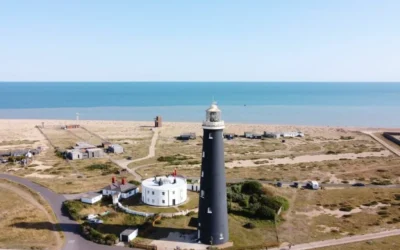
The Old Lighthouse at Dungeness
The Old Lighthouse at Dungeness: A Victorian Tower in Britain's Only Desert Dungeness is like nowhere else in Britain. A vast, flat headland of shingle — grey pebbles stretching to every horizon, sparse vegetation clinging to the stones, fishing boats drawn up on the...
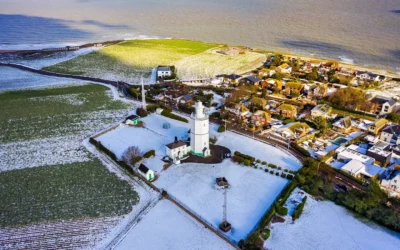
North Foreland Lighthouse
North Foreland Lighthouse: The Kent Beacon That Has Shone Since 1499 The Goodwin Sands lie seven miles offshore from the chalk cliffs of North Foreland, and they have been doing what they do for centuries: appearing and disappearing with the tides, drawing ships onto...
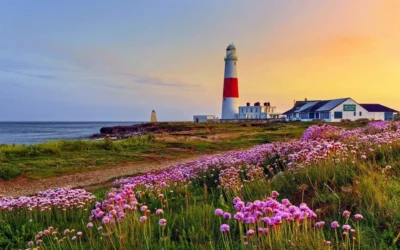
Portland Bill Lighthouse
Portland Bill Lighthouse: Red Stripes Above the Channel's Most Dangerous Race At the very tip of the Isle of Portland — a great block of Jurassic limestone connected to the Dorset mainland only by the eighteen-mile sweep of Chesil Beach — a red and white striped tower...
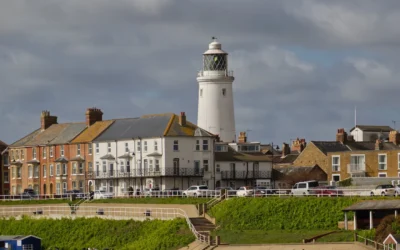
Southwold Lighthouse
Southwold Lighthouse: The Beacon at the Heart of a Suffolk Town Most lighthouses stand alone — on a cliff, a headland, a remote point of land where the sea has the upper hand. Southwold Lighthouse stands in the middle of a town. Walk along any of the streets radiating...
Cromer Lighthouse
Cromer Lighthouse: Standing 84 Metres Above the North Sea on the Cromer Ridge There is something quietly astonishing about the numbers at Cromer Lighthouse. The tower itself stands 18 metres tall — modest by lighthouse standards. Yet the light it projects sits 84...