
Science Museum London
Science Museum London | Everything You Need to Know
In South Kensington, surrounded by some of the greatest museums in the world, there is a building that contains — among its 300,000 objects — a genuine Apollo 10 command module, one of the machines that took human beings to the Moon and brought them back again. It also contains Stephenson’s Rocket, the locomotive that effectively launched the railway age; the world’s first jet engine; Crick and Watson’s original model of the DNA double helix; and an interactive gallery where children can slide down friction slides and conduct live science experiments.
The Science Museum was founded in 1857 and has been a cornerstone of London’s cultural landscape ever since. Its permanent collection spans the entire story of human innovation in science, technology, engineering and mathematics, from the Industrial Revolution to the space age to the frontiers of biotechnology. The best part: general admission is completely free. The IMAX cinema, Wonderlab and a handful of special exhibitions carry their own charges, but the permanent collection — which most visitors could spend days in — costs nothing. This guide covers everything you need to know before you go.
Where Is the Science Museum London?
The Science Museum is located at Exhibition Road, South Kensington, London SW7 2DD, in the heart of London’s “Albertopolis” cultural district. It sits directly alongside the Natural History Museum and a short walk from the Victoria and Albert Museum — three of the world’s great institutions within a few minutes’ walk of each other.
The nearest Tube station is South Kensington (a five-minute walk), and the cluster of museums makes this one of London’s most rewarding days out even if you only explore the area’s free attractions.
Opening Hours
The Science Museum is open daily from 10:00 AM to 6:00 PM, with last entry at 5:15 PM. Galleries begin closing 30 minutes before the museum shuts. The museum is closed on 24, 25 and 26 December.
Individual galleries and paid experiences (IMAX, Wonderlab) keep their own schedules within these hours and may occasionally close for maintenance. As access to specific galleries can vary, it’s worth checking the official website before visiting.
How to Get to the Science Museum London
By Underground. South Kensington station (District, Circle and Piccadilly lines) is a five-minute walk via a pedestrian subway from the station concourse directly to Exhibition Road. This is the easiest and most recommended option.
By bus. Routes 14, 74, 360, 414 and C1 stop on or near Exhibition Road.
By bike. Santander Cycles docking stations are on Exhibition Road and Thurloe Place. Folding bicycles can be stored in the museum’s cloakroom for a small fee.
On foot. A pleasant twenty-to-twenty-five-minute walk from Hyde Park or Kensington Gardens.
By car. No on-site parking is available. Street parking in the area is very limited — public transport is strongly recommended.
Compare Transfers & Local Transport in London →
The Best Time to Visit
The Science Museum is a year-round destination — as an entirely indoor museum, the weather is irrelevant and it’s particularly excellent on a rainy day. Spring (March to May) and autumn (September to November) offer quieter weekdays compared to the summer school holiday peak. Summer (June to August) is the busiest season, especially in the interactive galleries like Wonderlab. Winter (December to February) is the quietest period, with the Christmas closure (24–26 December) the only days to avoid.
For any season, arriving at 10:00 AM on a weekday is the calmest strategy. Select Fridays feature late-night openings until 10:00 PM — a genuinely atmospheric time to visit, with far fewer visitors than during the day. Check the official what’s on page for current late openings, special exhibitions and science show schedules.
Tickets and Costs
General admission to the Science Museum’s permanent collection is completely free. A free timed ticket should be pre-booked online before your visit.
Special experiences carry additional charges:
| Experience | Adult | Child (3–16) | Notes |
|---|---|---|---|
| General Admission | Free | Free | Pre-book online |
| Wonderlab: The Equinor Gallery | £11 | £9 | Interactive science gallery |
| IMAX Cinema | £12 | £8 | 3D documentary films |
Concessions for paid experiences are available for students, seniors and disabled visitors with valid ID. Science Museum memberships offer priority access and discounts across paid experiences. As prices are reviewed periodically, check the official website for current rates before booking.
What to Expect
The Science Museum spans multiple floors and contains objects that reward slow, attentive looking as well as energetic hands-on exploration.
Exploring Space is the gallery that tends to stop visitors in their tracks first — walk under real rockets, including the Apollo 10 command module (which actually flew to the Moon and back in 1969), and trace the history of space exploration from Sputnik to the International Space Station. The scale and the reality of these objects — not replicas but the actual machines — is genuinely affecting.
The Making the Modern World gallery on the ground floor is a survey of the most significant objects of the industrial and technological age — Stephenson’s Rocket, the Ford Model T, early computers, the Apollo 10 capsule itself. It is a room that captures 200 years of human ingenuity in a single glance.
Browse South Kensington Tours & Experiences →
The Medicine: The Wellcome Galleries covers five floors of medical history — surgical instruments, prosthetics, anatomical models, the story of vaccines, the history of birth and death — with volunteer-led tours that add real depth for visitors who want to linger.
Wonderlab: The Equinor Gallery (additional charge) is the museum’s interactive science space — live demonstrations, friction slides, hands-on experiments, and a high-wire bicycle — designed for families but genuinely engaging for adults too. The IMAX: The Ronson Theatre screens 3D documentary films on science, space and the natural world. Check the schedule for current screenings on the official website.
The museum also runs a regular programme of temporary exhibitions, science shows and family activities throughout the year — check the official what’s on page for what’s current during your visit.
Facilities include the Energy Café, Diner and Shake Bar, a gift shop with science-themed souvenirs, accessible restrooms with a Changing Places facility, a cloakroom and free Wi-Fi.
A typical visit lasts two to three hours; families and enthusiasts can easily spend a full day.
Safety and Accessibility
Safety. The museum is a well-managed, family-friendly environment with staff and security present throughout. Children under 12 must be accompanied by an adult. Keep valuables secure in busy interactive galleries.
Accessibility. Ramps and lifts provide access to most galleries. Free wheelchair hire is available at the main entrance (first come, first served). Sensory maps and quiet spaces are available for neurodiverse visitors, and a dedicated Contemplation Room offers a calm retreat. Hearing loops are installed at information desks and in select galleries. Audio-described tours for blind or partially sighted visitors are available via the museum’s SoundCloud channel. Assistance dogs are welcome throughout.
Families. The museum is highly family-friendly, with Wonderlab and regular interactive science shows designed with children in mind. Under-3s enter free; children under 12 must be accompanied by an adult.
Where to Stay Near the Science Museum London
South Kensington is one of London’s most desirable areas — quiet, elegant Victorian streets, excellent transport links and three of the world’s greatest museums within walking distance.
A few areas worth considering:
- South Kensington & Brompton — the most immediate option, with the museum and the Natural History Museum on the doorstep. High quality but comes with a premium price.
- Earl’s Court & West Kensington — slightly west, more affordable, still excellent District line connections back to the museums.
- Chelsea & Fulham — south and east, characterful and well connected, with the Piccadilly line at South Kensington serving both.
South Kensington fills quickly in summer and at school holiday periods — booking ahead is advisable.
Find Hotels Near the Science Museum London →
A Brief History of the Science Museum London
The Science Museum’s origins lie in the collections assembled for the Great Exhibition of 1851 — Prince Albert’s ambitious showcase of Victorian industry and technology, held in the Crystal Palace in Hyde Park. The surplus objects were retained, and in 1857, under Bennet Woodcroft, a science collection was opened in South Kensington as part of the broader South Kensington Museum.
The science and art collections gradually separated — what is now the Victoria and Albert Museum taking the decorative arts, the Science Museum taking the technology and industry. The Science Museum formally became an independent institution on 26 June 1909. The current building, designed by Sir Richard Allison, opened in stages from 1919 to 1928, with the famous Children’s Gallery opening in 1931.
Today, as part of the Science Museum Group, it is one of the world’s pre-eminent science museums, with a network of sister institutions including the National Railway Museum in York and the Natural Science Museum in Manchester.
A detail that makes the collection uniquely vivid: when Watson and Crick built their model of the DNA double helix in Cambridge in 1953, they used the model to understand and demonstrate the structure of the molecule that carries hereditary information. That original model — the actual physical construction — is in the Science Museum. The object that first made the secret of life visible.
Nearby Attractions
South Kensington is extraordinary for its concentration of world-class free attractions within a few minutes’ walk.
| Attraction | Why Visit | Distance |
|---|---|---|
| Natural History Museum | Dinosaurs, the blue whale skeleton, an earth science gallery — one of the world’s great natural history collections | ~2-min walk |
| Victoria and Albert Museum | The world’s greatest museum of art and design — free entry | ~3-min walk |
| Hyde Park | One of London’s finest open spaces — Serpentine Gallery, boating, wide green space | ~10-min walk |
| Royal Albert Hall | The iconic circular concert hall, with regular tours and a year-round programme | ~5-min walk |
| Kensington Palace | Former home of Diana, Princess of Wales — State Apartments and gardens | ~15-min walk |
A natural day out: all three South Kensington museums — Natural History, Science and Victoria and Albert — in a single day, ending with a stroll through Hyde Park.
Explore London with a Multi-Attraction Pass →
Practical Tips for Your Visit
- Pre-book your free ticket. Timed entry tickets are required and free — book online before your visit to skip the queue.
- Arrive at 10:00 AM. The museum in the first hour is noticeably calmer than mid-morning.
- Wear comfortable walking shoes. Multiple floors of extensive galleries require solid footwear.
- Overseas visitor? The UK uses Type G plugs — a UK travel adapter is essential for charging your devices.
- Book Wonderlab and IMAX separately. Both carry additional charges and book up — reserve in advance if you plan to include them.
- Check the late-night openings. Select Fridays, the museum stays open until 10:00 PM — a uniquely atmospheric way to experience it.
- Photography is permitted in most areas. Some special exhibitions may have specific restrictions.
Frequently Asked Questions
What are the opening hours of the Science Museum London?
Daily from 10:00 AM to 6:00 PM, with last entry at 5:15 PM. Closed 24–26 December. Some galleries close 30 minutes before the museum. Check the official website for any variations.
How much does it cost to visit the Science Museum London?
General admission to the permanent collection is free, with a pre-booked timed ticket. Wonderlab costs around £11 for adults; IMAX around £12. Check the official website for current rates.
Is the Science Museum London suitable for children?
Yes — it’s one of London’s best family attractions. Wonderlab, science shows and interactive galleries are designed with children in mind. Children under 12 must be accompanied by an adult.
Are there any discounts available for the Science Museum London?
General admission is free. Concessions on paid experiences are available for students, seniors and disabled visitors. Membership offers discounts and priority access.
How long does a visit to the Science Museum London take?
A typical visit lasts two to three hours. Families and enthusiasts, especially with Wonderlab and the IMAX, can easily spend a full day.
Is photography allowed at the Science Museum London?
Yes — personal photography is welcome in most areas. Some special exhibitions may have restrictions.
Are there guided tours available at the Science Museum London?
Yes — volunteer-led tours of the Medicine: Wellcome Galleries and other areas are available. Science shows run regularly in the main galleries. Check the official what’s on page for current schedules.
What’s the best way to get to the Science Museum from the city centre?
Take the Tube to South Kensington (District, Circle or Piccadilly lines), then walk five minutes along the pedestrian subway from the station to Exhibition Road.
Is the Science Museum London wheelchair accessible?
Yes — ramps and lifts access most galleries, free wheelchair hire is available, and sensory maps and quiet spaces are provided. A Changing Places accessible facility is in the basement.
Are there dining options near the Science Museum London?
The Energy Café, Diner and Shake Bar are on-site. South Kensington has numerous cafés and restaurants within a short walk.

Dartmoor National Park
Dartmoor National Park | Everything You Need to Know In the heart of Devon, a landscape rises out of the surrounding farmland that feels genuinely ancient — a high, open plateau of granite moorland crossed by rushing rivers, dotted with strange rock formations and...
Tate Modern London
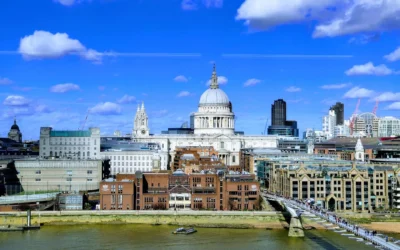
Tate Modern London | Everything You Need to Know On the south bank of the Thames, facing St Paul's Cathedral across the river, stands a former power station that was decommissioned in 1981 and reopened in 2000 as one of the most visited art museums in the world. Tate...

Trafalgar Square London
Trafalgar Square London | Everything You Need to Know At the centre of London — quite literally, since distances from the city have historically been measured from Charing Cross at its edge — there is a square that has been in continuous public life since the 1200s...

Blenheim Palace
Blenheim Palace Oxfordshire | Everything You Need to Know In 1704, the Duke of Marlborough won a battle near the Bavarian village of Blindheim and changed the course of European history. A grateful nation gave him something extraordinary in return: a palace. Not a...
Hampton Court Palace
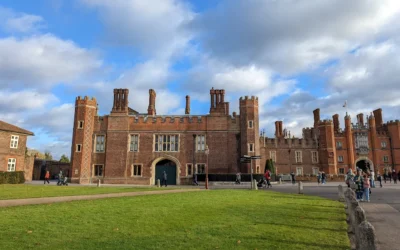
Hampton Court Palace | Everything You Need to Know Twelve miles south-west of central London, on the north bank of the Thames, stands a palace that encompasses the entire drama of Tudor England. Cardinal Wolsey built it. Henry VIII took it — and expanded it, feasted...