
Pendeen Lighthouse
Pendeen Lighthouse: A Wild Atlantic Beacon on Cornwall’s Mining Coast
On a granite headland at the far western edge of Cornwall, where the Atlantic crashes against some of the most dramatic cliffs in Britain, Pendeen Lighthouse — known locally as Pendeen Watch — has stood guard since 1900. This is a coast of raw, elemental beauty: sheer cliffs, hidden sandy coves, and the wild ocean rolling in from thousands of miles of open water. It is also a coast steeped in history, for the ground around Pendeen is dotted with the engine houses and shafts of Cornwall’s ancient tin-mining industry, a UNESCO World Heritage landscape unlike anywhere else on earth.
Pendeen sits just six miles north of Land’s End and two miles from the town of St Just, within both a Site of Special Scientific Interest and an Area of Outstanding Natural Beauty. It remains a working lighthouse, automated since 1995, and while the tower itself is not open for tours, the real draw is the chance to stay in one of its two former keepers’ cottages, with the Atlantic filling the windows and the South West Coast Path at the door. This guide covers everything you need to know about visiting and staying at Pendeen.
Where Is Pendeen Lighthouse?
Pendeen Lighthouse stands on a granite headland on the west coast of Cornwall, in the village of Pendeen, approximately six miles north of Land’s End and two miles from the town of St Just. It is easily reached by road, with parking available nearby.
The setting is classic far-west Cornwall: dramatic cliffs, sandy coves, the vast Atlantic, and the haunting remains of the region’s historic mining landscape all around. The South West Coast Path runs directly around the headland, linking the lighthouse to some of Cornwall’s oldest mining areas. Public transport to this remote corner is limited, so driving is recommended.
A Brief History of Pendeen Lighthouse
Pendeen Lighthouse was built in 1900 under the direction of Sir Thomas Matthews, the engineer-in-chief of Trinity House, and first lit in the same year. Its purpose was the age-old one of this coast: to guide ships safely past a shoreline notorious for shipwrecks, where the Atlantic and the unforgiving granite cliffs had claimed countless vessels over the centuries. The headland on which it stands had long been known as Pendeen Watch, a lookout point over dangerous waters.
The lighthouse was electrified in 1926 and fully automated in 1995, when the last keepers left and their cottages passed into new use. Its fog signal, originally driven by compressed air and later replaced by an electric signal, was finally discontinued in 2014. Throughout its working life, Pendeen has been bound up with the life of the local community — the keepers and their families were part of the fabric of this remote mining and fishing district.
The remarkable thing about Pendeen lies in the engineering of its light. The great lens mechanism that projects the beam weighs around 2.5 tonnes — yet it was designed to rotate with almost no effort at all, because the entire assembly floats in a bath of liquid mercury. The mercury bears the weight and lets the heavy optic turn smoothly and continuously through the night, a beautifully ingenious solution that allowed the massive lens to be moved with the lightest of touches.
Architecture & The Light
Pendeen is a classic early-20th-century lighthouse: a white-painted tower with a lantern room and gallery at the top, built low and solid to withstand the full force of Atlantic gales on this exposed headland. The clean, functional lines are characteristic of the lighthouses Trinity House built around 1900, combining practical strength with a quiet elegance against the cliffs and sky.
The light was originally produced by a five-wick Argand lamp, modernised to an electric lamp in 1926. The optical mechanism is the lighthouse’s engineering masterpiece: a 2.5-tonne lens assembly that floats on a bath of liquid mercury, allowing the heavy optic to rotate smoothly and continuously with minimal friction. The fog signal — once a vital warning in the frequent Atlantic mists — was powered by compressed air, later by electricity, and was discontinued in 2014. The lighthouse remains automated and operational, still guiding shipping along this perilous stretch of the Cornish coast.
Visiting the Lighthouse
Pendeen is, first and foremost, a place to stay rather than tour. The lighthouse tower itself is not open for public climbing or guided tours — but this does nothing to diminish a visit, because the real experience here is the headland, the coast and the cottages.
The lighthouse grounds and the surrounding clifftops are accessible at all times, and there is no admission fee to explore the area. The South West Coast Path runs right around the headland, offering some of the finest coastal walking in Cornwall, and the views of the lighthouse against the Atlantic — especially at sunset — are spectacular. Nearby, the Geevor Tin Mine and Levant Engine House open up the region’s extraordinary mining heritage, making Pendeen an excellent base for a few days of exploration on foot.
There is no fee to visit the grounds; only the cottage rentals carry a charge. For walkers and day visitors, Pendeen is a rewarding stop on the coast path at any time of year.
Staying at the Lighthouse
This is the heart of a Pendeen visit: the chance to stay in one of the two former lighthouse keepers’ cottages, Solebay and Argus, set right beside the working tower on its wild Atlantic headland. Originally home to the keepers and their families, these self-catering cottages combine genuine lighthouse history with comfortable modern living — spacious sitting and dining rooms, well-equipped kitchens, and stunning views out over the ocean and the lighthouse itself. To stay here is to have this dramatic headland, and its sunsets, almost to yourself once the day visitors have gone.
|
Cottage |
Sleeps |
Features |
|
Solebay |
Small group (2–6) |
Spacious living areas, Atlantic and lighthouse views, self-catering |
|
Argus |
Small group (2–6) |
Spacious living areas, coastal views, self-catering |
Some cottages are pet-friendly, allowing up to two well-behaved dogs, and a minimum two-night stay typically applies. As these are unique cottages in a remarkable location, they book up well ahead — reserving early is strongly advised, especially for summer and school holidays.
Find Lighthouse & Coastal Stays Near St Just →
The Best Time to Visit
Spring (March to May) brings clifftop wildflowers, returning seabirds and the clear light that makes the Atlantic views so spectacular, all before the summer holiday crowds arrive. Summer (June to August) offers the warmest weather, the longest days, the best chance of calm seas for spotting dolphins, and those legendary far-west sunsets over the ocean — but it is also the busiest time and the cottages book up earliest.
Autumn (September to November) is quieter, with dramatic Atlantic skies and wonderful light for photography, and is a fine time to walk the coast path and explore the mining heritage. Winter (December to February) is wild and elemental — Pendeen takes the full force of Atlantic storms — and while not for the faint-hearted, the coastline at this time of year is unforgettable for those who come prepared.
For the calmest experience, weekday visits outside the school holidays are best. This is an exposed Atlantic headland where the weather changes fast, so always check the forecast and dress for wind and rain.
How to Get There
By car. Strongly recommended. Pendeen is reached by road through the village of Pendeen, near St Just in far-west Cornwall, with parking available near the lighthouse. From Land’s End it is around six miles; from St Just, around two.
By public transport. Public transport to this remote western corner is limited. Buses serve St Just and the surrounding villages from Penzance, but services to Pendeen itself are infrequent — check local timetables carefully and allow plenty of time.
On foot. The South West Coast Path runs directly around the Pendeen headland, making the lighthouse a natural goal for walkers exploring this magnificent and historic stretch of coast. The terrain is rugged and the cliffs are steep, so wear proper footwear and keep well back from the edges.
Compare Transfers & Local Transport in Cornwall →
Wildlife & The Coast
The waters and cliffs around Pendeen are alive with wildlife. Grey seals haul out on the rocks and in the coves below, dolphins and porpoises pass offshore — most often seen on calm days — and the cliffs host nesting seabirds through the spring and summer breeding season. The wild Atlantic heathland behind the cliffs is rich in wildflowers and supports choughs, the red-billed crows that are the emblem of Cornwall.
A pair of binoculars for wildlife watching is well worth bringing — the headland is a superb vantage point for scanning the sea for seals and dolphins and the cliffs for seabirds. The South West Coast Path stretches away in both directions, past hidden coves like Portheras and on towards Cape Cornwall, inviting walkers to make a full day of this dramatic and unspoilt shore.
Nearby Attractions
Pendeen sits in the heart of Cornwall’s far-western mining country, a landscape of extraordinary natural and industrial heritage.
|
Attraction |
Why Visit |
Distance |
|
Geevor Tin Mine |
One of Cornwall’s largest preserved mines, now a fascinating heritage museum |
~1 mile |
|
Levant Engine House (NT) |
A restored beam engine on the cliffs, part of the UNESCO mining landscape |
~1 mile |
|
Cape Cornwall |
A dramatic headland near Land’s End, the only “cape” in England |
~3 miles |
|
Portheras Cove |
A beautiful, secluded sandy beach reached on foot |
~1 mile |
|
St Just |
The westernmost town in mainland Britain, with shops, cafés and local heritage |
~2 miles |
A natural day out: walk the coast path around the headland in the morning, explore Geevor Tin Mine and Levant in the afternoon, and return to the lighthouse for the Atlantic sunset.
Browse West Cornwall Tours & Boat Trips →
Safety & Accessibility
Safety. The cliffs around Pendeen are dramatic and dangerous — stay well back from the edges, keep to the marked paths, and supervise children closely at all times. This is an exposed Atlantic headland where the weather and sea can change very quickly; check the forecast and dress for wind and rain. The coastal terrain is rugged, so wear suitable footwear for any walking.
Accessibility. The lighthouse is accessible by road with parking nearby, and the cottages have ground-floor living. The lighthouse tower is not open to the public. The surrounding coastal paths are uneven and can be challenging, and the cliffs require particular care. Visitors with specific access needs should check with the booking agent before staying.
Families. The cottages are family-friendly and the headland and coves are wonderful for children to explore, but the cliffs and coastal paths demand constant supervision of younger children.
Practical Tips
- Book your cottage stay well ahead — there are only two, in a remarkable location, and they fill quickly in summer. Note the minimum two-night stay.
- Remember the tower is not open for tours — Pendeen is about the headland, the coast and the cottages, not a tower climb.
- Wear waterproof walking boots — the coast path and clifftops are uneven and often wet or slippery.
- Pack a waterproof walking jacket; this Atlantic headland is fully exposed and the weather turns quickly.
- Bring binoculars for the seals, dolphins and seabirds — the headland is an outstanding spot for wildlife-watching.
- Overseas visitor? The UK uses Type G plugs, so a UK travel adapter is essential for charging your devices.
- Travelling with a dog? Check whether your chosen cottage is among the pet-friendly options when booking.
- Allow time for the mining heritage at Geevor and Levant — it’s as remarkable as the coast itself.
Conclusion
Pendeen Lighthouse offers something increasingly rare: the chance to stay in a working lighthouse at the wild western edge of Britain, with the Atlantic on the doorstep, the South West Coast Path at the gate, and one of the world’s most extraordinary mining landscapes all around. You cannot climb its tower, but you can fall asleep beside it, wake to the ocean, and watch the sun sink into the Atlantic from your own clifftop cottage. For lovers of wild coast and deep history, few places in Cornwall leave such a lasting impression.
Frequently Asked Questions
What is the history of Pendeen Lighthouse?
Pendeen was built and first lit in 1900, under Trinity House engineer Sir Thomas Matthews, to guide ships past a dangerous coast. It was electrified in 1926 and automated in 1995.
Where is Pendeen Lighthouse located?
On a granite headland on the north coast of west Cornwall, near the village of Pendeen, about six miles north of Land’s End and two miles from St Just.
Can I visit Pendeen Lighthouse?
The grounds and surrounding clifftops are open at all times and free to explore, but the lighthouse tower is not open for public tours. The main draw is staying in one of the keepers’ cottages.
What are the opening hours of Pendeen Lighthouse?
The lighthouse grounds are accessible at all times. Cottage check-in and check-out times vary with your booking.
Is there an admission fee for Pendeen Lighthouse?
There is no fee to visit the grounds or walk the surrounding coast path. Only the cottage rentals carry a charge.
Can I climb to the top of Pendeen Lighthouse?
No — the lighthouse tower is not open for public climbing.
Can I stay overnight at Pendeen Lighthouse?
Yes. Two former keepers’ cottages, Solebay and Argus, are available as self-catering holiday accommodation. Booking well ahead is recommended, and a minimum two-night stay typically applies.
Is Pendeen Lighthouse suitable for families?
Yes — the cottages are family-friendly and the headland is wonderful to explore. The cliffs and coastal paths require constant supervision of young children.
What wildlife can I see near Pendeen Lighthouse?
Grey seals, dolphins and porpoises offshore, nesting seabirds on the cliffs, and choughs on the heathland, especially during the spring and summer breeding season. Bring binoculars.
What makes Pendeen Lighthouse unique?
Its wild Atlantic location near Land’s End, its setting amid Cornwall’s UNESCO mining landscape, its ingenious mercury-floated lens, and the chance to stay in authentic keepers’ cottages all set it apart.
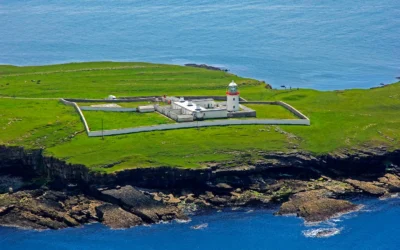
St John’s Point Lighthouse
St John's Point Lighthouse: The Yellow-Banded Giant of County Down In Van Morrison's song "Coney Island," the lighthouse at St John's Point is mentioned in a list of the things that make the Irish coast of County Down feel like home — somewhere between the Mourne...
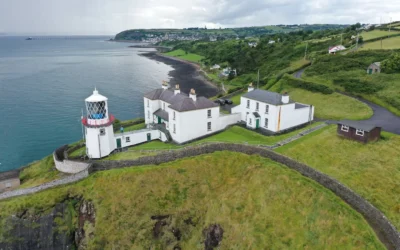
Blackhead Lighthouse
Blackhead Lighthouse: The Titanic Passed Here, and You Can Stay the Night In April 1912, RMS Titanic — built at Harland and Wolff's yards on Queen's Island in Belfast, launched in 1911 and fitted out over the following months — left Belfast Lough for the last time on...
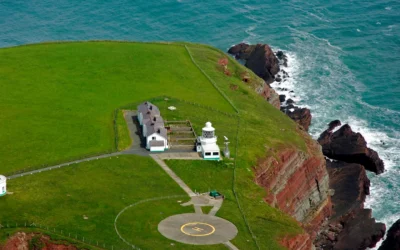
St Ann’s Head Lighthouse
St Ann's Head Lighthouse: The Last Shore-Based Light in Pembrokeshire, on the Tudor Coast In August 1485, a small fleet carrying Henry Tudor — exiled pretender to the English throne — rounded this headland and landed at Mill Bay, a sheltered cove just to the north of...
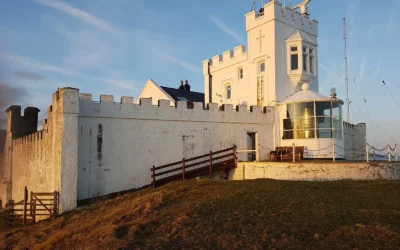
Point Lynas Lighthouse
Point Lynas Lighthouse: A Castle on the Cliffs of North Wales, Guiding Liverpool's Ships Since 1766 Most lighthouses are towers. Point Lynas is not. The lighthouse that stands on the rocky headland at the north-east corner of Anglesey is a low, castellated structure...
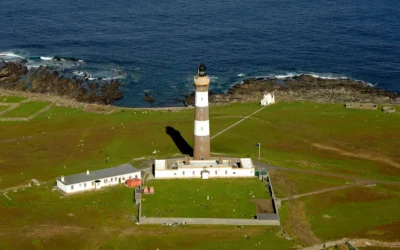
North Ronaldsay Lighthouse
North Ronaldsay Lighthouse: The UK's Tallest, Above the Island of the Seaweed Sheep Around the shoreline of North Ronaldsay — the northernmost and most isolated of the Orkney Islands — runs a drystone wall several miles long called the Sheep Dyke. Its purpose is...