
Laugharne Castle
Laugharne Castle: The "Brown as Owls" Fortress Where Dylan Thomas Found His Voice
Dylan Thomas called it "the brown as owls castle" — a phrase that tells you as much about the poet's way of seeing as it does about the castle itself. Thomas lived in Laugharne for much of his adult life, and the castle's summerhouse, tucked into the ornamental gardens overlooking the Taf estuary, was where he wrote Portrait of the Artist as a Young Dog, the semi-autobiographical collection of stories that established his voice.
The summerhouse is still there, and the estuary view from its window is unchanged. Few places in Wales carry both medieval history and literary legacy in quite this combination.
Laugharne Castle is a Norman fortress begun in 1116, rebuilt in stone by the de Brian family in the 13th century, transformed into a Tudor mansion by Sir John Perrot in the 1580s and ruined in the Civil War.
It has been a target for Welsh chieftains, a residence for an alleged son of Henry VIII, a prize in three Welsh wars, a place of inspiration for one of Wales's greatest poets, and the site of a memorial to one of Wales's greatest heroines. Important for planning: the castle is closed on Tuesdays and Wednesdays throughout the season. This guide covers everything you need to visit.
Where Is Laugharne Castle?
Laugharne Castle is in the town of Laugharne, Carmarthenshire, South Wales, on the estuary of the River Tâf, approximately 11 miles south-west of Carmarthen on the A4066. From St Clears, take the A4066 south to Laugharne. A pay-and-display car park is 300 metres from the castle, with limited spaces opposite the main entrance.
By public transport, trains from Cardiff reach Carmarthen (around 1 hour 20 minutes); from Carmarthen, bus route 222 serves Laugharne, stopping 100 metres from the castle. The castle is also on National Cycle Network Route 4.
A Brief History of Laugharne Castle
Laugharne Castle was established as a Norman stronghold in 1116 by Robert Courtemain, occupying a defensive position on the Taf estuary as part of the chain of Norman coastal castles that stretched from Chepstow to Pembroke. Its strategic location made it a repeated target for Welsh resistance. In 1189, Lord Rhys — the most powerful Welsh leader of his generation — seized and largely destroyed the castle. In 1215, Llywelyn the Great captured it during his campaign across South Wales. In 1257, Llywelyn ap Gruffudd attacked again, capturing the castle's lord, Guy de Brian.
The de Brian family rebuilt Laugharne in stone through the mid-13th century, creating the robust two-tower structure that still defines the site. The castle's last medieval crisis came during Owain Glyndŵr's rebellion: in 1403, a Welsh ambush dealt a significant blow to English forces near Laugharne.
The most colourful episode came in 1584, when Queen Elizabeth I granted the castle to Sir John Perrot, who was widely rumoured — though never confirmed — to be an illegitimate son of Henry VIII. Perrot found a dilapidated medieval ruin and transformed it comprehensively: he added a grand Tudor mansion, with a magnificent hall whose large windows looked directly over the Taf estuary. His ambitions, however, outran his judgement. Convicted of high treason in 1592, he died in the Tower of London — reportedly poisoned just as a royal pardon was being considered.
During the Civil War, the castle changed hands twice before Parliamentary forces captured it in 1644 and left it as the ruin that subsequent centuries, and Dylan Thomas, would come to love.
The remarkable thing about Laugharne Castle is the completeness of the story it contains: a Norman fort, a Welsh prize, a Tudor mansion, a poet's retreat, a heroine's memorial. Few castle ruins in Wales carry so many separate threads.
Architecture & Design
The two massive medieval stone towers are the dominant surviving elements of the 13th-century de Brian reconstruction, their thick walls and defensive form contrasting with the Tudor additions that fill the space between them. Sir John Perrot's grand hall is still readable in the ruins — the large, gaping window openings that look out over the estuary speak to the Tudor shift from military fortress to domestic mansion, letting light and views into spaces that medieval builders would have kept closed and dark.
The gatehouse retains evidence of the chambers that flanked the original entrance. The 19th-century ornamental gardens around the ruins add a quality of cultivated beauty that softens the ruined fabric — the combination of medieval towers, Tudor window-gaps, and well-maintained garden is distinctive and very pleasant to walk through. The summerhouse in the gardens, where Dylan Thomas wrote, is a separate small structure with a view over the estuary that explains exactly why he chose it.
Legends & Lore
Laugharne Castle carries no established ghost tradition, but its cultural and historical lore is substantial. The most resonant literary connection is Dylan Thomas: his phrase "the brown as owls castle" captures the colour of the stone and the quality of the light on the Taf estuary at dusk. The summerhouse in the gardens — where he wrote and from where he could look out over the water — is the most-visited specific location in the castle grounds for those who come for Thomas rather than for the medieval history.
A memorial at the castle commemorates Gwenllian, one of Wales's most celebrated heroines. In 1136, she led a Welsh army against the Marcher lord Maurice de Londres in a nearby battle — a remarkable episode of female military leadership in medieval Wales. Despite her courage, she was captured and beheaded. The memorial at Laugharne gives her a presence in a landscape closely associated with Welsh resistance to Norman rule.
Sir John Perrot's story — the rumoured royal son, the grand mansion, the treason conviction, the Tower, the death possibly by poison as a pardon was being arranged — is the castle's most dramatic human tale. True or not, the rumour of his parentage followed him through his life and death.
Visiting the Castle
Laugharne Castle is managed by Cadw and is open from spring to late autumn. The castle is closed on Tuesdays and Wednesdays throughout the season. Cadw members enter free.
The visit is self-guided, with an on-site exhibition covering the castle's history from Norman origins through Tudor transformation and Dylan Thomas's connection. The ruins of the two medieval towers, the Tudor hall windows and the gatehouse can all be explored. One tower is accessible for climbing, with views across the Taf estuary from the top. The ornamental gardens are pleasant to walk through in all weathers, and the summerhouse is a specific highlight for Thomas enthusiasts.
There is no café on site. Picnic areas in the gardens are provided and the estuary views make them an excellent choice — bring your own food and allow time to sit in the gardens. Laugharne town, a short walk away, has cafés and restaurants. There is a gift shop.
Dogs on short leads are welcome on the ground floor.
Photography is permitted for personal use; drones require prior permission from Cadw.
Check Tickets & Tour Times for Laugharne Castle →
For current opening hours and prices, check the official Cadw website before your visit — and confirm the castle is open on your chosen day, as it is closed on Tuesdays and Wednesdays.
Where to Stay Near Laugharne Castle
Laugharne town has a small selection of guesthouses and self-catering accommodation. Carmarthen, 11 miles north-east, is the most convenient larger town with a wider range of hotels and direct rail access.
Find Hotels & Stays in Laugharne →
The Best Time to Visit
Spring (April to June) is excellent for Laugharne — the ornamental gardens are coming into bloom, the estuary views are clear and the castle is uncrowded. The light on the Taf estuary in late spring and early summer is exactly the light that Dylan Thomas wrote about.
Summer (July to August) is the busiest period, with the gardens at their best. Autumn (September to October) brings quieter visits and autumn colour in the gardens. Note that the castle closes entirely from late autumn to late March, so plan accordingly.
How to Get There
By car. Take the A4066 from St Clears to Laugharne. A pay-and-display car park is 300 metres from the castle entrance.
By bus. From Carmarthen train station, bus route 222 serves Laugharne and stops 100 metres from the castle.
By train. Carmarthen is the nearest station (11 miles), with services from Cardiff (around 1 hour 20 minutes).
Compare Transfers & Local Transport in Carmarthenshire →
Nearby Attractions
Laugharne is at the heart of Dylan Thomas country and within easy reach of outstanding Carmarthenshire coast and heritage.
| Attraction | Why Visit | Distance |
|---|---|---|
| Dylan Thomas Boathouse (museum) | The former home of Dylan Thomas on the estuary edge, now a museum dedicated to his life and work — the essential companion to the castle | ~0.3 miles |
| Dylan's Walk | A waymarked trail through the town following the poet's routes, with estuary views and stops at key locations | Adjacent |
| Llansteffan Castle (Cadw) | A medieval fortress on a headland with dramatic views across Carmarthen Bay — another Norman coastal castle, strikingly positioned | ~5 miles |
| Pendine Sands | The vast beach where Malcolm Campbell and J.G. Parry-Thomas set world land speed records in the 1920s — one of the most historically significant beaches in Wales | ~8 miles |
| Kidwelly Castle (Cadw) | A well-preserved Norman castle in a town closely associated with the story of Gwenllian | ~15 miles |
A natural Carmarthenshire day pairs Laugharne Castle with the Dylan Thomas Boathouse and a walk along the estuary — all within a few hundred metres of each other.
Browse South Wales & Carmarthenshire Tours →
Family & Accessibility
Families. Laugharne is a pleasant and manageable castle for families. The scale is not overwhelming, the gardens give children space to explore, and the picnic areas are excellent. The Dylan Thomas connection gives older children and teenagers a cultural context. Dogs on short leads are welcome on the ground floor.
Accessibility. After the gatehouse, the castle has easy wheelchair and buggy access across most of the grounds, with a slight incline from the car park. One tower is accessible for walkers. Disabled visitors and one companion are admitted free. Check the Cadw accessibility guide for detailed information.
Practical Tips
- Check the opening days before travelling — the castle is closed on Tuesdays and Wednesdays and does not open in winter. Verify on the Cadw website before you go.
- Wear comfortable walking shoes — the castle grounds involve some uneven surfaces.
- No café on site — bring a packed lunch for the picnic areas in the ornamental gardens.
- Pack a compact travel umbrella; Carmarthenshire weather is changeable and much of the site is outdoors.
- Bring a portable power bank for photography across the estuary views and the gardens.
- Visit the Dylan Thomas Boathouse after the castle — the two together make the fullest account of Thomas's Laugharne.
- Overseas visitor? Pack a UK travel adapter for Type G plugs.
Conclusion
Laugharne Castle has been seized by Lord Rhys, stormed by Llywelyn the Great, transformed by the rumoured son of Henry VIII and described as "brown as owls" by Dylan Thomas. The summerhouse where Thomas wrote still stands in the ornamental gardens above the Taf estuary, and the estuary view from its window has not changed.
It is a castle with more human stories attached to it than most — Norman, Welsh, Tudor, literary, heroic — and the gardens in which it sits are among the most pleasant at any ruined castle in South Wales. Remember to avoid Tuesdays and Wednesdays.
Frequently Asked Questions
What are the opening hours of Laugharne Castle?
The castle is open from spring to late autumn (broadly April to November), daily except Tuesdays and Wednesdays, from 10am to 5pm. It is closed entirely in winter. Always check the Cadw website for exact dates and any changes before travelling.
How much does it cost to visit Laugharne Castle?
Admission fees vary by age; Cadw members and disabled visitors with one companion enter free. Check the Cadw website for current prices.
Why is Laugharne Castle associated with Dylan Thomas?
Dylan Thomas lived in Laugharne for much of his life and used the castle's summerhouse as a writing retreat, where he wrote Portrait of the Artist as a Young Dog. He described the castle as "the brown as owls castle" in his writing.
Is the castle closed on certain days?
Yes — Laugharne Castle is closed on Tuesdays and Wednesdays throughout the open season, and is closed entirely from late autumn to late March. Check the Cadw website before visiting.
Is there a café at Laugharne Castle?
No — there is no café on site. Picnic tables are provided in the gardens. Laugharne town, a short walk away, has cafés and restaurants.
Are dogs allowed at Laugharne Castle?
Dogs on short leads are welcome on the ground floor of the castle.
Who was Sir John Perrot?
Sir John Perrot was a prominent Elizabethan figure who received the castle from Queen Elizabeth I in 1584. He transformed the ruined medieval fortress into a grand Tudor mansion. He was widely rumoured to be an illegitimate son of Henry VIII. Convicted of high treason, he died in the Tower of London in 1592.
Is Laugharne Castle wheelchair accessible?
The castle has easy wheelchair and buggy access across most of the grounds after the gatehouse, with a slight incline from the car park. Disabled visitors and one companion enter free. Check the Cadw accessibility guide for detail.
How do I get to Laugharne Castle?
By car on the A4066 from St Clears, with a pay-and-display car park 300 metres away. By train to Carmarthen (11 miles), then bus route 222 to Laugharne.
Can I take photos at Laugharne Castle?
Photography for personal use is permitted throughout. Drones require prior permission from Cadw.
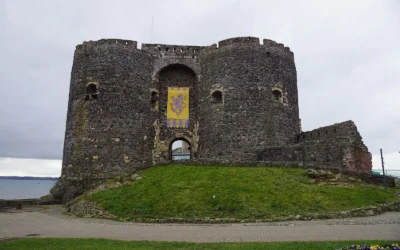
Carrickfergus Castle
Carrickfergus Castle: Ireland's Greatest Norman Fortress, Above Belfast Lough In 1315, Robert the Bruce's brother Edward invaded Ireland with an army and besieged Carrickfergus Castle. The siege went on so long, and provisions ran so completely dry, that the...
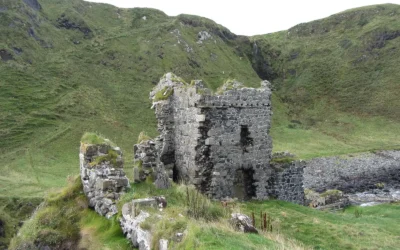
Kinbane Castle
Kinbane Castle: The White Head Castle at the End of 140 Steps, Above the Atlantic Kinbane means "white head" in Irish — Caisleán Ceinn Bán — and the name is immediately clear to anyone who looks at the limestone headland on which the castle stands: the cliff...
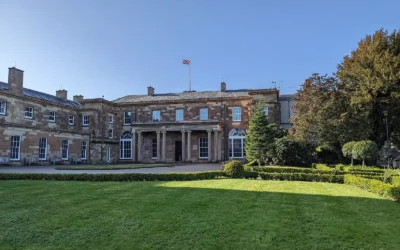
Hillsborough Castle
Hillsborough Castle: Where Northern Ireland's Peace Was Made, Twenty Minutes from Belfast In 1771, Wills Hill — the first Marquess of Downshire, one of the most powerful men in British colonial politics — received Benjamin Franklin at Hillsborough Castle. The...
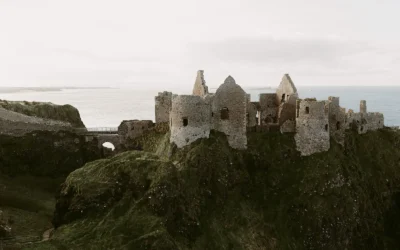
Dunluce Castle
Dunluce Castle: The Clifftop Ruin Where Game of Thrones Met Narnia, Above the Antrim Coast In 1588, a Spanish Armada ship called the Girona wrecked on the rocks near Dunluce Castle. The MacDonnell clan — who had controlled the castle since the 1550s — salvaged the...
Craig y Nos Castle
Craig y Nos Castle: The Victorian Opera Star Who Built Her Own Theatre in the Brecon Beacons Adelina Patti was the most celebrated opera singer of the Victorian era — a soprano who commanded the largest fees in the world and whose voice filled La Scala in Milan,...