
Lancaster Castle
Lancaster Castle: The Pendle Witch Trials, a Working Court and a Thousand Years Above the Lune
In the summer of 1612, twenty people from the Pendle Forest area of Lancashire were brought to Lancaster Castle to stand trial for witchcraft. Nineteen were tried at the Assizes held in the castle's courtroom. Ten were hanged. The Pendle Witch Trials are among the most thoroughly documented witch trials in English history, and they took place here, in rooms that visitors can still stand in today.
The cases were recorded in detail by the court clerk Thomas Potts, whose pamphlet The Wonderfull Discoverie of Witches in the County of Lancaster was published the following year and became one of the most widely read documents of the 17th century.
Lancaster Castle is still a working Crown Court. It is owned by the British Crown as part of the Duchy of Lancaster — the ancient medieval estate that has belonged to the sovereign since the 14th century — and leased to Lancashire County Council for its judicial function.
Visitors cannot wander freely through the building; they come on guided tours that lead them through a castle where the same rooms that heard the cases of the Pendle witches still hear cases today. The combination of medieval fortress, infamous trial venue, former prison and functioning courthouse is unique in England, and the guided tour is one of the most unusual castle experiences in the country. This guide covers everything you need to plan your visit.
Where Is Lancaster Castle?
Lancaster Castle is on Castle Hill in the centre of Lancaster, the county town of Lancashire, overlooking the River Lune and the surrounding hillside. Lancaster railway station, on the West Coast Mainline with direct services to London, Glasgow and Manchester, is a five-minute walk from the city centre and an easy walk to the castle.
By car, exit the M6 at Junction 34 and follow signs for Lancaster city centre, then for the castle. Limited parking is available on Castle Hill and at nearby paid car parks.
A Brief History of Lancaster Castle
The castle's origins reach back over a thousand years, possibly to a Roman fort on this hilltop above the Lune; the Roman presence in Lancaster is documented, and the hilltop position that commands the river crossing would have been equally valuable in the Roman period.
The castle as a medieval structure dates from the 11th century, and in 1164 it came under royal control as part of the Honour of Lancaster. The John o'Gaunt Gate — the castle's grand entrance — is named after John of Gaunt, Duke of Lancaster, the extraordinarily powerful medieval nobleman who was the father of Henry IV and whose Duchy of Lancaster survives today as a private estate of the Crown.
The castle's role as a prison began as early as 1196, and over the centuries it became one of the most significant judicial and penal institutions in the north of England. In 1612, it was the setting for the Pendle Witch Trials — the most famous witchcraft prosecution in English history, in which twenty people from the Pendle Forest area were accused, nineteen tried and ten hanged.
The trials are among the best-documented of the era, recorded in meticulous detail by Thomas Potts in his contemporaneous account. The castle was besieged during the English Civil War, served as a garrison and a prison through the following centuries, and was HM Prison Lancaster until 2011. Today it is a functioning Crown Court.
The remarkable thing about Lancaster Castle is how little the passage of time has changed its essential function. It was built to project royal authority over Lancashire. Eight centuries later, in the same rooms, that authority is still exercised — in the form of a Crown Court that sits to this day.
Architecture & Design
Lancaster Castle is one of the best-preserved castle complexes in north-west England. The Norman Keep, dating from around 1150, forms the castle's medieval core — a robust stone tower that has anchored the site through all its subsequent transformations. The John o'Gaunt Gate, one of the finest medieval gateways in Lancashire, makes an imposing entrance with its towers and heraldic stonework.
The Shire Hall is the castle's most remarkable interior space: a courtroom of real historical weight, still in use for Crown Court sittings, decorated with heraldic shields representing the Sovereigns and High Sheriffs of Lancashire over the centuries.
The former prison cells, preserved from the castle's time as HM Prison Lancaster (closed 2011), are among the most visceral spaces in the tour — small, austere and carrying the weight of the hundreds of people who passed through them. The Hanging Corner where public executions were carried out, and the drop room associated with them, add a darker dimension to the visit that the castle's guides handle with appropriate care.
Legends & Lore
Lancaster Castle's most famous historical chapter is also its darkest, and it belongs in the factual record rather than legend: the Pendle Witch Trials of 1612. The accused — mostly poor, mostly from connected families in the Pendle Forest — were tried over several days in the castle courtroom. Their confessions, which were extracted under pressure and often contradicted each other, were nevertheless accepted; ten people were hanged.
The trials were a product of the witch-hunting culture of their era, the particular tensions of rural Lancashire communities, and the judicial machinery of a state in which witchcraft was a capital offence. They are documented history, and the rooms in which they took place are the rooms in which visitors stand.
The castle's centuries as a prison have generated their own body of ghost stories. Visitors and staff have reported unexplained sounds and sensations in the former cells and passages, and the castle is regularly cited among Lancashire's most haunted buildings. These stories are told as atmosphere and folklore rather than as documented fact — but in a building of this weight of occupation and this kind of history, atmosphere is genuine and earned.
Visiting the Castle
Important: Lancaster Castle is only accessible on guided tours. Visitors cannot enter the interior independently — all access to the castle's rooms, including the Shire Hall, the former prison cells and the Hanging Corner, is through guided tours that run throughout the day. Tours typically last around 75 minutes and are comprehensive; booking in advance is recommended, particularly for groups and at peak times. Check the official website for current tour times, as court sittings occasionally affect availability.
The guided tour covers the castle's roles as a fortress, court and prison, moving through spaces that range from the medieval John o'Gaunt Gate to the Victorian-era courtroom and the cells closed only in 2011. The experience is unusual among castle visits — this is not a static museum but a building still in active use, and the tour reflects that.
An on-site café serves refreshments, and a gift shop offers souvenirs and books related to the castle's history. Photography is permitted for personal use; professional photography requires prior permission.
Check Tickets & Tour Times for Lancaster Castle →
Check the official Lancaster Castle website for current tour times, prices and availability before you travel.
Where to Stay Near Lancaster Castle
Lancaster Castle does not offer visitor accommodation. Lancaster city centre, immediately below the castle, has a range of hotels, guesthouses and bed and breakfasts, and the city is easy to explore on foot. The wider Lancashire countryside — the Forest of Bowland to the east, the Lune Valley to the north — offers self-catering options for those wanting to explore the area more deeply.
Lancaster's West Coast Mainline connections make it easily reached as a day trip from Manchester, Leeds or Liverpool; staying in Lancaster allows more time to explore the city's Roman heritage, the maritime museum and the Morecambe Bay coastline.
Find Hotels & Stays in Lancaster →
The Best Time to Visit
Spring (April to June) and early autumn (September to October) are the best times to visit Lancaster Castle — the weather is generally pleasant, crowds are lighter than in summer and the guided tours run to their full programme. Summer (July and August) is busier but offers the widest range of seasonal events and the best conditions for exploring the wider Lancaster area and the Lancashire countryside.
The castle's function as a working court means that tour availability can occasionally be affected by court sittings — always check the official website before travelling to confirm tour times for your planned date.
How to Get There
By train. Lancaster is on the West Coast Mainline with direct services from London Euston (around 2 hours 20 minutes), Glasgow (around 1 hour 20 minutes) and Manchester Piccadilly (around 1 hour). Lancaster station is five minutes' walk from the city centre and an easy walk to the castle.
By car. Exit the M6 at Junction 34 and follow signs for Lancaster city centre. Limited parking is available on Castle Hill; additional paid parking is on Dallas Road and nearby city centre car parks.
On foot. The castle is at the top of the hill in the city centre — easily reachable on foot from Lancaster station and from any city centre car park.
Compare Transfers & Local Transport in Lancaster →
Nearby Attractions
Lancaster is a historically rich city with excellent attractions within easy reach.
| Attraction | Why Visit | Distance |
|---|---|---|
| Lancaster City Museum | Roman artefacts, local history and a strong collection tracing Lancaster from the legions to the 20th century | ~0.5 miles |
| Lancaster Maritime Museum | The history of Lancaster's 18th-century trade — one of England's most important slave-trade ports — in a fine Custom House building | ~0.5 miles |
| Williamson Park & Ashton Memorial | A grand Victorian park with the "Taj Mahal of the North" — the baroque Ashton Memorial — and sweeping views to the Lake District | ~1 mile |
| Morecambe Bay | One of England's most spectacular estuaries — vast, tidal, home to enormous flocks of wading birds | ~5 miles |
| Forest of Bowland AONB | A quiet, undervisited Area of Outstanding Natural Beauty — excellent walking and dramatic fellside scenery | ~15 miles |
A natural Lancashire day pairs Lancaster Castle with the Maritime Museum and a walk to Williamson Park for the views — one of the finest urban heritage days in the north of England.
Browse Lancaster & Lancashire Tours →
Family & Accessibility
Families. Lancaster Castle is a good family visit, particularly for older children interested in history, law or the famous Pendle Witch Trials. The guided tour format is engaging rather than self-directed, and the combination of medieval fortress, Victorian courtroom and former prison cells tends to capture attention. Younger children may find the tour's 75-minute duration challenging.
Accessibility. The castle is generally wheelchair accessible, with staff available to assist and accessible toilets near the gift shop. Some areas involve steps; contact the castle in advance to discuss specific requirements. Dogs other than assistance dogs are not permitted inside the castle.
Practical Tips
- Guided tours are the only way inside — you cannot enter the castle's interiors independently. Book in advance, particularly for summer weekends and group visits.
- Check for court sittings before you travel — the castle's status as a working court means tour availability can occasionally be affected. The official website shows current availability.
- Wear comfortable walking shoes — the castle involves steps and uneven surfaces.
- Bring a compact travel umbrella; the hilltop location is exposed to Lancashire weather.
- Bring a portable power bank for photos and the castle's multimedia content.
- Allow time for the Maritime Museum after your castle tour — Lancaster's 18th-century role in transatlantic trade is a significant and sobering complement to the castle's history.
- Photography is permitted for personal use; confirm with staff for any restrictions in specific areas.
- Overseas visitor? Pack a UK travel adapter for Type G plugs.
Conclusion
Lancaster Castle is the only castle in England that is simultaneously a medieval fortress, the site of England's most famous witch trials, a former prison closed only in 2011 and a functioning Crown Court today.
The Pendle Witch Trials of 1612 are documented history — ten people hanged in the castle's shadow, their cases recorded in meticulous detail, the rooms in which they were tried still standing. The John o'Gaunt Gate opens into a building where the past is not preserved but still in use. There is nowhere quite like it in the north of England.
Frequently Asked Questions
How do I visit Lancaster Castle?
Lancaster Castle is only accessible on guided tours — you cannot enter the interior independently. Tours run throughout the day and last around 75 minutes. Book in advance through the official website, as court sittings can occasionally affect availability.
What are the opening hours of Lancaster Castle?
The castle is generally open daily, with guided tours running from mid-morning. Check the official website for current times, as court sittings may affect specific tour slots.
How much does it cost to visit Lancaster Castle?
Admission covers a guided tour; prices vary by age, with concession rates available. Check the official website for current prices.
What were the Pendle Witch Trials?
In 1612, twenty people from the Pendle Forest area of Lancashire were accused of witchcraft, brought to Lancaster Castle for trial and ten were hanged. The trials are among the most thoroughly documented in English history, recorded in detail by Thomas Potts in his 1613 account.
Is Lancaster Castle still a working court?
Yes — Lancaster Castle is a functioning Crown Court, owned by the Crown as part of the Duchy of Lancaster and leased to Lancashire County Council. Court sittings continue in the historic Shire Hall, which visitors see on the tour.
Is Lancaster Castle suitable for children?
The guided tour works well for older children and teenagers, particularly those with an interest in history, law or the Pendle Witch Trials. The tour lasts around 75 minutes, which may be challenging for younger children.
Is Lancaster Castle wheelchair accessible?
The castle is generally wheelchair accessible, with staff available to assist. Some areas involve steps. Contact the castle in advance to discuss specific requirements.
Is there food at Lancaster Castle?
An on-site café provides refreshments. Food and drink are not permitted inside during tours.
Are dogs allowed at Lancaster Castle?
Assistance dogs are welcome inside. Other dogs are not permitted in the castle's interior.
Can I take photos at Lancaster Castle?
Personal photography is permitted throughout the tour. Professional photography or videography requires prior permission from the castle management.
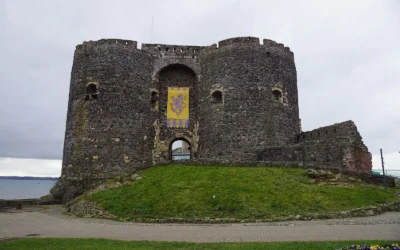
Carrickfergus Castle
Carrickfergus Castle: Ireland's Greatest Norman Fortress, Above Belfast Lough In 1315, Robert the Bruce's brother Edward invaded Ireland with an army and besieged Carrickfergus Castle. The siege went on so long, and provisions ran so completely dry, that the...
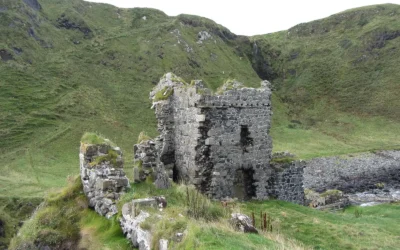
Kinbane Castle
Kinbane Castle: The White Head Castle at the End of 140 Steps, Above the Atlantic Kinbane means "white head" in Irish — Caisleán Ceinn Bán — and the name is immediately clear to anyone who looks at the limestone headland on which the castle stands: the cliff...
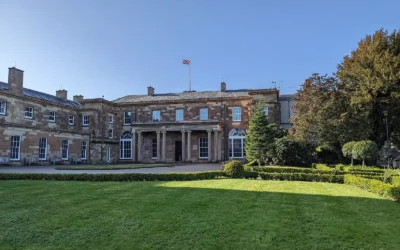
Hillsborough Castle
Hillsborough Castle: Where Northern Ireland's Peace Was Made, Twenty Minutes from Belfast In 1771, Wills Hill — the first Marquess of Downshire, one of the most powerful men in British colonial politics — received Benjamin Franklin at Hillsborough Castle. The...
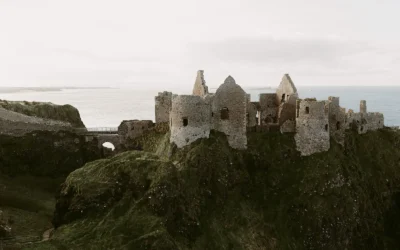
Dunluce Castle
Dunluce Castle: The Clifftop Ruin Where Game of Thrones Met Narnia, Above the Antrim Coast In 1588, a Spanish Armada ship called the Girona wrecked on the rocks near Dunluce Castle. The MacDonnell clan — who had controlled the castle since the 1550s — salvaged the...
Craig y Nos Castle
Craig y Nos Castle: The Victorian Opera Star Who Built Her Own Theatre in the Brecon Beacons Adelina Patti was the most celebrated opera singer of the Victorian era — a soprano who commanded the largest fees in the world and whose voice filled La Scala in Milan,...