
Hadrians Wall
Hadrians Wall | Everything You Need to Know
In AD 122, the Emperor Hadrian visited Britain and ordered the construction of a wall. It would stretch 73 miles from coast to coast across the narrowest point of northern England — from the River Tyne in the east to the Solway Firth in the west — marking the northern frontier of the Roman Empire. Around 15,000 Roman legionaries built it in approximately six years, cutting stone from local quarries, constructing forts every few miles and milecastles every Roman mile, and manning the whole extraordinary structure with soldiers drawn from across the empire: Gauls, Spaniards, Syrians, North Africans, all posted to the rain-swept hills of Northumberland.
Nearly two thousand years later, significant sections of Hadrian’s Wall still stand. Walking its ridge on a clear day, with the Northumberland hills rolling away to the north and Cumbria’s fells to the south, is one of the great experiences in British history — not just seeing the past, but standing in it. A UNESCO World Heritage Site since 1987, the largest Roman artefact in the world, and one of the most atmospheric ancient sites anywhere in Europe, it rewards every kind of visitor. This guide covers everything you need to know before you go.
Where Is Hadrian’s Wall?
Hadrian’s Wall stretches 73 miles across northern England, from Wallsend, Newcastle upon Tyne (NE28 7TQ) in the east to Bowness-on-Solway, Cumbria (CA7 5AF) in the west, passing through Northumberland, Tyne and Wear and Cumbria.
Rather than a single attraction, it is a landscape of sites. Key visitor destinations along the wall include:
- Housesteads Roman Fort — Bardon Mill, Hexham, NE47 6NN (the most visited section)
- Vindolanda — Bardon Mill, Hexham, NE47 7JN
- Chesters Roman Fort — near Chollerford
- Roman Army Museum — Greenhead, CA8 7JB
- Segedunum Roman Fort — Wallsend, NE28 6HR (eastern end)
Use any map app with the postcode of your chosen starting point. The B6318 Military Road runs parallel to much of the wall and is the main access route.
Opening Hours
The wall itself, as an outdoor landscape, can be walked 24 hours a day as a public right of way. Individual forts and museums keep their own hours, typically:
- Summer (April to October): 10:00 AM – 5:00 PM
- Winter (November to March): 10:00 AM – 4:00 PM (with some sites closing or reducing hours further)
The Roman Army Museum near Greenhead typically closes entirely in January and early February. As hours vary by site and season, always check the English Heritage and Vindolanda Trust websites before visiting.
How to Get to Hadrian’s Wall
By car. The most practical option for exploring multiple sites. From the A69, follow signs to individual sites — Housesteads is signposted off the B6318, around 5 miles north of Bardon Mill. Most major sites have car parks (fees typically around £3–£5). Sat-nav to individual postcodes works well; the B6318 is the main spine road.
By train and bus. Trains from Newcastle or Carlisle stop at Hexham (around 20 minutes from Housesteads) and Haltwhistle (around 15 minutes from Vindolanda). The AD122 Hadrian’s Wall bus connects key sites from both stations — it runs seasonally from spring to autumn; check current timetables at Hadrian’s Wall Country before travelling.
On foot. The Hadrian’s Wall Path is an 84-mile National Trail running the full length of the wall from coast to coast. Shorter sections near the main visitor sites offer excellent day walks without requiring the full trail.
By bike. Parts of the wall align with National Cycle Route 72, with bike racks at major sites.
Compare Transfers & Local Transport in Northumberland →
The Best Time to Visit
Late spring to early autumn (May to September) is the best period — longer daylight hours, milder weather and the most services running (including the AD122 bus). For fewer crowds, May, June and early September are preferable to the July–August peak.
Winter visits are possible, atmospheric and far quieter, but come with shorter opening hours, closures at some sites and the full force of Northumberland weather. The landscape in frost and low winter light can be spectacular, but preparation is essential.
For any visit, check the weather forecast carefully — the Northumberland hills are exposed, and conditions can change quickly.
Tickets and Costs
Walking the wall along the public footpath is completely free. Entry to the individual forts and museums requires separate tickets.
| Attraction | Adult | Child (5–17) | Notes |
|---|---|---|---|
| Housesteads Roman Fort | £10.50 | £6.30 | English Heritage members free |
| Vindolanda | £9.00 | £5.50 | Vindolanda Trust; active excavation site |
| Roman Army Museum | £7.50 | £4.50 | Closed in winter |
| Segedunum Roman Fort | £6.95 | Free | Eastern end, Wallsend |
| Vindolanda + Roman Army Museum | £14.50 | £8.00 | Combined ticket |
English Heritage and National Trust members enter Housesteads and other English Heritage sites free. As prices are reviewed periodically, check the official websites for current rates. Booking online in advance is recommended for busy periods.
Book Hadrian’s Wall Tours & Experiences →
What to Expect
Hadrian’s Wall is best approached as a landscape to explore rather than a single destination, and a day spent moving between sites rewards enormously.
The wall itself — the surviving sections of stone courses, up to three metres high in the best-preserved stretches — is most dramatically seen in the central section between Housesteads and Crag Lough, where the wall rides the ridge of the Whin Sill escarpment, the crags dropping sharply to the north. The views here are extraordinary.
Sycamore Gap is one of the most iconic spots on the wall — a natural dip in the ridge where a sycamore tree stood for over a century, becoming one of the most photographed trees in Britain. The tree was illegally felled by vandals in September 2023, in an act that provoked national outrage. The stump is still alive, with shoots regrowing from the base each year, and the gap itself remains a poignant and historically resonant place to visit. A “Trees of Hope” programme has seen saplings grown from the original tree planted across the UK.
Housesteads Roman Fort (Vercovicium) offers the most complete view of a Roman fort on the wall, with the foundations of barracks, granaries, a hospital and the famous latrine block clearly visible. The views from the north wall across open Northumberland are among the finest on the whole route.
Vindolanda, just south of the wall, is arguably the most historically fascinating site. An ongoing excavation — one of the most productive in Britain — regularly yields extraordinary finds. The Vindolanda tablets are its most celebrated treasure: thin slivers of wood bearing handwritten letters from Roman soldiers and their families, among the oldest surviving examples of handwriting in Britain. Birthday invitations, requests for socks and underpants (“I have sent you… socks from Sattua”), complaints about the weather — they make the garrison of Hadrian’s Wall intensely, unexpectedly human.
Chesters Roman Fort preserves one of the finest Roman bathhouses in Britain. The Roman Army Museum at Greenhead offers vivid, interactive exhibits on Roman military life.
A visit to a single site takes one to three hours; a full day across two or three sites is ideal. Facilities vary by site — Vindolanda has a café, gift shop and excellent museum; more remote sections of the wall have nothing.
Safety and Accessibility
Safety. This is a wild landscape in places. Wear sturdy footwear, carry water and snacks (facilities are sparse away from the main sites), be prepared for sudden weather changes and be aware that mobile signal can be weak. Do not climb on the wall itself — the stone is both fragile and potentially unstable.
Accessibility. Conditions vary considerably across 73 miles. The museums at Vindolanda and Segedunum are largely accessible, with ramps and mobility scooters available. Housesteads requires a steep walk from the car park (around 500 metres uphill) and is not suitable for standard wheelchairs, though accessible viewing is available. Check English Heritage and the Vindolanda Trust for site-specific accessibility details.
Families. The interactive museums at Vindolanda and the Roman Army Museum are genuinely engaging for children. The open landscape and the hands-on nature of an active excavation at Vindolanda make it a memorable family experience.
Where to Stay Near Hadrian’s Wall
Staying along the wall allows you to explore multiple sites at a relaxed pace — and the Northumberland countryside is beautiful in itself.
A few good bases worth considering:
- Hexham — the most practical town base, well connected by train from Newcastle and Carlisle, with a range of hotels and B&Bs and convenient for the central section of the wall.
- Haltwhistle — claims to be the geographical centre of Britain, and sits close to Vindolanda and the Roman Army Museum. A quieter, very traditional small town.
- The wall corridor itself — farmhouse B&Bs and self-catering cottages are dotted along the B6318, perfect for walkers doing sections of the Hadrian’s Wall Path.
Accommodation in the area books up in summer, particularly for long weekends and the walking season — booking ahead is sensible.
Find Hotels Near Hadrian’s Wall →
A Brief History of Hadrian’s Wall
Construction began in AD 122, ordered by Emperor Hadrian during his visit to Britain — probably in response to unrest in the north and a desire to define and secure the Roman frontier. The wall was built by soldiers of the three legions then stationed in Britain: the II Augusta, the VI Victrix and the XX Valeria Victrix.
At its completion it stretched 73 miles from coast to coast, with a fort approximately every 5 miles, a milecastle every Roman mile (1,000 paces) and two turrets between each milecastle. Behind the wall ran the Vallum, a massive earthwork ditch, creating a controlled military zone. The garrison numbered around 9,000 soldiers at full strength — not primarily legionaries but auxiliary troops drawn from across the empire, including units from the Rhineland, Spain and North Africa.
The Romans left Britain around AD 410. The wall was never destroyed — it was simply abandoned, and over the following centuries its stone was systematically quarried for local buildings, churches and farms, which is why large sections are now missing. What remains was designated a UNESCO World Heritage Site in 1987, alongside the broader Frontiers of the Roman Empire — a recognition shared with the German limes and other Roman frontier works.
A detail that haunts every visit: the Vindolanda tablets, discovered from the 1970s onwards, reveal that the Romans at Hadrian’s Wall were not so different from us. One officer’s wife writes to another, inviting her to a birthday celebration — the first recorded birthday invitation in British history. Another letter asks for warm clothing. The frontier was cold, and the men and women who served there missed home.
Nearby Attractions
Hadrian’s Wall sits within one of England’s most rewarding landscapes for further exploration.
| Attraction | Why Visit | Distance |
|---|---|---|
| Chesters Roman Fort | Well-preserved bathhouse and museum in a river setting | ~20-min drive from Housesteads |
| Hexham Abbey | A magnificent 7th-century medieval church at the heart of a market town | ~20-min drive |
| Northumberland National Park | One of England’s least-visited and most beautiful national parks — dark skies, wide moorland | Adjacent |
| Alnwick Castle | A medieval fortress and the backdrop to some Harry Potter filming | ~45-min drive |
| Lake District | England’s most celebrated national park — lakes, fells, Wordsworth | ~1-hour drive |
Explore with an England Heritage Pass →
Practical Tips for Your Visit
- Wear hiking boots with ankle support. The wall path involves uneven, sometimes steep terrain — trainers are not enough for serious walking.
- Bring a waterproof walking jacket. Northumberland is exposed and the weather can change without warning.
- Pack a reusable water bottle. Facilities are sparse away from the main visitor sites — carry more water than you think you’ll need.
- Overseas visitor? The UK uses Type G plugs — a UK travel adapter is essential for charging your devices.
- Book tickets in advance for the main sites, especially in summer.
- Check mobile signal. It is weak or absent across much of the central section — download offline maps before you leave.
- Do not climb the wall. It looks solid but the stone is fragile and the wall is irreplaceable.
- Start early. The wall in morning light, before the day-trippers arrive, is a completely different and far more atmospheric experience.
Frequently Asked Questions
What are the opening hours of Hadrian’s Wall?
The wall itself is accessible at any time as a public right of way. Forts and museums typically open 10:00 AM to 5:00 PM in summer and 10:00 AM to 4:00 PM in winter. The Roman Army Museum closes in winter. Check English Heritage and the Vindolanda Trust for current hours.
How much does it cost to visit Hadrian’s Wall?
Walking the wall is free. Entry to Housesteads is around £10.50 for adults; Vindolanda around £9.00; the Roman Army Museum around £7.50. English Heritage and National Trust members enter many sites free. Check official websites for current rates.
Is Hadrian’s Wall suitable for children?
Yes — the interactive museums at Vindolanda and the Roman Army Museum are particularly good for children. The active excavation at Vindolanda is genuinely exciting. Some terrain is rough and steep, so age-appropriate footwear is important.
Are there any discounts available for Hadrian’s Wall?
English Heritage and National Trust members enter English Heritage sites (including Housesteads) free. Concessions for students and seniors are available at most sites.
How long does a visit to Hadrian’s Wall take?
A single site visit (Housesteads or Vindolanda) takes one to three hours. A full day allows two to three sites and a section of walking. The complete Hadrian’s Wall Path takes 6–8 days.
Is photography allowed at Hadrian’s Wall?
Yes — personal photography is welcome throughout. The landscape and the wall are magnificent subjects.
Are there guided tours available at Hadrian’s Wall?
Yes — guided tours are offered at Housesteads and Vindolanda. Walking guides and multi-day guided itineraries of the full path are also available.
What’s the best way to get to Hadrian’s Wall from Newcastle?
Take a train from Newcastle to Hexham (around 30 minutes), then the seasonal AD122 Hadrian’s Wall bus to Housesteads or other sites. By car from Newcastle, Housesteads is around 35 minutes.
Is Hadrian’s Wall wheelchair accessible?
Accessibility varies significantly by site. Vindolanda’s museum and Segedunum are largely accessible; Housesteads requires a steep uphill walk and is challenging for wheelchairs. Check individual site websites for specific accessibility details.
Are there dining options near Hadrian’s Wall?
Vindolanda has an on-site café. Hexham and Haltwhistle offer a range of cafés and restaurants. Remote sections of the wall have no facilities — carry your own supplies.
Dartmoor National Park
Dartmoor National Park | Everything You Need to Know In the heart of Devon, a landscape rises out of the surrounding farmland that feels genuinely ancient — a high, open plateau of granite moorland crossed by rushing rivers, dotted with strange rock formations and...
Tate Modern London
Tate Modern London | Everything You Need to Know On the south bank of the Thames, facing St Paul's Cathedral across the river, stands a former power station that was decommissioned in 1981 and reopened in 2000 as one of the most visited art museums in the world. Tate...
Trafalgar Square London
Trafalgar Square London | Everything You Need to Know At the centre of London — quite literally, since distances from the city have historically been measured from Charing Cross at its edge — there is a square that has been in continuous public life since the 1200s...
Science Museum London
Science Museum London | Everything You Need to Know In South Kensington, surrounded by some of the greatest museums in the world, there is a building that contains — among its 300,000 objects — a genuine Apollo 10 command module, one of the machines that took human...
Blenheim Palace
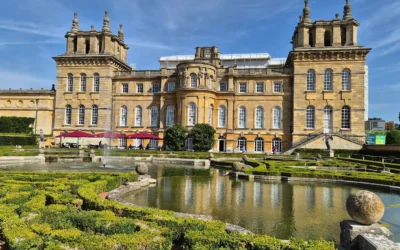
Blenheim Palace Oxfordshire | Everything You Need to Know In 1704, the Duke of Marlborough won a battle near the Bavarian village of Blindheim and changed the course of European history. A grateful nation gave him something extraordinary in return: a palace. Not a...