
Gwrych Castle
Gwrych Castle: Gothic Revival Ruin, WWII Refuge and Wales's Most Unexpected TV Star
In 1940, as Nazi Germany occupied much of Europe, a group of Jewish young people arrived at a ruined Gothic Revival castle on the North Wales coast. Gwrych Castle — already damaged, already beginning its long decline — became their home and their refuge for several years, a place of relative safety in an extraordinary moment of history. That episode, which sheltered young Jews who had fled the Holocaust, is among the most remarkable and least-known stories connected to any castle in Wales.
Gwrych Castle was built between 1810 and 1825 by Lloyd Hesketh Bamford-Hesketh as a memorial to his mother's ancestors — a Gothic Revival castle with castellated towers, battlements and a marble staircase of considerable grandeur, set in 240 acres of grounds with views across the Welsh hills to the Irish Sea. It drew nearly 10 million visitors over two decades before closing in 1985 and falling into ruin.
The Gwrych Castle Preservation Trust has been working since to restore it, and in 2020 and 2021, with COVID restrictions preventing the usual Australian filming, ITV brought I'm A Celebrity… Get Me Out of Here! to Gwrych — giving the castle a television audience of millions and a new generation of visitors. This guide covers everything you need to plan your visit.
Where Is Gwrych Castle?
Gwrych Castle is near the town of Abergele, Conwy County Borough, on the North Wales coast, approximately 18 miles west of Rhyl and 20 miles east of Llandudno. From the A55 North Wales Expressway, take the junction for Abergele and follow signs to the castle.
The nearest railway station is Abergele & Pensarn, approximately 2 miles from the castle, with regular services on the North Wales coast line. A taxi from the station takes around 5 minutes.
A Brief History of Gwrych Castle
Lloyd Hesketh Bamford-Hesketh commissioned Gwrych Castle in 1810 not as a residence in the conventional sense but as a monument — a memorial to his mother's family, the Lloyds of Gwrych, who had held land here for generations. The design evolved from an initial Regency concept into a full Gothic Revival castle, with contributions from architects including Charles Augustus Busby and Thomas Rickman, making it one of the earliest and most ambitious Gothic Revival castle-building projects in Europe.
The castle passed through several owners, including the Dundonald family, who added the 52-step marble staircase designed by Detmar Blow — an extraordinary centrepiece that speaks to the ambitions of each successive owner. In 1924, following the death of Winifred Cochrane, Countess of Dundonald, the castle was bequeathed to the British royal family, but eventually came to the St John of Jerusalem charity before being repurchased by the 12th Earl of Dundonald in 1928.
The Second World War brought the most extraordinary episode in Gwrych's history. Jewish young people who had fled Nazi-occupied Europe came to the castle, which was organised as a refuge — a place of relative safety for those escaping the Holocaust. For several years, the partially ruined castle was a community and a haven, its unlikely Gothic towers sheltering people in a moment of European catastrophe. This chapter of the castle's history, only relatively recently given the recognition it deserves, is one of the most profoundly moving stories attached to any building in Wales.
After the war, Gwrych became a tourist attraction, drawing nearly 10 million visitors across two decades before closing in 1985. It fell into substantial ruin. The Gwrych Castle Preservation Trust has been working since to restore it — an ongoing project that gives the site its current character as a working restoration project open to visitors.
The remarkable thing about Gwrych is the breadth of its history: built as a memorial, used as a wartime refuge, abandoned and ruined, restored and discovered anew. The I'm A Celebrity years of 2020 and 2021 were the latest chapter in a story that has never been straightforward.
Architecture & Design
Gwrych's Gothic Revival architecture was among the earliest examples of the style in Europe and was designed to create an illusion of medieval antiquity from a Regency starting point — the castellated towers, the battlements, the pointed windows and the intricate stonework all drawn from medieval precedents and assembled into a romantic whole. The castle's 52-step marble staircase, added by Detmar Blow for the Dundonald family, is the most opulent surviving interior feature: a grand sweep of marble in a building otherwise built to appear ancient.
The castle is set within 240 acres of grounds that include remnants of formal gardens, woodland, a deer park and open parkland, with panoramic views south across the North Wales hills and north towards the Irish Sea. The combination of Gothic towers, woodland and sea views gives Gwrych a setting unlike any other castle in Wales.
The fabric of the building is in ongoing restoration — some areas are substantially ruined, while restoration work by the Preservation Trust has stabilised and begun to return others. The castle presents itself honestly as a working restoration project, which gives it a different quality from the polished heritage experience of fully managed castles.
Legends & Lore
The castle's most frequently reported ghost is that of Winifred Cochrane, Countess of Dundonald, who died in 1924 after spending much of her life at Gwrych and famously bequeathing it to the Crown. Visitors and staff have long reported a sense of her presence in the castle — a figure seen in the halls, an atmosphere in the older rooms. These accounts are presented as folklore and personal experience rather than documented fact; the castle hosts ghost tours and investigative events that draw on these traditions.
The I'm A Celebrity years brought a different kind of lore — a television audience watching the castle in all weathers, celebrities navigating its towers and grounds in ways that the medieval builders of the style's inspirations could not have imagined.
Visiting the Castle
Gwrych Castle is open seasonally, with opening days and hours varying considerably between winter and summer. Opening patterns change significantly across the year — the castle may be open only at weekends in late winter, daily in summer, and closed on selected dates for private events. Check the official website before every visit to confirm the castle is open on your chosen day.
The visit is primarily self-guided around the ruins, gardens and grounds, with guided tours available on selected dates. The ruins of the towers and battlements, the marble staircase, the grounds and woodland walks and the views to the Irish Sea are the principal features. Elements from the I'm A Celebrity productions are still visible for those who know the show.
A café serves hot and cold drinks, snacks and sandwiches on site; visitors may also bring their own food to enjoy on the East Lawn or Main Terrace. A gift shop is on site. Photography is permitted for personal use. The castle is dog-friendly in most outdoor areas.
Check Tickets & Tour Times for Gwrych Castle →
For current opening days, hours and prices, always check the official Gwrych Castle website before your visit.
Where to Stay Near Gwrych Castle
Abergele town, 2 miles from the castle, has local accommodation. Colwyn Bay, 6 miles west, has a wider range of seafront hotels. Llandudno, 20 miles west, is the finest Victorian seaside resort in Wales and the most atmospheric base for exploring the North Wales coast.
Find Hotels & Stays Near Abergele →
The Best Time to Visit
Spring (April to June) is recommended — the grounds are at their best, the castle is open daily and the North Wales coast is at its most pleasant without peak summer crowds. The views to the Irish Sea in clear spring weather are outstanding.
Summer (July to August) sees the castle at its busiest and with the longest hours; the grounds and woodland are at their most lush. Autumn (September to October) brings quieter visits and autumn colour in the woodland.
Note the significant seasonal variation in opening days — the castle is open only at weekends in late winter and on selected days in spring. Check the official website carefully before travelling at any time of year.
How to Get There
By car. From the A55, take the Abergele junction and follow signs. The castle is on the hillside above Abergele.
By train. Abergele & Pensarn station (on the North Wales Coast Line, approximately 2 miles from the castle) has services from Chester and Llandudno Junction. A taxi from the station takes around 5 minutes.
By bus. Bus services connect Abergele to Rhyl and Llandudno.
Compare Transfers & Local Transport in North Wales →
Nearby Attractions
Gwrych is on the North Wales coast between Conwy and Rhyl, with outstanding heritage and landscape nearby.
| Attraction | Why Visit | Distance |
|---|---|---|
| Conwy Castle (Cadw, UNESCO) | One of the finest medieval castles in Europe, with the best-preserved medieval town walls in Europe — our separate guide covers it fully | ~15 miles |
| Fairy Glen Nature Reserve | An ancient broadleaved woodland and protected local nature reserve — a peaceful contrast to the castle | ~1 mile |
| Bodnant Garden (National Trust) | One of the finest gardens in Wales — terraced Victorian gardens above the Conwy Valley with outstanding views | ~10 miles |
| Colwyn Bay | A traditional North Wales seaside town with a beach, promenade and the Dinosaur World Wales attraction | ~6 miles |
| Llandudno | The finest Victorian seaside resort in Wales — the Great Orme, the pier and the two beaches make it a full day | ~20 miles |
A natural North Wales day combines Gwrych Castle with Conwy Castle — Gothic Revival and Edwardian medieval on the same coastline.
Browse North Wales & Conwy Coast Tours →
Family & Accessibility
Families. Gwrych is excellent for families with older children and teenagers, particularly those who know I'm A Celebrity. The ruined castle atmosphere, the woodland grounds and the restoration story all engage children who enjoy exploration over polished heritage. Dogs are welcome in most outdoor areas.
Accessibility. Pathways through parts of the castle are accessible, with a specific accessible route for visitors with mobility difficulties. Some areas — including parts of the gardens and the chapel — involve steps and uneven terrain. Contact the castle directly or check the accessibility information on the official website before visiting.
Practical Tips
- Always check the official website before visiting — opening days and hours change significantly through the year, and some dates are closed for private events.
- Wear comfortable walking shoes with good grip — the castle grounds cover 240 acres with woodland paths and uneven surfaces throughout.
- Pack a waterproof walking jacket; the North Wales coast is exposed to Atlantic weather.
- Bring a portable power bank for photography — the Irish Sea views and the Gothic towers are exceptionally photogenic.
- Photography is permitted for personal use throughout.
- Overseas visitor? Pack a UK travel adapter for Type G plugs.
Conclusion
Gwrych Castle was built as a memorial, became a refuge for Jewish young people fleeing the Holocaust, drew 10 million visitors, fell into ruin, and then found a new audience when I'm A Celebrity brought its cameras to the North Wales coast. The Gothic Revival towers above 240 acres of grounds with views to the Irish Sea.
The 52-step marble staircase survives in the ruins. The Gwrych Castle Preservation Trust is restoring it, stone by stone. The WWII history is the most important story these walls contain, and it deserves to be better known. Check the website before you go — the opening days vary considerably — and allow time for the full grounds.
Frequently Asked Questions
What are the opening hours of Gwrych Castle?
Opening days and hours vary significantly through the year — the castle may be open only at weekends in late winter, more frequently in spring, and daily in summer. Some dates are closed for private events. Always check the official Gwrych Castle website before travelling.
How much does it cost to visit Gwrych Castle?
Admission fees vary by age and type of visit; annual passholders and Historic Houses members may enter free. Check the official website for current prices.
Why was Gwrych Castle used for I'm A Celebrity… Get Me Out of Here!?
COVID travel restrictions in 2020 and 2021 prevented the programme from filming in its usual Australian location. ITV chose Gwrych Castle for both years, giving the castle a new international audience. Some elements from the productions remain visible on site.
What is the WWII history of Gwrych Castle?
During the Second World War, the castle provided a refuge for Jewish young people who had fled Nazi-occupied Europe, sheltering them for several years. This history is one of the most remarkable and moving stories attached to any castle in Wales.
Is there food at Gwrych Castle?
A café serves hot and cold drinks, snacks and sandwiches on site. Visitors may also bring their own food to enjoy on the East Lawn or Main Terrace.
Are dogs allowed at Gwrych Castle?
Dogs are welcome in most of the outdoor areas of the castle and grounds.
Is Gwrych Castle wheelchair accessible?
An accessible route is available through parts of the castle. Some areas, including sections of the gardens, involve steps and uneven terrain. Check the accessibility information on the official website before visiting.
How do I get to Gwrych Castle?
By car from the A55 (Abergele junction). By train to Abergele & Pensarn station (around 2 miles from the castle), then taxi or bus. Bus services also connect Abergele to Rhyl and Llandudno.
Can I take photos at Gwrych Castle?
Photography for personal use is generally permitted throughout the castle and grounds. Check with staff for any specific restrictions.
Is Gwrych Castle still being restored?
Yes — the Gwrych Castle Preservation Trust is actively restoring the castle. The site presents itself honestly as a working restoration project, and some areas remain substantially ruined while restoration work continues.
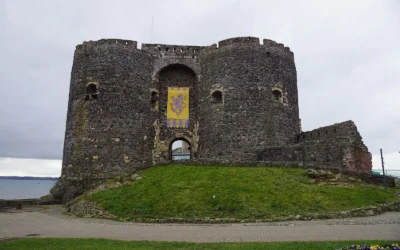
Carrickfergus Castle
Carrickfergus Castle: Ireland's Greatest Norman Fortress, Above Belfast Lough In 1315, Robert the Bruce's brother Edward invaded Ireland with an army and besieged Carrickfergus Castle. The siege went on so long, and provisions ran so completely dry, that the...
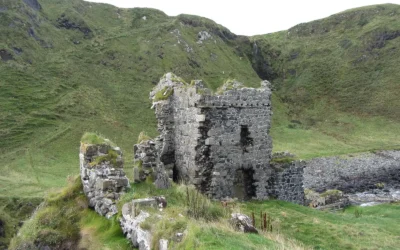
Kinbane Castle
Kinbane Castle: The White Head Castle at the End of 140 Steps, Above the Atlantic Kinbane means "white head" in Irish — Caisleán Ceinn Bán — and the name is immediately clear to anyone who looks at the limestone headland on which the castle stands: the cliff...
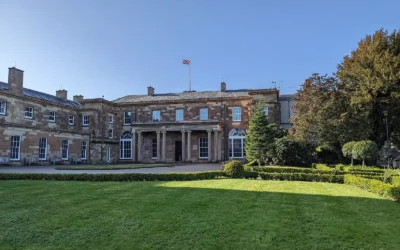
Hillsborough Castle
Hillsborough Castle: Where Northern Ireland's Peace Was Made, Twenty Minutes from Belfast In 1771, Wills Hill — the first Marquess of Downshire, one of the most powerful men in British colonial politics — received Benjamin Franklin at Hillsborough Castle. The...
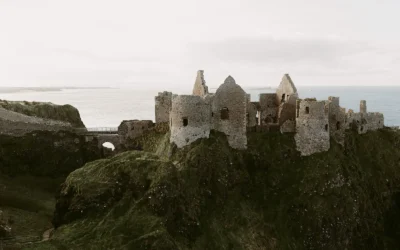
Dunluce Castle
Dunluce Castle: The Clifftop Ruin Where Game of Thrones Met Narnia, Above the Antrim Coast In 1588, a Spanish Armada ship called the Girona wrecked on the rocks near Dunluce Castle. The MacDonnell clan — who had controlled the castle since the 1550s — salvaged the...
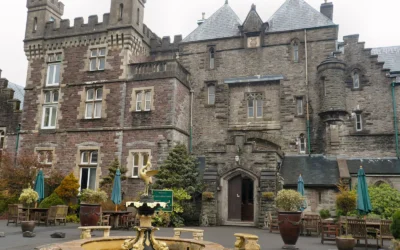
Craig y Nos Castle
Craig y Nos Castle: The Victorian Opera Star Who Built Her Own Theatre in the Brecon Beacons Adelina Patti was the most celebrated opera singer of the Victorian era — a soprano who commanded the largest fees in the world and whose voice filled La Scala in Milan,...