
Falls of Glomach
Falls of Glomach: One of Britain's Tallest Waterfalls
Imagine standing on a narrow rocky balcony, high above a hidden Highland chasm, as 113 metres of crystal-clear water crashes past you into the gorge below, the spray rising in a moody mist. This is the Falls of Glomach — one of the tallest and most magnificent waterfalls in Britain, and one of the very hardest to reach.
There are no shortcuts here. The falls lie deep in the wild country of Kintail, in the care of the National Trust for Scotland, and the only way to see them is to walk — a serious 5-to-6-hour mountain hike there and back. That remoteness is the whole point: you don't stumble upon Glomach, you earn it.
Here's everything you need to plan the adventure.
About the Falls of Glomach
The Falls of Glomach drop 113 metres (370 feet) where the Allt a' Ghlomaich, a Highland burn, pours into a steep, narrow cleft in the hills of Kintail, in the historic county of Ross-shire.
It's worth being honest about the records. Glomach is sometimes billed as Britain's greatest single-drop waterfall, but that superlative is disputed, and it certainly isn't the country's highest fall overall. That title belongs to Eas a' Chual Aluinn in Sutherland, at around 200 metres, with Steall in Glen Nevis (about 120 metres) also taller. What Glomach can fairly claim is to be one of the tallest in Britain — generally reckoned around the third-highest — and, thanks to its setting and its sheer inaccessibility, arguably the most dramatic.
The falls sit at the northern edge of Kintail, the first land in the area to come into the National Trust for Scotland's care, in the 1940s, and now part of the Kintail National Scenic Area. It's prime golden-eagle and red-deer country, often half-hidden in the swirling mist that gives the falls their name.
Getting there
The Falls of Glomach can only be reached on foot, so "getting there" really means getting to the trailhead.
By car, head for the National Trust for Scotland's Morvich countryside centre, signposted off the A87 a little past Inverinate, about 16 to 18 miles east of Kyle of Lochalsh; the postcode IV40 8HQ will bring you close, and the road ends at a pleasant woodland car park with picnic tables. The drive itself is a treat, passing the iconic Eilean Donan Castle on its loch.
Public transport is sparse. Citylink coaches between Glasgow, Inverness and Skye stop at Allt a' Chruinn, around 2 km from Morvich, and a local bus may get you a little closer — check the current timetables, as services are infrequent.
On foot, the hike from Morvich is about 11 miles (17.5 km) there and back, taking five to six hours. It climbs through Dorusduain Wood and over the bare pass of Bealach na Sroine before descending towards the hidden gorge — a graded hillwalk on a good path, but remote, with no mobile signal.
If you're coming from further afield, public transport to the trailhead is sparse, so visitors arriving without a car often prefer to let a local driver handle the journey.
Compare Transfers & Local Transport in the Highlands →
Where does the name come from?
The name comes from the Scottish Gaelic glòmach, meaning "hazy" or "gloomy" — and it can also carry the sense of "chasm." All three fit perfectly: the falls plunge into a gloomy cleft, and the force of the water throws up a near-constant haze that drifts through the gorge.
There's no famous legend attached to the falls, but the name alone conjures the brooding, mist-wrapped mood of this lonely corner of the Highlands — fitting for a waterfall that hides itself away and is often, quite literally, hard to see.
The walk and the trails
The standard and safest approach is from Morvich, the route advised by the National Trust for Scotland. From the car park, follow the road on past the centre, keeping left at two forks, then cross the Abhainn Chonaig and pick up the signed footpath. Rough at first, it soon becomes clear, running beside the river before climbing through woodland and out onto the open pass of Bealach na Sroine — "the pass of the nose" — with grand views.
From there the path undulates, then drops towards the unseen gorge. This is the crucial part to understand: from the top of the path you get only a partial, foreshortened glimpse of the falls. To see the full 113-metre drop head-on, most walkers continue very carefully down a rough, exposed path to a natural rocky balcony with a tremendous view — but the ground here is steep, slippery and genuinely dangerous, so stay well back from the edge.
A second, finer but trickier approach climbs in from Glen Elchaig, and a through-route descends to the glen beyond, but both are best left to confident, experienced hillwalkers. If you have any doubts about your navigation, the Trust's rangers run escorted walks in summer.
Parking
There's a small woodland car park at the National Trust for Scotland's Morvich countryside centre (IV40 8HQ), with a few picnic tables. It holds only a handful of vehicles and there's no real alternative nearby, so arriving early — or visiting on a quieter weekday — is the only reliable plan. Check the National Trust for Scotland's website for current details before you travel.
Facilities
Be in no doubt: this is genuine wilderness. There are no toilets, no café and no shops at the falls or anywhere along the hike, and no mobile signal once you leave the road. You must set out fully self-sufficient.
The nearest facilities are back towards the main road and the coast — Shiel Bridge, Dornie (beside Eilean Donan Castle) and Kyle of Lochalsh all have shops and somewhere to eat. Fuel up, fill your water and use the facilities there before you start walking.
Things to know before you go
Best time to visit. Summer brings the most settled weather and the longest daylight for a five-to-six-hour day; spring offers fuller flow and autumn fine colour. The falls are most spectacular after heavy rain — but that's also when the path and the viewpoint are most hazardous, so weigh it up carefully.
Midges. In summer, the Highland midges can be fierce on still, damp days, so carry repellent and a head net.
Dogs. Dogs should be kept on a lead for the livestock, wildlife and cliff edges — but think hard about whether yours can manage 11 miles and a steep, exposed finish.
Accessibility. This is not an accessible site: it's a long, rough mountain hike, unsuitable for wheelchairs or pushchairs.
Navigation and safety. This matters more here than at almost any other waterfall. You need genuine hillwalking experience, an OS map and compass (there's no phone signal), and you should tell someone your plans and expected return time. Avoid the walk in mist or low cloud, when it's easy to lose the path on the open pass, and take great care at the exposed viewpoint. It's not a route for young children or first-time walkers, and in winter it demands full winter equipment and skills.
Swimming. No — this is a dangerous, remote gorge, not a bathing spot. Enjoy it from the viewpoint and keep back from the edge.
Where to stay
Because the falls are so remote, you'll want a comfortable base on the coast and an early start.
Kyle of Lochalsh, around 16 to 18 miles west, is the nearest town, with a good range of accommodation and the Skye Bridge on its doorstep.
For somewhere closer and especially scenic, the little village of Dornie sits right beside Eilean Donan Castle on Loch Duich, a lovely spot to stay within easy reach of the Morvich trailhead.
Find Hotels & Stays in Kyle of Lochalsh →
What to pack
This is a serious hike, so pack properly — your safety depends on it.
- A pair of waterproof walking boots for the long, rough and sometimes boggy path.
- A waterproof jacket and trousers plus warm layers; Highland weather turns fast.
- A set of walking poles for the climb and the steep descent.
- A midge head net for still summer days.
Most important of all: carry an OS map and compass — there is no mobile signal — along with a power bank, plenty of water and high-energy snacks, and a first-aid kit.
Nearby attractions and making a day of it
This is one of the most spectacular corners of the Highlands, with an iconic castle, a famous mountain ridge and the Isle of Skye all close by.
| Attraction | Why Visit | Distance |
|---|---|---|
| Eilean Donan Castle | The much-photographed 13th-century stronghold on its own little island where three lochs meet — passed on the drive in | ~10 minutes |
| Five Sisters of Kintail | One of Scotland's most famous mountain ridges, a classic Munro-bagging skyline rising straight from Glen Shiel | In Kintail |
| Isle of Skye | Just over the Skye Bridge from Kyle of Lochalsh — the jagged Cuillin, the Trotternish ridge and a string of pretty coastal villages | ~25 minutes |
| Plockton | A charming village with palm trees and a sheltered bay, a gentle counterpoint to the wild falls | ~30 minutes |
| Glen Affric | Often called Scotland's most beautiful glen, on the area's eastern side, with native pinewoods and lochs | Eastern side of Kintail |
For a full day, pair the long hike to the falls with a visit to Eilean Donan Castle on the way back, or save the falls for a clear day and explore Skye or Plockton instead.
Browse Skye & Highland Tours →
Photography tips
Glomach rewards the effort with unforgettable images. The rocky balcony gives you the full-height, head-on shot of the falls in their gorge; step a little higher on the path and you can set them against the surrounding mountains.
A visit after rain brings the most water and the moodiest mist, but only attempt it with safe footing. Aim for soft morning or late-afternoon light, bring a tripod for silky long exposures, and keep a waterproof cover on your camera — the spray and Highland drizzle are ever-present. Above all, mind your footing near the edge; no photograph is worth the risk.
Conclusion
The Falls of Glomach is not a waterfall you visit so much as one you undertake. Eleven miles of wild country, a high open pass, a hidden chasm and 113 metres of crashing water on a lonely rocky balcony — it asks a great deal and gives back even more. Go properly equipped, pick a clear day, and let the solitude of one of Britain's tallest and most hard-won waterfalls work its quiet magic.
FAQs
How tall is the Falls of Glomach?
It drops 113 metres (370 feet), making it one of the tallest waterfalls in Britain — generally ranked around the third-highest. It's sometimes called Britain's greatest single drop, but that's disputed, and it isn't the country's highest overall: that title is held by Eas a' Chual Aluinn in Sutherland, at around 200 metres.
Is there a fee to visit the Falls of Glomach?
No — the falls are free to visit and in the care of the National Trust for Scotland. For details on the Morvich car park, check the Trust's website.
What is the best time to visit the Falls of Glomach?
Summer offers the most settled weather and longest daylight for the long hike, spring brings fuller flow, and autumn fine colour. The falls are most dramatic after rain, but also most hazardous then.
Are dogs allowed at the Falls of Glomach?
Yes, on a lead, but bear in mind it's a long, exposed mountain hike — consider carefully whether your dog can manage the distance and the steep, slippery viewpoint.
Is the Falls of Glomach accessible for wheelchairs?
No. It's a long, rough mountain walk with steep, exposed ground, and is not suitable for wheelchairs or pushchairs.
What are the parking options at the Falls of Glomach?
There's a small car park at the National Trust for Scotland's Morvich countryside centre (IV40 8HQ). Spaces are very limited and there's no real alternative nearby, so arrive early.
Can I swim at the Falls of Glomach?
No — it's a dangerous, remote gorge rather than a bathing spot. Admire it from the viewpoint and stay back from the edge.
What should I wear when visiting the Falls of Glomach?
Sturdy waterproof boots, a waterproof jacket and trousers and warm layers, and carry an OS map and compass, as there's no mobile signal on the route.
Are there guided tours of the Falls of Glomach?
The National Trust for Scotland's rangers run escorted walks in the summer months, which are ideal if you're unsure about navigating the remote route. Check the Trust's website for details.
How long is the hike to the Falls of Glomach?
The usual route from Morvich is about 11 miles (17.5 km) there and back, taking five to six hours, and is graded a moderate hillwalk that nonetheless needs proper experience.
What's nearby?
Eilean Donan Castle, the Isle of Skye, the Five Sisters of Kintail, Glen Affric and the village of Plockton are all within reach.
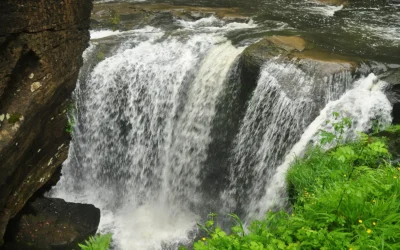
Aberdulais Falls
Aberdulais Falls: Where Wales' Industrial Story Began In the winter of 1584, a German engineer named Ulrich Frosse chose this gorge for a secret reason: the River Dulais plunging over its ridge of hard Pennant sandstone was exactly the power source he needed. Under...
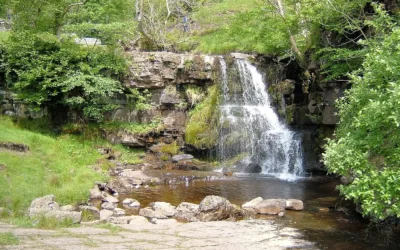
East Gill Force
East Gill Force: Where Two Great Walks Meet There is a particular pleasure in arriving at East Gill Force. You have walked the short path from Keld, crossed the long stone footbridge over the River Swale, and then the path turns and the waterfall is simply there — the...
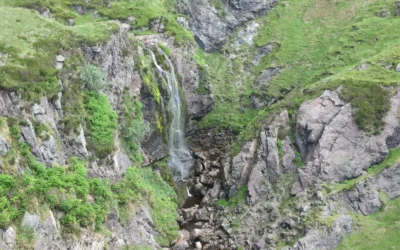
Spout of Garnock
Spout of Garnock: Ayrshire's Highest Waterfall The River Garnock rises on the southern slopes of the Hill of Stake, the highest summit in Clyde Muirshiel Regional Park, and barely has time to become a river before it falls off the edge of the moorland. About a mile...
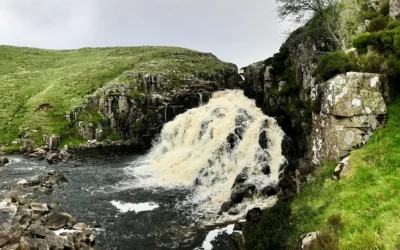
Cauldron Snout
Cauldron Snout: England's Longest Waterfall Most waterfalls announce themselves with a sudden vertical drop. Cauldron Snout does something different: it unrolls. From below, the River Tees is white and relentless for two hundred yards, cascading down the black...
Falls of Foyers
Falls of Foyers: The Smoking Falls of Loch Ness When Robert Burns reached the Falls of Foyers in 1787 and looked down into the gorge, he saw what he described as "the horrid cauldron" — the deep, spray-filled amphitheatre at the base of the lower falls,...