
Drummond Castle
Drummond Castle Gardens: The Formal Terraces That Played Versailles, Above Perthshire
The drive to Drummond Castle is itself a preparation: a mile-long avenue of beech trees, reaching overhead, narrowing to a vanishing point ahead. It ends at a gate. Beyond the gate, the ground falls away in terraces of extraordinary precision — Italianate parterres of geometric hedges and floral patterns laid out on a slope above Perthshire, with the castle rising behind as backdrop.
Historic Environment Scotland has assessed these as the finest example of formal terraced gardens in Scotland. When the television production of Outlander needed a location to represent the Palace of Versailles, they came here.
Drummond Castle Gardens have existed in some form since the early 17th century. The Italian-style terracing and parterre design were developed in the 19th century and restored substantially in the 1950s.
The castle behind the gardens — first built as a tower house around 1490 by John Drummond, 1st Lord Drummond of Cargill — is a private residence and not open to the public; the gardens are the entire visit, and for garden lovers, the entire visit is more than enough. Queen Victoria planted a beech tree here in 1842 during a royal visit to Perthshire, and it is still standing. This guide covers everything you need to plan your visit.
Where Are Drummond Castle Gardens?
Drummond Castle Gardens are 4 kilometres (2.5 miles) south of the town of Crieff, in Perthshire, Scotland, reached via the A822. The journey from Edinburgh takes around 90 minutes by car; from Perth it is around 40 minutes. The single-track beech avenue approach to the gardens is clearly signposted from the main road.
Public transport to the gardens is limited — Crieff itself is served by buses from Perth and Stirling, but the final 4 kilometres to the gardens are best covered by taxi or car. Driving is the most practical option for most visitors.
A Brief History of Drummond Castle and Its Gardens
The tower house at Drummond was built around 1490 by John Drummond, 1st Lord Drummond of Cargill, on a prominent Perthshire ridge. A 17th-century mansion was added to the original tower, and both structures were rebuilt in Victorian times to produce the castle complex that stands today — though as a private residence, none of this is accessible to visitors. The gardens, however, are the property's most significant achievement and the principal reason for visiting.
The gardens were first laid out in the early 17th century, possibly by John Mylne, Master Mason to King James VI. The terracing and Italianate parterre design were developed and expanded in the 19th century, creating the structured landscape that visitors see today.
A significant restoration in the 1950s preserved the original features — including the ancient yew hedges that frame the terraces and give the gardens their sense of great age. In 1842, Queen Victoria visited Perthshire and planted a beech tree in the gardens; it remains one of the most tangible connections between this private estate and the broader sweep of Scottish royal history.
The remarkable thing about Drummond Castle Gardens is the ambition of their scale and the completeness of their survival. Gardens of this formal complexity were extremely difficult to maintain through the 20th century; many of Scotland's great historic designed landscapes were simplified or lost. Drummond survived intact, which is why Historic Environment Scotland gives them the designation they do.
Architecture & Design
The gardens are a masterpiece of formal landscape design on a hillside site. The approach — the mile-long avenue of beech trees — is a designed experience, controlling the visitor's anticipation before the terraces are revealed. From the top of the slope, the full extent of the Italianate parterre becomes visible: a vast geometric composition of clipped hedges, topiary and floral planting, forming patterns across the terraced ground with the Perthshire countryside stretching away beyond.
The ancient yew hedges, some centuries old, provide the vertical structure of the design — dark, dense walls of clipped yew that frame the terraces and give the garden its sense of permanence. At their centre, the parterre creates a complex pattern of box hedges and seasonal planting, visible in full from the terrace above in a way that reveals the design's geometry.
The sundial at the heart of the parterre is a significant period feature. A Daggan Wood Woodland Walk is accessible from the gardens, providing a gentler, naturalistic contrast to the formal terraces. The castle provides the backdrop to all of it, its Victorian profile contributing to the composition without being part of the visit.
Legends & Lore
Drummond Castle Gardens have no established ghost tradition — their atmosphere is one of geometry and cultivation rather than darkness or drama. Their lore is cinematic and royal, and both elements are entirely genuine.
The gardens starred in the 1995 Hollywood film Rob Roy, featuring Liam Neeson, providing the aristocratic Scottish landscape backdrop for the story of Rob Roy MacGregor. Their most globally significant screen appearance came in the television series Outlander, where the gardens were used to represent the Palace of Versailles — a tribute to the precision and grandeur of the Italianate terraces that is, in its way, the most compelling endorsement Historic Environment Scotland's assessment has received. For fans of either production, walking the terraces through which Versailles was conjured gives the gardens a particular resonance.
Queen Victoria's 1842 visit and the beech tree she planted are the royal chapter of the gardens' story — a tangible survivor of Victorian royal Perthshire, still growing.
Visiting the Gardens
Important: The castle at Drummond is a private residence and is not open to visitors. The gardens are the entire experience, and they are well worth coming for.
The gardens are open seasonally, generally from May through October. Admission is low by Scottish heritage standards, with free entry for Historic Houses members and for wheelchair users with registered carers. No booking is required.
The self-guided visit takes visitors through the terraced gardens, along the parterre and past the ancient yew hedges, with views across the Perthshire landscape from the upper terrace. Allow at least 90 minutes to explore properly; those with a deeper interest in garden design or the Outlander connection may wish to allow considerably more. The Daggan Wood Woodland Walk extends the visit into the adjacent woodland if time allows.
A coffee wagon in the inner courtyard serves hot drinks, cakes and filled rolls. Picnic benches are available for those bringing their own food. The ticket office sells locally hand-crafted gifts and Drummond-branded items. Photography is generally permitted throughout the gardens; check with staff for any specific guidance.
Check Tickets & Tour Times for Drummond Castle Gardens →
For current opening dates, hours and prices, check the official Drummond Castle Gardens website before your visit.
Where to Stay Near Drummond Castle Gardens
The gardens do not offer visitor accommodation. The town of Crieff, 4 kilometres to the north, is the natural base — a well-served Perthshire market town with a range of hotels, guesthouses and self-catering options. Perth, around 20 miles east, offers a wider choice and excellent transport connections. The wider Perthshire countryside has exceptional self-catering for those wanting to combine the gardens with a longer Highland exploration.
Find Hotels & Stays in Crieff →
The Best Time to Visit
June to September is when the Drummond Castle Gardens are at their most magnificent — the parterre in full bloom, the ancient yew hedges in their deepest summer green and the maximum seasonal planting in the geometric beds. May opens the season with the gardens waking up and significantly smaller visitor numbers. October is the quietest month of the season and the Perthshire countryside is at its most colourful, though the opening hours are shorter.
The gardens close in late October and reopen the following May. For the finest photography of the parterre, a clear morning in June or July — arriving near opening time — gives the best light from above the terrace.
How to Get There
By car. From Crieff, take the A822 south for 4 kilometres; the gardens are well signposted. From Edinburgh, allow around 90 minutes via the M9 and A9 to Crieff. Parking is available at the gardens.
By public transport. Buses from Perth and Stirling reach Crieff; from Crieff, a taxi covers the 4 kilometres to the gardens. Cycling from Crieff along the A822 is possible for those comfortable on a main road.
Compare Transfers & Local Transport in Perthshire →
Nearby Attractions
Drummond Castle Gardens sit at the heart of Perthshire, one of Scotland's most rewarding countryside destinations.
| Attraction | Why Visit | Distance |
|---|---|---|
| Crieff Town | A well-served Perthshire market town with independent shops, cafés and the scenic Knock of Crieff hill walk | ~4 km |
| Muthill Village | A charming Perthshire village with a ruined medieval tower and a strong local heritage | ~5 km |
| Scone Palace | Where Scottish kings were crowned on the Stone of Destiny — a magnificent palace with extensive parkland | ~20 miles |
| Loch Earn & Comrie | Beautiful loch and river valley walking in the Perthshire landscape — ideal for an afternoon after the gardens | ~8 miles |
| Perth City | A handsome riverside city with Perthshire's finest museums, galleries and shopping | ~20 miles |
A natural Perthshire day combines Drummond Castle Gardens in the morning with an afternoon walk above Crieff on the Knock, looking north towards the Highland Line.
Browse Perthshire & Crieff Tours →
Family & Accessibility
Families. Drummond Castle Gardens suit families with older children who appreciate designed landscapes, film locations or Scottish history. The mile-long beech avenue approach is itself an experience for children, and the scale of the parterre — seen from above — tends to impress. The Woodland Walk provides a more relaxed outdoor complement to the formal terraces.
Accessibility. The gardens have a steep hillside with steps, which limits access for visitors with mobility difficulties. An alternative entrance at the bottom of the gardens is available, and wheelchair users can park in the castle courtyard; a grass path route is suggested, though gravel paths may need assistance. An accessible viewing area and lavatory facilities are provided near the ticket office. Wheelchair users with registered carers enter free. Dogs are welcome in the gardens on leads; owners must clean up after them.
Practical Tips
- Arrive at opening time — the parterre is best seen in morning light, and the beech avenue approach with low sun filtering through the trees is worth the early start.
- Wear comfortable walking shoes — the terraced hillside involves significant walking on gravel, grass and some steps.
- Pack a compact travel umbrella — Perthshire weather is changeable even in summer.
- Bring a portable power bank for a full morning of garden photography.
- The castle is not open — the gardens are the visit. Allow at least 90 minutes and more if you plan the Woodland Walk.
- Outlander enthusiasts: the terraces that represented Versailles are real and explored at the visitor's own pace — bring a screenshot from the series to find the exact angles.
- Overseas visitor? Pack a UK travel adapter for Type G plugs.
Conclusion
Drummond Castle Gardens are Scotland's finest formal terraced gardens — the assessment of Historic Environment Scotland, and one of the more self-evidently accurate verdicts in Scottish heritage. The ancient yew hedges, the Italianate parterre, the beech avenue and the Perthshire backdrop make a visit almost surreally beautiful on a clear summer day.
That these are also the terraces that doubled for Versailles in one of the world's most popular television dramas only adds to their fascination. The castle behind them is private and unavailable; the gardens in front of it are entirely accessible, and they are more than enough.
Frequently Asked Questions
When are Drummond Castle Gardens open?
The gardens are open seasonally from May through October, with varying hours by month — generally from mid-morning. Check the official website for the current season's exact dates and times.
How much does it cost to visit Drummond Castle Gardens?
Admission is low by Scottish heritage standards. Free entry for Historic Houses members and for wheelchair users with registered carers. Check the official website for current prices.
Is the castle at Drummond open to visit?
No — the castle is a private family residence and is not open to the public. The gardens are the entirety of the visitor experience.
What is the Outlander connection?
The Drummond Castle Gardens were used to represent the formal gardens of the Palace of Versailles in the television series Outlander. The Italianate terraces and parterre were considered the most convincing available stand-in for the French original. The gardens also appeared in the 1995 film Rob Roy, featuring Liam Neeson.
What is the beech tree planted by Queen Victoria?
During a royal visit to Perthshire in 1842, Queen Victoria planted a beech tree in the Drummond Castle Gardens. The tree is still growing in the gardens today.
Are dogs allowed at Drummond Castle Gardens?
Yes — dogs are welcome in the gardens on leads, provided owners clean up after them.
Is there food at Drummond Castle Gardens?
A coffee wagon in the inner courtyard serves hot drinks, cakes and filled rolls during opening hours. Picnic benches are available for those bringing their own food.
Is Drummond Castle Gardens wheelchair accessible?
The gardens have a steep hillside and steps, with limited access for wheelchair users. An alternative entrance at the garden's lower level is available, along with accessible parking in the castle courtyard and a grass path route. An accessible viewing area is provided near the ticket office.
How long should I allow for a visit?
At least 90 minutes to explore the terraces, parterre and yew hedges properly. Allow more time if you plan to walk the adjacent Daggan Wood Woodland Walk.
What is the best way to see the parterre?
From the upper terrace, looking down the slope — the full geometric pattern of the hedges and seasonal planting is only fully visible from above, which is where the garden was designed to be seen from.
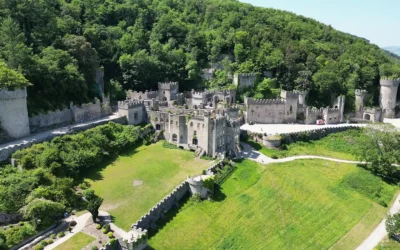
Gwrych Castle
Gwrych Castle: Gothic Revival Ruin, WWII Refuge and Wales's Most Unexpected TV Star In 1940, as Nazi Germany occupied much of Europe, a group of Jewish young people arrived at a ruined Gothic Revival castle on the North Wales coast. Gwrych Castle — already...
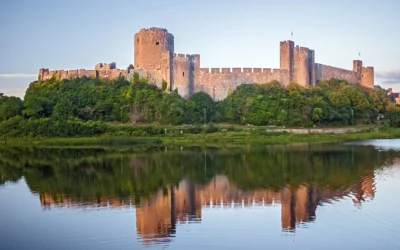
Pembroke Castle
Pembroke Castle: Where Henry VII Was Born, Above a Prehistoric Cave Beneath Pembroke Castle, in the limestone bedrock on which the fortress stands, there is a cave. Wogan Cavern is a prehistoric chamber that was occupied by early humans long before any castle existed...
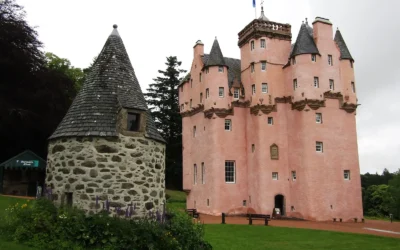
Craigievar Castle
Craigievar Castle: The Pink Tower That Danzig Willy Built, Rising Above Aberdeenshire William Forbes made his fortune trading with the Baltic port of Danzig — now Gdańsk in Poland — in the early years of the 17th century. So successful was his trade that he became...
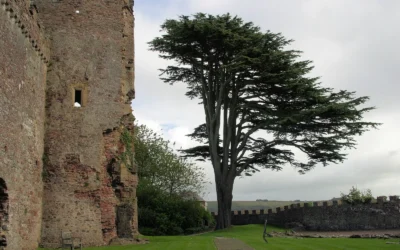
Laugharne Castle
Laugharne Castle: The "Brown as Owls" Fortress Where Dylan Thomas Found His Voice Dylan Thomas called it "the brown as owls castle" — a phrase that tells you as much about the poet's way of seeing as it does about the castle itself. Thomas...
Beaumaris Castle
Beaumaris Castle: The Most Perfect Fortress Never Finished, on the Isle of Anglesey In 1295, Master James of St George began designing the most geometrically perfect concentric castle in the history of medieval military architecture. The inner ward was rectangular,...