
Dover Castle
Dover Castle: The Key to England, Above the White Cliffs, for Two Thousand Years
In the summer of 1940, with the German army closing in on the beaches of Dunkirk and 338,000 Allied soldiers trapped against the sea, Admiral Bertram Ramsay stood in a tunnel carved into the chalk beneath Dover Castle and coordinated one of the greatest military evacuations in history. Operation Dynamo took eight days.
The tunnels from which Ramsay worked had been cut during the Napoleonic Wars — when another French army had last threatened England’s shores — and repurposed for the Second World War. They are still there, still accessible, and a guided tour through them is one of the most powerful experiences any English castle can offer.
Dover Castle has guarded England’s shortest sea crossing for over two thousand years. Iron Age earthworks came first; the Romans built a lighthouse here in the 2nd century that still stands to four storeys, the oldest working structure of its kind in Britain; William the Conqueror strengthened it after Hastings; and Henry II spent seven years and £7,000 building the great keep that remains the centrepiece of the site.
It is called the Key to England, and from the battlements the reason is immediately apparent: on a clear day France is visible, 21 miles across the water. Everything that has ever mattered about England’s relationship with the Continent has passed, at some point, through this narrow strait, and this fortress has watched it all. This guide covers everything you need to plan your visit.
Where Is Dover Castle?
Dover Castle sits on the chalk cliffs above the town of Dover, in Kent, overlooking the English Channel. It is approximately 77 miles from central London — about an hour and a half by road via the M20 and A2 — and lies just minutes from the Port of Dover and the Channel Tunnel terminal at Folkestone, making it the first or last great English landmark many international visitors encounter.
The castle is managed by English Heritage, and English Heritage members visit free. From Dover Priory railway station, the castle is reached by a short bus ride or a 20-minute walk uphill into the town and up to the cliff. Parking is available on site.
A Brief History of Dover Castle
The cliffs of Dover have been fortified since the Iron Age, but the castle’s identifiable history begins with the Romans, who built a lighthouse — the Pharos — here in the early 2nd century to guide ships across the Channel. The Pharos still stands to four of its original eight storeys, its octagonal Roman brickwork visible inside the Saxon church of St Mary in Castro alongside which it sits; few Roman structures anywhere in Britain have survived so completely.
After the Norman Conquest, William the Conqueror seized and strengthened the existing fortifications in 1066. The decisive building phase came between 1179 and 1188, when Henry II commissioned the engineer Maurice to construct the great keep — at 83 feet tall with walls up to 21 feet thick, one of the last and finest of the great Norman rectangular keeps — along with the inner and outer baileys and curtain walls, at a total cost estimated at £7,000.
Dover’s gravest crisis came in 1216, during the First Barons’ War, when Louis VIII of France besieged the castle with a substantial army. The castellan Hubert de Burgh held Dover for months, reinforcing the gates that the French had partly undermined, and the siege eventually failed. Historians have argued that had Dover fallen — and had Louis secured England’s southeastern gateway — French control of England might have followed.
The castle held, and England remained English. Henry VIII added the Moat Bulwark in the Tudor period; during the Napoleonic Wars, engineer William Twiss cut the underground barracks tunnels into the chalk, preparing for a French invasion that never came. It was these tunnels — repurposed, expanded and fitted with communications equipment — that became Admiral Ramsay’s command centre in 1940.
The remarkable thing about Dover is the sheer continuity of its strategic purpose. Every major threat to England from the Continent — Roman, Norman, French, Napoleonic, Nazi — has in some way been met, prepared for or survived at this single point on the cliffs above the Channel.
Architecture & Design
The great keep built by Henry II between 1179 and 1188 remains the dominant presence on the site: a massive rectangular tower, 83 feet tall, its walls between 17 and 21 feet thick, built to be impregnable by the standards of 12th-century warfare.
It is one of the last great Norman keeps in England, and English Heritage’s restoration of its medieval interiors — a £2.45 million project completed in 2009 — recreated the rooms as they would have appeared in Henry II’s time, with painted walls, carved furniture and period furnishings that give the spaces unusual life and specificity.
Alongside the Norman keep, Dover’s architecture spans a remarkable range. The Roman Pharos, built in the early 2nd century from Kentish ragstone with courses of red Roman brick, is one of the oldest standing structures in Britain.
The underground tunnels, begun in the Napoleonic era and dramatically expanded for the Second World War, form a subterranean city of communications rooms, a hospital and barracks carved entirely from chalk. The outer defensive works — Constable’s Gate, Fitzwilliam’s Gate, the Horseshoe and Hudson’s bastions — reflect each century’s evolving understanding of how to hold this particular cliff against particular kinds of attack.
Legends & Lore
Dover’s long history of military occupation and violent incident has generated a substantial body of ghost stories. According to local legend, the underground tunnels are haunted by a headless drummer boy, said to have been murdered in the passages during the Napoleonic Wars; tradition holds that his figure is seen on the battlements. Within the great keep, visitors have reported a woman in a red dress and a figure dressed as a Cavalier — stories that belong to the castle’s long stretch of Civil War history.
The Second World War tunnels carry their own atmosphere and their own folklore: tales of disembodied voices, sudden temperature drops and the impression of wartime soldiers still moving through the passages are often told by guides and reported by visitors. These are stories and atmosphere, told as part of the castle’s layered character, not as documented fact.
The screen credentials, by contrast, are entirely real. Dover has appeared in Doctor Who, Wolf Hall, The Hollow Crown, Mel Gibson’s Hamlet and The Amazing Race, among others — its combination of medieval stone and clifftop drama making it one of the most recognisable castle locations in English television and film.
Visiting the Castle
Dover rewards a full day, and the two headline experiences — the Secret Wartime Tunnels and the Great Tower — are each substantial in their own right.
The Secret Wartime Tunnels are the most powerful: a guided tour through the chalk-cut passages where Operation Dynamo was directed in 1940, with immersive recreations of the command centre, the underground hospital and the atmosphere of those eight days in May and June when the fate of the Allied armies hung in the balance. This is one of the finest immersive history experiences offered by any English castle.
The Great Tower offers a very different experience: Henry II’s 12th-century keep, restored to its medieval appearance, with rooms including the king’s bedchamber and the great hall dressed with painted walls and period furnishings, and the rooftop offering panoramic views across the Channel to France on a clear day.
The Dover Castle Under Siege exhibition recreates the 1216 siege with interactive exhibits including a trebuchet to fire; the Sacred Sites — the Roman Pharos and the Saxon church of St Mary in Castro — are reached by a short walk within the grounds. For families, the Siege Play Area and the Bunker Escape Room (set in a WWII scenario) add another dimension.
Seasonal events run throughout the year. Cafés on site serve food and drink, and picnicking is permitted in designated areas — the clifftop setting makes an outdoor lunch here particularly memorable. Photography is generally permitted throughout the grounds. English Heritage members enter free.
Check Tickets & Tour Times for Dover Castle →
Check the official English Heritage website for current opening times, prices and seasonal event information.
Where to Stay Near Dover Castle
Dover Castle does not offer visitor accommodation. The town of Dover is directly below the castle — a short downhill walk — with a range of hotels and guesthouses convenient for an early start or a late finish. Dover’s location as a Channel port means it is well-served with overnight options, and the wider Kent coast, from Deal to Folkestone, offers quieter and more characterful bases for those wanting to explore the area more deeply.
Find Hotels & Stays in Dover →
The Best Time to Visit
Spring (April to June) is ideal at Dover: the White Cliffs are at their most vivid, the Channel light is exceptional, and crowds are lighter than in high summer.
The Secret Wartime Tunnels are open year-round and particularly atmospheric in quieter periods — early morning visits, before the main groups arrive, give the tunnels a solemnity that is hard to replicate in a crowd. Summer (July and August) brings the full seasonal programme, the longest days and the clearest cross-Channel views, but also the busiest visitor numbers.
Autumn (September and October) offers dramatic skies over the Channel, excellent walking on the White Cliffs, and quieter castle grounds. Winter brings reduced hours and a quieter site, but the cliff-top and the Channel in winter light have their own stark beauty — and the contrast between the cold Channel air and the warmth of the tunnel tours is particularly effective.
How to Get There
By car. From London, the M20 and A2 bring you to Dover in about an hour and a half (77 miles). From the Channel Tunnel terminal at Folkestone the drive is around 20 minutes. Parking is available at the castle, though fees may apply — check before arriving.
By train. Southeastern trains run from London St Pancras International to Dover Priory in around one hour fifteen minutes; from the station a short bus ride or 20-minute uphill walk reaches the castle.
By coach. National Express coaches from London Victoria reach Dover town centre in around three hours, with a short taxi or bus ride to the castle.
Compare Transfers & Local Transport in Dover →
Nearby Attractions
Dover and the surrounding Kent coast offer several outstanding attractions within easy reach.
| Attraction | Why Visit | Distance |
|---|---|---|
| White Cliffs of Dover (National Trust) | The iconic chalk cliffs above the Channel — superb clifftop walks with views to France | Adjacent |
| South Foreland Lighthouse | A charming Victorian lighthouse above the Channel, with guided tours and views across to France | ~3 miles |
| Dover Museum & Bronze Age Boat Gallery | Home to a 3,500-year-old Bronze Age boat — one of the oldest seagoing vessels ever found | ~0.5 miles |
| Deal Castle | A perfectly preserved Tudor coastal fort built by Henry VIII — one of the finest of its kind in England | ~8 miles |
| Canterbury Cathedral (UNESCO) | The mother church of the Church of England — one of England’s greatest medieval buildings | ~15 miles |
A natural Kent coast day pairs Dover Castle with a walk along the White Cliffs and a visit to South Foreland Lighthouse; Canterbury is an easy extension for those with more time.
Family & Accessibility
Families. Dover Castle is an excellent family visit. The Secret Wartime Tunnels guided tours work well for older children and teenagers; the Siege Play Area, trebuchet experience and Bunker Escape Room add interactive elements; and the Great Tower’s restored medieval rooms have a tangibility — painted walls, dressed beds, period objects — that brings the 12th century alive in a way that empty rooms do not. The cross-Channel views from the roof of the keep tend to delight visitors of all ages.
Accessibility. Much of the castle, including the Great Tower’s ground floor, the Spur Casemates and the clifftop viewpoints, is step-free. Mobility scooters are available for the Secret Wartime Tunnels and the underground hospital. Some areas, including the Spur Tunnels, require stairs; the underground hospital’s emergency exit involves over 150 steps.
English Heritage members with accessibility needs can check the castle’s detailed access guide before visiting. Check the current policy for dogs — assistance dogs are permitted; other dogs should be confirmed with the castle before visiting.
Practical Tips
- Book the Secret Wartime Tunnels in advance — guided tour places fill quickly, especially in summer, and missing them is missing the best of Dover.
- Buy tickets online — English Heritage offers a discount for advance online booking; English Heritage members enter free.
- Wear comfortable walking shoes — the castle grounds are extensive and uneven in places.
- Pack a waterproof walking jacket; the clifftop is fully exposed to Channel weather.
- Arrive early — the castle is busiest between mid-morning and early afternoon; arriving at opening gives the quietest experience of the tunnels and the keep.
- Bring a portable power bank for a full day of photography, including the views across the Channel.
- Combine with the White Cliffs — the National Trust’s cliff path runs adjacent to the castle; a short walk takes you to some of the most iconic views in England.
- Overseas visitor? Pack a UK travel adapter for Type G plugs.
Conclusion
Dover Castle is where England’s history has been most continuously tested — by the Romans, the Normans, a French prince, Napoleon’s armies and Hitler’s Luftwaffe in turn — and where it has, each time, held. The great keep that Henry II built in the 1180s and the tunnels from which Admiral Ramsay directed the Dunkirk evacuation in 1940 are separated by eight centuries of history and barely a hundred metres of chalk cliff.
To walk from one to the other, from the 12th century to the 20th, above the same narrow strip of water that has always been England’s most contested threshold, is to feel the full weight of this country’s geography on its history. Dover earns its name — the Key to England — more completely than any title given to any castle anywhere.
Frequently Asked Questions
What are the opening hours of Dover Castle?
Dover Castle is generally open daily, typically from 10am, with last admission an hour before closing and seasonal variations in closing times. It is managed by English Heritage — check the official English Heritage website for current seasonal hours.
How much does it cost to visit Dover Castle?
Admission prices vary by age, with concessions for children and seniors. Booking online in advance offers a discount; English Heritage members visit free. Check the official English Heritage website for current prices.
What are the Secret Wartime Tunnels?
Underground chalk tunnels beneath the castle, originally cut during the Napoleonic Wars and repurposed during the Second World War as the command centre from which Admiral Bertram Ramsay directed Operation Dynamo — the 1940 Dunkirk evacuation of 338,000 Allied troops. Guided tours recreate the atmosphere of those eight days.
Is Dover Castle suitable for children?
Yes — the Secret Wartime Tunnels guided tours, the Great Tower’s medieval rooms, the trebuchet experience, the Siege Play Area and the Bunker Escape Room make it an outstanding family visit.
Is Dover Castle wheelchair accessible?
The Great Tower’s ground floor, the Spur Casemates and clifftop viewpoints are step-free. Mobility scooters are available for the tunnels and underground hospital. Some areas involve significant stairs. Check the English Heritage access guide before visiting.
Is there food at Dover Castle?
On-site cafés serve food and drink. Picnicking is permitted in designated areas, with the clifftop setting making an outdoor lunch memorable.
Can I take photos at Dover Castle?
Photography is generally permitted throughout the castle and grounds. Check with staff for any specific restrictions in certain areas.
How do I get to Dover Castle?
By car, the M20 and A2 from London take about one hour fifteen minutes. By train, London St Pancras to Dover Priory takes about one hour fifteen minutes, then a short bus or walk to the castle.
What is the White Cliffs of Dover?
The iconic chalk cliffs running alongside the castle above the English Channel, managed by the National Trust. The clifftop path adjacent to the castle offers some of the finest views in south-east England, looking across to France on a clear day.
What films and TV shows have featured Dover Castle?
The castle has appeared in Doctor Who, Wolf Hall, The Hollow Crown and Mel Gibson’s Hamlet, among others, drawn by its combination of medieval drama and the distinctive cliff setting above the Channel.
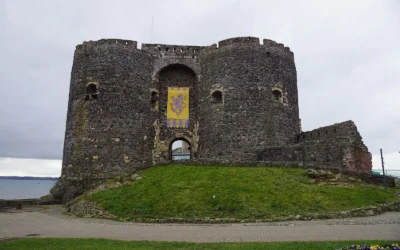
Carrickfergus Castle
Carrickfergus Castle: Ireland's Greatest Norman Fortress, Above Belfast Lough In 1315, Robert the Bruce's brother Edward invaded Ireland with an army and besieged Carrickfergus Castle. The siege went on so long, and provisions ran so completely dry, that the...
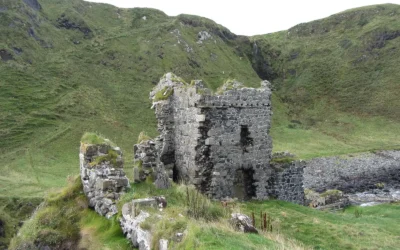
Kinbane Castle
Kinbane Castle: The White Head Castle at the End of 140 Steps, Above the Atlantic Kinbane means "white head" in Irish — Caisleán Ceinn Bán — and the name is immediately clear to anyone who looks at the limestone headland on which the castle stands: the cliff...
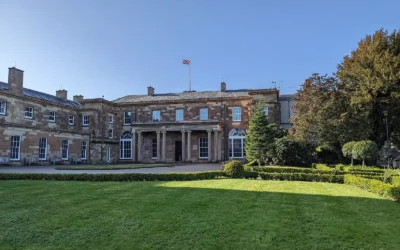
Hillsborough Castle
Hillsborough Castle: Where Northern Ireland's Peace Was Made, Twenty Minutes from Belfast In 1771, Wills Hill — the first Marquess of Downshire, one of the most powerful men in British colonial politics — received Benjamin Franklin at Hillsborough Castle. The...
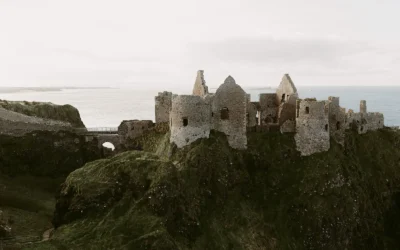
Dunluce Castle
Dunluce Castle: The Clifftop Ruin Where Game of Thrones Met Narnia, Above the Antrim Coast In 1588, a Spanish Armada ship called the Girona wrecked on the rocks near Dunluce Castle. The MacDonnell clan — who had controlled the castle since the 1550s — salvaged the...
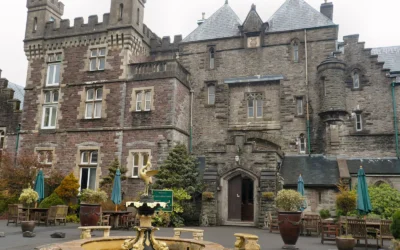
Craig y Nos Castle
Craig y Nos Castle: The Victorian Opera Star Who Built Her Own Theatre in the Brecon Beacons Adelina Patti was the most celebrated opera singer of the Victorian era — a soprano who commanded the largest fees in the world and whose voice filled La Scala in Milan,...