
Castle Drogo
Castle Drogo: England’s Last Castle, Built on a Dream Above Dartmoor
Most castles were built for survival: to hold territory, repel invaders, control roads and rivers. Castle Drogo was built for a dream. In the early years of the 20th century, Julius Drewe — a self-made millionaire who had founded the Home and Colonial Stores grocery chain and retired at 33 — became convinced that he was descended from a Norman knight named Drogo de la Baume, who had held lands in Devon in the 12th century.
He hired the greatest British architect of the day, Edwin Lutyens, to build him a castle on the land where he believed his ancestor had lived. The result, constructed in granite above the Teign Gorge on the edge of Dartmoor between 1911 and 1930, is the last castle to be built in England — and, in the eyes of many who study it, one of the most remarkable buildings in the country.
Lutyens did not build a pastiche. He built something that is genuinely difficult to date from the outside — a castle that feels at once ancient and unmistakably modern, medieval in its mass and materials but 20th-century in its geometry and restraint.
Castle Drogo was given to the National Trust in 1974, the first 20th-century building the Trust had ever acquired; it sits in the Dartmoor National Park above the Teign Gorge, with walking routes threading through the woodland below and the open moor stretching away beyond. This guide covers everything you need to plan your visit.
Where Is Castle Drogo?
Castle Drogo is located near the village of Drewsteignton, Devon, about 5 miles south of the A30 and roughly 30 to 40 minutes’ drive from Exeter. From the A30 or the A382, follow signs for Drewsteignton; the final approach lanes are narrow with tight bends, so allow time and drive carefully. A car park is available at the visitor centre.
By public transport, the Stagecoach 173 bus from Exeter city centre runs to Moretonhampstead, stopping near the castle drive, from where it is an 800-yard uphill walk to the visitor centre. The castle also lies on long-distance walking routes — the Two Moors Way and the Dartmoor Way both pass through the estate — making it accessible on foot from the surrounding moorland.
A Brief History of Castle Drogo
Julius Drewe was born in 1856 and made his fortune building the Home and Colonial Stores into one of the largest grocery chains in Victorian Britain. He retired at 33, acquired a substantial country house in Sussex, and then — in middle age — became absorbed in a genealogical obsession: the belief that his family descended from a Norman knight called Drogo de la Baume, who had held lands in Devon in the 12th century and whose name was embedded in the Devon placename Drewsteignton.
Drewe acquired land near the village, chose a site above the Teign Gorge, and in 1910 approached Edwin Lutyens to design his castle.
Lutyens was initially resistant — he found the idea of building a genuine castle, rather than a country house, architecturally eccentric — but Drewe was a persuasive and determined client, and the collaboration that followed produced something exceptional.
Construction began in 1911 on what Lutyens envisioned as a substantially larger building; as the decades passed and costs mounted, the plan was progressively reduced. The version that was completed by 1930 is roughly a third of the original design. Julius Drewe died in 1931, just a year after its completion. His son Adrian gave the castle to the National Trust in 1974.
The remarkable thing about Castle Drogo is the sincerity of the project. Julius Drewe was not building a theme park or a folly — he genuinely believed he was reclaiming ancestral land, and he poured his fortune and the last two decades of his life into the attempt. Whether his genealogy was accurate or invented, the castle he built is real, and it is extraordinary.
Architecture & Design
Lutyens built Castle Drogo almost entirely in granite — the same unforgiving stone that the moorland around it is made of — and the result is a building of exceptional weight and solidity. From a distance it reads as medieval, its towers and battlements and irregular profile suggesting centuries of accumulation; closer up, the geometry is precise and deliberate, the window arrangements and the proportions unmistakably early 20th century.
This is what Lutyens’s architectural critic Christopher Hussey called an authentic modernity: a building that earns the word “castle” without pretending to be anything other than what it is.
The interior is equally thoughtful. The Library, the Drawing Room and the Dining Room are furnished with the Drewe family’s possessions, including Venetian chandeliers that Julius and Frances Drewe bought on their honeymoon in 1891, Persian rugs, and an extensive collection of books. The Nursery contains objects of genuine charm, including a 120-year-old teddy bear and a Victorian dolls’ house.
The castle underwent a major conservation project completed around 2019 to address chronic water penetration — granite, as it turns out, is not entirely waterproof — and the building is now in better condition than it has been since it was built. The Lutyens-designed gardens, with their formal hedging and seasonal planting, sit between the castle and the gorge, with Persian Ironwood gazebos and long views over the Dartmoor landscape.
Legends & Lore
Castle Drogo has no ghost stories — it is barely a century old, and the Drewe family’s history, though dramatic in its ambitions, did not produce the centuries of siege and violence that stock older castles with their supernatural traditions. Its legend is a different kind: the legend that Julius Drewe constructed for himself, a genealogy reaching back to a Norman knight whose surname he believed had given the village its name.
Whether that genealogy was genuine or a confabulation, Drewe acted on it as completely as any medieval baron — spending an enormous fortune and twenty years building a castle on the land he believed his ancestor had held eight centuries before.
The castle’s cultural resonance has grown since Lutyens’ reputation recovered in the late 20th century. He is now recognised as one of the greatest British architects — designer of much of New Delhi, of the Cenotaph in Whitehall, of country houses across the British Isles — and Castle Drogo is considered among his most personal and idiosyncratic achievements.
For anyone interested in British architecture of the early 20th century, it is a pilgrimage destination: a granite castle above the gorge, built to reclaim an imaginary past, that turned out to be entirely real.
Visiting the Castle
Castle Drogo is a National Trust property, and National Trust members visit free. The visit centres on the castle interior and the gardens, with the Teign Gorge walks as a substantial additional attraction for those with time and energy.
Inside the castle, the Library, Drawing Room, Dining Room and Nursery are the main rooms open to visitors, each carrying the texture of a family home rather than a state palace: the Drewe family’s books and furniture, their honeymoon purchases and inherited objects, the 120-year-old teddy bear and the Venetian chandeliers.
The rooms are modest in scale compared with grander houses but deeply personal — the castle was lived in until 1974, and the rooms feel it. Upstairs, a digital book is available for visitors unable to reach the upper floors, giving access to spaces not otherwise on the route.
Outside, the Lutyens-designed gardens offer formal structure and seasonal colour, and the Teign Gorge below provides one of the finest walks in Dartmoor, from gentle riverside strolls to more demanding paths through the oak woodland. The castle café serves traditional Devon cream teas alongside light lunches and snacks, and picnics are welcome in designated areas. There is a gift shop. Photography for personal use is permitted throughout.
Check Tickets & Tour Times for Castle Drogo →
Check the official National Trust website for current opening times, prices and seasonal arrangements before your visit.
Where to Stay Near Castle Drogo
Castle Drogo does not offer visitor accommodation. The village of Drewsteignton, within walking distance of the castle, has a small number of local guesthouses, and the wider Dartmoor National Park — particularly the towns of Moretonhampstead and Chagford, both a short drive away — has a good range of independent hotels, inns and self-catering cottages. Exeter, 30 to 40 minutes away, provides the widest choice of hotels and is an excellent base for exploring both the castle and the wider Devon countryside.
Find Hotels & Stays Near Dartmoor →
The Best Time to Visit
Spring (April to June) is outstanding at Castle Drogo: the Lutyens gardens come into colour, the Teign Gorge woodland is at its most vivid, and the castle is quieter than in the peak summer school holidays. Summer (July and August) brings the best walking weather on Dartmoor, the café at its most welcoming and the longest opening hours, but also the busiest visitor days.
Autumn (September and October) turns the Teign Gorge to gold and russet — the gorge walk in autumn is one of the finest woodland walks in the south-west of England. Winter sees reduced hours and some areas closed, but the granite castle in bare winter moorland is an atmospheric and dramatic sight, and National Trust members can often find quiet visits at this time of year.
How to Get There
By car. From the A30, take the exit for Whiddon Down and follow the A382 towards Moretonhampstead, turning off at Sandy Park for Drewsteignton. The approach lanes are narrow with tight bends — allow time and drive carefully. Parking is available at the visitor centre. From Exeter, allow 30 to 40 minutes.
By bus. The Stagecoach 173 service from Exeter bus station runs to Moretonhampstead and stops near the castle drive (Monday to Saturday); from the stop it is an 800-yard walk uphill to the visitor centre.
On foot. The Two Moors Way and Dartmoor Way long-distance routes both pass through the estate, making Castle Drogo accessible to walkers tackling these trails.
Compare Transfers & Local Transport in Devon →
Nearby Attractions
Castle Drogo sits at the edge of Dartmoor, within easy reach of some of Devon’s finest landscape and heritage.
| Attraction | Why Visit | Distance |
|---|---|---|
| Dartmoor National Park | Wild moorland, prehistoric stone circles, dramatic tors and exceptional walking — England’s highest National Park south of the Yorkshire Dales | Adjacent |
| Fingle Bridge & Teign Gorge | One of Devon’s most beautiful river walks, through ancient oak woodland directly below the castle | On foot |
| Okehampton Castle (English Heritage) | A dramatic medieval ruin in the northern Dartmoor foothills — the largest castle in Devon | ~12 miles |
| Exeter Cathedral & City | A magnificent Gothic cathedral in a compact and walkable historic city — Roman walls, excellent museums | ~30 miles |
| Finch Foundry, Sticklepath (National Trust) | A working 19th-century edge-tool forge on the Taw river — one of the finest surviving examples of a traditional rural industry | ~10 miles |
A natural Devon day pairs Castle Drogo with a walk down into the Teign Gorge to Fingle Bridge and back — allow two to three hours for the full gorge walk alongside your castle visit.
Browse Devon & Dartmoor Tours →
Family & Accessibility
Families. Castle Drogo works particularly well for families with older children interested in architecture or design; the Nursery, with its 120-year-old teddy bear and Victorian dolls’ house, tends to delight younger visitors; and the Teign Gorge walk is an excellent family outdoor activity. The estate is within Dartmoor National Park, with all that implies for outdoor exploration on the moor.
Accessibility. A buggy runs from the visitor centre to the castle for visitors who need it. Some areas of the castle require stairs; a digital book provides access to upper-floor rooms for those who cannot use them. The gardens and much of the grounds are accessible.
Dogs on leads are welcome in the countryside and informal garden areas of the estate, though not in the formal gardens or the castle interior. National Trust members with accessibility needs should check the detailed access guide on the Trust’s website before visiting.
Practical Tips
- National Trust members visit free — Castle Drogo is a standard NT property and the membership pays for itself quickly given the range of NT sites in Devon and the south-west.
- Wear comfortable walking shoes — the approach from the visitor centre, the gardens and especially the Teign Gorge walk all require good footwear.
- Pack a waterproof walking jacket; Dartmoor weather can turn quickly, and the gorge walk involves exposure to the elements.
- Allow time for the Teign Gorge walk — the woodland below the castle is exceptional and the walk to Fingle Bridge and back is one of the finest in the south-west.
- Photography for personal use is permitted throughout; check with staff for any tripod or professional equipment restrictions.
- The castle café serves traditional Devon cream teas — a highly recommended stop after the gorge walk.
- Bring a portable power bank for a full day of photography in the castle and on the moor.
- Overseas visitor? Pack a UK travel adapter for Type G plugs.
Conclusion
Julius Drewe spent twenty years and a considerable fortune building a castle on land he believed his Norman ancestor had held eight centuries before. Whether the genealogy was accurate or imagined, the building he created with Edwin Lutyens is entirely real — a granite castle above the Teign Gorge that is both the last of its kind in England and, in its way, one of the most sincere.
The rooms carry the texture of a family that lived in them; the gorge below carries one of Dartmoor’s finest walks; and the building itself repays close attention in a way that older, more famous castles sometimes do not. There is nothing quite like Castle Drogo anywhere in England.
Frequently Asked Questions
What are the opening hours of Castle Drogo?
Opening times vary by season and are updated regularly on the National Trust website. Check before travelling, as hours can differ between the castle interior and the garden and grounds.
How much does it cost to visit Castle Drogo?
Standard National Trust admission fees apply; National Trust members visit free. Check the National Trust website for current prices.
Why is Castle Drogo called the last castle in England?
It was the last castle to be built in England, constructed between 1911 and 1930 for Julius Drewe to designs by Edwin Lutyens. No castle has been built since.
Who was Edwin Lutyens?
Sir Edwin Lutyens (1869–1944) was one of the most influential British architects of the early 20th century. He designed much of New Delhi, the Cenotaph in Whitehall, and hundreds of country houses across Britain. Castle Drogo is considered among his most personal works.
Is there parking at Castle Drogo?
A car park is available at the visitor centre, though spaces are limited. A small fee applies — check the National Trust website for current rates.
Is there food at Castle Drogo?
Yes — the castle café serves traditional Devon cream teas alongside light lunches and snacks. Picnics are welcome in designated areas of the grounds.
Are dogs allowed at Castle Drogo?
Dogs on leads are welcome in the countryside areas and the informal garden areas of the estate. They are not permitted in the formal gardens or inside the castle. Check the National Trust’s current policy before visiting.
Is Castle Drogo wheelchair accessible?
A buggy runs from the visitor centre to the castle, and some areas are accessible. Parts of the castle interior require stairs; a digital book provides access to upper-floor rooms for those unable to use the stairs. Check the National Trust’s detailed access guide before visiting.
Can I take photos at Castle Drogo?
Photography for personal use is permitted throughout the castle and grounds. Check with staff if you wish to use a tripod or professional equipment.
Is Castle Drogo suitable for children?
Yes — the Nursery with its historic toys, the garden and the Teign Gorge walks are all suitable for families. Older children with an interest in architecture or history will find the castle particularly engaging.
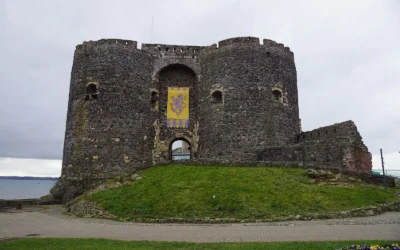
Carrickfergus Castle
Carrickfergus Castle: Ireland's Greatest Norman Fortress, Above Belfast Lough In 1315, Robert the Bruce's brother Edward invaded Ireland with an army and besieged Carrickfergus Castle. The siege went on so long, and provisions ran so completely dry, that the...
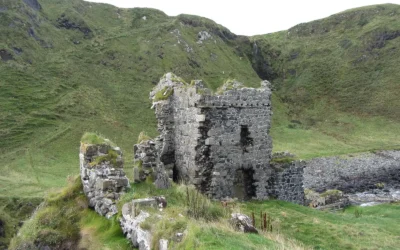
Kinbane Castle
Kinbane Castle: The White Head Castle at the End of 140 Steps, Above the Atlantic Kinbane means "white head" in Irish — Caisleán Ceinn Bán — and the name is immediately clear to anyone who looks at the limestone headland on which the castle stands: the cliff...
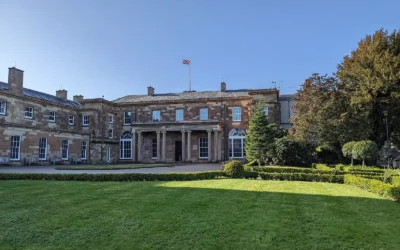
Hillsborough Castle
Hillsborough Castle: Where Northern Ireland's Peace Was Made, Twenty Minutes from Belfast In 1771, Wills Hill — the first Marquess of Downshire, one of the most powerful men in British colonial politics — received Benjamin Franklin at Hillsborough Castle. The...
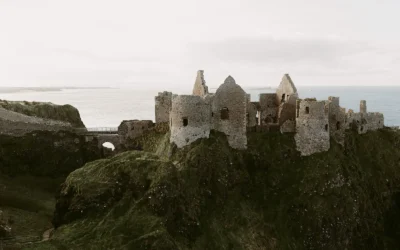
Dunluce Castle
Dunluce Castle: The Clifftop Ruin Where Game of Thrones Met Narnia, Above the Antrim Coast In 1588, a Spanish Armada ship called the Girona wrecked on the rocks near Dunluce Castle. The MacDonnell clan — who had controlled the castle since the 1550s — salvaged the...
Craig y Nos Castle
Craig y Nos Castle: The Victorian Opera Star Who Built Her Own Theatre in the Brecon Beacons Adelina Patti was the most celebrated opera singer of the Victorian era — a soprano who commanded the largest fees in the world and whose voice filled La Scala in Milan,...