
Caerlaverock Castle
Caerlaverock Castle: Scotland's Triangular Fortress, Where Edward I Came, Above the Solway
In 1300, Edward I of England laid siege to Caerlaverock Castle with a substantial army, and a herald named Walter of Exeter was present to record the event in a poem. The poem — the Roll of Caerlaverock — named each of the 87 knights who participated in the siege, with their heraldic devices described in careful Norman French.
It is one of the finest surviving examples of medieval heraldic poetry, and it makes the 1300 siege of this modest Scottish castle one of the best-documented military episodes in medieval Britain. The castle fell in two days.
Caerlaverock Castle is unique in the British Isles. It is the only castle in the UK built on a triangular plan — two drum towers flanking the gatehouse at the apex, the walls sweeping back to a single tower at the base — surrounded by a moat, earthwork ramparts and the flood plain of the River Nith.
It is built of warm red sandstone from Bankend; it sits within the Caerlaverock National Nature Reserve, where tens of thousands of barnacle geese winter on the Solway mudflats; and it contains, in the Nithsdale Lodging of the 1630s, some of the most ambitious early classical domestic architecture in Scotland. The Maxwell family held it for four centuries. In 1640 a Covenanting army besieged it for the last time, and the Maxwells abandoned it for good. This guide covers everything you need to plan your visit.
Where Is Caerlaverock Castle?
Caerlaverock Castle is 11 kilometres south of Dumfries, on the B725 road, on the flood plain of the River Nith close to the Solway Firth. Free parking is available at the castle. From Dumfries, the drive takes around 15 minutes. Public transport from Dumfries to the castle is limited — a taxi is the most practical option without a car.
The castle is managed by Historic Environment Scotland and is open year-round, with longer summer hours than winter hours.
A Brief History of Caerlaverock Castle
The site at Caerlaverock has been in use since at least the early medieval period — a Roman fort and a British hillfort from around the 10th century have been identified in the area, and the foundations of an earlier 13th-century castle are visible some 200 metres south of the surviving building.
The current triangular castle was begun in the 13th century by the Maxwell family, and it was this building that faced Edward I's siege of 1300 — an event recorded in the Roll of Caerlaverock, the heraldic poem that preserves the names and arms of 87 knights who took part. The castle fell within two days and was occupied by the English; it changed hands between English and Scottish forces repeatedly across the following century.
By the 15th century the castle was firmly back in Maxwell hands. Murdoch, Duke of Albany — the last of the Albany governors of Scotland — was imprisoned in one of the towers in 1425 before his execution, an episode that illustrates how central to Scottish affairs this remote Dumfries stronghold had become. In 1509, James IV granted the Maxwells a charter, consolidating their position.
In the 1630s, the 1st Earl of Nithsdale added the Nithsdale Lodging — a Renaissance range of residential apartments built into the inner courtyard, its classical façade remarkable for its ambition and sophistication in what was by then a military ruin of some antiquity. In 1640, a Covenanting army besieged the castle for thirteen weeks; the garrison surrendered, the Maxwells abandoned the site and Caerlaverock fell into the ruin that visitors explore today.
The remarkable thing about Caerlaverock is the contrast between the Renaissance domestic architecture of the Nithsdale Lodging and the medieval fortification surrounding it. The Maxwells built, in the 1630s, something more comfortable and more elegant than almost anything in south-west Scotland — inside a castle wall that had been obsolete as a military structure for two centuries.
Architecture & Design
The triangular plan is Caerlaverock's defining feature and the thing that makes it unique in Britain. Most medieval castles are rectangular, square or follow the irregular outlines of their sites; a true triangular castle — with three sides of deliberate equal proportion — is extremely rare. Caerlaverock's plan has the twin-towered gatehouse at the narrow apex and the round Murdoch's Tower at the single southern angle, with curtain walls connecting all three. The whole is surrounded by a water-filled moat crossed by a drawbridge.
The twin-towered gatehouse with its drum towers and gunloops is the most complete surviving structure — impressive in its remaining height and scale. The Nithsdale Lodging built into the inner courtyard in the 1630s is the architectural revelation: a three-storey Renaissance range with a classical façade of heraldic panels and carved architectural detail that Historic Environment Scotland describes as among the most ambitious early classical domestic architecture in Scotland.
To find it inside these walls, in this remote corner of Dumfries and Galloway, is genuinely unexpected. The remainder of the castle — the walls, the towers, the earthworks and the moat — survive as a striking and coherent ruin.
Note: parts of the castle are subject to ongoing restoration work and may be inaccessible during your visit. Check the official Historic Environment Scotland website for the current situation before travelling.
Legends & Lore
Caerlaverock has no established ghost tradition, but its surroundings carry one of the most unusual connections to British legend. The Battle of Arthuret, fought in 573 AD at a site close to the Solway Firth, ended in the death of King Gwenddoleu ap Ceidio and — according to Welsh tradition — the madness of his court poet, Myrddin Wyllt.
The legend of Myrddin Wyllt, who fled to the forest in grief and acquired prophetic powers, is widely considered one of the source traditions of the Merlin legend in Arthurian lore. The battlefield is a few miles from Caerlaverock. The connection is tenuous but genuine, and it gives this corner of south-west Scotland an unexpected place in the mythology of Britain.
The castle's most vivid documented story — the Roll of Caerlaverock itself, with its 87 named knights and their blazons — is more compelling than any ghost. That a poem was written about a two-day siege of a triangular castle in Dumfries in 1300, and that it survives, is one of the more extraordinary facts in the history of Scottish castles.
Visiting the Castle
Caerlaverock Castle is open year-round, with longer hours in summer and shorter hours in winter. The visit is self-guided and typically takes one to two hours, with the castle ruins, the moat and earthworks, and the Nithsdale Lodging providing the main focus.
The siege warfare exhibition with reconstructions of medieval siege engines gives a vivid sense of the castle's military history and is particularly engaging for families. The twin-towered gatehouse and the Nithsdale Lodging are the architectural highlights. The moat — still water-filled — and the earthwork ramparts give the site an unusually complete defensive character for a ruin.
A small café serves coffee and cake; picnic areas with benches and a large grass area are available for those bringing their own food. There is a gift shop. Dogs are welcome in the grounds. Photography is permitted for personal use throughout the castle. A nature trail through the adjacent Caerlaverock National Nature Reserve is accessible from the castle, offering a very different experience immediately alongside the ruins — the reserve is one of the finest sites in Scotland for winter barnacle geese.
Historic Environment Scotland members visit free.
Check Tickets & Tour Times for Caerlaverock Castle →
For current opening hours, prices and any restoration-related access restrictions, check the official Historic Environment Scotland website before you travel.
Where to Stay Near Caerlaverock Castle
Caerlaverock Castle does not offer visitor accommodation. Dumfries, 11 kilometres north, is the principal base — a historic market town with a range of hotels, guesthouses and bed and breakfasts, and direct train and bus connections to Glasgow and Carlisle.
Find Hotels & Stays in Dumfries →
The Best Time to Visit
Winter (November to February) is, uniquely for a castle in this guide, one of the finest times to visit Caerlaverock — not for the castle itself but for the spectacle of tens of thousands of barnacle geese arriving from Svalbard to winter on the Solway mudflats alongside the nature reserve. The sight and sound of the barnacle geese flock is extraordinary and combined with the castle ruins in winter light, it is an experience found nowhere else in Scotland.
Spring (April to June) is excellent for the castle and the reserve: the weather is generally kind, the ruins are quieter than in summer and the reserve is alive with breeding birds. Summer (July and August) brings the best weather and the longest hours, with the siege engine exhibition at full programme. Autumn (September to October) is quieter and the barnacle geese begin returning in late autumn.
How to Get There
By car. From Dumfries, take the B725 south for 11 kilometres; the castle is well signposted. Free parking is available.
By public transport. Buses from Dumfries to the castle area are limited. A taxi from Dumfries town centre takes around 15 minutes.
Compare Transfers & Local Transport in Dumfries →
Nearby Attractions
Caerlaverock sits in a quiet but rewarding corner of Scotland, with several fine sites within easy reach.
| Attraction | Why Visit | Distance |
|---|---|---|
| WWT Caerlaverock Wetland Centre | World-class wetland reserve managed by the Wildfowl & Wetlands Trust — the winter barnacle goose spectacle is exceptional | ~1 mile |
| Caerlaverock National Nature Reserve | The internationally important estuary reserve surrounding the castle — coastal walk to the Solway Firth | Adjacent |
| Robert Burns House, Dumfries | The house where Scotland's national poet lived and died — an intimate museum in the heart of Dumfries | ~7 miles |
| Sweetheart Abbey (Historic Environment Scotland) | A hauntingly beautiful Cistercian ruin founded in 1273, famous for the story of Devorgilla of Galloway | ~8 miles |
| Dumfries Museum | Comprehensive museum covering the history of Dumfries and Galloway, including a camera obscura with panoramic views | ~7 miles |
A natural Dumfries day pairs Caerlaverock Castle with the WWT Wetland Centre (both at the same site) and the Robert Burns House in town — castle, nature and poetry within a few miles.
Browse Dumfries & Galloway Tours →
Family & Accessibility
Families. Caerlaverock is particularly good for families. The siege engine exhibition captivates children immediately; the moat and the triangular plan are instantly understandable and appealing; the large grass area and picnic benches make it an easy place to spend time; and the castle hunt activity engages younger visitors in the history. The nature reserve alongside adds a wildlife dimension that extends the day naturally.
Accessibility. The grounds are generally accessible, but ongoing restoration work may make some areas inaccessible. Uneven surfaces are present in parts of the ruins. Check the Historic Environment Scotland accessibility information before visiting. Dogs are welcome in the grounds on leads.
Practical Tips
- Check the official website before you travel — ongoing restoration work means some areas of the castle may be inaccessible, and prices may be adjusted to reflect this. The situation changes as restoration progresses.
- Wear comfortable walking shoes with grip — the castle grounds involve uneven surfaces, gravel and grass.
- Pack a waterproof walking jacket; the Solway coast location means the weather can change quickly.
- Bring a portable power bank for photography across the castle, moat and the nature reserve.
- If visiting in winter, combine the castle with the WWT Wetland Centre for the barnacle geese spectacle — one of the finest wildlife experiences in southern Scotland.
- Photography is permitted for personal use throughout the castle grounds.
- Overseas visitor? Pack a UK travel adapter for Type G plugs.
Conclusion
Caerlaverock Castle is a ruin of red sandstone, triangular and moated, standing in a flood plain where barnacle geese come in winter from the Arctic. The Roll of Caerlaverock — the poem written in 1300 about a two-day siege — is one of the finest documents of medieval chivalric culture in Britain, and the name of every knight who besieged this castle is preserved in it.
Inside the walls, the Nithsdale Lodging of the 1630s is a surprise: sophisticated Renaissance architecture in one of the most remote corners of Scotland. And in the nature reserve alongside, the Solway Firth is one of the great estuaries of Britain. Caerlaverock gives the visitor more than one castle usually can.
Frequently Asked Questions
What are the opening hours of Caerlaverock Castle?
The castle is open year-round, with longer hours in summer and shorter hours in winter. Check the official Historic Environment Scotland website for current times and any restoration-related access changes.
How much does it cost to visit Caerlaverock Castle?
Admission fees vary by age. Historic Environment Scotland members visit free. Prices may currently be adjusted to reflect ongoing restoration work — check the official website for current rates.
What makes Caerlaverock Castle unique?
It is the only castle in the United Kingdom built on a genuine triangular plan, with a twin-towered gatehouse at the apex and towers at each angle, surrounded by a moat. This design is extremely rare anywhere in Europe.
What is the Roll of Caerlaverock?
A poem composed in Norman French by Walter of Exeter, recording the 1300 siege of the castle by Edward I and naming 87 knights who participated, with their heraldic devices described in detail. It is one of the finest surviving examples of medieval heraldic poetry in Britain.
What is the Nithsdale Lodging?
A three-storey Renaissance range of apartments built into the inner courtyard in the 1630s by the 1st Earl of Nithsdale, featuring a classical façade of carved heraldic panels. It is considered among the most ambitious early classical domestic architecture in Scotland.
Is Caerlaverock Castle suitable for families?
Very much so — the siege engine exhibition, the triangular moat, the castle hunt activity, the picnic areas and the adjacent nature reserve all work well for families.
Is there food at Caerlaverock Castle?
A small café serves coffee and cake. Picnic areas with benches and a large grass area are available.
Are dogs allowed at Caerlaverock Castle?
Yes — dogs are welcome in the castle grounds on leads.
Can I take photos at Caerlaverock Castle?
Photography is permitted for personal use throughout the castle grounds.
What wildlife can I see near Caerlaverock Castle?
The Caerlaverock National Nature Reserve and the adjacent WWT Wetland Centre are internationally important for wintering barnacle geese, which arrive from Svalbard in autumn and winter in enormous flocks on the Solway Firth mudflats. Other species include various waders, wildfowl and raptors throughout the year.
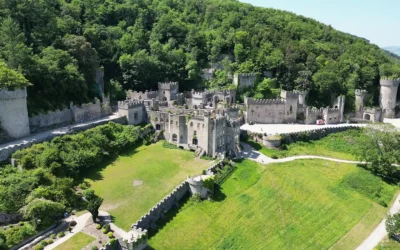
Gwrych Castle
Gwrych Castle: Gothic Revival Ruin, WWII Refuge and Wales's Most Unexpected TV Star In 1940, as Nazi Germany occupied much of Europe, a group of Jewish young people arrived at a ruined Gothic Revival castle on the North Wales coast. Gwrych Castle — already...
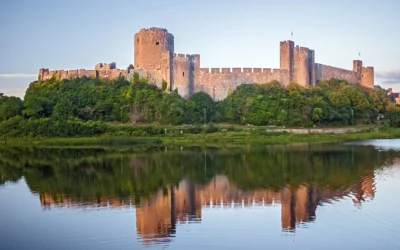
Pembroke Castle
Pembroke Castle: Where Henry VII Was Born, Above a Prehistoric Cave Beneath Pembroke Castle, in the limestone bedrock on which the fortress stands, there is a cave. Wogan Cavern is a prehistoric chamber that was occupied by early humans long before any castle existed...
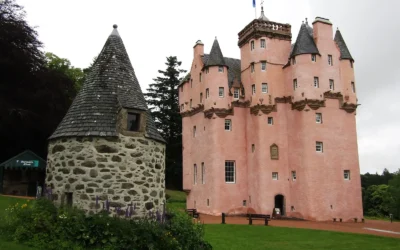
Craigievar Castle
Craigievar Castle: The Pink Tower That Danzig Willy Built, Rising Above Aberdeenshire William Forbes made his fortune trading with the Baltic port of Danzig — now Gdańsk in Poland — in the early years of the 17th century. So successful was his trade that he became...
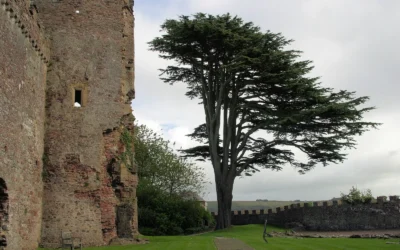
Laugharne Castle
Laugharne Castle: The "Brown as Owls" Fortress Where Dylan Thomas Found His Voice Dylan Thomas called it "the brown as owls castle" — a phrase that tells you as much about the poet's way of seeing as it does about the castle itself. Thomas...
Beaumaris Castle
Beaumaris Castle: The Most Perfect Fortress Never Finished, on the Isle of Anglesey In 1295, Master James of St George began designing the most geometrically perfect concentric castle in the history of medieval military architecture. The inner ward was rectangular,...