
Aysgarth Falls
Aysgarth Falls: Wensleydale's Three-Stage Waterfall
You hear them before you see them. Walking down through Freeholders' Wood, the sound of the River Ure builds steadily until you round a bend and the whole river spreads itself across a series of broad limestone steps, cascading from one wide stage to the next in a long, churning procession of white water. This is Aysgarth Falls — three falls in one, each with its own character, and together one of the most dramatic sights in the Yorkshire Dales.
It has drawn visitors for over two hundred years: Wordsworth, Turner and John Ruskin all made the journey here and enthused about the place in ink and paint. More recently, it drew a Hollywood film crew — the river fight between Robin Hood and Little John in Robin Hood: Prince of Thieves was filmed at Aysgarth, and so was a scene from the 1992 Wuthering Heights. The falls have been named one of the Seven Natural Wonders of the North too. Yet for all that fame, on a quiet morning in spring or a golden afternoon in autumn, it still feels like a discovery.
Here is everything you need to know to plan a visit.
About Aysgarth Falls
Aysgarth Falls are a triple flight of waterfalls on the River Ure in mid-Wensleydale, carved by Ice Age meltwater over broad, nearly horizontal limestone beds across an almost one-mile stretch. The total drop is around 200 feet (61 metres) across the three stages, though the individual falls vary considerably in height.
Upper Force is the smallest in drop but the most dramatic in presence — a powerful single surge over a pronounced lip, best seen from the viewing platform at the visitor centre. Middle Force is the widest of the three, the River Ure spreading itself broadly across the limestone, surrounded by the ancient oak woodland of Freeholders' Wood. Lower Force is the most tranquil, with still pools among the rocks and the quietest atmosphere of all. Many visitors only see the Upper Falls; it is worth making the effort for all three.
The site is a designated Site of Special Scientific Interest for its geology, and forms part of the Yorkshire Dales National Park. The woodland is home to roe deer, dormice and red squirrels, and the river regularly draws kingfishers and dippers. In autumn, salmon can sometimes be seen leaping the falls on their way upstream — one of the less expected treats of an autumn visit.
Getting there
By car, Aysgarth Falls lie on the A684, the main road that runs the length of Wensleydale between Leyburn and Hawes. Leyburn is around seven miles to the east; Hawes about ten miles to the west. The National Park visitor centre and car park sit at Church Bank, just off the A684, with brown tourist signs directing you in. From Leeds or the A1(M), the simplest approach is to follow the A684 west from Leyburn — a beautiful drive through the dale. From the north, the A684 is reached from Bedale and Northallerton.
By public transport, DalesBus services run through Wensleydale on certain days; check current routes before relying on them, as services are seasonal and limited. The Wensleydale Railway, a heritage line, runs from Leeming Bar towards Redmire, a few miles east of Aysgarth.
If you're arriving from further afield and would rather not drive, a local transfer can take the strain.
Compare Transfers & Local Transport in the Yorkshire Dales →
Where does the name come from?
The name is Old Norse in origin, meaning roughly "the open space among the oak trees" — a quiet image of the wooded valley the River Ure has carved through the limestone plateau. The village name appears in the Domesday Book of 1086 as "Echescard," which confirms how old the settlement here truly is.
There is no dramatic legend attached to the falls in the way of some Highland waterfalls; the magic here is quieter and more cumulative — the depth of the woodland, the breadth of the river across the limestone, and the long procession of artists and poets who found the place irresistible.
The walk and the trails
The heart of a visit is the walk from the visitor centre to all three falls. The Upper Falls are the closest, a short walk from the car park with a viewing platform that gives a clear head-on view of the main cascade. For the Middle and Lower Falls, a well-surfaced path descends through Freeholders' Wood, with boardwalks and riverside sections, covering about 1.5 miles in total — an easy walk taking most people around an hour.
For accessibility, the Miles Without Stiles route is a purpose-built path to a viewing platform overlooking Middle Force, manageable for wheelchairs and pushchairs with care. The Lower Falls involve around seventy steps, so the most accessible viewpoint is the Middle Falls platform.
Beyond the falls themselves, several longer circular walks head out from Aysgarth. A four-mile circular follows the Ure downstream to the hamlet of West Burton and the pretty Cauldron Falls before looping back. A six-mile circular climbs north across the Dales pastures to Bolton Castle, with sweeping views of Wensleydale on the return via Carperby. A longer route heads upstream to the separate Mill Gill Force near Askrigg. Maps and route leaflets are available from the visitor centre.
Parking
The main car park is the Yorkshire Dales National Park car park at Church Bank (DL8 3TH), with space for around eighty cars, four designated bays for Blue Badge holders, and electric charging points. It's pay-and-display, card payments accepted; check the machine on site for current charges.
A second, smaller car park near the old railway station is a useful overflow option when the main car park is full. At busy times — particularly summer weekends and bank holidays — arriving early is the most reliable plan. Check the official Yorkshire Dales National Park website for current details before you set off.
Facilities
Aysgarth Falls is notably well set up for a day out. The National Park Visitor Centre at the car park has a café serving hot and cold food and drinks, toilets (including RADAR-key disabled facilities), an interpretive exhibition on the geology and wildlife of the site, and a shop. It's worth a look before heading to the falls.
The Yore Mill Craft Shop and Gallery sits right beside the Upper Falls in the converted former mill building — art, crafts and local produce in a fine setting. For anything further, Leyburn has the full range of shops and cafés about seven miles east.
Things to know before you go
Best time to visit. The falls are at their most powerful after heavy rain. Spring brings snowdrops, then primroses and bluebells in Freeholders' Wood. Autumn is outstanding — rich colour in the woodland and the falls in good flow; watch for salmon leaping in autumn. Weekdays are always quieter than weekends.
Dogs. Welcome, and should be kept on leads near livestock and the river.
Accessibility. The Miles Without Stiles path and Middle Falls viewing platform are accessible for wheelchairs and pushchairs. An all-terrain mobility scooter (Tramper) can be booked in advance through Access the Dales. The Lower Falls require around seventy steps and are not wheelchair-accessible.
Families and safety. An excellent family walk — the paths are well-made and the falls endlessly watchable. Keep children close near the water: after rain the limestone is very slippery and the current is real.
Swimming. Not recommended. Strong currents, slippery rock and rising water levels after rain make the river genuinely hazardous.
Where to stay
The natural base is Leyburn, the small market town around seven miles east on the A684, with the widest choice of accommodation in the dale. Alternatively, Hawes ten miles west makes a fine base for exploring the upper dale — with the Wensleydale Creamery and Hardraw Force also close by.
Find Hotels & Stays in Leyburn →
What to pack
The walk is easy, but Yorkshire weather and the spray near the falls deserve a little preparation.
- A pair of waterproof walking boots — the paths can be muddy after rain, and the limestone near the water is very slippery.
- A waterproof jacket and warm layers; Wensleydale weather changes quickly.
- A pair of binoculars for the kingfishers, dippers, red squirrels and (in autumn) leaping salmon.
- A travel tripod for long-exposure shots of all three falls.
Water, snacks and the Yorkshire Dales National Park walking app round out the kit nicely — though the café at the visitor centre has you covered before and after.
Nearby attractions and making a day of it
Wensleydale is rich in things to do, and Aysgarth sits almost exactly in its middle, making it a natural starting point for a full day out.
| Attraction | Why Visit | Distance |
|---|---|---|
| Bolton Castle | A towering 14th-century quadrangular fortress where Mary Queen of Scots was imprisoned in 1568 — falconry, archery and sweeping Wensleydale views | ~3 miles |
| West Burton & Cauldron Falls | A beautiful, unspoilt Dales village with its own charming waterfall — easily combined on the four-mile circular walk | ~2 miles |
| The Forbidden Corner | A unique labyrinth of tunnels, follies and surprises in a four-acre garden near Middleham — one of Yorkshire's most unusual family days out | ~7 miles |
| Middleham Castle | The childhood home of Richard III, a substantial ruined keep above a racehorse-training town with strong Plantagenet history | ~9 miles |
| Hardraw Force | England's highest single-drop waterfall above ground — and the waterfall where Robin Hood took his famous swim in the same film | ~10 miles |
For a classic Wensleydale day, walk all three falls in the morning, take the six-mile circular up to Bolton Castle, and finish with the Wensleydale Creamery in Hawes. Or pair Aysgarth with The Forbidden Corner and Middleham Castle for a day that mixes nature, history and something genuinely unexpected.
Browse Yorkshire Dales Tours & Experiences →
Photography tips
Aysgarth Falls offers three different shots in one visit. The Upper Falls platform gives a clear, head-on view of the main cascade. Middle Force spreads wide across the rock — best captured in overcast light that tames the glare on white water. Lower Force rewards a low angle among the rocks, with the still pools and the woodland behind.
Visit after rain for the fullest flow, aim for overcast or soft early-morning light, and bring a tripod — the long-exposure silk effect on a broad fall like Middle Force is one of the Dales' best landscape shots.
Conclusion
Aysgarth Falls offer something genuinely rare: a waterfall walk that gets better as you go further. Most visitors stop at the Upper Force, watch the river hurl itself over the edge, and leave satisfied. But the walk down through Freeholders' Wood to the wide, serene beauty of Middle Force, and on to the quiet pools of Lower Force, is the real experience. Time it for after the rain, go all the way to the bottom, and Wensleydale's most famous waterfall will earn every step.
FAQs
How tall are Aysgarth Falls?
The three falls drop a combined total of around 200 feet (61 metres) across an almost one-mile stretch of the River Ure. The individual heights of Upper, Middle and Lower Force vary; Upper Force is the most powerful, Middle Force is the widest, and Lower Force is the most tranquil.
Is there a fee to visit Aysgarth Falls?
The falls themselves are free to visit. The Yorkshire Dales National Park car park charges for parking; check the pay-and-display machine on site for current rates.
What is the best time to visit Aysgarth Falls?
After heavy rain for the fullest and most dramatic flow, or in spring for woodland flowers, or in autumn for colour and the chance to see salmon leaping the falls. Weekdays are always quieter than weekends.
Are dogs allowed at Aysgarth Falls?
Yes, dogs are welcome and should be kept on leads near livestock and the river.
Is Aysgarth Falls accessible for wheelchairs?
Yes, in part. The purpose-built Miles Without Stiles path leads to a viewing platform overlooking Middle Force, suitable for wheelchairs and pushchairs with care. An all-terrain Tramper scooter can be booked in advance through Access the Dales. The Lower Falls require around seventy steps and are not accessible by wheelchair.
What are the parking options at Aysgarth Falls?
The main car park is at Church Bank (DL8 3TH) with around eighty spaces and Blue Badge bays; a smaller car park near the old railway station is a useful alternative. Arrive early at busy times. Check the official Yorkshire Dales National Park website for current charges.
Can I swim at Aysgarth Falls?
Swimming is not recommended — strong currents, slippery rock and unpredictable water levels after rain make the river hazardous.
What should I wear when visiting Aysgarth Falls?
Sturdy, waterproof footwear with good grip, and a waterproof jacket with warm layers. The paths near the falls can be slippery and the Dales weather changes quickly.
Was Aysgarth Falls really used in Robin Hood?
Yes. The falls were a filming location for Robin Hood: Prince of Thieves (1991) — most famously the fight between Robin Hood and Little John in the river. They also appeared in the 1992 Wuthering Heights and were named one of the Seven Natural Wonders of the North.
Are there guided tours of Aysgarth Falls?
There are no regular guided tours of the falls. The visitor centre staff can give advice on routes, and guided walking experiences across the Yorkshire Dales are available.
What's nearby?
Bolton Castle, West Burton and Cauldron Falls, The Forbidden Corner near Middleham, Middleham Castle, and Hardraw Force are all within easy reach, along with the Wensleydale Creamery in Hawes.
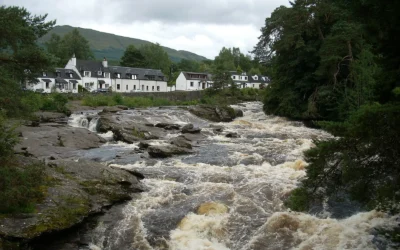
Falls of Dochart
Falls of Dochart: The Waterfall at the Heart of a Village Most waterfalls require a walk to find. The Falls of Dochart require no such effort at all — they run directly through the centre of Killin, beneath the old stone Bridge of Dochart, in full view of the...
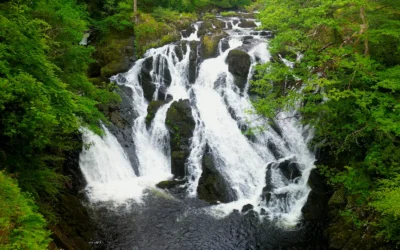
Swallow Falls
Swallow Falls: Wales' Highest Continuous Waterfall The River Llugwy has been performing for visitors at Swallow Falls for well over a century, and it still knows exactly what it is doing. The water tumbles 42 metres through a narrow, tree-lined gorge in a sequence of...
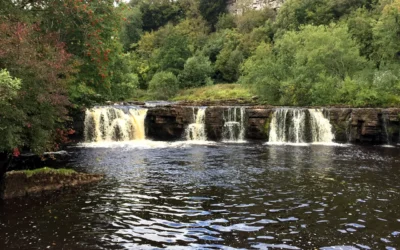
Wain Wath Force
Wain Wath Force: The Broadest Waterfall in Upper Swaledale Wain Wath Force will never win a prize for height. The River Swale drops only around a metre and a half here, sliding gently over a wide limestone ledge beneath the pale cliffs of Cotterby Scar. But what it...
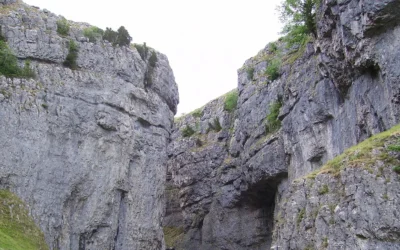
Gordale Scar
Gordale Scar: The Gorge That Stopped Wordsworth in His Tracks There is a moment as you walk the flat, pleasant path from Malham when the gorge closes around you without warning. The sky narrows to a strip above. The walls rear up on either side — overhanging...
Low Force
Low Force: Teesdale's Most Peaceful Waterfall High Force gets the crowds. Low Force gets the quiet. Just a mile and a half downstream from its more famous neighbour, where the River Tees spreads wide across a series of 18-foot cascades over the Whin Sill...