
Anvil Point Lighthouse
Anvil Point Lighthouse: A Beacon on Dorset’s Jurassic Coast
On a headland just south of Swanage, where the cliffs of the Isle of Purbeck drop away to the English Channel, Anvil Point Lighthouse has marked this stretch of the Dorset coast since 1881. It is a squat, sturdy little tower of locally quarried Purbeck stone — not tall, but perfectly placed, standing 45 metres above the sea on the edge of Durlston Country Park. All around it stretches the Jurassic Coast, England’s only natural UNESCO World Heritage Site, where 185 million years of Earth’s history are written into the rock.
This is a coast for walkers, wildlife-watchers and anyone who loves dramatic, unspoilt scenery, with the South West Coast Path running right past the lighthouse and the cliffs alive with seabirds and wildflowers. Anvil Point remains a working light, automated since 1991, and although its tower is not open for tours, the headland is freely open to all — and you can stay the night in one of its two former keepers’ cottages, Veronica and Rowena. This guide covers everything you need to know about visiting and staying at Anvil Point.
Where Is Anvil Point Lighthouse?
Anvil Point Lighthouse stands on a headland within Durlston Country Park, approximately two miles south of Swanage town centre in Dorset. It is reached by car via the A351, using the sat-nav postcode BH19 2JL, or on foot through Durlston Country Park or along the South West Coast Path.
The setting is the heart of the Jurassic Coast: rugged Purbeck cliffs, the open Channel, and the rich landscape of Durlston Country Park, with its mix of gentle and more challenging walking trails. Nearby are the historic Tilly Whim Caves, former quarry workings cut into the cliffs. Note that the access roads to the lighthouse are narrow.
A Brief History of Anvil Point Lighthouse
Anvil Point was built in 1881 by the celebrated Trinity House engineer James Douglass — the same engineer responsible for the great Eddystone Lighthouse out in the Channel. It was first lit on 18 June 1881. Its purpose was the familiar one of this coast: to prevent the shipwrecks that had so often befallen vessels navigating the waters off the Isle of Purbeck, providing a clear mark for ships passing along the English Channel.
The light was originally produced by a paraffin burner, and the lighthouse was fully automated in 1991, when its keepers departed and the cottages passed into new use. For much of its history it carried an unusual fog signal — a small cannon, fired to warn ships in poor visibility — which was discontinued in the 1980s.
The remarkable thing about Anvil Point is how it captures a moment in lighthouse history. It was built at the height of the Victorian age of lighthouse engineering, by one of the greatest engineers of that age, using stone quarried from the very cliffs on which it stands — so the lighthouse is, quite literally, made of the Jurassic Coast it watches over. Its light still flashes every ten seconds, reaching some nine nautical miles out to sea, exactly as it was designed to do well over a century ago.
Architecture & The Light
Anvil Point is a short, round tower standing 12 metres tall, set 45 metres above sea level on its clifftop headland — built low and solid, in the practical, durable style of late-Victorian lighthouses, from locally quarried Purbeck stone that ties it visually to the landscape. There is no soaring height here; the lighthouse’s effectiveness comes from its elevated clifftop position rather than the tower itself.
The light, originally a paraffin burner, now flashes white every ten seconds and is visible for around nine nautical miles. The rotating lens that produces this characteristic flash is the tower’s key working feature. For many years a fog signal warned ships in poor visibility — remarkably, in its earliest form this was a small cannon, fired by hand, later replaced and then discontinued in the 1980s. The lighthouse has been automated since 1991 and remains an active navigational aid on the Channel.
Visiting the Lighthouse
Anvil Point is a place to walk, watch and stay rather than tour. The lighthouse tower is not open to the public for climbing or internal visits — but the headland and its surroundings are freely open and richly rewarding.
The lighthouse grounds and the clifftops around them are accessible during daylight hours, with no admission fee. The South West Coast Path runs directly past the lighthouse, offering superb coastal walking in both directions, and the wider Durlston Country Park has trails to suit everyone from gentle strollers to serious walkers, along with a visitor centre and the famous Great Globe, a huge Victorian stone globe near Durlston Castle. The headland is ideal for a picnic, for photography, or simply for taking in the sweeping views — though the cliffs are steep, so caution is needed.
There is no fee to visit the grounds; only the cottage stays carry a charge. For walkers exploring the Jurassic Coast, Anvil Point is a memorable stop at any time of year.
Staying at the Lighthouse
The real draw of Anvil Point is the chance to stay in one of its two former lighthouse keepers’ cottages — Veronica and Rowena — set right beside the working tower on its Jurassic Coast headland. These self-catering cottages combine genuine lighthouse heritage with comfortable, well-equipped modern living, and all enjoy panoramic sea views. To wake here, with the Channel spread out below and the coast path at the door, is a wonderful and increasingly rare experience.
The two cottages suit families, couples and small groups:
|
Cottage |
Sleeps |
Features |
|
Veronica |
6 |
4 bedrooms, 2 bathrooms, sea views, on-site parking (no dogs) |
|
Rowena |
5 |
3 bedrooms, en-suite, sea views, parking; up to 2 dogs welcome |
Both cottages are fully equipped for self-catering, with Wi-Fi (light browsing), central heating and parking. A minimum stay applies (typically two to three nights), and a few practical notes are worth knowing: the water supply is from a borehole (bottled drinking water is provided), mobile signal is limited, and barbecues, fireworks and drones are not permitted. As prices and availability vary by season, check current rates when you book.
Find Lighthouse & Coastal Stays Near Swanage →
The Best Time to Visit
Spring (March to May) is a glorious time on this coast — Durlston’s clifftops fill with wildflowers, seabirds return to nest, and the early-season light is wonderfully clear, all before the summer holiday crowds. Summer (June to August) brings the warmest weather, the longest days and the best chance of calm seas for spotting dolphins offshore; it is the busiest time and the cottages book up earliest.
Autumn (September to November) offers quieter trails, dramatic Channel skies and excellent walking weather, with the migrating birds passing along the coast. Winter (December to February) is wild and bracing on this exposed headland, with few visitors and a stark beauty all its own, though some facilities may be reduced.
For the calmest visit, weekday mornings outside the school holidays are best. This is an exposed clifftop coast where the weather and wind can change quickly, so always check the forecast and dress accordingly.
How to Get There
By car. The most practical option. From Swanage, follow the A351 and the local roads south towards Durlston, using the postcode BH19 2JL — the lighthouse is about two miles, roughly ten minutes, from the town centre. Note that the final access roads are narrow, with potential overhanging vegetation.
By public transport. Swanage, two miles away, is the nearest town, reachable by bus from Poole and Wareham and, seasonally, by the heritage Swanage Railway. From Swanage, the lighthouse is reached on foot through Durlston Country Park or by a short taxi ride; there is no direct public transport to the lighthouse itself.
On foot. The South West Coast Path runs directly past Anvil Point, and the walk from Swanage through Durlston Country Park is one of the finest short coastal walks in Dorset. The terrain is undulating and the cliffs are steep, so wear proper footwear and keep well back from the edges.
Compare Transfers & Local Transport in Dorset →
Wildlife & The Coast
The cliffs and seas around Anvil Point are a haven for wildlife, and Durlston Country Park is one of the finest wildlife sites on the south coast. The waters of the Channel below are home to dolphins and porpoises, seen on calm days, while the cliffs host important colonies of nesting seabirds — including guillemots and razorbills — through the spring and summer breeding season. The limestone grassland of Durlston is famous for its wildflowers and butterflies, and the park is an excellent place to watch for migrating birds in spring and autumn.
A pair of binoculars for wildlife watching is well worth bringing — the clifftops are superb for scanning the sea for dolphins and the cliff ledges for nesting seabirds. The South West Coast Path stretches away in both directions, past Tilly Whim Caves and on towards Durlston Castle and beyond, inviting walkers to make a full day of this spectacular Jurassic shore.
Nearby Attractions
Anvil Point sits in one of the richest corners of the Dorset coast, with outstanding attractions close by.
|
Attraction |
Why Visit |
Distance |
|
Durlston Country Park |
Clifftop nature reserve, visitor centre and the Victorian Great Globe |
Adjacent |
|
Tilly Whim Caves |
Dramatic former cliff quarry workings on the coast path |
Short walk |
|
Swanage |
Seaside town with a sandy beach, pier and heritage steam railway |
~2 miles |
|
Corfe Castle (NT) |
One of England’s most evocative ruined castles, National Trust |
~6 miles |
|
Lulworth Cove |
A world-famous geological marvel on the Jurassic Coast |
~12 miles |
A natural day out: walk the coast path from the lighthouse through Durlston Country Park in the morning, explore Tilly Whim Caves and the Great Globe, then head into Swanage for the afternoon.
Browse Jurassic Coast Tours & Boat Trips →
Safety & Accessibility
Safety. The cliffs around Anvil Point and Durlston are dramatic and dangerous — stay well back from the edges, keep to the marked paths, and supervise children closely at all times. This is an exposed clifftop where strong winds and sudden weather changes are common; check the forecast and dress appropriately. Take particular care on the coast path in wet or windy conditions.
Accessibility. The grounds are reached by walking paths, with uneven terrain and steep cliffs requiring caution. The lighthouse tower is not open to the public, and no climbing is permitted. The cottages have practical facilities but sit in a rugged clifftop setting. Walking trails in Durlston vary in difficulty, with some requiring moderate fitness. Visitors with specific access needs should check with the booking agent.
Families. The cottages are family-friendly and Durlston Country Park is wonderful for children, with its wildlife and the Great Globe, but the steep cliffs demand constant supervision of younger children.
Practical Tips
- Book your cottage stay well ahead — there are only two, in a sought-after Jurassic Coast location, and they fill quickly in summer. Note the minimum-stay requirement.
- Remember the tower is not open for tours — Anvil Point is about the headland, the coast path and the cottages.
- Wear waterproof walking boots — the coast path and clifftops are uneven and often wet.
- Pack a waterproof walking jacket; this clifftop headland is exposed and the weather turns quickly.
- Bring binoculars for the dolphins and the nesting seabirds — Durlston is one of the best wildlife sites on the south coast.
- Overseas visitor? The UK uses Type G plugs, so a UK travel adapter is essential for charging your devices.
- Note the practical details if staying: limited mobile signal, borehole water (bottled water provided), and narrow access roads.
- Don’t miss Durlston’s Great Globe and visitor centre — a short walk from the lighthouse.
Conclusion
Anvil Point is a small lighthouse with a large setting — a sturdy Victorian beacon of Purbeck stone, built by one of the great lighthouse engineers, standing watch over the wild and ancient Jurassic Coast. You cannot climb its tower, but you can walk the cliffs that surround it, watch dolphins pass below, and stay the night in a keeper’s cottage with the Channel at your window. For lovers of dramatic coast, rich wildlife and deep history, Anvil Point and Durlston offer one of the most rewarding corners of the Dorset shore.
Frequently Asked Questions
What is the history of Anvil Point Lighthouse?
Anvil Point was built in 1881 by the renowned Trinity House engineer James Douglass and first lit on 18 June 1881, to prevent shipwrecks along the Dorset coast. It was automated in 1991.
Where is Anvil Point Lighthouse located?
On a headland within Durlston Country Park, about two miles south of Swanage in Dorset, on the Jurassic Coast. The sat-nav postcode is BH19 2JL.
Can I visit Anvil Point Lighthouse?
The grounds and surrounding clifftops are open during daylight hours and free to explore, but the lighthouse tower is not open for tours or climbing. The main draw is staying in one of the keepers’ cottages.
What are the opening hours of Anvil Point Lighthouse?
The grounds are accessible from dawn to dusk. Cottage check-in and check-out times depend on your booking.
Is there an admission fee for Anvil Point Lighthouse?
There is no fee to visit the grounds or walk the surrounding coast path. Only the cottage rentals carry a charge.
Can I climb to the top of Anvil Point Lighthouse?
No — the lighthouse tower is not open to the public.
Can I stay overnight at Anvil Point Lighthouse?
Yes. Two former keepers’ cottages, Veronica (sleeps 6) and Rowena (sleeps 5), are available as self-catering holiday accommodation. Booking well ahead is recommended, and a minimum stay applies.
Is Anvil Point Lighthouse suitable for families?
Yes — the cottages are family-friendly and Durlston Country Park is wonderful for children. The steep cliffs require constant supervision of young children.
What wildlife can I see near Anvil Point Lighthouse?
Dolphins and porpoises offshore, important colonies of nesting seabirds on the cliffs, and wildflowers and butterflies in Durlston Country Park, especially in spring and summer. Bring binoculars.
What makes Anvil Point Lighthouse unique?
Its setting on the UNESCO Jurassic Coast, its construction by the great engineer James Douglass from local Purbeck stone, its former cannon fog signal, and the chance to stay in authentic keepers’ cottages all set it apart.
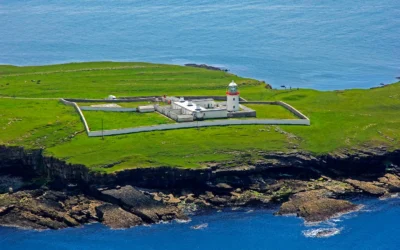
St John’s Point Lighthouse
St John's Point Lighthouse: The Yellow-Banded Giant of County Down In Van Morrison's song "Coney Island," the lighthouse at St John's Point is mentioned in a list of the things that make the Irish coast of County Down feel like home — somewhere between the Mourne...
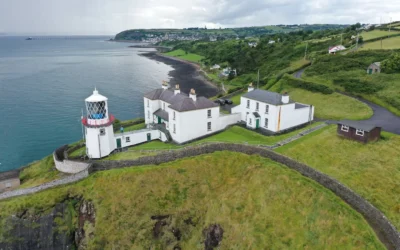
Blackhead Lighthouse
Blackhead Lighthouse: The Titanic Passed Here, and You Can Stay the Night In April 1912, RMS Titanic — built at Harland and Wolff's yards on Queen's Island in Belfast, launched in 1911 and fitted out over the following months — left Belfast Lough for the last time on...
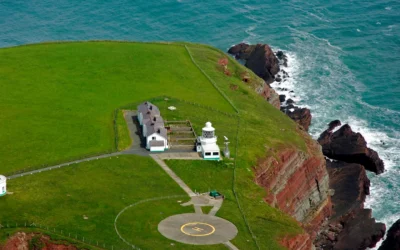
St Ann’s Head Lighthouse
St Ann's Head Lighthouse: The Last Shore-Based Light in Pembrokeshire, on the Tudor Coast In August 1485, a small fleet carrying Henry Tudor — exiled pretender to the English throne — rounded this headland and landed at Mill Bay, a sheltered cove just to the north of...
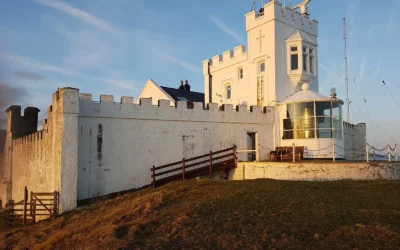
Point Lynas Lighthouse
Point Lynas Lighthouse: A Castle on the Cliffs of North Wales, Guiding Liverpool's Ships Since 1766 Most lighthouses are towers. Point Lynas is not. The lighthouse that stands on the rocky headland at the north-east corner of Anglesey is a low, castellated structure...
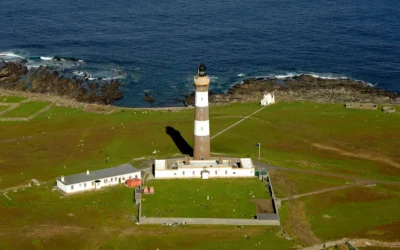
North Ronaldsay Lighthouse
North Ronaldsay Lighthouse: The UK's Tallest, Above the Island of the Seaweed Sheep Around the shoreline of North Ronaldsay — the northernmost and most isolated of the Orkney Islands — runs a drystone wall several miles long called the Sheep Dyke. Its purpose is...